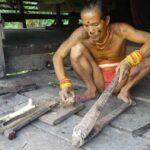
Who are the Ute Indians?
The Ute (historically self-identified as Noochew) are the oldest continuous residents of the present-day Colorado region. Historically, their territory spanned across the southern Rocky Mountains, encompassing portions of modern Colorado, Utah, northern New Mexico, and southern Wyoming.
Unlike the plains-dwelling tribes who relied primarily on large-scale nomadic bison hunting across flat grasslands, the Ute adapted to high-altitude mountain environments. They operated in small, family-based bands that moved seasonally. During the summer months, they migrated to alpine areas above the timberline to hunt elk, mule deer, and bighorn sheep. In the winter, they occupied lower-altitude river valleys for shelter. This seasonal mobility required highly compact, durable, and reliable tools and weapons.
Who was Chief Ouray?
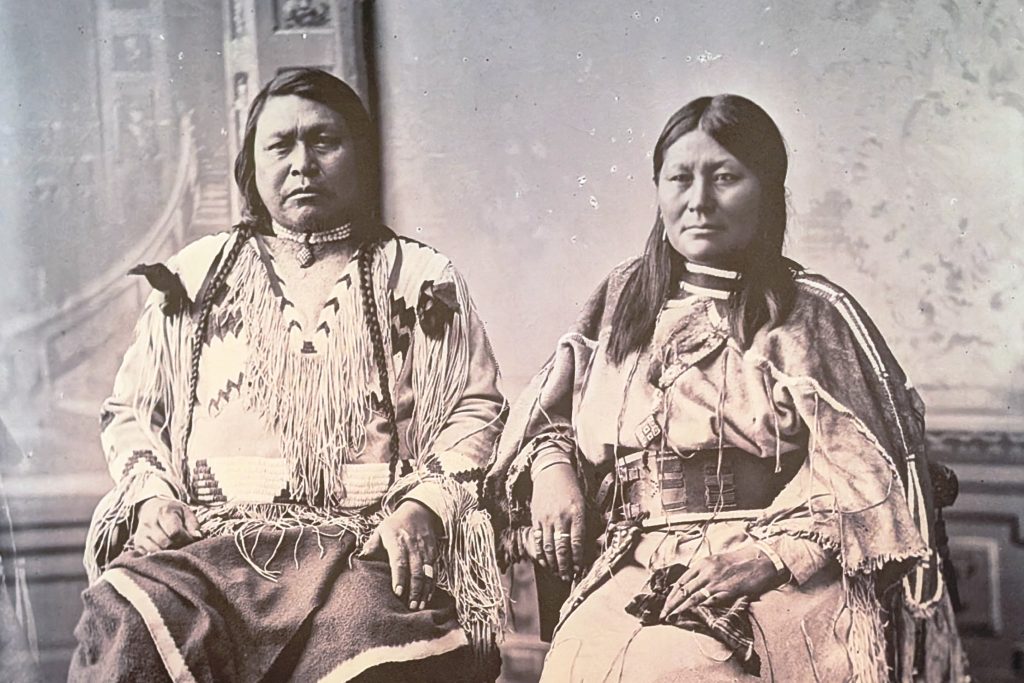
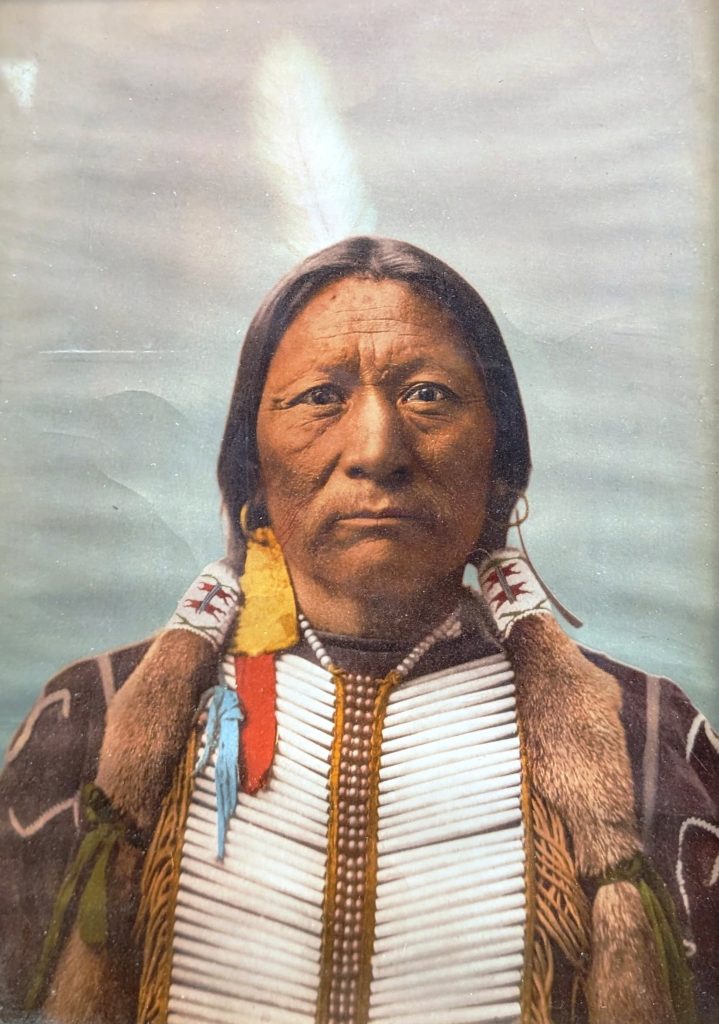
Chief Ouray was a prominent leader of the Tabeguache (Uncompahgre) band of the Ute Nation. Born in present-day New Mexico, Ouray grew up in a multicultural environment, becoming bilingual in Spanish and English before learning Ute and Apache. This linguistic ability positioned him as a primary negotiator and diplomat during the mid-to-late 19th century.
During his leadership, the discovery of gold and silver in the San Juan Mountains led to intense pressure from miners and the U.S. government to relocate the Ute. Ouray advocated for diplomatic solutions, negotiating multiple treaties (including the Conejos Treaty of 1863 and the Brunot Agreement of 1873) to secure sovereign lands. Despite his diplomatic efforts, the Meeker Massacre of 1879, which was conducted by a separate Northern Ute band, led the U.S. government to forcibly relocate most of the Uncompahgre Utes to reservations in Utah.
Description of Chief Ouray’s bow
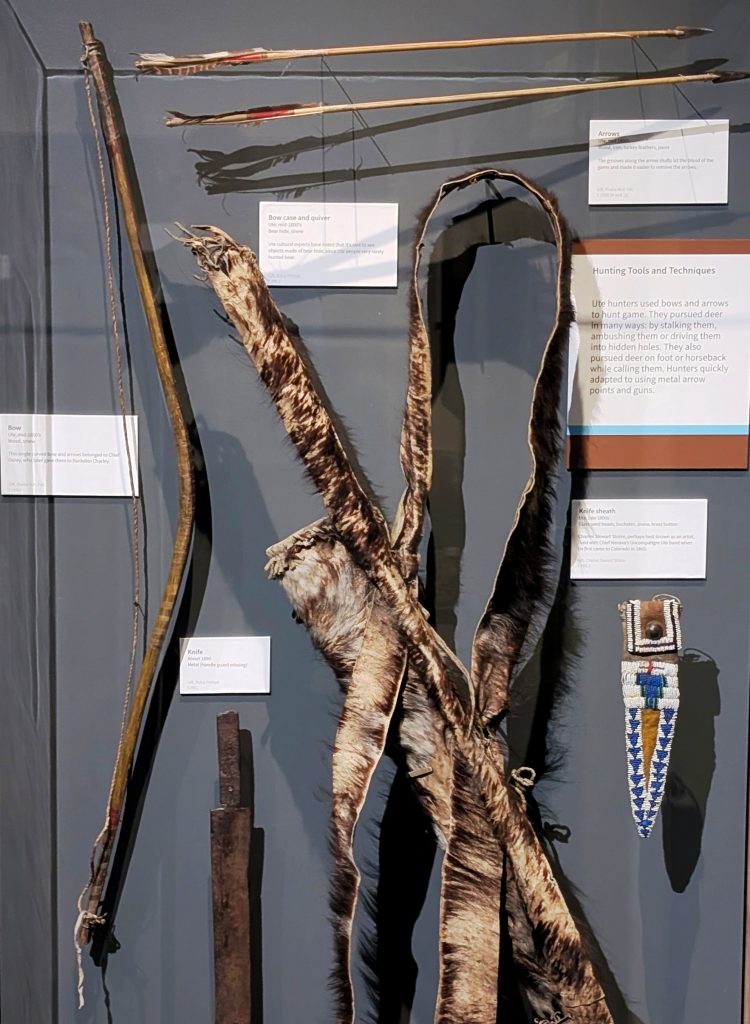
Chief Ouray gave his bow, along with arrows and a quiver, to Buckskin Charlie, who later sold these items to Thomas Wheeler. After he passed away, his sister, Mrs. Phebe Fell, donated it to the Ute Indian Museum in Montrose.
The bow is a single-curved wooden bow with partial sinew wrapping, in the standard design of the Uncompahgre Ute Indians. A context for this bow in comparison to other Indian bow designs can be found at Laubin, R., & Laubin, G. (1980) in their book ‘American Indian Archery’.
Material composition
Bow limbs
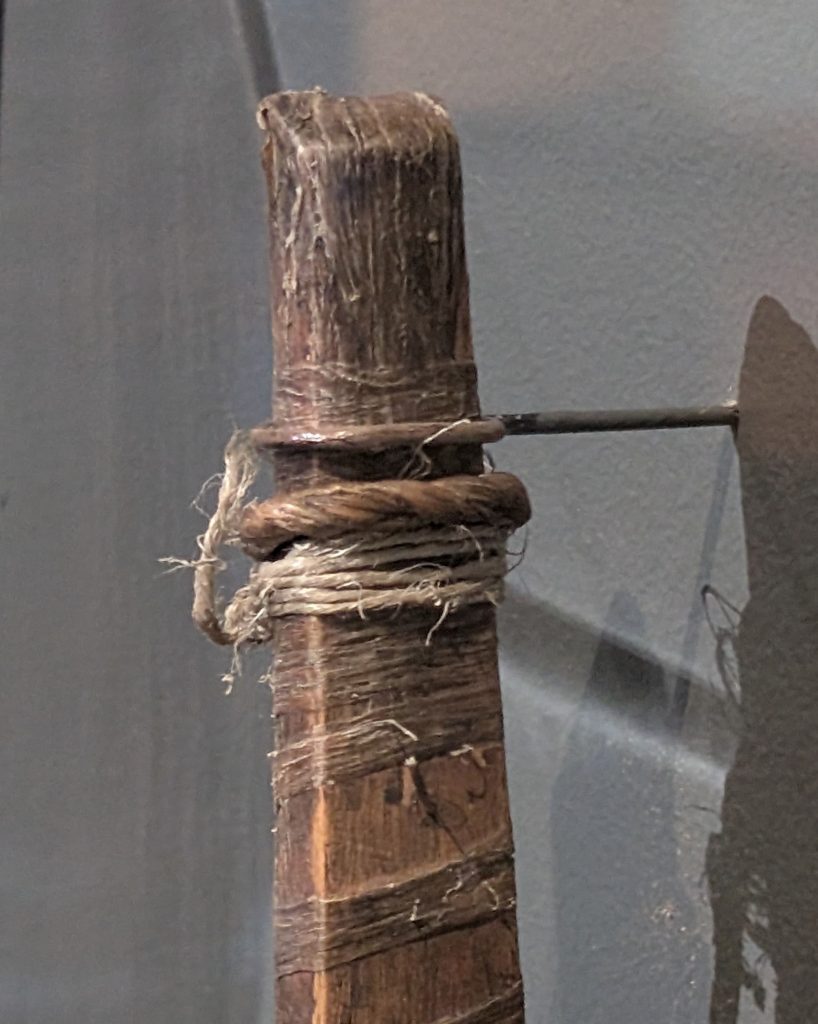
The wood of the bow limbs has a dark-brown color, which means that it is wood from one of three local Juniper species, which are the Rocky Mountain Juniper (Juniperus scopulorum), the Utah Juniper (J. osteosperma), and the One-seed Juniper (J. monosperma). Or they were made from the Curl-leaf Mountain Mahogany (Cercocarpus ledifolius) or other types of wood.
All Juniper woods have a high compression, but low tensile strength, necessitating a full sinew backing, which is not the case at Chief Ouray’s bow. And it is very difficult to find a long enough, straight, and unknotted piece of wood for the stave.
The other wood alternatives for the area where Chief Ouray lived would be Serviceberry (Amelanchier), Western chokeberry (Prunus virginiana var. demissa), and Western Yew (Taxus brevifolia). Serviceberry- and Chokeberry wood is not strong enough for a non-sinew-reinforced bow, and Western Yew shows a sharp contrast between its growth rings. But there are no growth rings visible on Chief Ouray’s bow, just fine-grained, dark brown wood. I am therefore convinced that this bow was made from Mountain Mahogany.
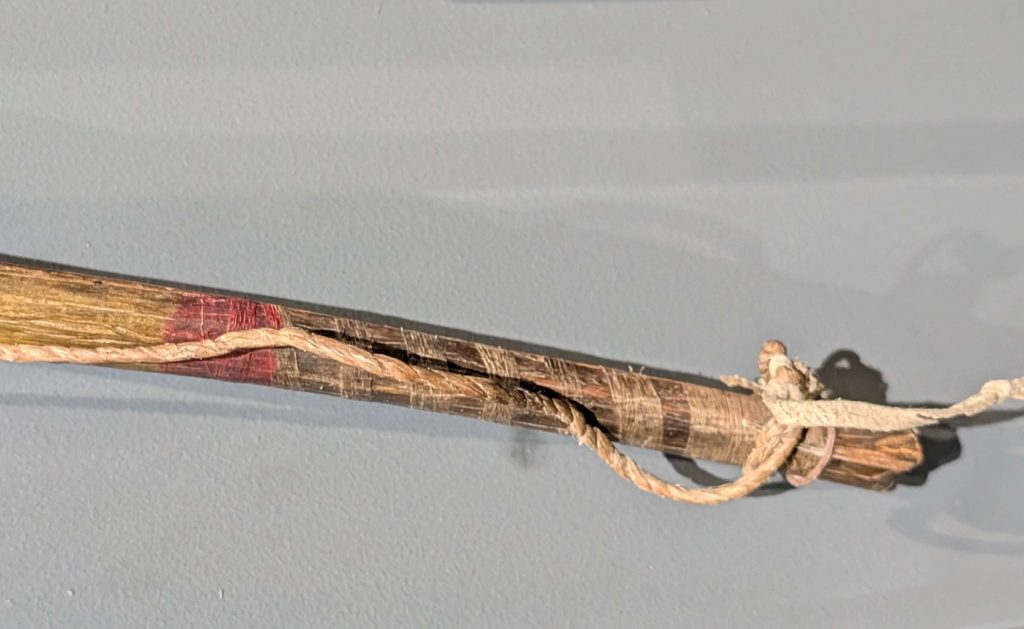
The bow shows a weathered painted coating in various places. There are two red stripes at either inside end of the bow limbs, which were painted horizontally across the inside and the edges of the limbs.
Sinew reinforcement
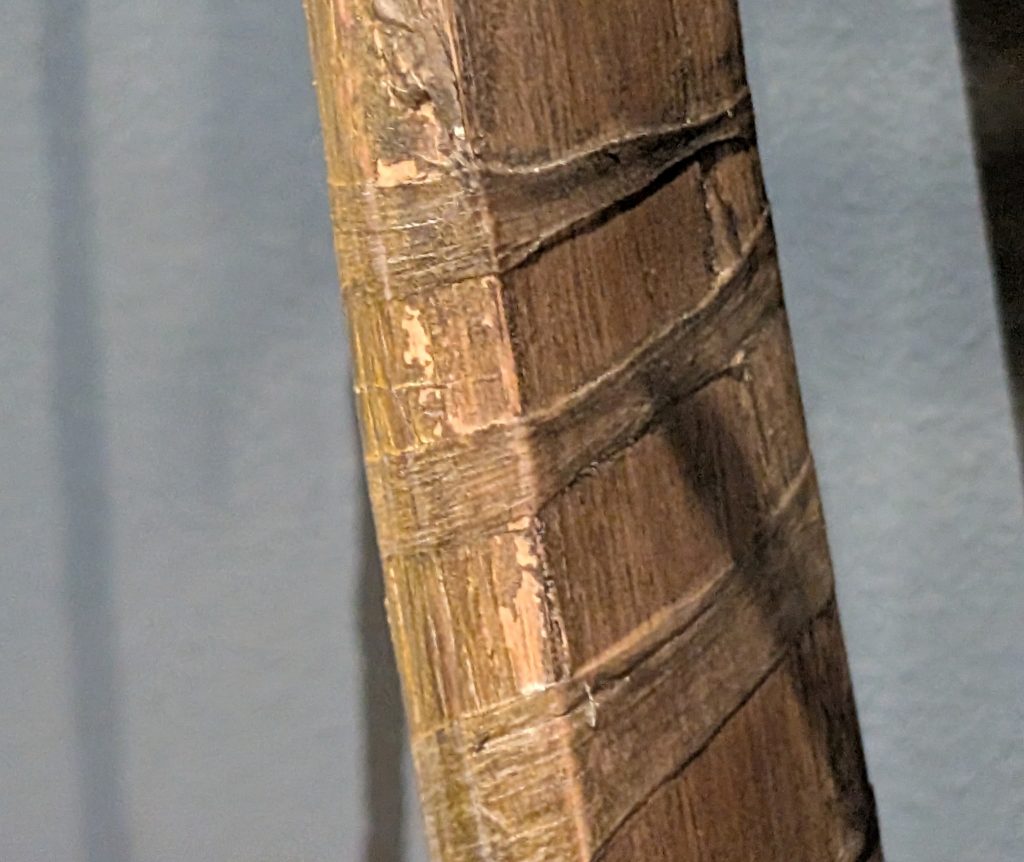
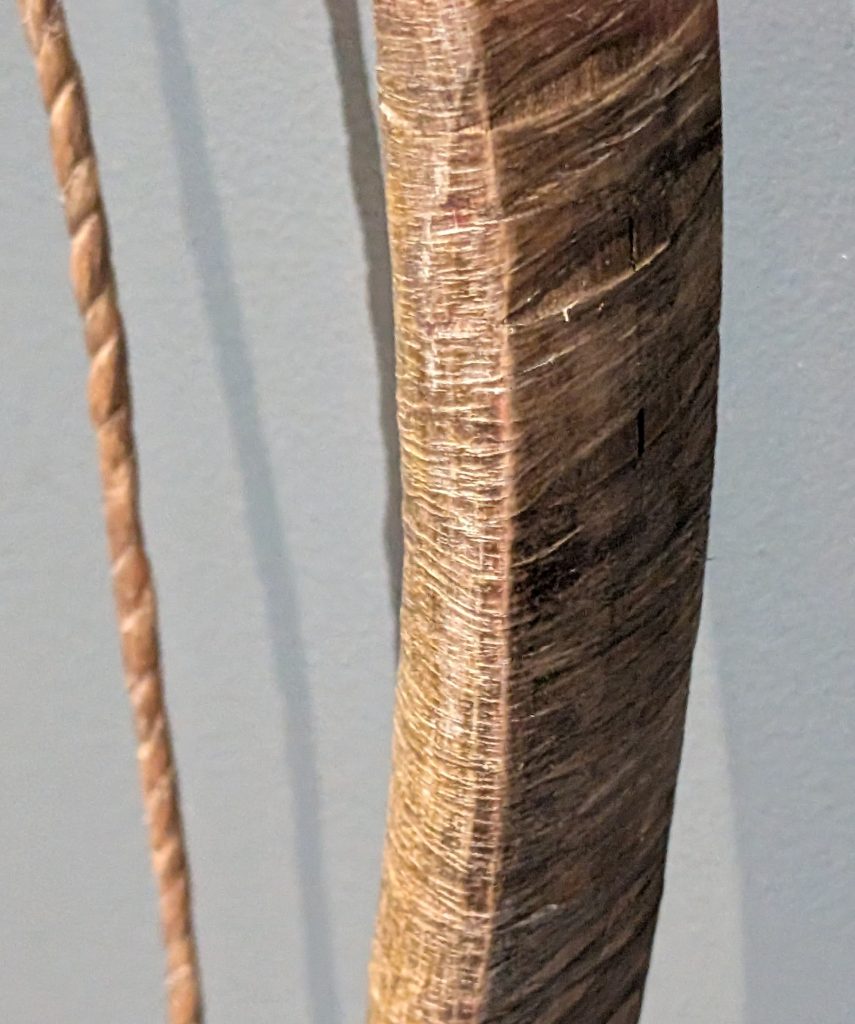
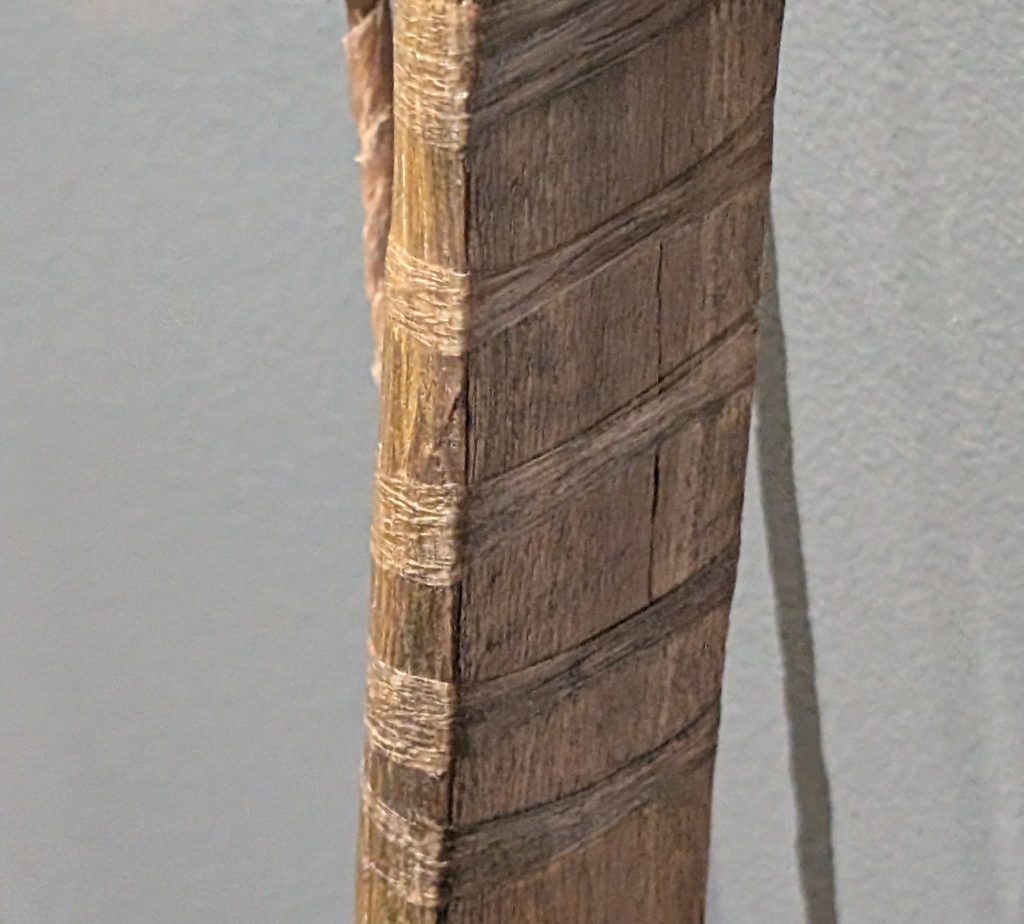
The sinew is wrapped around the handle and at both ends in a single layer. It is not stretched over the whole tensile area (front side) of the bow (facing away from the archer) but restricted to the mentioned three sections. This means the limb wood had sufficient flexibility and tensile strength to withstand repeated drawing forces.
The sinew for the covering of the handle and upper and lower limbs is very thin and fine-grained, and therefore most probably sourced from a mule deer supraspinous ligament (backstrap sinew). See the location of these ligaments in a picture in one of my former articles about the bows of the Hadzabe people in Tanzania. Elk or Bighorn Sheep sinews have a rougher and more robust texture.
Glueing material
The hide glue and sinew form a composite material. As the wet hide glue (boiled from hooves, hide scraps, and joints) dries, it shrinks by approximately 3%, placing the limb wood under pre-stressed compression. This pre-stressing stiffens the wrapped area and prevents the wood from splintering in dry climates and under high tension. But this glue must be protected from humidity using a hydrophobic material, such as pine pitch, animal fat, or – like in this case – with natural pigments.
Bow string
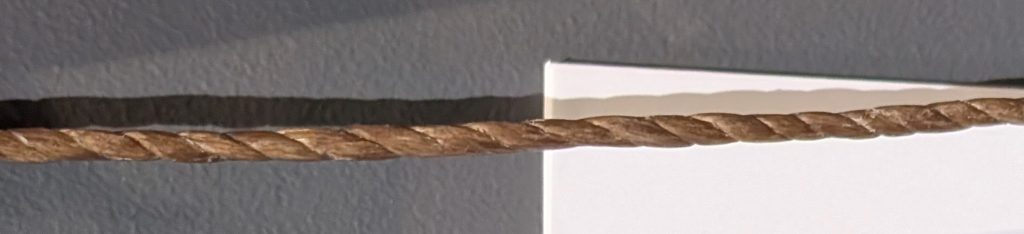
The bow has a double-ply twisted sinew bowstring attached to the notch on one limb end, but only loosely looped around the other limb end. There is no tension on the bow or the bowstring. The total length of the string consists of the free length of 43’’ from the unstrung string, plus both holding loops, which are about 5’’ each, resulting in an uninterrupted string length of about 58’’ (abt. 1,47 m) in dry condition after shrinking. A leg sinew of any local animal would be undoubtedly too short for such a bowstring, as would be the backstrap sinews of a mule deer or bighorn sheep. Moose did not appear during Chief Ouray’s time in the area, so it was harvested from the backstraps of an elk.
Physical dimensions of the bow
General shape and appearance

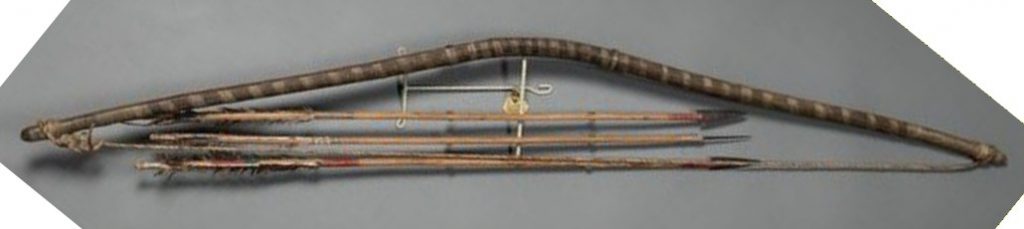
Besides its small size, the bow appears to be bent in the middle of the grip, radiating two straight limbs on either side. This is a very uncommon appearance of a bow, which is neither symmetrically nor continuously bent, nor shows any signs of a reflex area.
But this is the typical shape and appearance of a Ute bow. A nearly identical bow is just now (July 2026) being auctioned by The Taos Auction Company in Santa Fe. See the following picture.
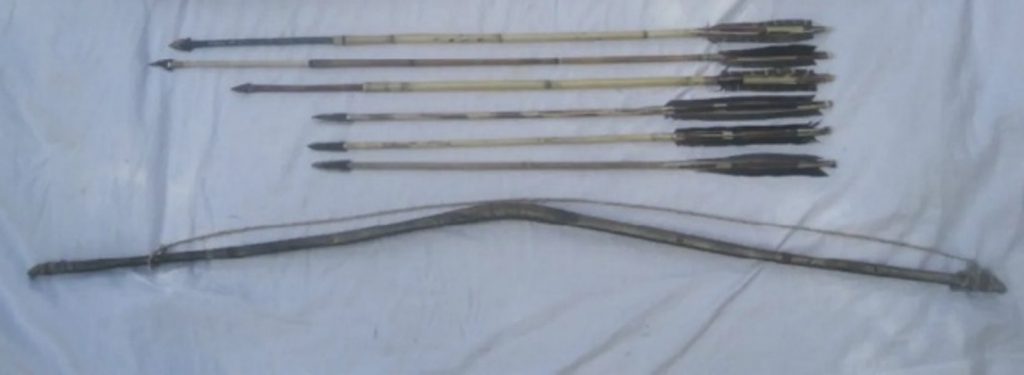
Also, Apache-style bows often show such a bend in the middle with two straight limbs. One of them was featured on the Heartwoodbows website.
Bow dimensions
The bow is highly compact in its length, measuring 41,1 inches (104,5 cm) from the top end to the end of the bottom limb. This short length is a deliberate adaptation for mobility in the pinyon-juniper woodlands and for use on horseback.
The cross-section is flat on the back (the side facing away from the archer) and rounded on the belly (the side facing the archer). This flat-to-oval profile distributes mechanical stress evenly across the limbs. The limbs are widest near the grip – approximately 1 ½’’ – and taper gradually to 1’’ wide tips.
There are no distinctive notches for holding the bow string back in place at either end, but a string of hemp (or similar material) is wrapped around either limb, which acts as a bowstring stop. At the upper limb, this stop is ½’’ from the end, and at the lower limb, at ¾’’.
Sinew wrapping dimensions
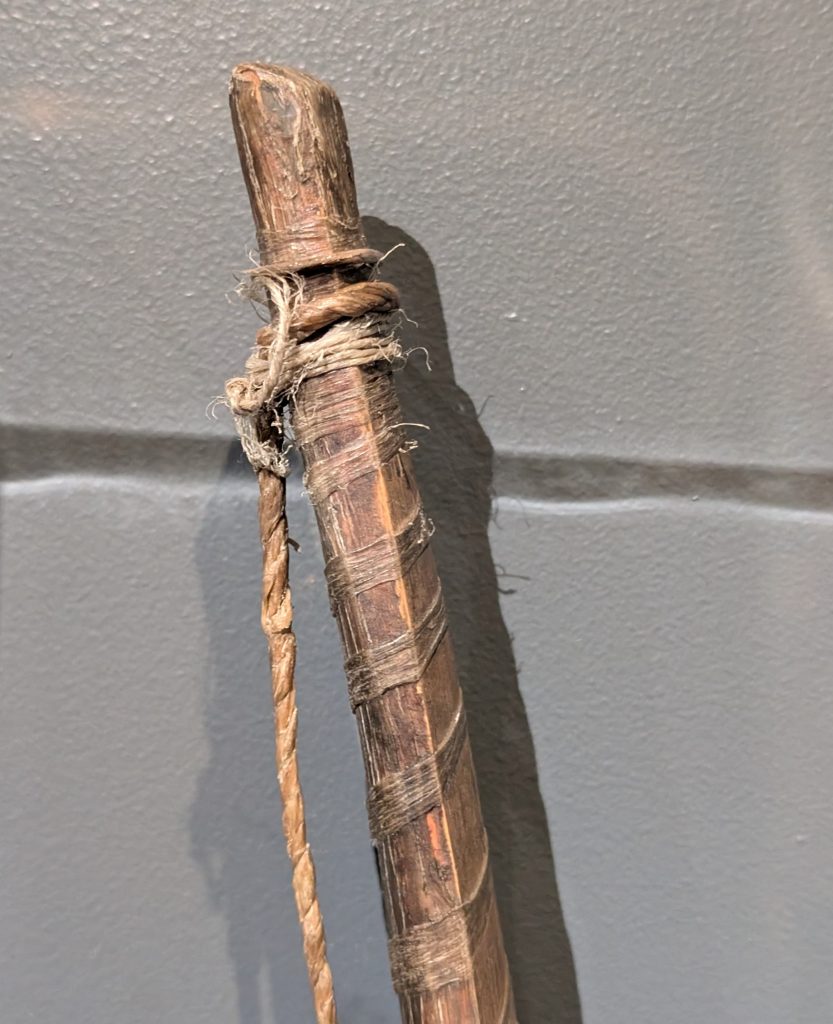
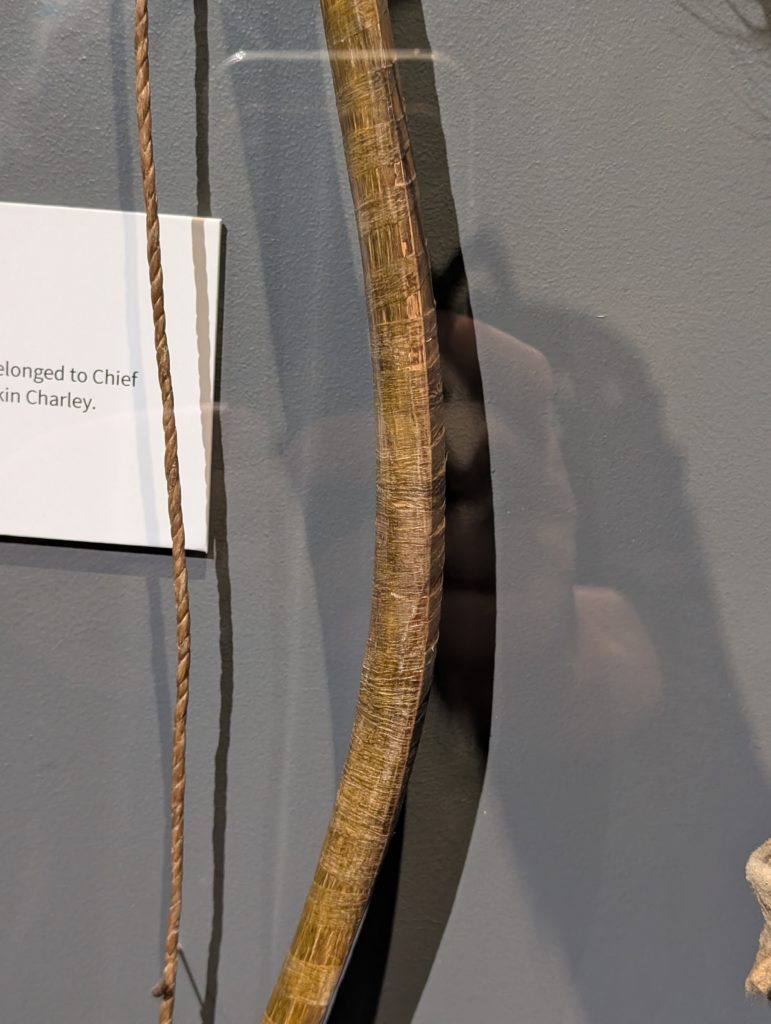
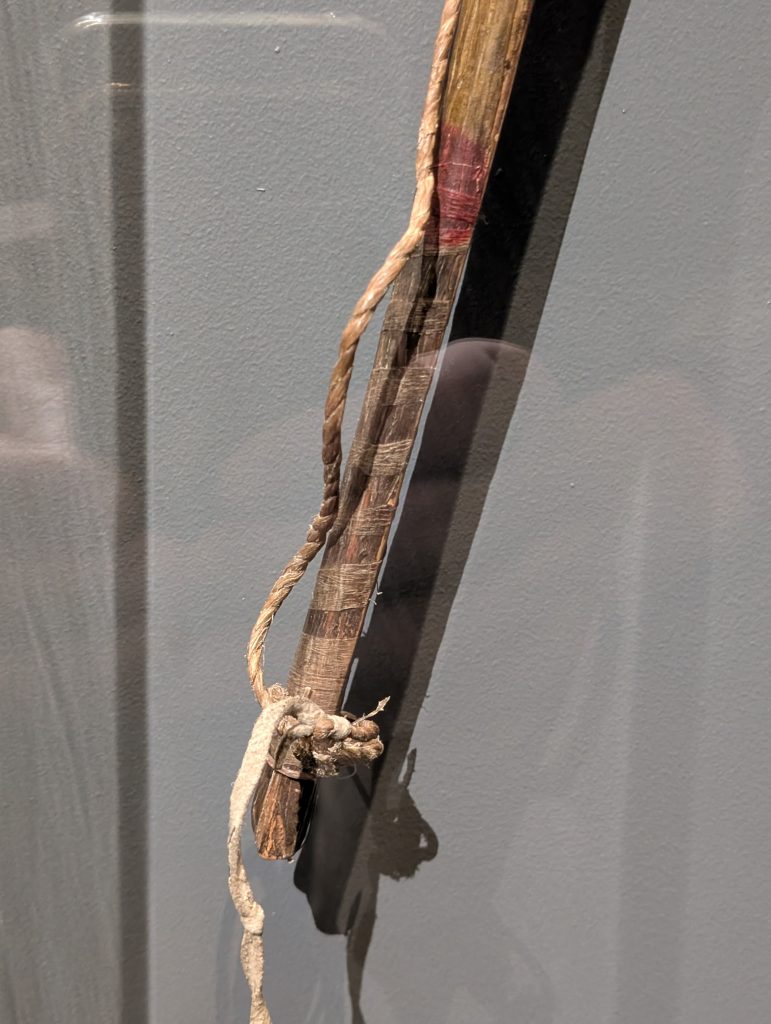
Sinew wrapping was done only at three points on the bow. At the upper limb, the wrapping is 3 ½’’ long and starts at 1’’ from the upper end. The wrapping in the middle of the bow is 14’’ long and in multiple layers. And the wrapping at the lower limb is 4’’ long and 1’’ apart from the lower bow end. The distance between the wrapping in the middle and to the beginning of both limb end wrappings is 9’’ on either side. Within this area, the bow limbs are flexing when drawn, storing the potential energy (Ep ), and releasing it at the arrow launch.
Draw length and -weight
At the unstrung bow, the brace height between the backside of the half-round wood of the handle and a theoretical line between both nock points is around 2 ¼’’. This distance will increase after stringing the bow. Both original arrows at the Ute Indian museum are 24’’ long. When fully drawn, at least 2’’ of the arrow front side will range outside the outer limb wood. That means, when subtracting these 2’’, plus the thickness of the handle wood (1/2’’) and the brace height (2 ¼’’), the calculated draw length will be around 19 ¼’’.
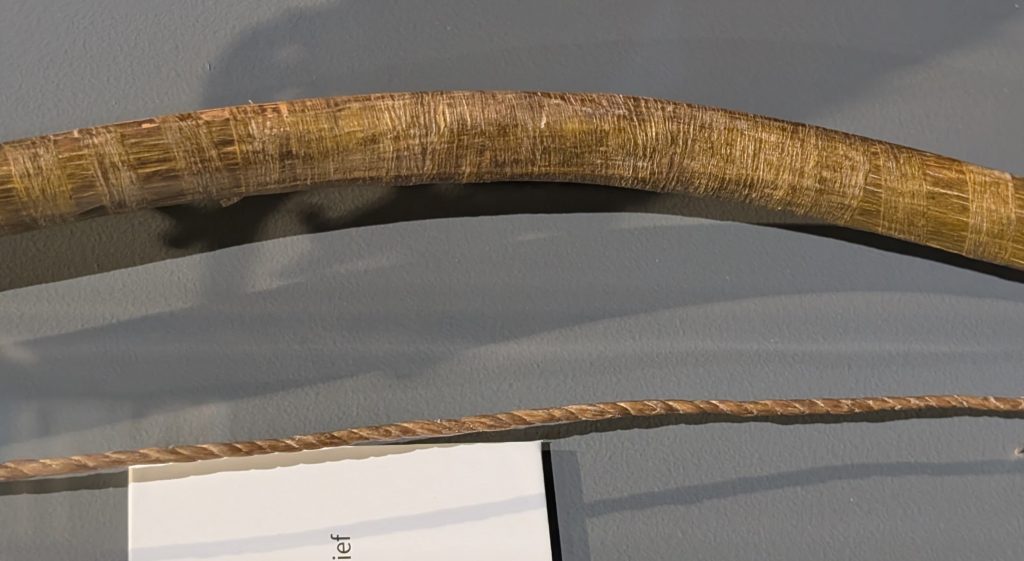
According to The Traditional Bowyer’s Bible, for every inch of draw length, a draw weight of 2–3 lb/inch can be assumed. A draw length of 19 ¼” would therefore result in a draw weight of in average 48 lb.
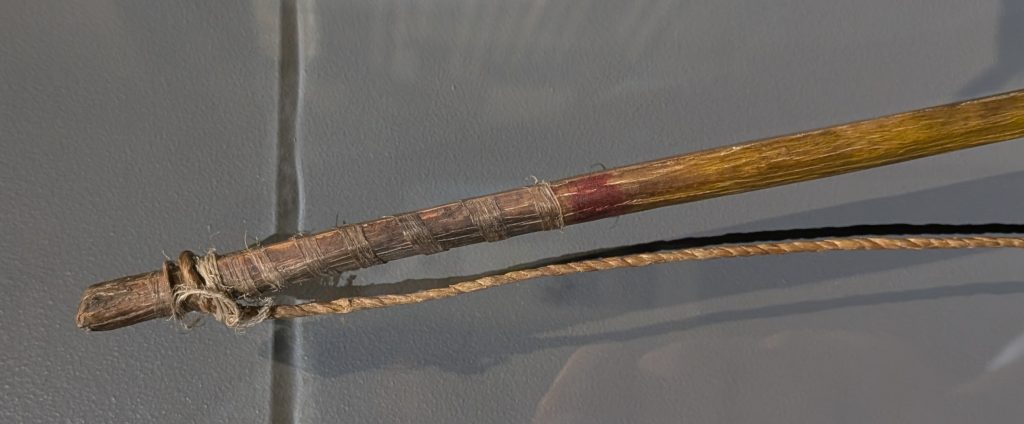
What was the bow used for?
The bow served two primary functions. One was hunting game, and the other was for security and warfare.
Hunting game
The primary application of this bow was hunting rabbits, mule deer, elk, and bighorn sheep. The short profile of this bow allowed the hunter to move stealthily through heavy cover and execute shots from a kneeling or crouched position.
With a calculated draw weight of in average 48 pounds, the bow was capable enough to shoot even a large elk bull. But the killing was not done by velocity or hydrostatic shock (like modern bows do), but through hemorrhage caused by cutting open vital blood vessels or penetration of organs. In one of the following articles on this webpage, I will further describe the arrows that were used together with Chief Ouray’s bow. There, I will describe why a high arrow- and Front-of-Center weight, and 2-blade broadheads are necessary for a clean kill. As are shots from a close range and to the broadside of the animal’s body.
Personal security and warfare
Prior to the widespread adoption of repeating firearms, bows and arrows were the primary defensive weapons of the Ute people. These bows remained their primary weapon well into the 19th century, until the rise of metal cartridges and repeating firearms.
Significance of the bow of Chief Ouray
Chief Ouray’s bow holds both engineering and cultural significance. On the engineering side, the bow represents the peak of indigenous material combination in the Rocky Mountain region east of the Great Basin. By marrying the tensile strengths of backstrap sinews with the compressive strength of slow-growth wood, it was possible to create a compact-sized, energy-storing and releasing system.
Its cultural significance lies in the fact that this bow is a relic of the transition from the pre-colonial Ute lifestyle to the Ute’s sad end in the reservation era. Predecessors of this bow style replaced the Atlatl dart-throwers and evolved over millennia into the pinnacle of composite bow engineering. Its final days overlapped with slow-loading but far-reaching muzzle-loading firearms, to which it still had a chance to survive. Its era ended, however, with the rise of metal cartridges and breech-loading firearms, which also marked the destruction of the remaining indigenous culture.
Also, Chief Ouray transitioned to using firearms, such as repeating rifles, later in his life and during his diplomatic duties and travels to Washington, D.C.
Where can the original bow be found today?
The original personal bow of Chief Ouray is preserved in the collections of the Ute Indian Museum in Montrose, Colorado. The museum is built on the historic 8.65-acre homestead originally owned by Chief Ouray and his wife, Chipeta. Operated by History Colorado, this institution maintains one of the most complete collections of Ute ethnographic materials and historic artifacts in the United States.
I want to cordially thank the Director of this museum, Mrs. C.J. Brafford, for her strong support and provision of information on this valuable artifact – the original bow of Chief Ouray.
Lessons learned from Chief Ouray’s bow design
- The bow design must take the local terrain and vegetation into consideration, trying to achieve maximum performance under the local circumstances.
- Pre-compressing the limbs with glued sinew stripes increases their load-bearing capacity.
- Sinew-reinforced bows must be coated with hydrophobic materials to protect the water-soluble hide glue from rain and snow.
.