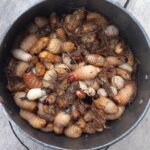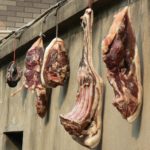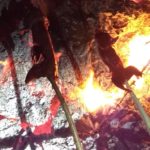
In the rugged terrain of the Pu Luong Nature Reserve in northern Vietnam, insects have long formed an integral part of the traditional diets of the Muong ethnic people living there. Among the social wasps local foragers target, the Black Shield Wasp (Vespa bicolor) stands out among other, larger Vespa species. Renowned for its rich nutrient profile, high protein content, and distinct flavor, this wasp species is actively sought out during late summer and autumn.
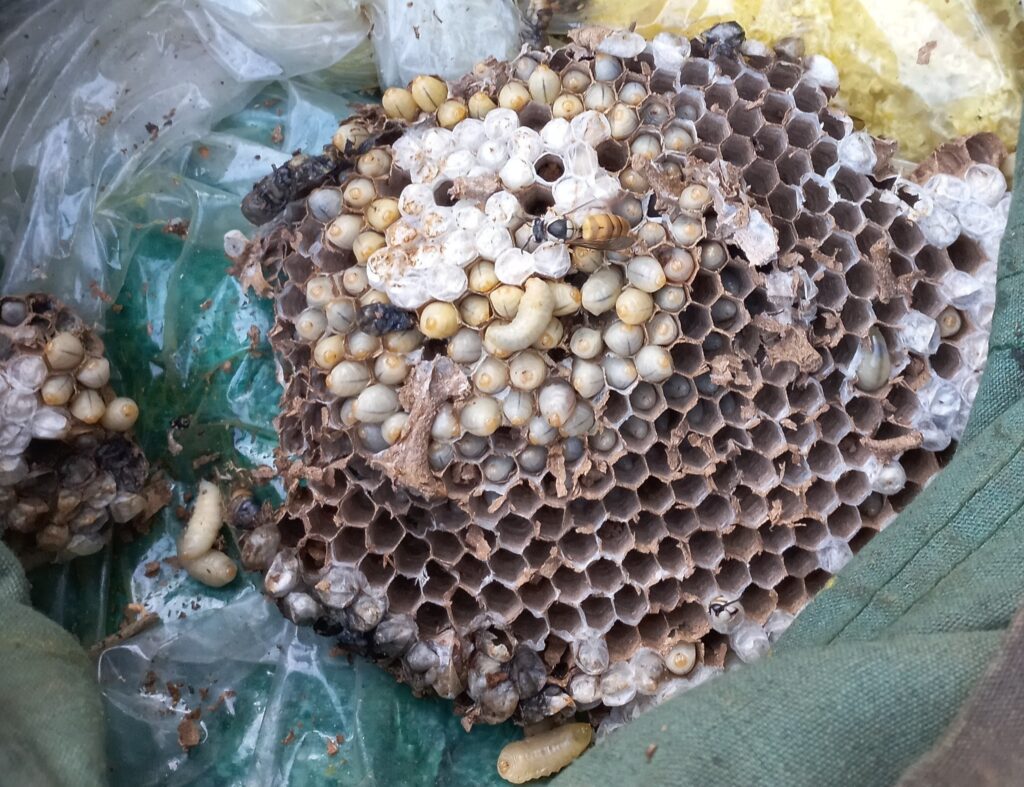
Bands of mostly young, local males venture deep into mixed forests and hill country to locate wild colonies. The main harvest consists of the tender larvae and pupae inside the paper brood combs.
Once extracted, Muong females prepare these pupae in several traditional dishes. They commonly flash-fry them with fresh lime leaves (lá chanh), stir-fry them with chili and garlic, or incorporate them into rice wines for medicinal tinctures. Wild brood fetches a premium price in local markets as a delicacy. And understanding the biology, habitat, and safe collection methods of Vespa bicolor and other Vespa species is essential for anyone studying wilderness survival in Southeast Asia.
Distribution of Black Shield Wasps
Vespa bicolor is native to a broad geographic region spanning Eastern and Southeastern Asia. Its range extends from northern China down to Cambodia, and from Taiwan to Nepal and Central India.
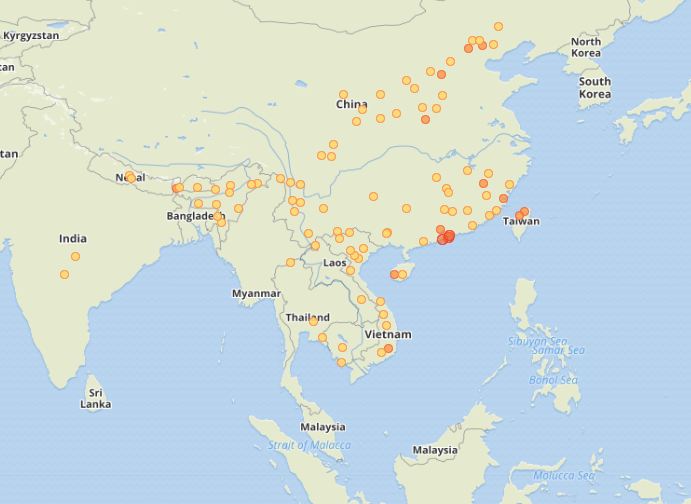
The species demonstrates remarkable ecological adaptability. While naturally favoring subtropical and tropical secondary forests, foothills, and bamboo groves, Vespa bicolor thrives equally well in agricultural landscapes and disturbed rural environments. It is frequently encountered near human habitations, orchards, and plantations where food sources and nesting sites are abundant. In northern Vietnam, it ranges from low-lying valley agricultural zones up into mid-altitude mountain slopes.
Description of Vespa bicolor
The Black Shield Wasp is easy to recognize once you know the key diagnostic markings that distinguish it from larger Vespa (wasp and hornet) species.
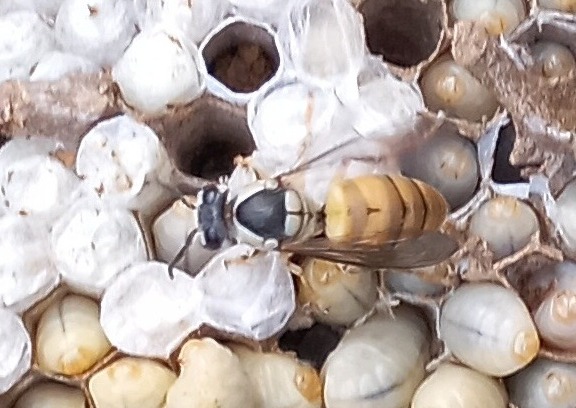
Vespa bicolor is a small-to-medium-sized Vespa species. Workers typically measure 15-22 mm in body length, while queens are noticeably larger, reaching up to 25 mm. Its head and face are bright white, framed by black compound eyes. The defining visual characteristic is on the upper thorax: white spots surround a black shield mark at the top and center. The abdomen is predominantly yellow, patterned with narrow, dark brown transverse bands separating the segments. The legs are uniformly yellow, which helps them stand out during flight.
Compared to aggressive wasps and hornets like the Asian giant hornet, Vespa bicolor is moderately defensive near its nest and generally docile while foraging.
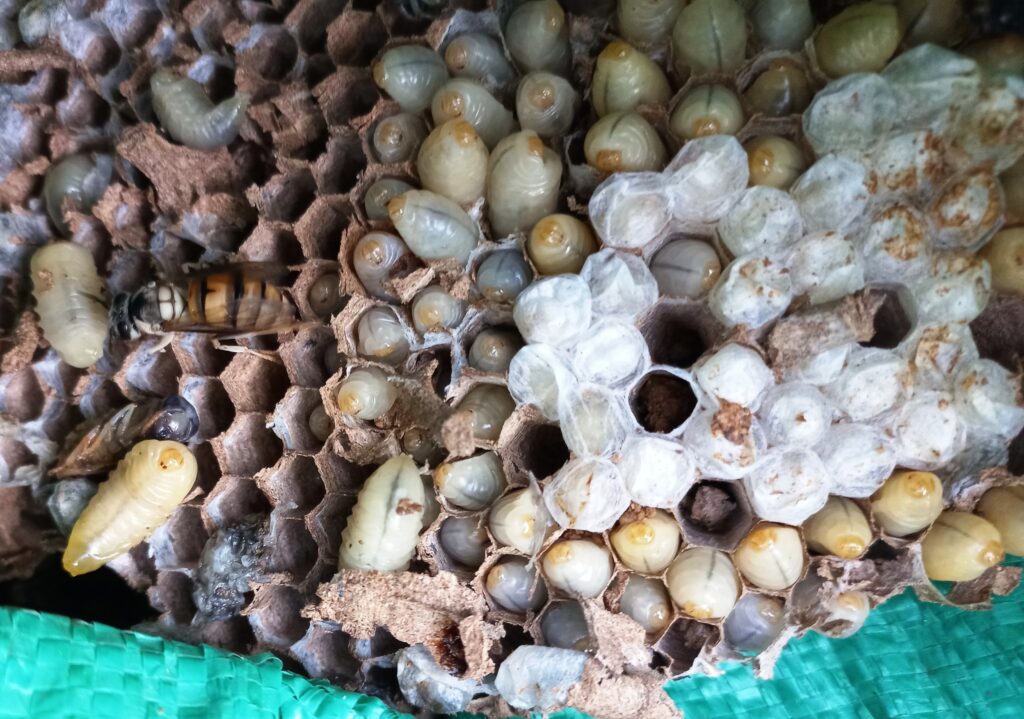
Nests and Combs of Black Shield Wasps
Vespa bicolor primarily constructs aerial paper nests. Common locations include low- to mid-canopy tree branches in secondary forests, dense shrubbery, bamboo thickets, abandoned rural buildings, and rock crevices.
Nest architecture and Comb Structure
The nest is constructed from chewed wood pulp mixed with saliva, yielding a light brown, papery material with distinctive concentric pattern lines.
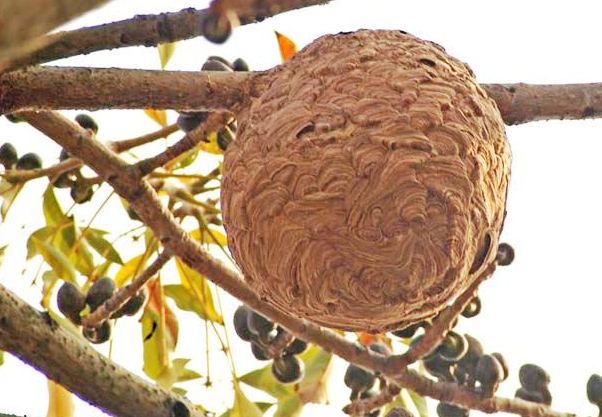
The nest’s external envelope is a spherical papery shell that provides thermal regulation and rain protection, with a small circular entrance hole near the bottom. Internal combs hang inside in multiple horizontal layers of hexagonal brood cells, facing downward. These cells consist of relatively thick, inedible walls, unlike those of Lesser banded hornets, which can be eaten.
Strong paper pillars connect the combs vertically. The upper, older combs contain developing pupae, while lower tiers contain younger larvae and eggs. A mature nest in late autumn can reach 20 to 35 cm in diameter and contain several thousand individual cells filled with fat and protein-rich larvae ready for harvest.
Protective Personal Equipment for Collecting Wasp Nests in Northern Vietnam
Harvesting Vespa bicolor nests is inherently high-risk. Although individual wasps are smaller than larger hornet species, a disturbed colony will swarm defensively, and their stings cause severe local pain, tissue swelling, and potentially fatal anaphylactic shock with multiple stings. Local Muong gatherers in northern Vietnam use specialized protective gear combined with field precautions.
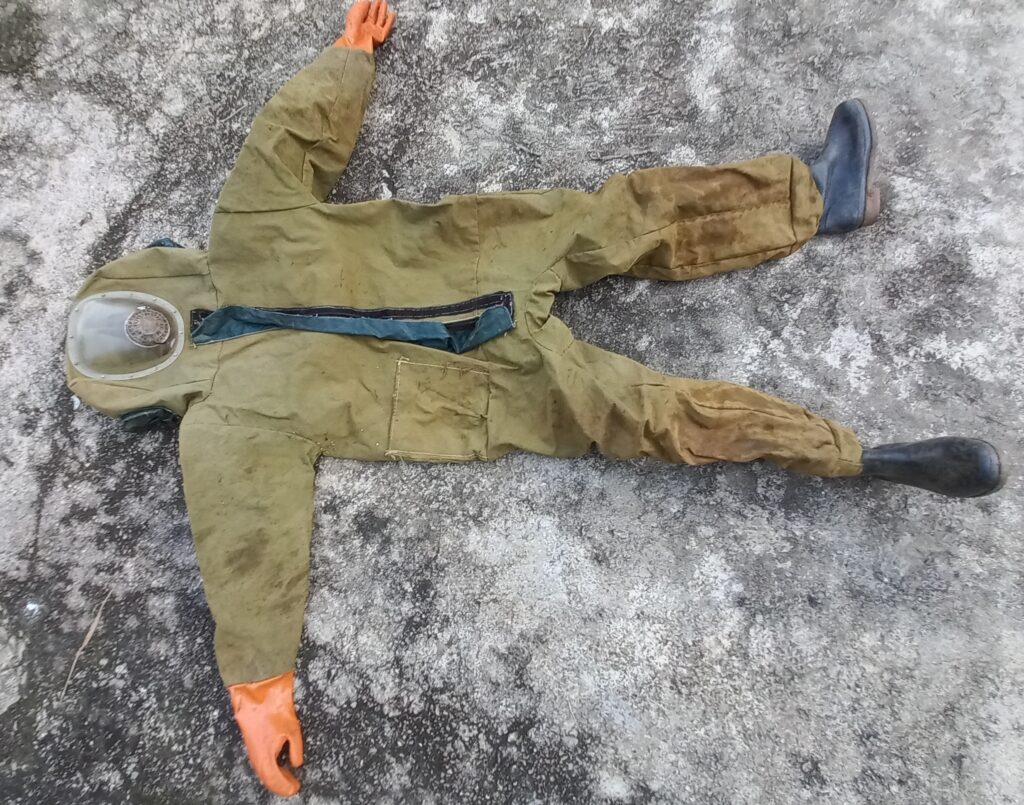
Sealed Full-Body Protective Suit
Gatherers wear full-body suits made of thick canvas, dense rubberized fabric, or multi-layered synthetic material. The suit must be thick enough to prevent a 3–4 mm sting from reaching the skin and must be completely sealed at all seams, zippers, and cuffs. A full glass face mask fitted with a fine wire-mesh air filter protects the head. Fabric mesh alone is insufficient, as wasps can sting through soft mesh if pressed against the skin. Thick rubber gloves protect the hands and are sewn directly to the thick canvas. Heavy rubber boots, also sewn directly to the trouser legs, prevent wasps from crawling up inside the suit.
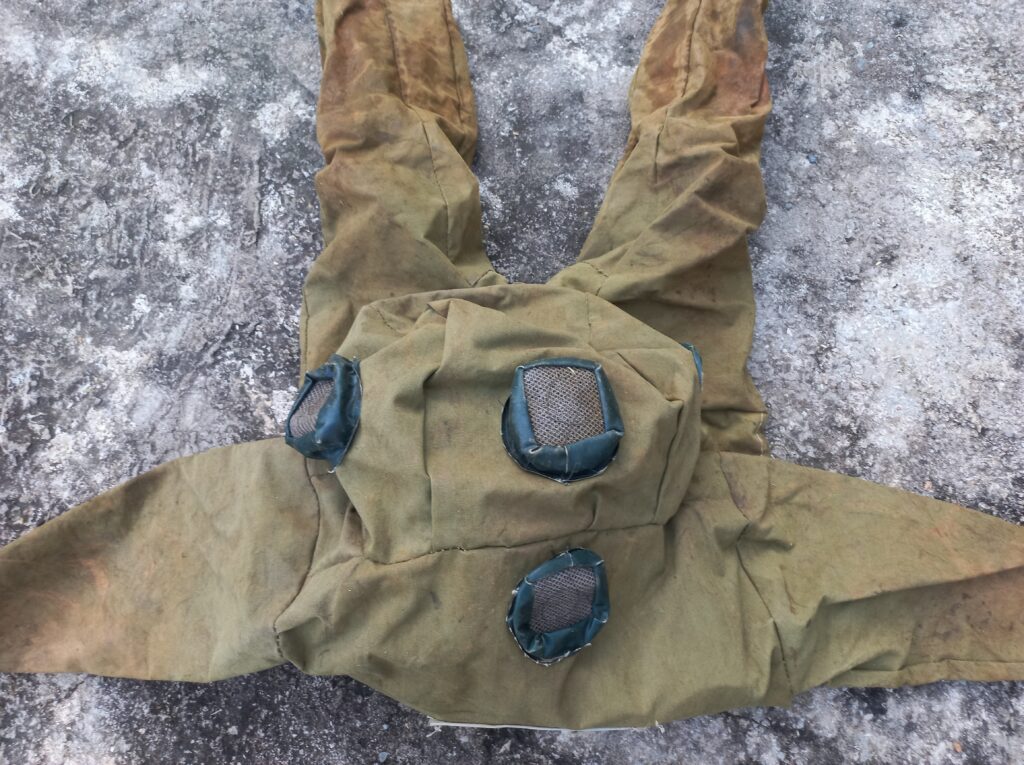
On top of the head, and on the left, right, and back, thick wire-mesh air filters provide enough oxygen during the heavy work of collecting nests in the hot, humid climate.
Nocturnal Harvesting Strategy
In addition to the physical full-body suit protection, collectors harvest nests at night or in the pre-dawn hours, when ambient temperatures drop and the entire colony gathers inside the nest. Using red-filtered torch lights prevents alarming the wasps, allowing collectors to bag the entire nest structure before extracting the combs.
Lessons learned about Black Shield Wasp combs for food in Vietnam:
- Vespa bicolor larvae and pupae are a highly prized seasonal delicacy, serving as a protein source and a lucrative income stream for rural collectors.
- The species builds distinctive, spherical aerial paper nests in trees and structures, making colonies easier to spot in secondary forests and rural margins than ground-nesting species.
- Collectors exploit hornet biology by harvesting nests at night or during cold early-morning hours, when low ambient temperatures render the colony docile inside the papery nest.
- Specialized full-body protection suits are essential, as defensive swarms of Vespa bicolor can deliver stings that can cause severe toxicity or anaphylaxis.
.