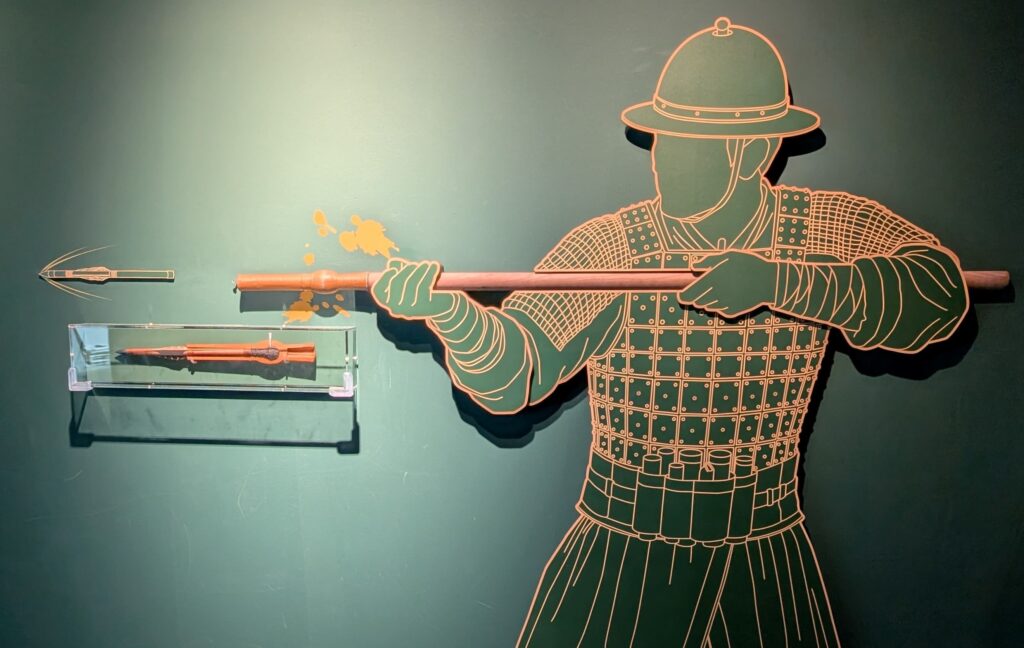
When we examine traditional hunting and projectile tools around the world—from Hadza wooden bows in Tanzania to spring-pole traps in Sumatra—we usually see a clear separation between muscle-powered weapons and gunpowder firearms. In medieval Korea, however, engineers bridged both technologies in a compact bronze tube known as a Hwatong (火筒) (literally “fire tube”). Rather than firing round lead musket balls, these early hand-held cannons were designed primarily to launch heavy, fletched arrows using the explosive force of black powder.
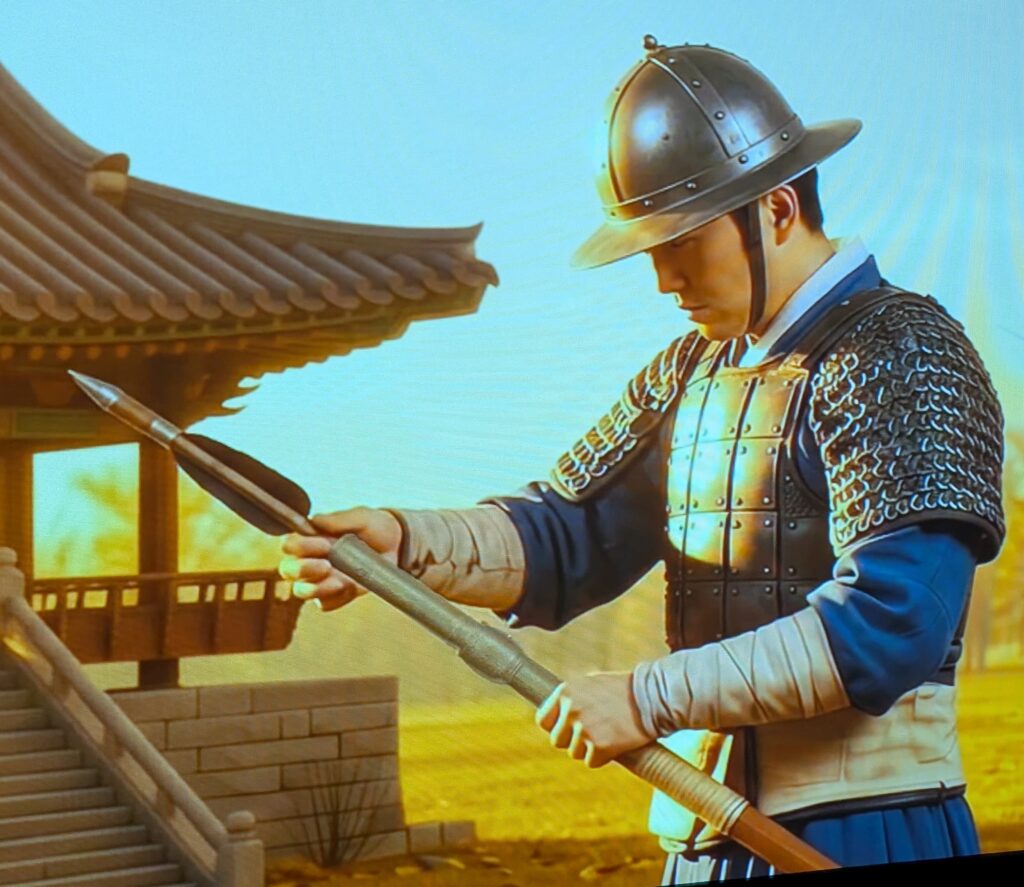
Hwatong – A Combination of Bow & Arrows and Black Powder
At first glance, shooting an arrow out of a metal cannon barrel seems counterintuitive. Yet in East Asia, arrows had been perfected over millennia as stable, aerodynamically balanced projectiles capable of piercing armor and maintaining flight stability without rifling.
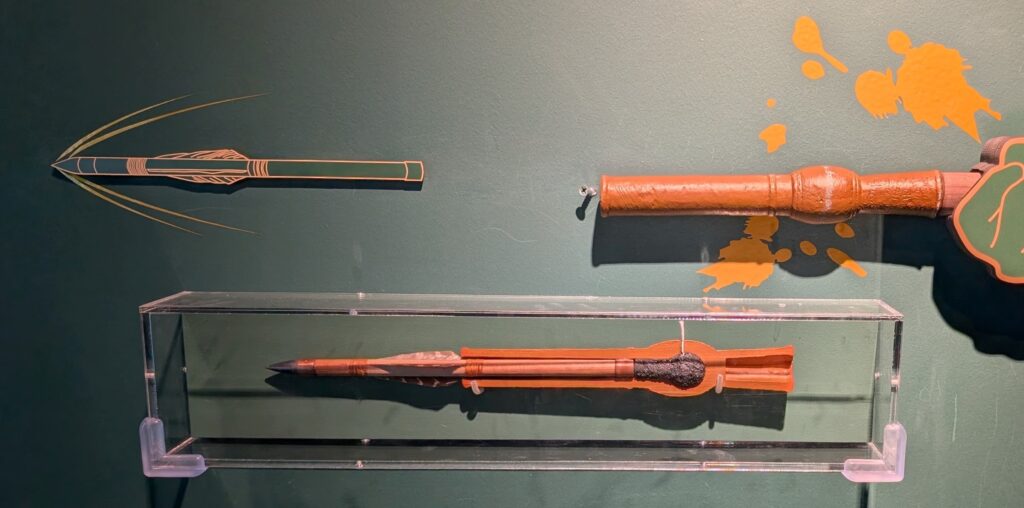
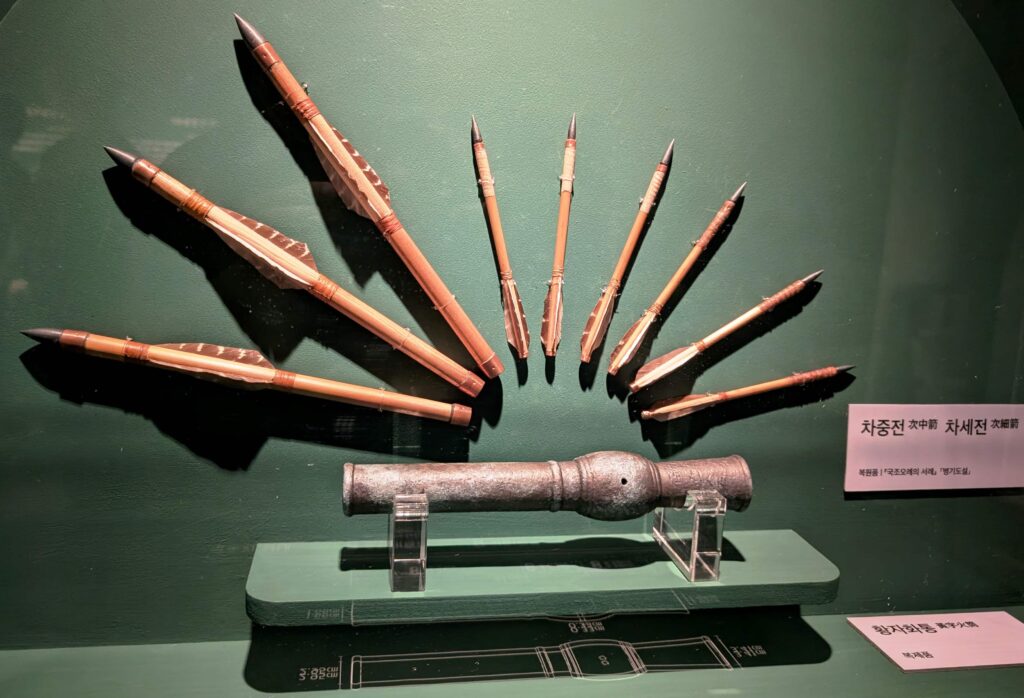
When black powder arrived on the Korean Peninsula, weapon makers did not immediately abandon the arrow. Instead, they replaced the elasticity of bent wood and animal sinew with the rapid gas expansion of ignited charcoal, sulfur, and saltpeter. By seating a thick wooden arrow shaft—often fitted with iron fins or leather fletching and a heavy iron tip—into a bronze tube, an operator could project a bolt far faster and with greater kinetic energy than any hand-drawn bow could achieve. The Hwatong represents the exact transitional link between traditional archery and true barrel artillery.
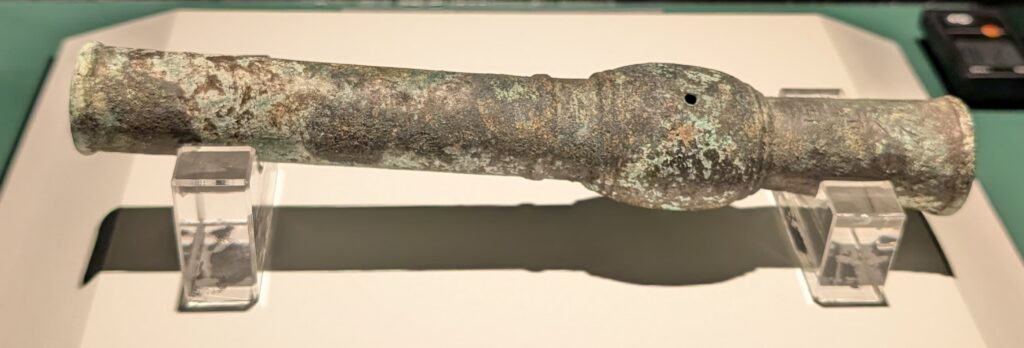
Korea’s adoption of gunpowder weapons accelerated rapidly during the late Goryeo Dynasty in the late 14th century, driven largely by coastal raids from Wokou (Japanese pirates). In 1377, the military inventor Choe Mu-seon successfully established the Hwatong Dogam (Superintendency of Gunpowder Weapons) after learning saltpetre extraction techniques, allowing Korea to manufacture its own black powder rather than relying on scarce imports.
From the late Goryeo Dynasty into the early Joseon Dynasty, Korean foundries standardized hand cannons and artillery pieces under the Thousand-Character Classic (Cheonjamun) naming system—ranking weapons by size from Cheonja (Heaven) and Jija (Earth) down to smaller, portable tubes like Hyeonja (Black) and Hwangja (Yellow). State artisans cast these barrels from bronze alloys of copper, tin, and lead, stamping official production records directly into the metal to enforce strict quality control.
How Does the Hand-Held Arrow Fire Tube Work?
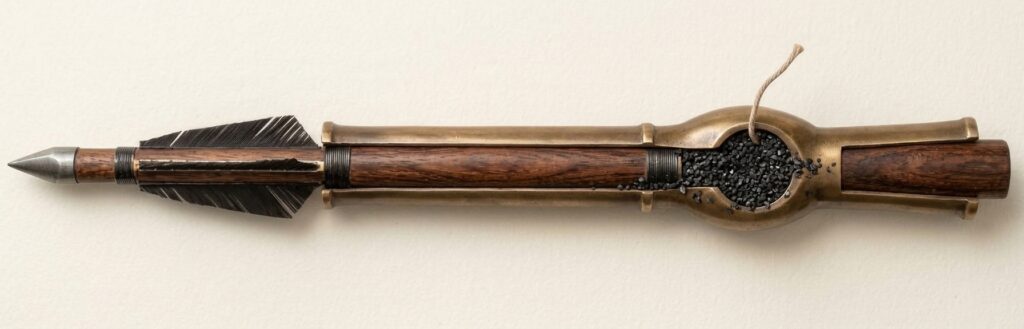
A Hwatong is built around three distinct functional sections:
- The Socket (Mobyung): The rear end features a hollow tapered socket into which the user wedged a long wooden pole or handle, allowing the shooter to brace the weapon under an arm or against the ground while keeping hands clear of the hot bronze barrel.
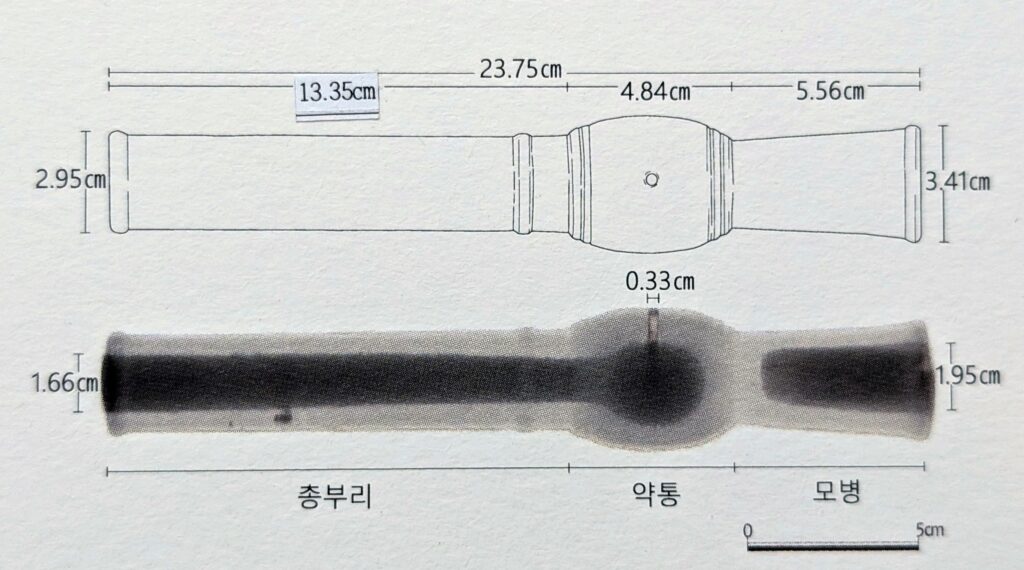
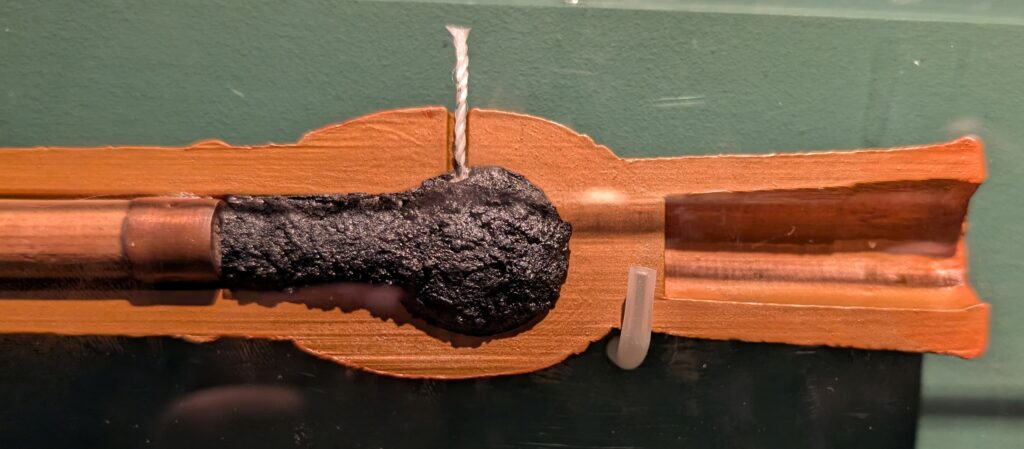
- The Powder Chamber (Yak실): The middle section is a thick-walled, slightly rounded chamber designed to withstand peak combustion pressure. A tiny touchhole drilled through the top wall connects the outside of the barrel to this chamber.
- The Muzzle (Buri): The forward barrel guides the projectile straight during acceleration.
To load and fire, the operator poured a measured charge of black powder down the muzzle into the chamber and tamped it down. Unlike later Joseon cannons under King Sejong—which inserted a tight-fitting wooden plug (gyeokmok) between the powder and the projectile to trap expanding gases—early tubes like the Hwangja Hwatong seated the arrow shaft directly over the powder charge (often wrapped with paper or cloth wadding for a snug fit). Loose priming powder was sprinkled into the touchhole, and a glowing slow-match cord or hot iron rod ignited the charge, blasting the arrow out of the muzzle in a cloud of white smoke.
Is a Hwatong a Survival Tool?
From a strict bushcraft and wilderness survival perspective, a Hwatong is not a practical survival tool. While traditional wooden bows can be carved in two hours from green saplings using a simple knife and strung with plant fibers or animal ligaments, a bronze fire tube requires mining, smelting, casting facilities, and a steady supply of refined saltpetre, sulphur, and charcoal.
Furthermore, black powder is highly sensitive to moisture; damp weather renders an unsealed fire tube useless without specialized waterproofing. Its loud report, heavy recoil, slow reloading time, and reliance on manufactured metal bolts make it poorly suited for quiet subsistence hunting in forests or savannas. However, as an emergency defensive tool and signalling device—capable of launching flaming arrows or producing an unmistakable acoustic boom over long distances—it served vital tactical roles on medieval fortifications and coastal patrol boats.
Lessons Learned about the Hwatong – A Korean Hand-Held Arrow Fire Tube
- Rather than jumping straight to spherical bullets, early gunsmiths adapted familiar arrow aerodynamics to new chemical propellants, maximizing accuracy from smoothbore tubes.
- CT scans of the Mount Geumseong Hwatong revealed a simple rounded powder chamber without a wooden gyeokmok wad, illustrating how early designs lost substantial gas pressure around the arrow shaft before later 15th-century refinements dramatically boosted range.
- Keeping tin content below 10 percent in a copper-tin-lead bronze alloy prevented the barrel from becoming overly brittle, ensuring the tube would deform rather than shatter under sudden black-powder pressure.
- Stamping the exact weight, maker’s name, and production date into every barrel allowed medieval quartermasters to match powder charges safely to specific weapon tolerances.
.