
Tracks & Signs
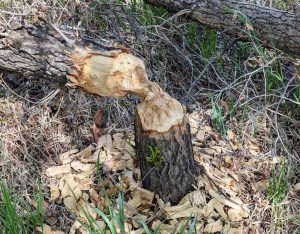
American Beaver tracks and signs
The North American beaver (Castor canadensis) is slightly larger than the Eurasian beaver (Castor fiber), and he modifies its environment to a higher degree than almost any other mammalian species in North America. These alterations change water chemistry, local hydrology, and vegetation structure across riparian zones (Nelner & Hood, 2011). Because beavers are primarily nocturnal or crepuscular, field confirmation of their presence relies heavily on the identification of tracks, trails, feeding signs, and building structures. This article should serve as a documentation of beaver tracks and signs for field identification. Track identification Beavers are heavy-bodied, low-slung semi-aquatic rodents. Identifying their…
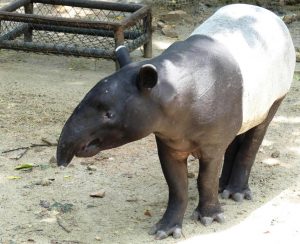
Malayan Tapir tracks and signs
The Malayan tapir (Tapirus indicus) is the largest terrestrial mammal native to Peninsular Malaysia and one of the most ancient surviving members of the order Perissodactyla — a lineage that has changed little in tens of millions of years. Despite its size, which in adult females can exceed 400 kg, it is an animal that most people who walk in Malaysian forests will never see. It is nocturnal, solitary, and moves through dense vegetation with a quietness that seems improbable for its bulk. What it does leave behind, however, is a consistent and readable set of signs. For the forest…