
The North American beaver (Castor canadensis) is slightly larger than the Eurasian beaver (Castor fiber), and he modifies its environment to a higher degree than almost any other mammalian species in North America. These alterations change water chemistry, local hydrology, and vegetation structure across riparian zones (Nelner & Hood, 2011).

Because beavers are primarily nocturnal or crepuscular, field confirmation of their presence relies heavily on the identification of tracks, trails, feeding signs, and building structures. This article should serve as a documentation of beaver tracks and signs for field identification.
Track identification
Beavers are heavy-bodied, low-slung semi-aquatic rodents. Identifying their individual footprints can be difficult because their large, flat tails, along with the branches they drag, frequently obscure or completely obliterate their tracks. However, impressions can be found in soft substrates such as deep mud, silt, or wet sand along the margins of water bodies.
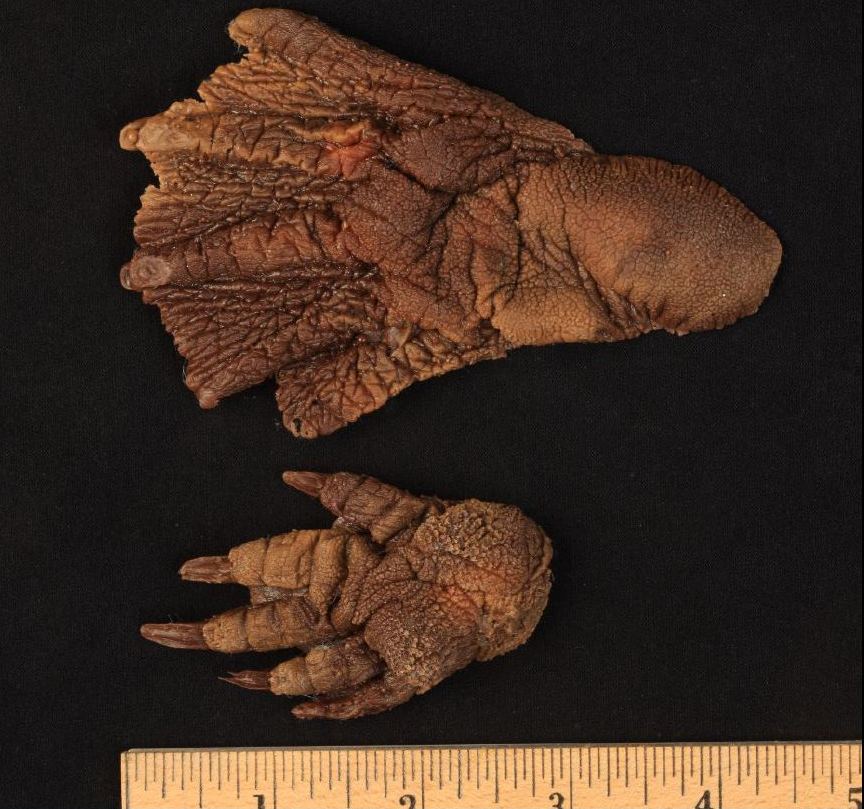
- Front track: 5 unwebbed toes -> ~2.5 – 3.0 inches long
- Hind track: 5 fully webbed toes -> ~5.0 – max. 7.0 inches long
- Gait pattern: Overlapping registers with central tail drag line
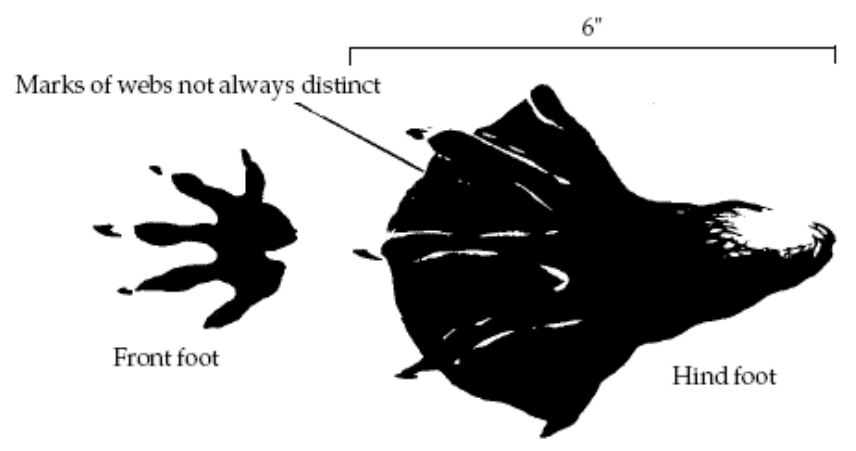
Their footprint could be mistaken for that of muskrats, which, however, have no webbing between their toes and are considerably smaller.
Beaver front foot morphology
- Dimensions: Front tracks measure between 2.5 and 3 inches (6.4 to 7.6 cm) in length and are approximately equal in width.
- Toe structure: The front foot features five distinct, unwebbed digits. The claw marks are typically visible in soft substrates.
- Appearance: The overall shape resembles a small human handprint. The front feet are adapted for grasping branches, digging mud, and manipulating food rather than propulsion through water.
Their hind foot morphology
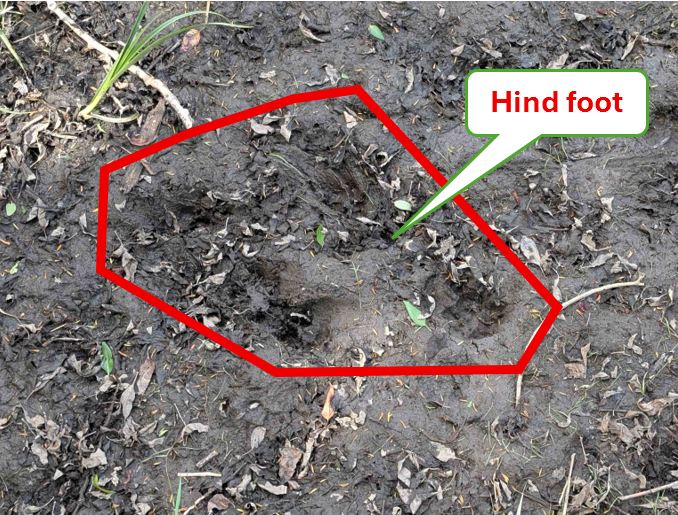
- Dimensions: The hind tracks are substantially larger, measuring between 5 and 7 inches (12.7 to 17.8 cm) in length.
- Toe structure: The hind foot possesses five long digits that are completely webbed to the tips of the toes.
- Grooming claws: The inner two toes of the hind foot feature a specialized, split or double claw. This anatomical structure functions as a comb to distribute waterproofing oils from the castor glands throughout the fur (Montana Field Guide, n.d.). While the split structure is rarely distinct in mud, the overall shape of the wide, webbed foot is a primary identification marker.
Gait and track patterns of beavers
When walking, the beaver exhibits a waddling gait. The hind foot typically steps near or directly on top of the print left by the front foot, creating an overlapping register. The straddle—the total width of the track trail from the outside edge of the left print to the outside edge of the right print—ranges from 8 to 12 inches (20.3 to 30.5 cm). A continuous, wavy line running down the center of the track sequence indicates a tail drag.
Feeding signs and foraging evidence
Beavers are obligate herbivores that consume the leaves, twigs, and inner bark (cambium layer) of woody plants, as well as various aquatic plants. Their foraging activity leaves distinct, unmistakable evidence on local timber.
Tooth Marks and cut angles
Beaver incisors are chisel-shaped and continuously grow throughout the animal’s lifespan. The outer enamel layer contains high concentrations of iron, which hardens the front of the tooth relative to the softer inner dentin layer. This structural differential ensures the teeth self-sharpen as they chew.
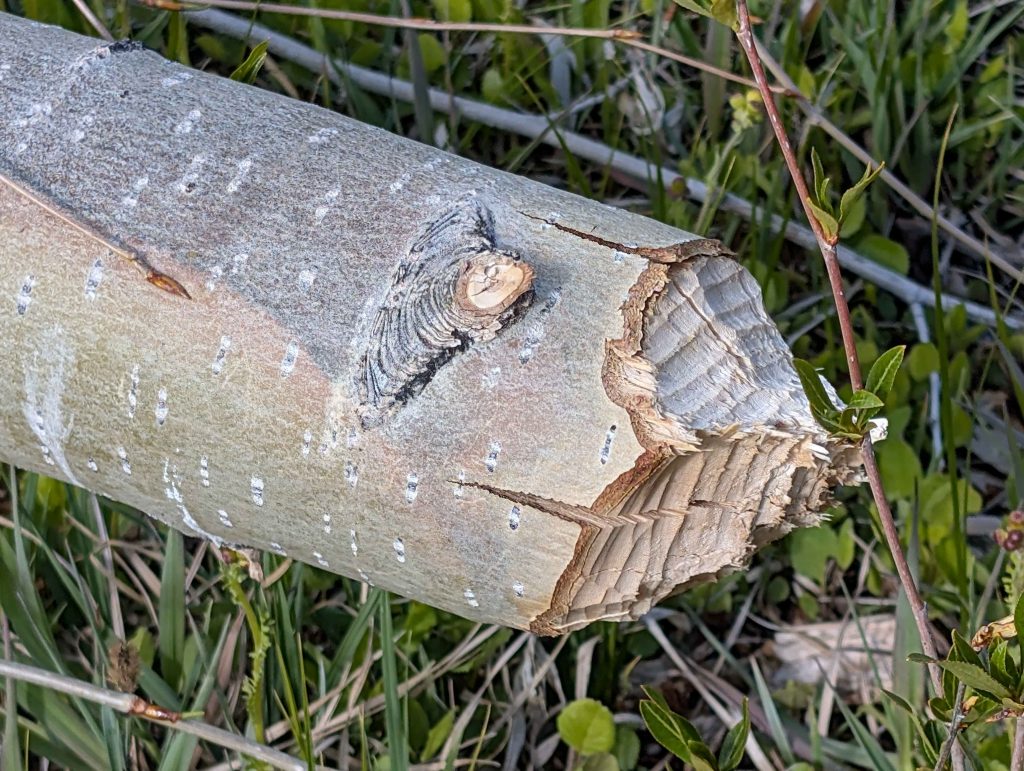
- Imprint characteristics: When felling a tree, a beaver leaf paired, parallel grooves in the wood. Each individual tooth mark measures approximately 1/4 inch (6 mm) in width.
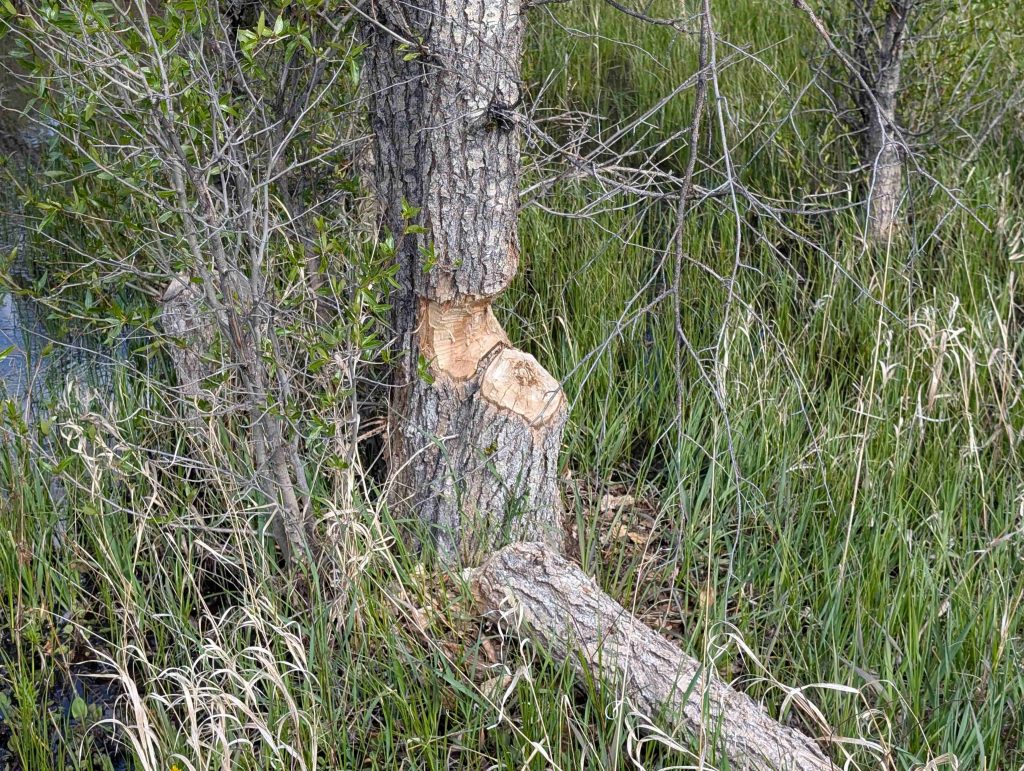
- Stump profiles: Stumps left by beavers have a characteristic conical or hourglass shape. The height of the cut generally ranges from 1 to 2 feet (30 to 60 cm) above the ground, corresponding to the animal’s reach when sitting on its hind legs.
Girdled Trees
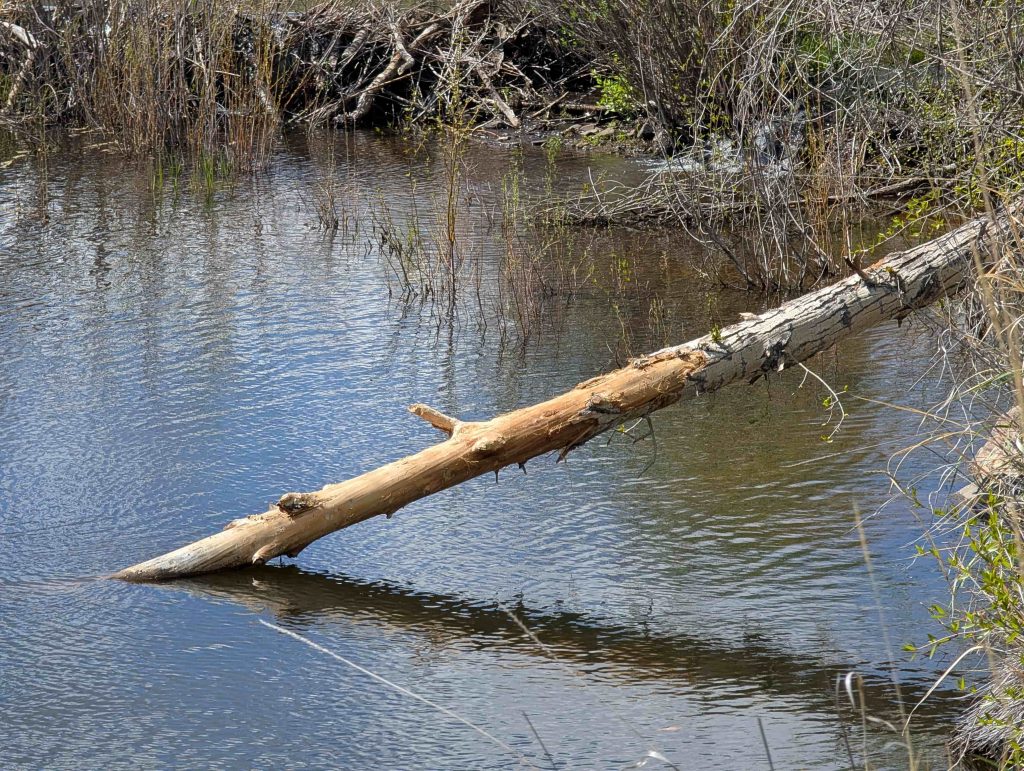
Not all trees visited by beavers are felled. In many instances, beavers remove only the outer bark to access the nutrient-rich inner cambium. This behavior results in a ring of stripped wood around the base of a standing tree, a condition known as girdling (USDA APHIS, n.d.). If the bark is removed around the entire circumference, the tree’s nutrient transport system is severed, eventually killing the tree.
Woodchips as age indicators
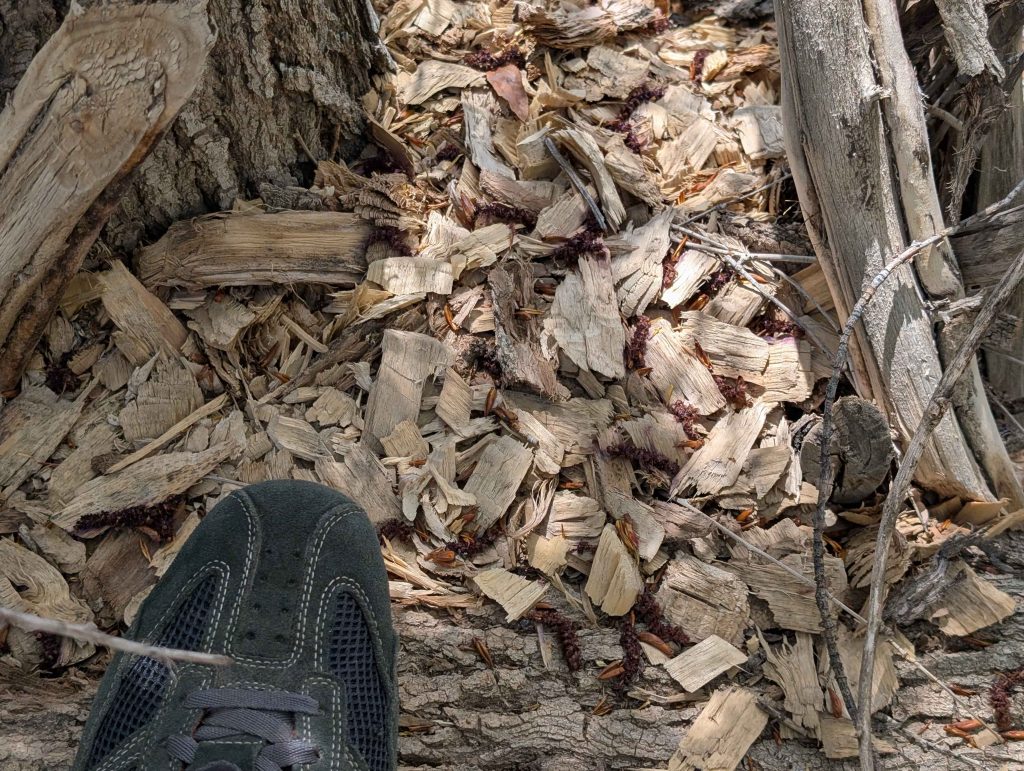
The wood flakes and chips left at the base of a cut tree provide a direct baseline for dating colony activity:
- Fresh activity (1–48 hours): Woodchips are light in color, highly moist, retain natural sap, and possess a strong wood odor.
- Degraded activity (weeks to months): Woodchips become dry, brittle, and turn a weathered gray or dull brown color due to oxidation and exposure to elements.
Structural indications of beaver presence
Beavers alter riparian biomes by constructing dams, residential lodges, and transport channels. The maintenance level of these structures indicates whether a territory is currently occupied.
Beaver dams
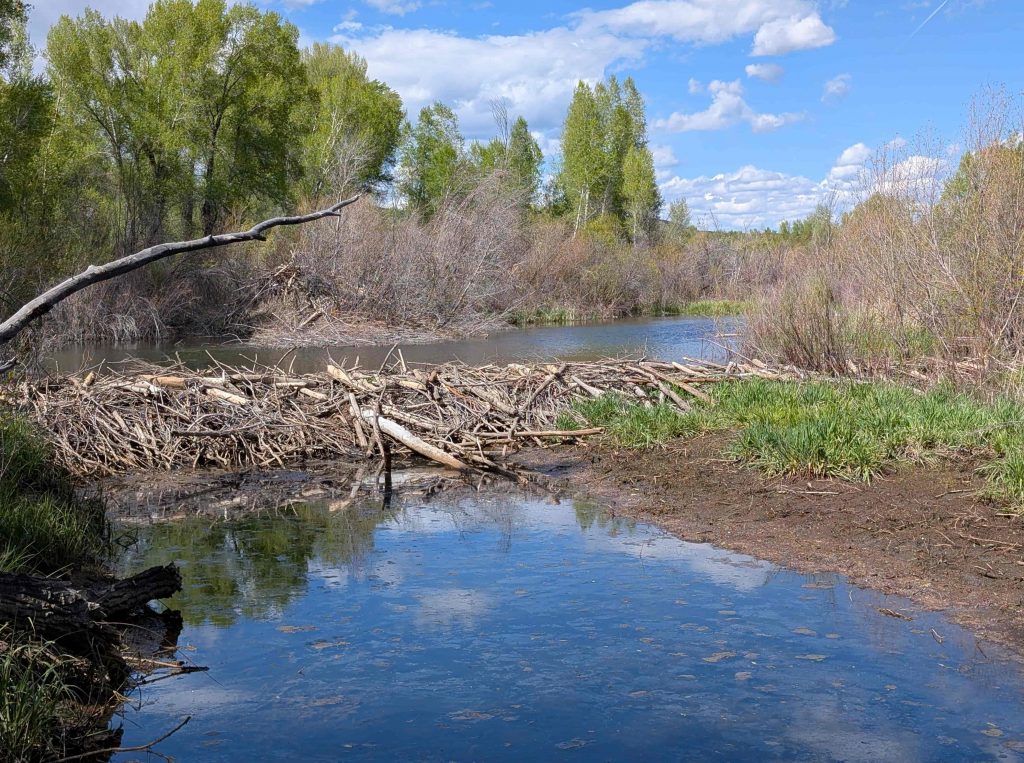
Dams are constructed from a combination of woody debris, stones, and mud scooped from the water channel. They are positioned across moving water systems to slow the current and raise water levels, creating a deep pool that provides protection from predators.
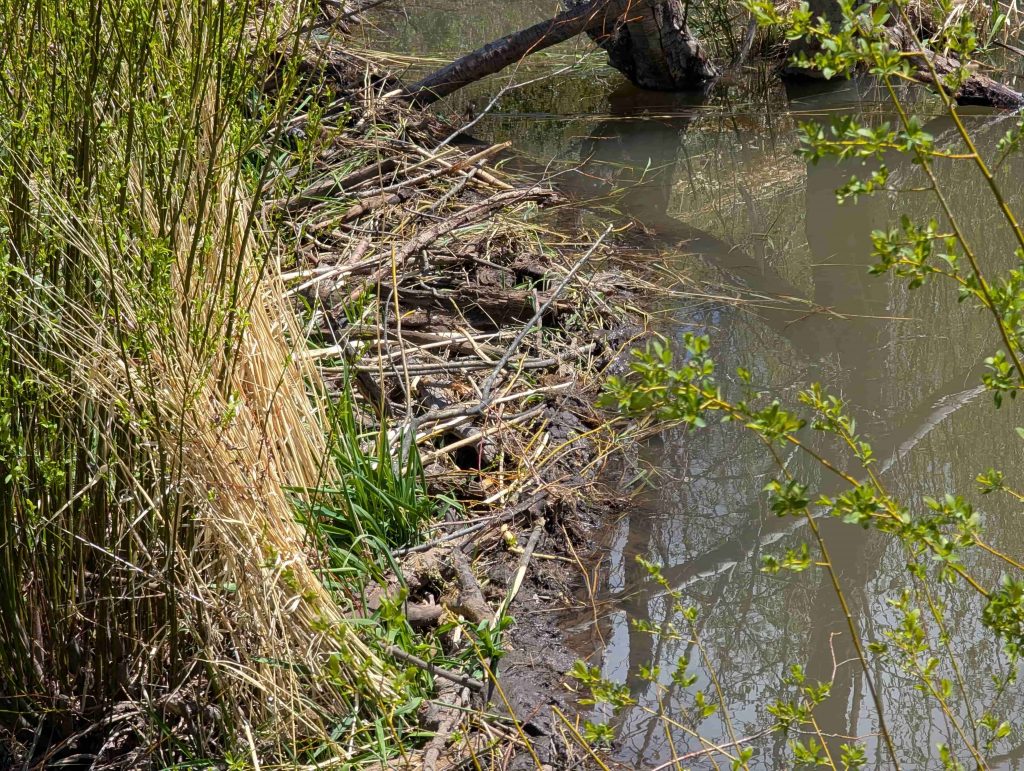
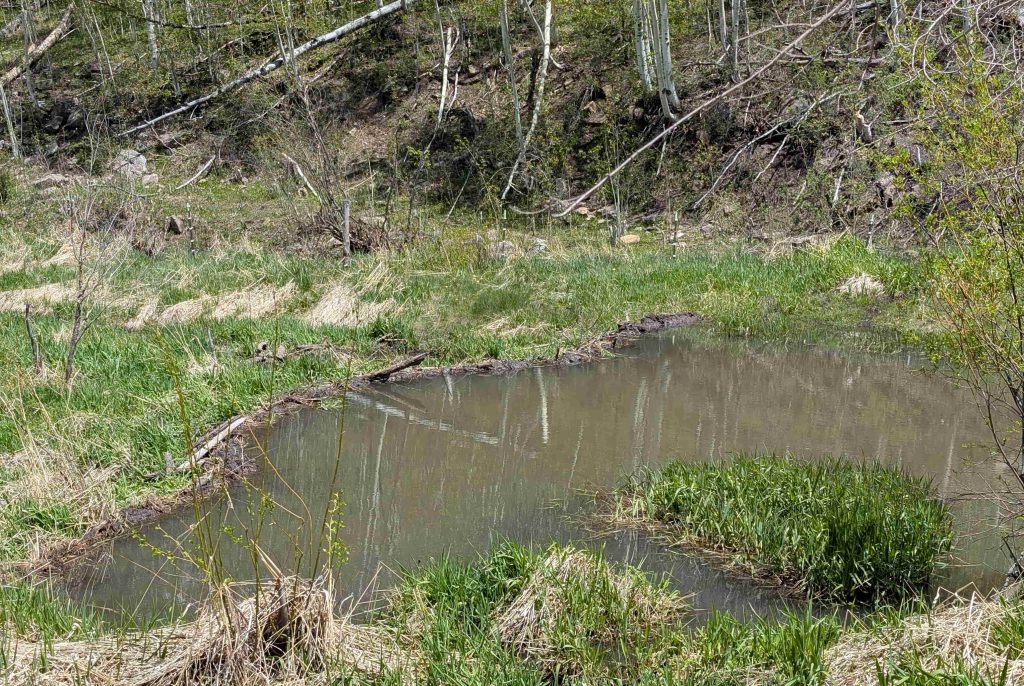
- Active status: An active dam is watertight, showing signs of daily maintenance such as wet mud packed into the upper crest and freshly cut branches woven into the downstream side (Wikar & Ciechanowski, 2023).
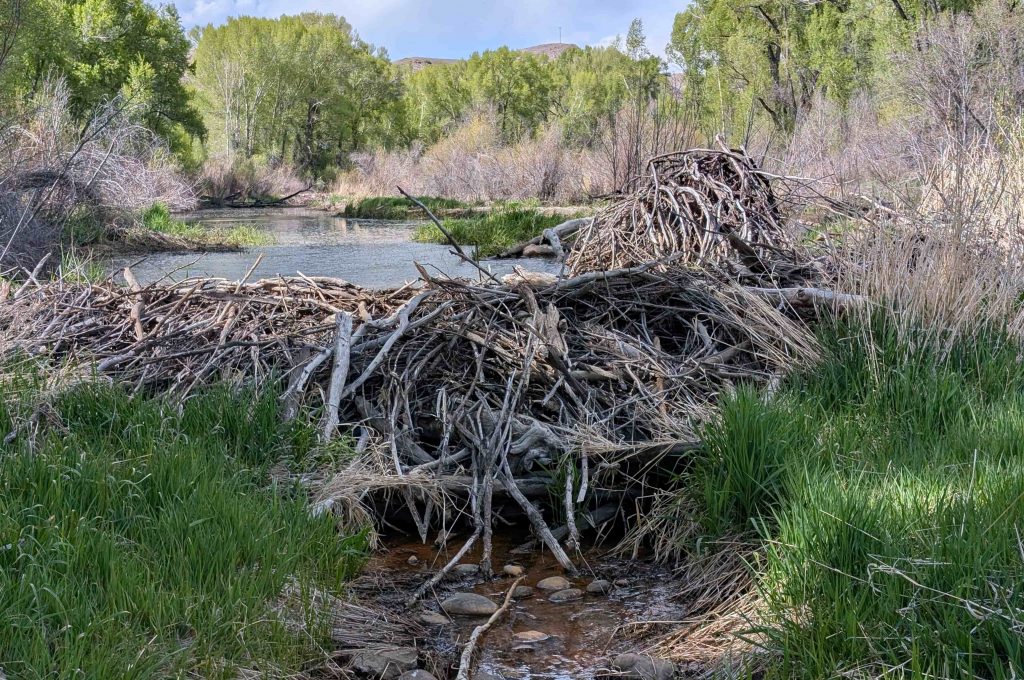
- Inactive status: Inactive or abandoned dams display breaching sections, drop in upstream water levels, and a lack of fresh mud. Vegetation or grass may begin to grow directly out of the drying mud layers.
Beaver lodges
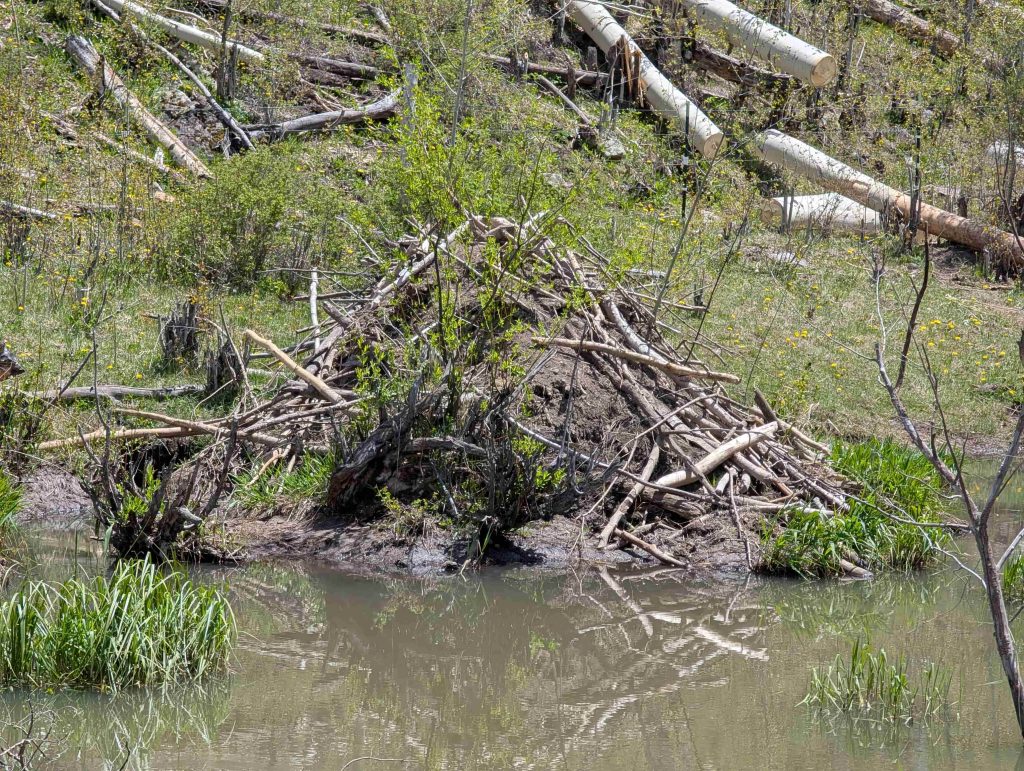
Lodges are conical structures built out of sticks and mud, typically situated in the center of the pond or against a secure bank. The interior contains an above-water living chamber with underwater entrance tunnels to prevent predators from accessing it.
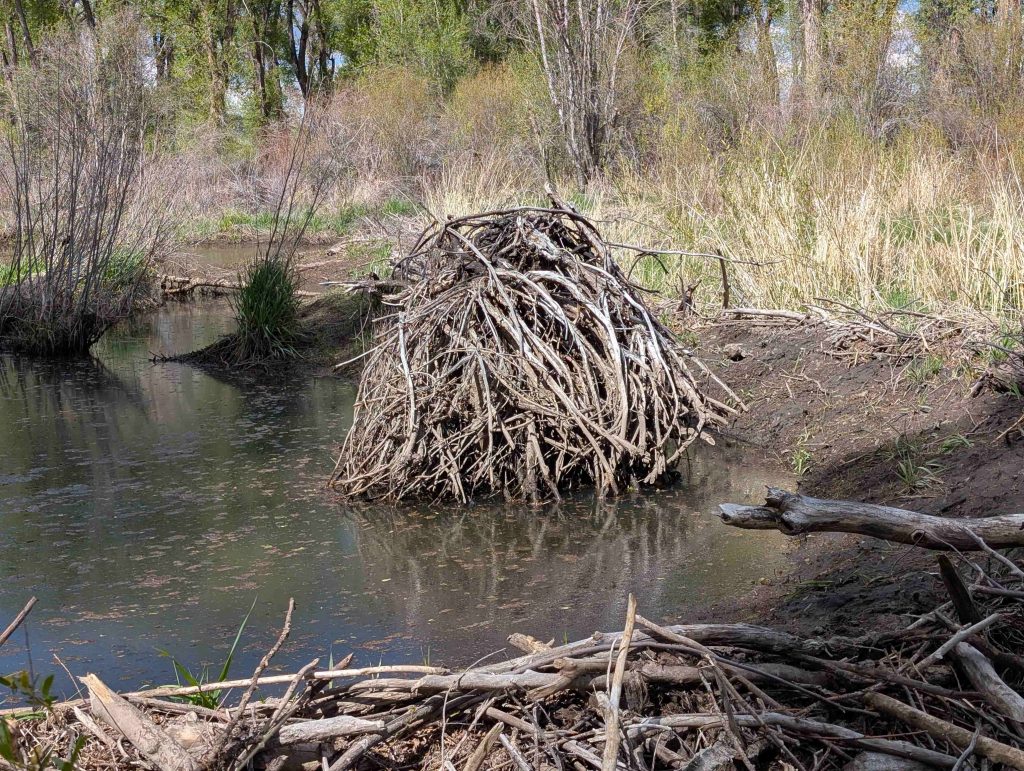
- Ventilation chimney: The peak of the lodge lacks heavy mud packing to allow for air exchange. In winter, active occupancy can be verified by watching for rising steam or melted snow around this top ventilation chimney.
- Food caches: During autumn, colonies construct a submerged pile of branches near the lodge entrance, known as a food cache (Doden et al., 2022). The presence of a submerged, unweathered branch pile in late fall confirms active overwintering.
Trail systems and aquatic infrastructure
Beavers are central-place foragers that transport heavy materials from terrestrial gathering zones back to aquatic safe zones. This movement pattern creates permanent infrastructure across the area.
Slides and feeding trails
As beavers repeatedly access specific foraging zones, they wear down the vegetation along the shoreline.
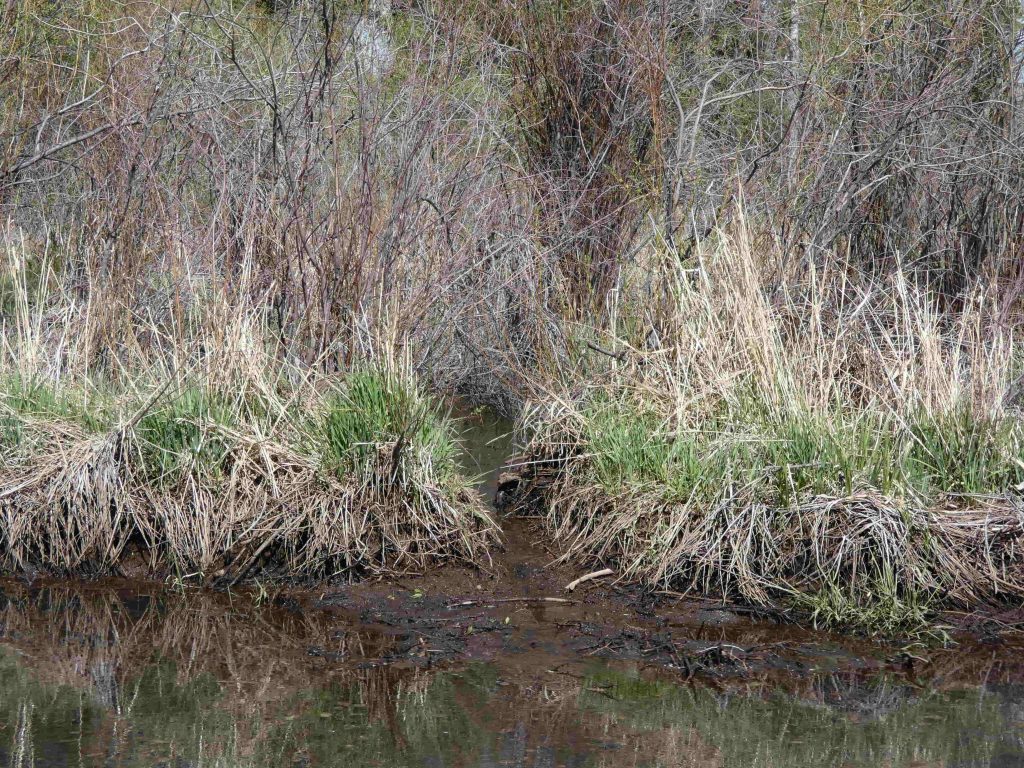
- Slides: On steep banks, this repetitive traffic creates slick, vertical mud chutes measuring 10 to 15 inches (25 to 38 cm) wide. These slides are completely devoid of vegetation and are kept wet by water dripping from the animals’ fur as they exit the pond.
- Feeding trails: On flatter terrain, these pathways extend perpendicularly from the water into the surrounding forest. They resemble well-defined paths but are distinguished by the presence of cleared twigs, dragged bark fragments, and occasional footprint impressions.
Canals
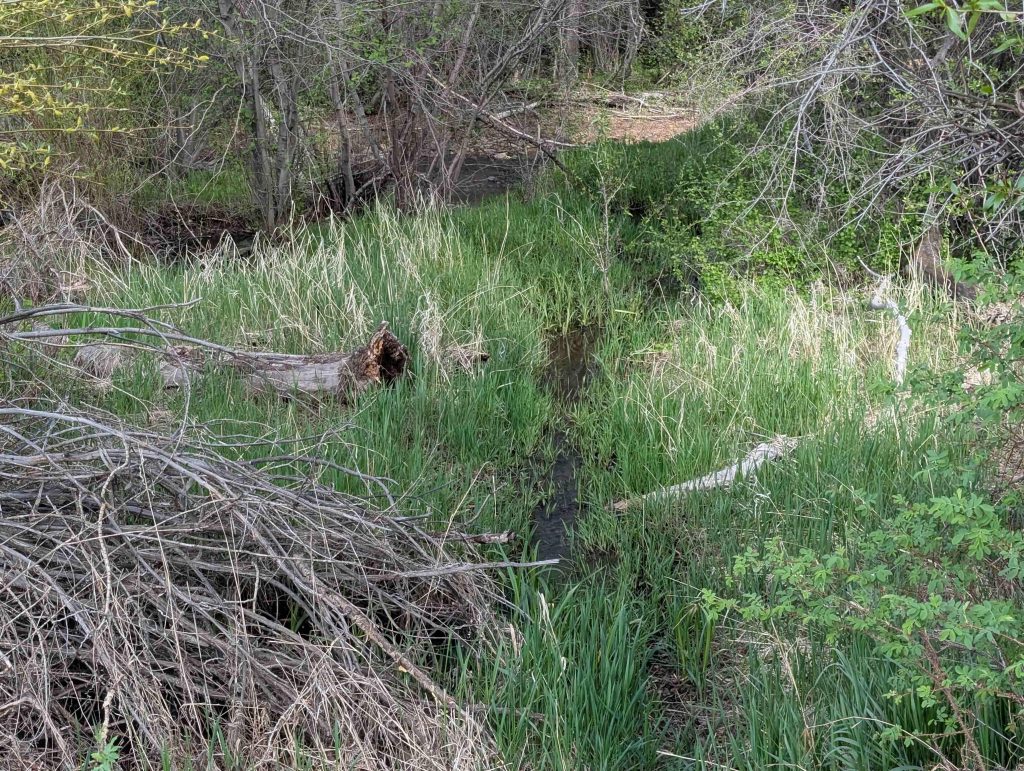
In wide, flat wetlands or shallow complexes, beavers actively excavate channels to extend their aquatic reach. These canals measure 1 to 3 feet (30 to 90 cm) wide and up to 2 feet (60 cm) deep. Canals allow beavers to float heavy wood sections back to the main pond rather than dragging them over land, significantly reducing energy expenditure and vulnerability to terrestrial predators.
Scent mounds and territorial signaling
Beavers establish strict territorial boundaries through olfactory signaling. Both male and female adults participate in marking behaviors along the perimeter of their ponds and core foraging areas (Rosner, n.d.).
Scent mounds are small, constructed piles of mud, decomposing leaves, and bottom sediment gathered from the floor of the water body or are remaining tree stumps. These mounds are situated immediately along the water’s edge or on small islands. They range in height from 2 to 12 inches (5 to 30 cm) and are typically spaced at irregular intervals along the shoreline.
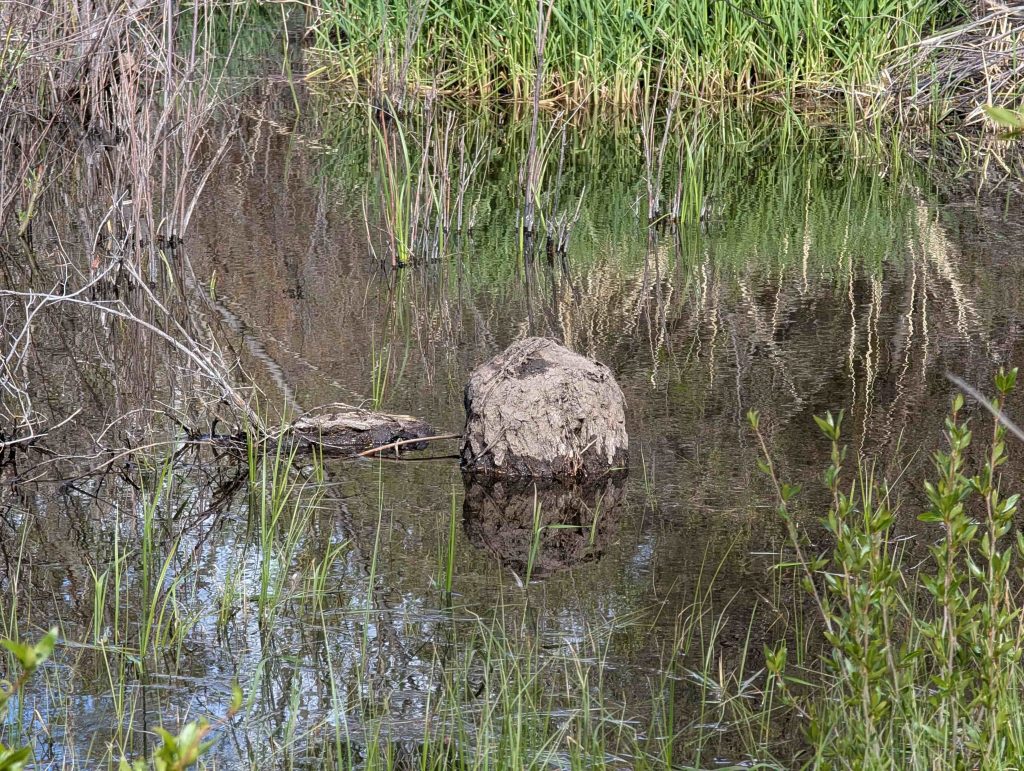
Once the mud mound is formed, the beaver sits on it and deposits secretions from its castor sacs and anal glands.
- Castoreum: A yellowish substance secreted by the castor sacs. It carries a distinct, pungent odor frequently described as a combination of vanilla, musk, and wood smoke.
- Anal gland secretions: These lipids vary in color and consistency based on the individual’s sex and unique chemical signature, allowing neighboring colonies to identify specific individuals (Montana Field Guide, n.d.). Freshly scented mounds appear wet and have a strong, noticeable aroma even to humans standing several feet away.
Summary of field indicators
To evaluate a riparian site for beaver presence, the following matrix can be used:
| Category | Primary Field Markings | Status Determination |
| Tracks | Webbed hind prints (5–7″), hand-like front prints, central tail drag. | Confirms recent traverse across exposed mud or sand. |
| Faeces and urination | Beavers scat and urinate under water; therefore, faeces pellets (secondary scat) are rarely found on land. | Disintegration of pellets determines age of droppings |
| Feeding | Conical stumps, parallel tooth grooves (1/4″ wide), bark stripping. | Moist, sap-filled woodchips indicate activity within 48 hours. |
| Structures | Mud-packed dams, conical lodges, underwater food caches. | Steam from lodge chimneys in winter indicates active occupancy. |
| Scenting | Shoreline mud mounds smelling of castoreum. | Indicates active territory defence and colony presence. |
Lessons learned about beaver tracks and signs:
- Front foot tracks are seldom seen in river mud, due to being registered by hind feet.
- Both front- and hind foot tracks are often obliterated by a sweeping action of the broad and flat tail.
- The most obvious signs of beaver activities are their conical lodges and freshly maintained dams.
- When populating new areas, beavers will normally not build dams but dig cavities in riverbanks.
- Fresh scenting with castoreum can be clearly smelled by humans.
.