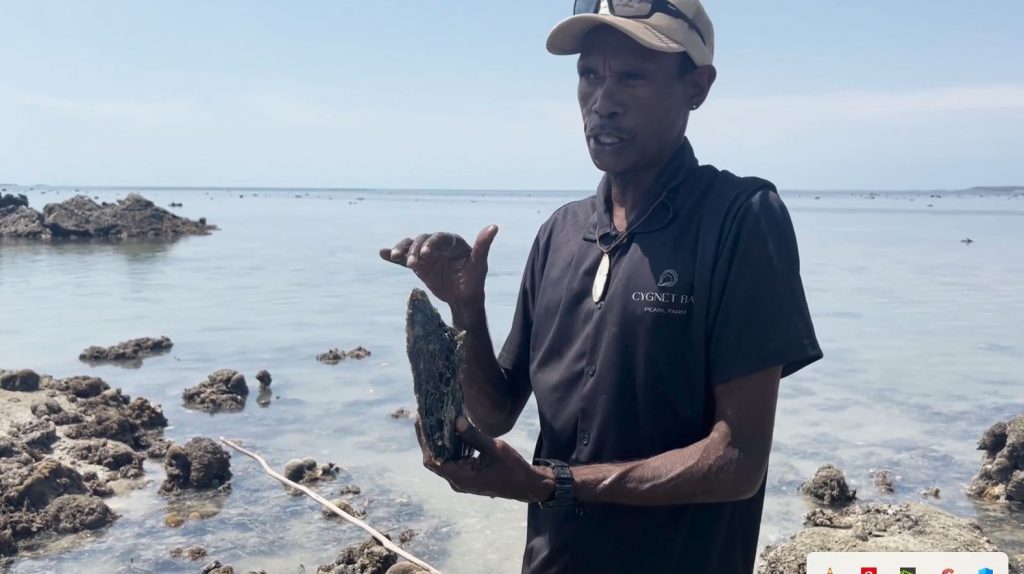
When we headed to the Kimberley coast of Western Australia, we worried about the obvious threats: saltwater crocodiles, box jellyfish, and the massive 10- to 12-meter tides. While walking with Terry Hunter on an exposed reef, we became aware, however, that a grave hazard lay stationary in the shallow waters. Terry is a highly experienced Bardi Aboriginal who, together with his father, has already taught Malcolm Douglas indigenous survival techniques.
Razor clam species around the Kimberleys
When the tide drops across the Cygnet Bay at Cape Leveque on the Peninsula north of Broome in Western Australia, it reveals vast reef flats. There, many razor-sharp bivalve mollusks known locally as razor clams (Atrina and Pinna species) are waiting for the unsuspecting beachcomber. Three species of pen shells occur, which are all called ‘Razor shells’ and which are the following:
Bicolored Razor Clam (Pinna bicolor)
This is the most widespread and abundant razor clam species in the region. They have large, thin, elongated wedge- or fan-shaped shells that can grow up to 40–50 cm in length. The shell color ranges from a light yellow-brown to a dark, silvery greyish-black, but the color is often not visible due to a heavy infestation of marine life on its shells. Bi-colored razor clams bury themselves narrow-end-down into the intertidal mudflats, sandbanks, and seagrass beds (such as those in Roebuck Bay near Broome).
Other pen shell species around the Kimberleys
While Pinna bicolor is the most ubiquitous, the tropical waters of the Kimberley also host close relatives within the same family that share similar habitats:
The Prickly Pen Shell (Pinna muricata) is generally smaller than P. bicolor, with small, radiating ridges covered in tiny spines or prickles on the shell’s exterior.
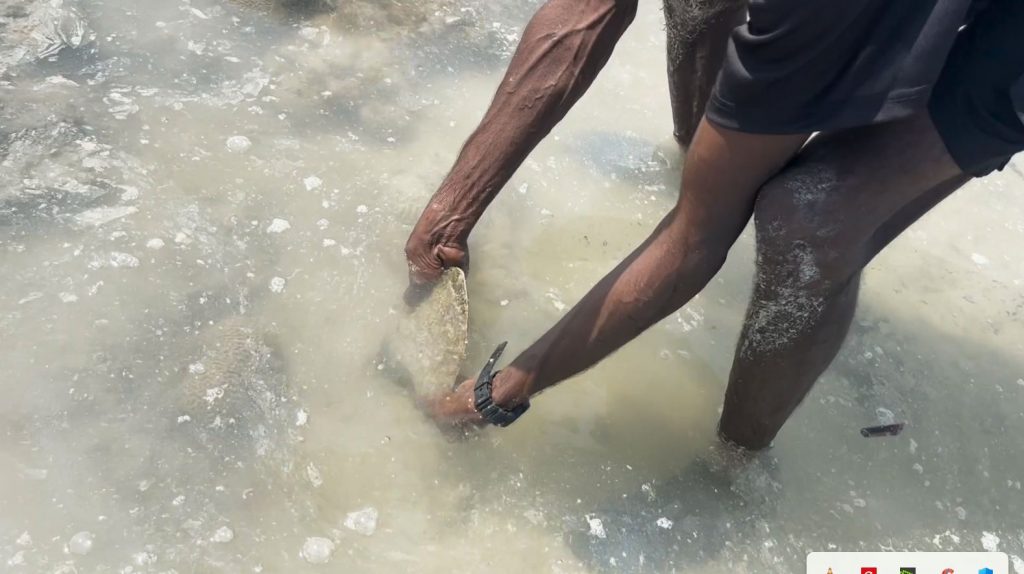
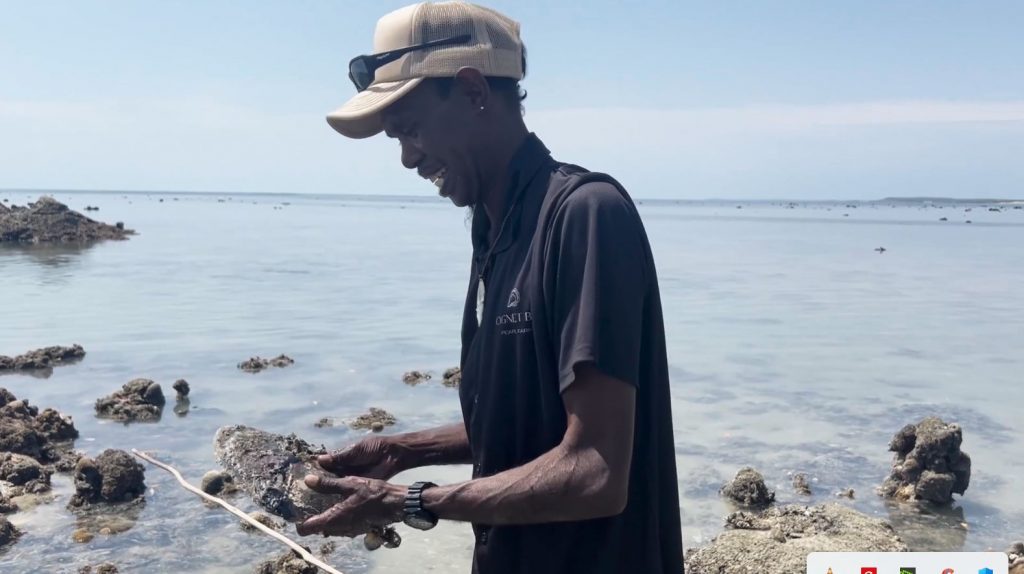
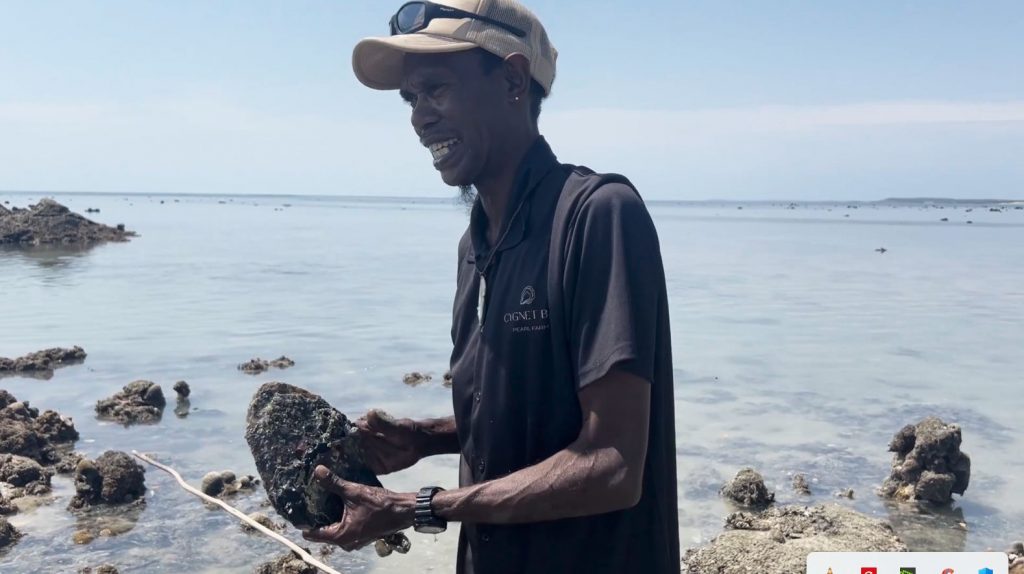
And the Black Pen Shell (Atrina vexillum) is much stouter, darker, and more broadly fan-shaped, and can also be found anchored in northern tropical waters. All photos in this article show such a Black pen shell.
Razor clam fixation to the ground
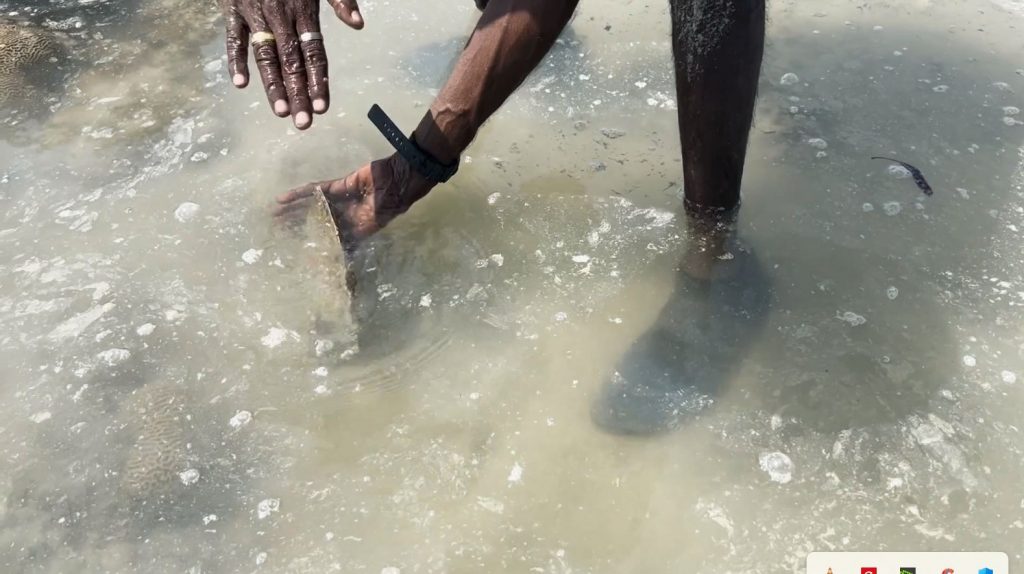
To survive the high-energy tidal shifts of Northwest Australia, razor clams anchor themselves vertically. They bury the long, wedge-shaped end of their shells deep into the sand, mud, or dead coral rubble, and then secrete tough, hair-like fibers called byssus threads that glue them firmly to the underlying reef structure.
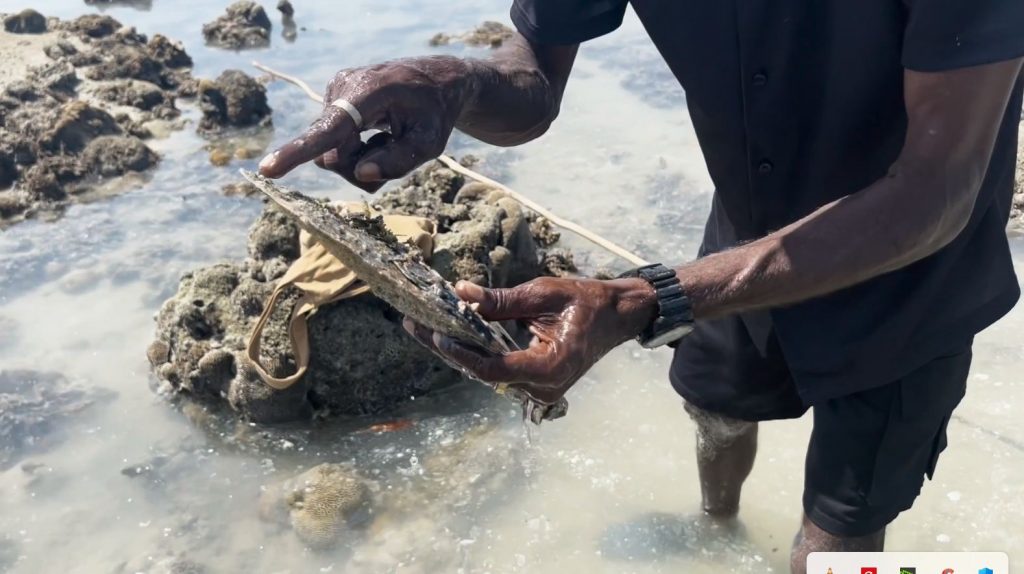
The top edge of the shell sticks out slightly above the seafloor. As the clam grows, this edge becomes highly calcified, brittle, and sharp. Because the shells are frequently covered in fine silt or low turf algae, they blend into the reef. You rarely can see them before stepping on them.
Influence of the extreme tides at the Kimberleys
The Kimberley’s hydrology increases the danger. The region features 10–12 m-high semi-diurnal tides that move masses of water in a few hours. Places that are underwater at high tide suddenly become dry, walkable platforms at low tide. This tempts fishermen and locals to walk out onto the reefs to forage or explore. However, the receding water leaves a slick surface of macroalgae and mud. If a walker slips or steps down with full body weight onto a hidden razor clam, the shell does not bend. It acts as a fixed stone chisel.
Which footwear to use on the reef
Terry’s kids had to learn from a young age onward which mollusks, fish, and other reef inhabitants can be collected and eaten. They know about 35 different species of mollusks and are aware from the first day on the reef of how to spot and avoid razor shells. And they only walk barefoot. This is not advised for people who did not grow up under this threat. Standard neoprene reef booties, rubber thongs, or light canvas sneakers do not protect against razor shells. The calcified edge of a mature clam can slice straight through soft vulcanized rubber or foam soles. True reef walking requires stiff, puncture-resistant, heavy-duty soles.
Tropical marine infections
A deep cut to the foot is a medical nightmare in the bush, but the real danger in the tropics is the bacterial load. Kimberley mudflats and warm coastal waters harbor aggressive marine bacteria, including Vibrio vulnificus and Pseudomonas species. When a foot drives down onto a razor clam, the brittle shell often shatters under the pressure. This embeds microscopic, sharp shards of dirty shell deep inside the wound.
The resulting infections thrive in tropical warmth and can progress to severe tissue necrosis within 24 hours. Such an infection can only be cured by emergency medical care and, if possible, intravenous antibiotics. But in these remote areas, this kind of medical help can be far away. Such a severe foot injury can make it impossible to walk alone and escape the tidal zone. This further exacerbates the problem.
Bushcraft protocol for coastal foraging on tidal reefs
If you walk the low-tidal reefs of Northwest Australia, use the following field protocols to minimize risk.
Walking style and outfit
- Don’t venture out alone. Have a buddy with you.
- Stiff-soled footwear: Wear heavy canvas or leather work boots with thick, rigid rubber soles.
- The “Reef Shuffle”: Do not take high, stomping steps. Keep your feet low and slide or shuffle them forward. This allows you to detect vertical shell edges with the side of your boot before placing your weight down.
- Use a wading staff: Carry a sturdy stick or pole. It provides a third point of balance on slick algae and helps prevent falls.
Field first aid
If a companion is cut, treat the injury immediately before the tide returns:
- Evacuate the reef: Move the injured person back to the boat or high ground before the incoming tide cuts off your path.
- Flush the wound: Irrigate the cut immediately using clean freshwater. Never use ambient seawater, which introduces more bacteria.
- Remove the shards: Use sterile tweezers to check for and remove any embedded fragments of the shattered shell.
- Disinfect: Apply a strong antiseptic (e.g., iodine-based) deeply into the clean wound.
- Dress and elevate: Bandage the foot securely, keep it elevated to manage swelling, and monitor for early signs of infection (increased redness, heat, or throbbing) and seek professional medical help as soon as possible.
Turning the table
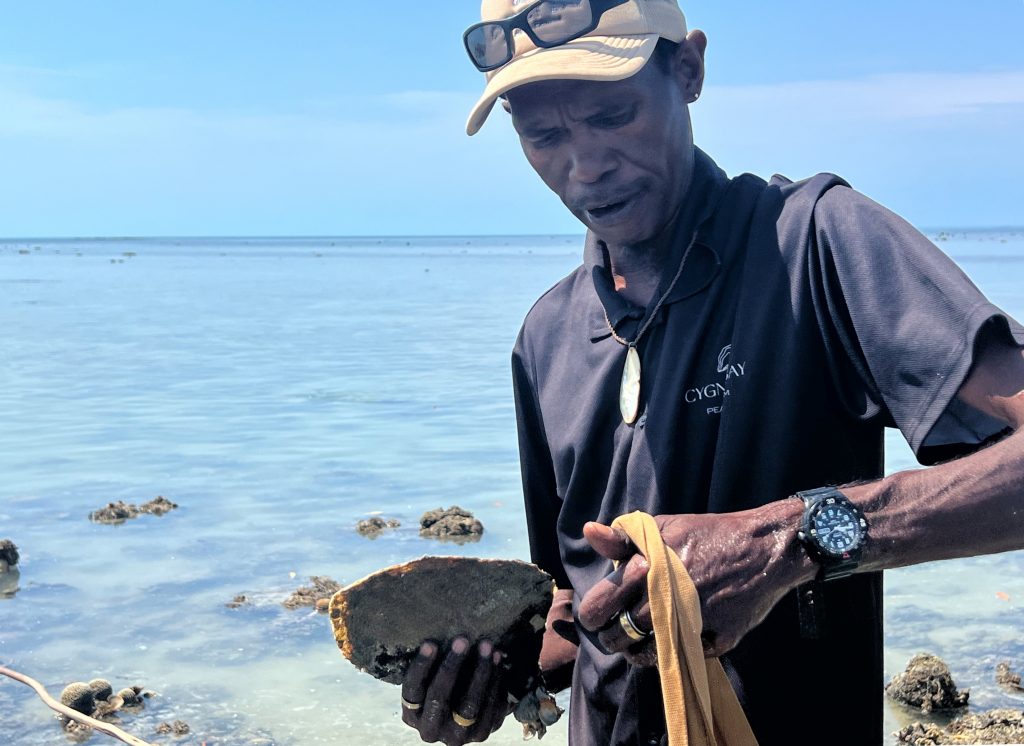
In case a razor shell is found before you or somebody else gets injured, the clam can be easily pulled from the seabed and used as food. Although the shell is huge, there is only one edible part inside: the posterior adductor muscle. That is the meaty, large muscle at the lower end of the shell. At the upper end, the anterior adductor muscle is situated and is too small to be eaten. The size, light color, appearance, haptic structure, and taste of the posterior muscle are very similar to those of a scallop. Surrounded by the posterior muscle are intestines and other inedible parts, which are dark in color and should be discarded. An interesting and educational video about turning the tables on razor clams is available here.
Conclusion
Beach combing at the Kimberley coast requires preparation and self-reliance. Its hazards are manageable if you understand how they function. By using a tidal table, walk with a buddy; wearing the right footwear, moving deliberately, and knowing how to treat tropical wounds, you can safely forage in the region’s intertidal reefs and environments.
Lessons learned about the danger of razor clams:
- Don’t walk alone when foraging on the coast.
- Always wear reef shoes with sturdy soles.
- Apply the ‘Reef Shuffle’ when walking.
- If cut by a razor clam, apply the first aid steps, as laid down above.
- In case you walk repeatedly on the same reef, pull out any razor clams you find and bring them home for cooking.
- Razor clam muscles are the poor man’s scallops.
Essential statement
We acknowledge the Bardi and Jawi people as the Traditional Custodians of the sea country and tidal reefs of Cygnet Bay and the Dampier Peninsula, and recognize Bardi Elder and cultural guide Terry Hunter for sharing traditional ecological knowledge on identifying, navigating, and harvesting intertidal razor clams.
.