Description of the location
My friend, Shaik Reismann, and I visited Kampung Yum in Perak state, Malaysia, to learn from the Temiar Orang Asli people’s traditional junglecraft skills and knowledge. Shaik himself also serves as the junglecraft trainer for the Community Rangers (Renjer Komuniti) of the RIMAU NGO, which specializes in preserving and protecting the last remaining Malayan tigers. And one of his Community Rangers is Bakri, our point of contact at Kampung Yum.
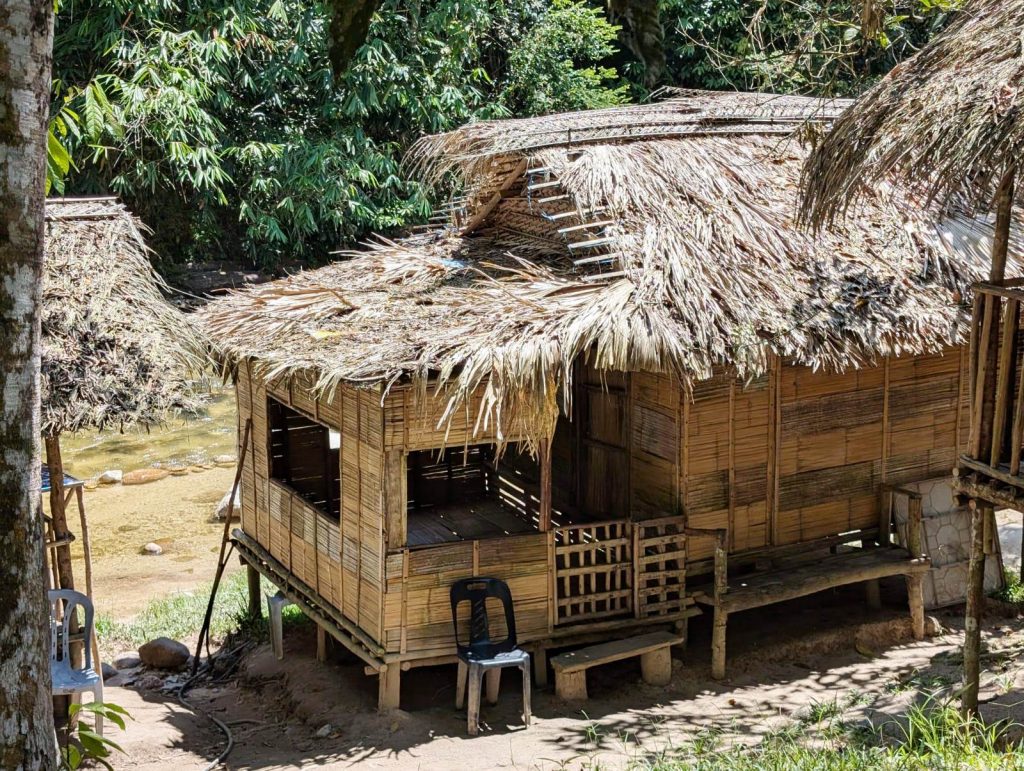
This village (Kampung) is part of Pos Yum, which is about a one-hour drive from Sungai Siput in the Malaysian state of Perak. Within the eight separate villages that make up Pos Yum, around 800 Temiar Orang Asli people live.
The creek and its fish species
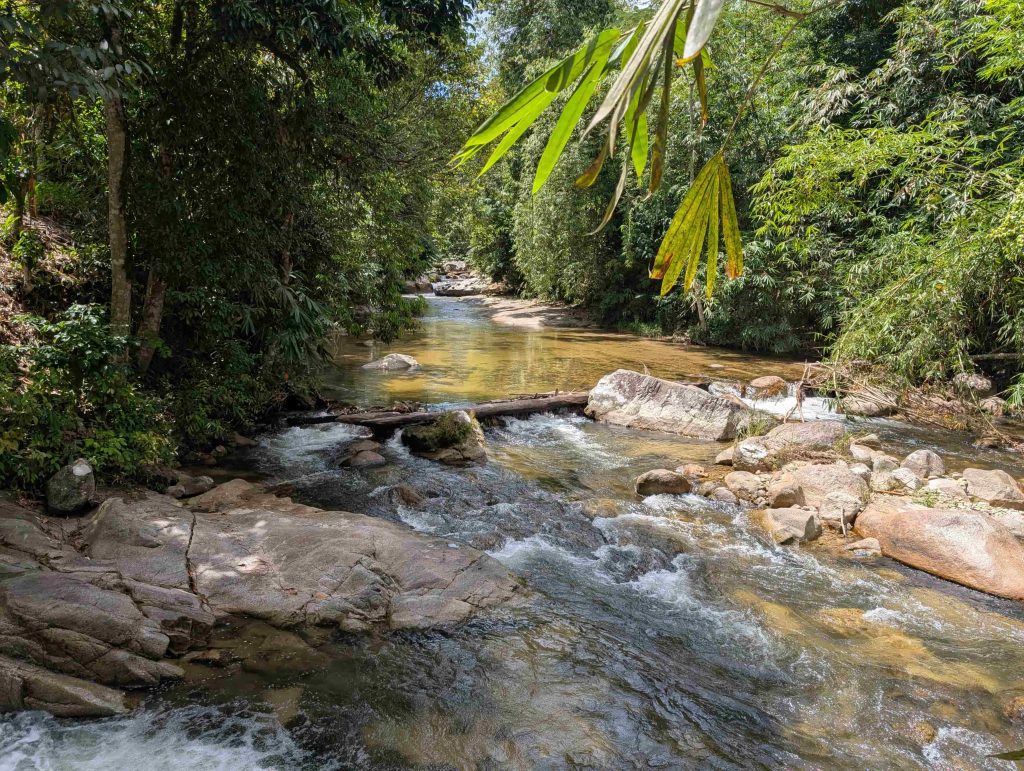
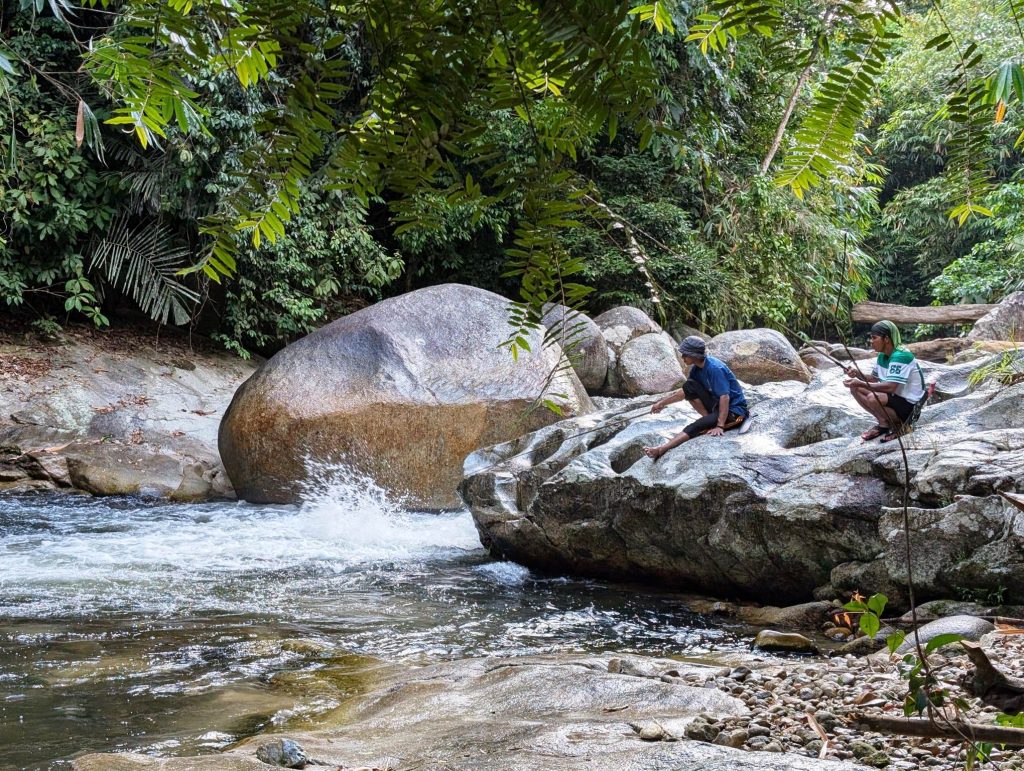
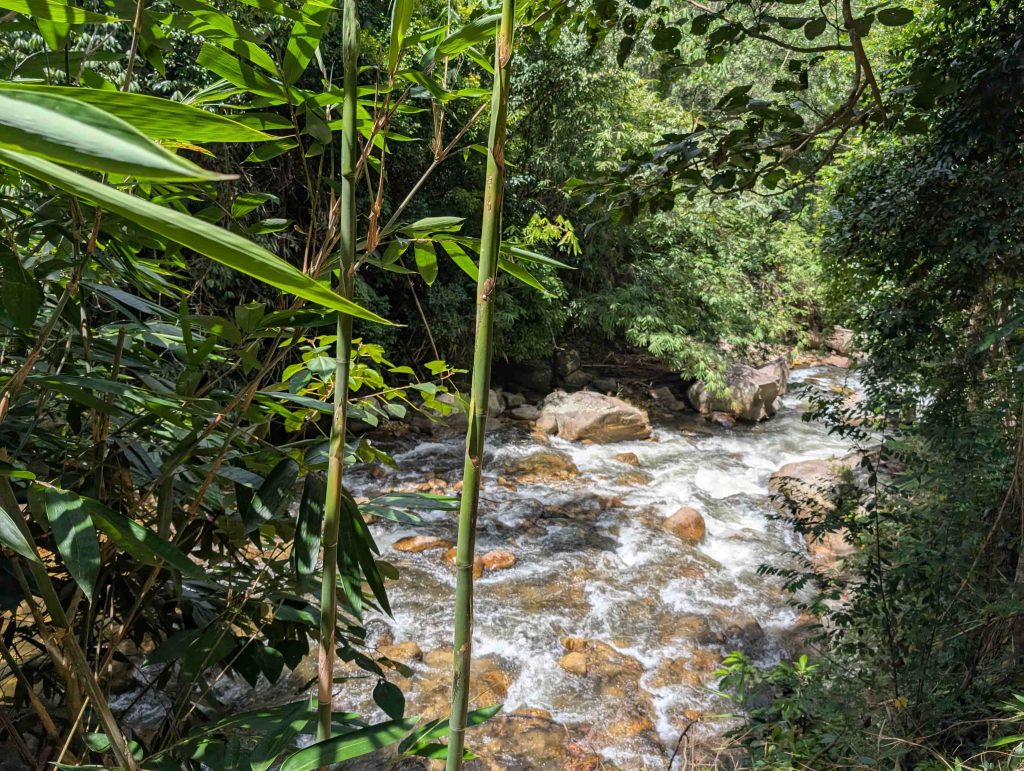
The creek flowing next to the Temiar Orang Asli settlement of Kampung Yum is Sungai Yum (Yum River). Malays call ‘Sungai’ all kinds of flowing water bodies, whether rivers, creeks, or brooks, as well as the villages next to them. Because it is a fast-flowing, clean, and cool upland creek located deep within the rainforest foothills, it is a prime habitat for freshwater mountain fish.
The dominant fish species occurring in Sungai Yum include:
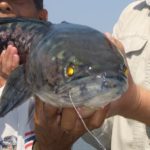
- Ikan Tengas (Copper Mahseer / Neolissochilus soroides): This is the most famous and abundant species at the upland Yum Creek.
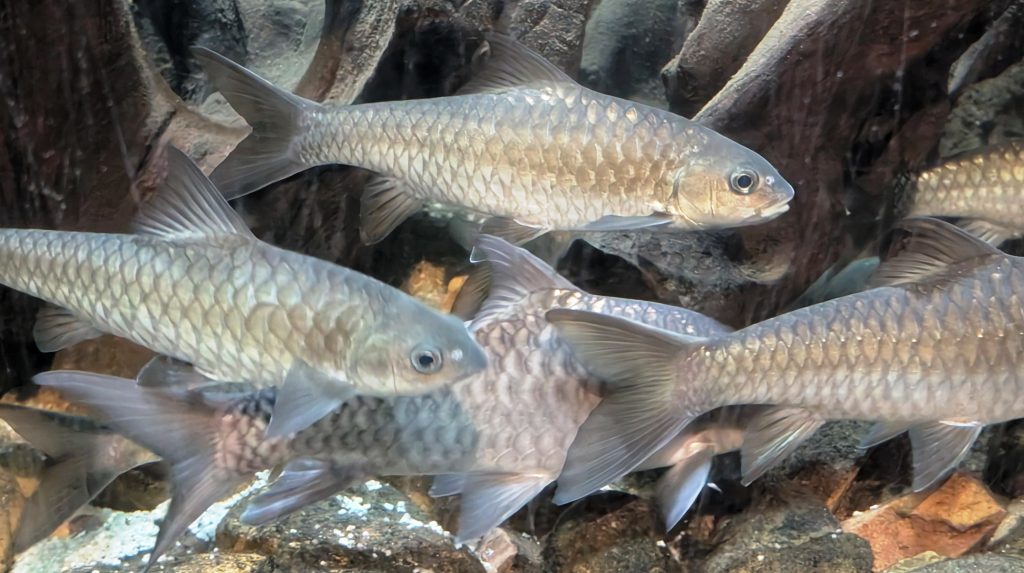
- Ikan Kelah (Malayan Mahseer / Tor tambroides): Often called the “King of the River,” smaller or medium-sized Kelah are found in the deeper pools (lubuk) of Yum.
- Ikan Sebarau (Hampala Barb / Hampala macrolepidota): A predatory cyprinid commonly caught in the clear running waters of Perak’s forest streams.
- Various Rasboras and Minnows: Smaller species, such as Barbodes binotatus (Ikan Putih/Common Barb) and local Rasbora species, inhabit the shallower margins of the creek.
Tengas habitat and behavior
Tengas are specialized torrent fish, meaning they are built specifically for fast, turbulent water, and they travel much further upstream into the mountains than most other fish. They thrive in narrow, rocky, high-gradient headwater creeks and brooks where the water is chilly, clear, and full of rapids.
These fish are opportunistic omnivores. They primarily graze on algae growing on the river rocks, but they also feed on fallen fruits, seeds, and aquatic insects. But large Tengas are notorious night feeders. While smaller ones can be caught during the day, the large Tengas leave their deep hiding spots under giant boulders to hunt in the shallows only right after the sun goes down. Tengas do not nibble. Because they hunt in fast currents, they hit hard and run instantly to prevent the food from washing away.
Because they live in clean, untouched headwaters, they are highly sensitive to logging, mud siltation, and pollution. Finding a healthy population of Ikan Tengas is a sure sign that the surrounding mountain jungle biosphere is healthy.
Traditional fishing techniques
The following two fishing methods are used by the Temian Orang Asli people in Kampung Yum to catch Tengas.
Natural bait drifting and bottom fishing
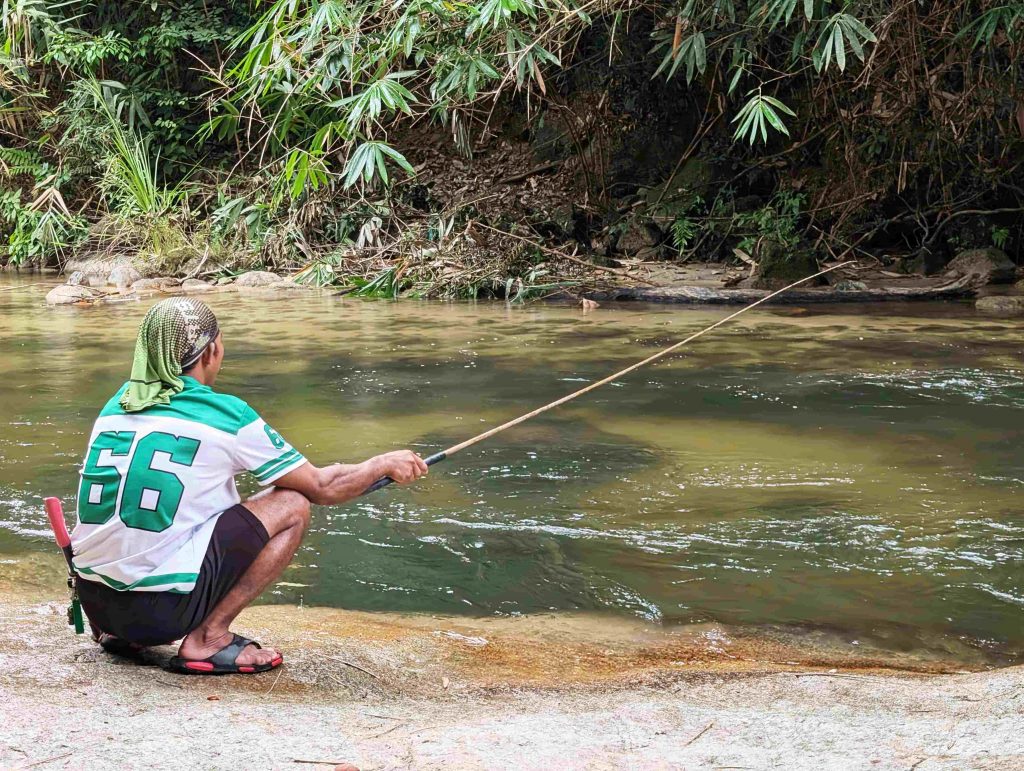
This is the most popular traditional method used by the locals to target Tengas, particularly around boulders and deep river pools (lubuk). Because Tengas love fast currents, the Temian Orang Asli anglers use an ultra-light setup with a very small home-made reel on a lightweight rod.
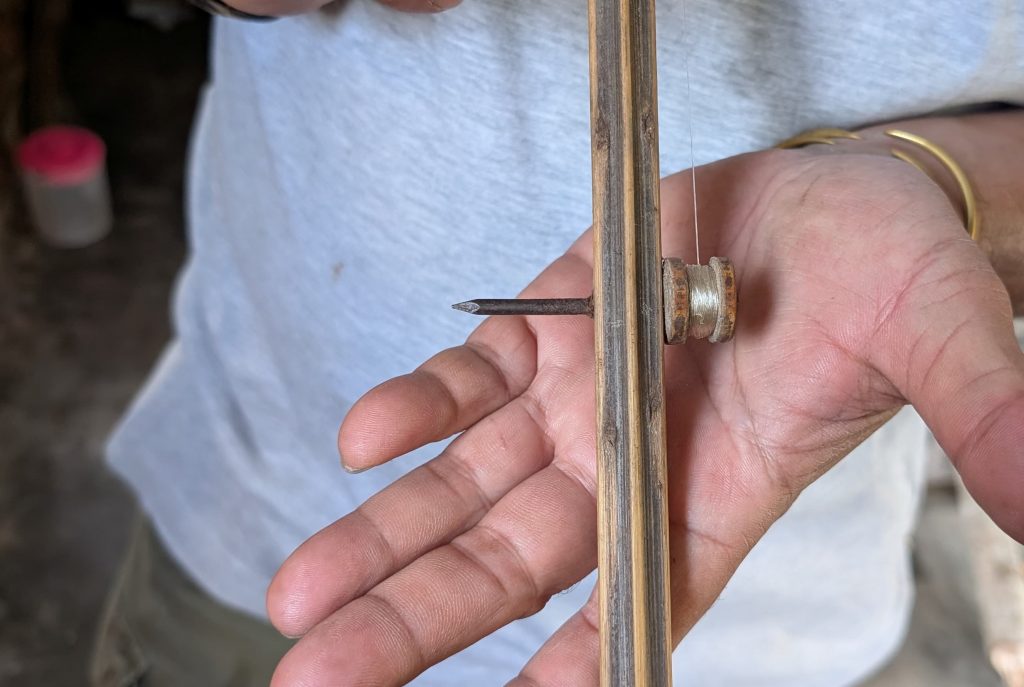
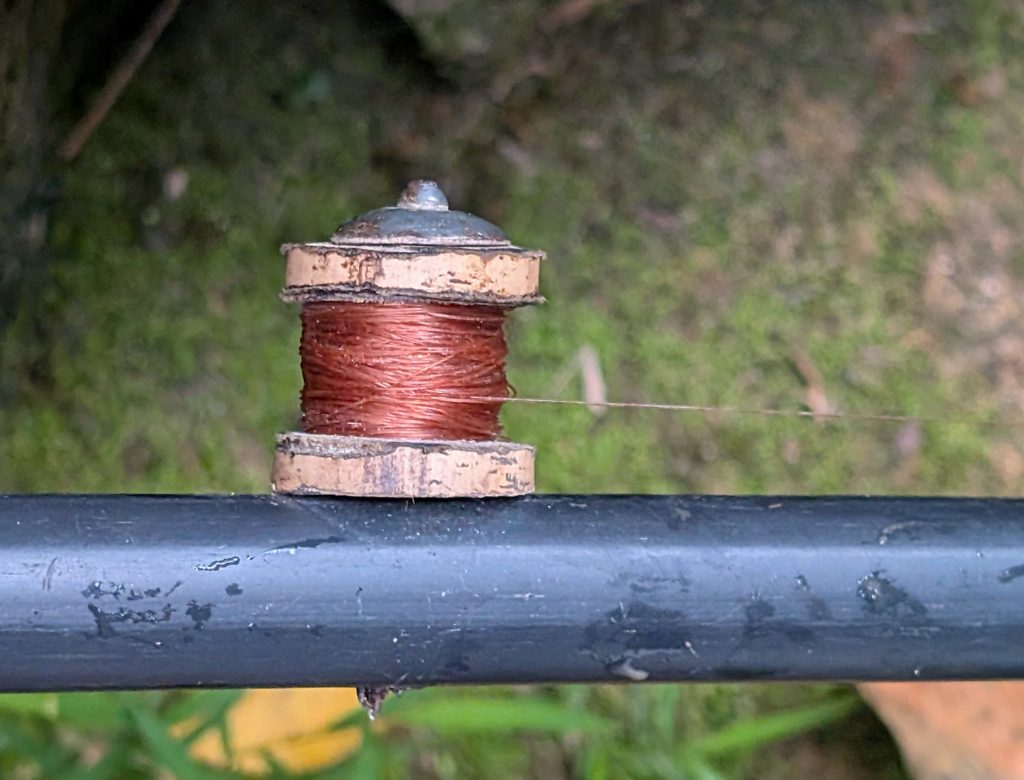
They use a small (1 cm long), running, olive-shaped lead sinker and a #6-10 hook, knotted directly onto the main line. The baited hook will be dropped upstream or behind large boulders where the water creates an eddy. It will drift naturally with the current right into the hidden spots where Tengas wait for food. This is very similar to trout fishing in the mountain brooks of my home in Austria, but with a larger, running sinker olive. Here and there, it is important not to show one’s silhouette next to the creek to avoid spooking the fish.
Baits
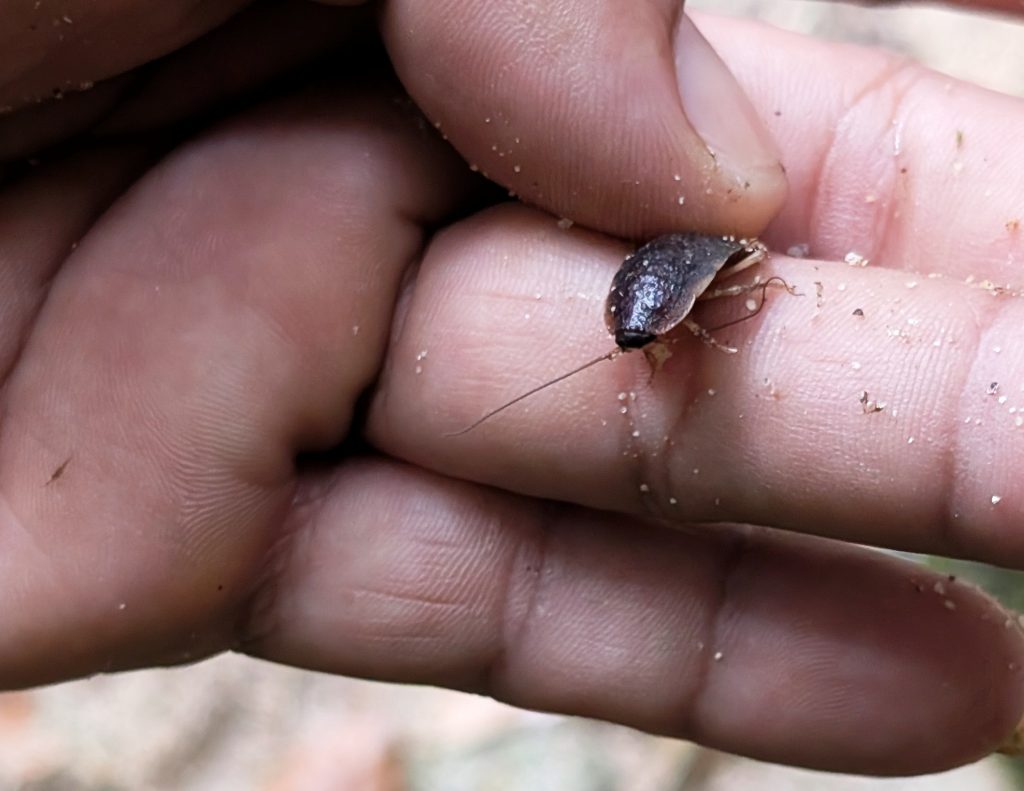
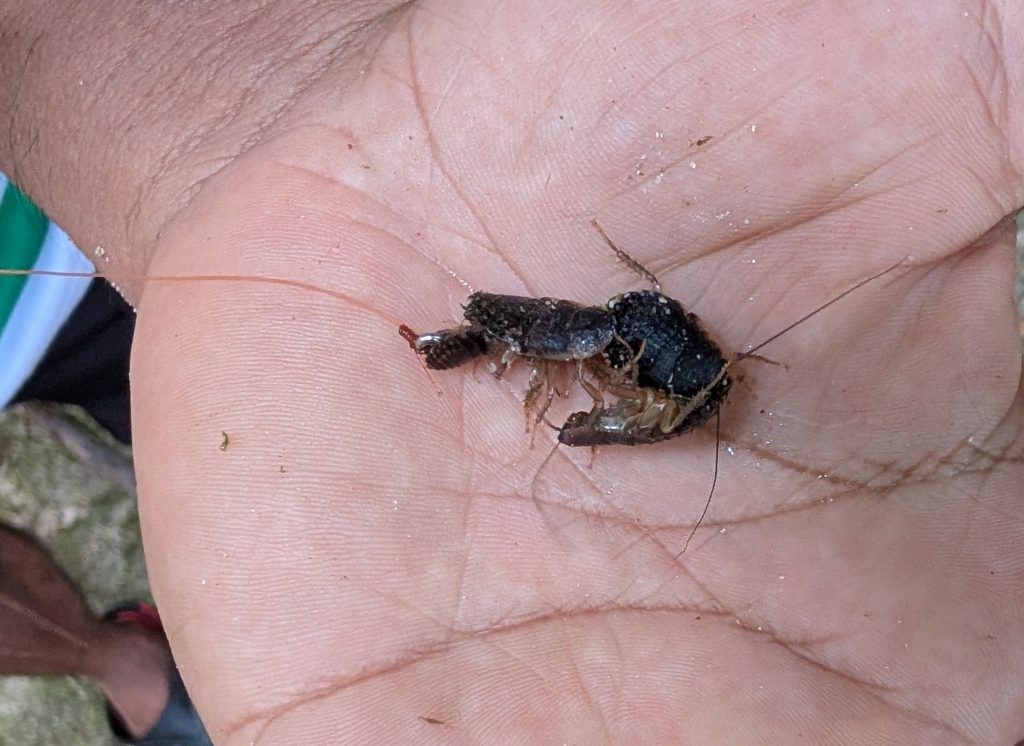
The best baits are fermented oil palm fruits (Sawit Peram), various ripe, wild fruits, and insects. The insects are best caught directly at the water’s edge, where aquatic isopods, various worms, and other arthropods are found. But also, grasshoppers, crickets, and earthworms work well. When wild fruit trees, e.g., figs, drop their fruit into the river, dropping a simulated or real wild fruit at a high angle into pools or calm waters is highly effective.
Traditional Sawit Peram making
Tengas (like Kelah) have an incredibly sharp sense of smell, and the pungent, sour, and intensely oily aroma of fermented oil palm fruits mimics the wild fruits that naturally drop into Perak’s jungle rivers.
- Ripe palm oil fruits are boiled for 20–30 minutes, until the outer skin softens and the orange oil begins to coat the surface of the water. Then let them cool completely.
- Place the boiled fruits in an airtight container and mix them with a bit of shrimp paste (Belacan). This starts the fermenting process.
- The sealed container must now be placed in a warm, dark place and opened regularly to release the developing fermentation gases.
- The bait can be used after the first 3 days, depending on the surrounding temperature. After about 7 days of fermentation, the fruits become very pungent and oily and are used at this stage to catch older fish sitting in deep pools.
Traditional Cast Netting
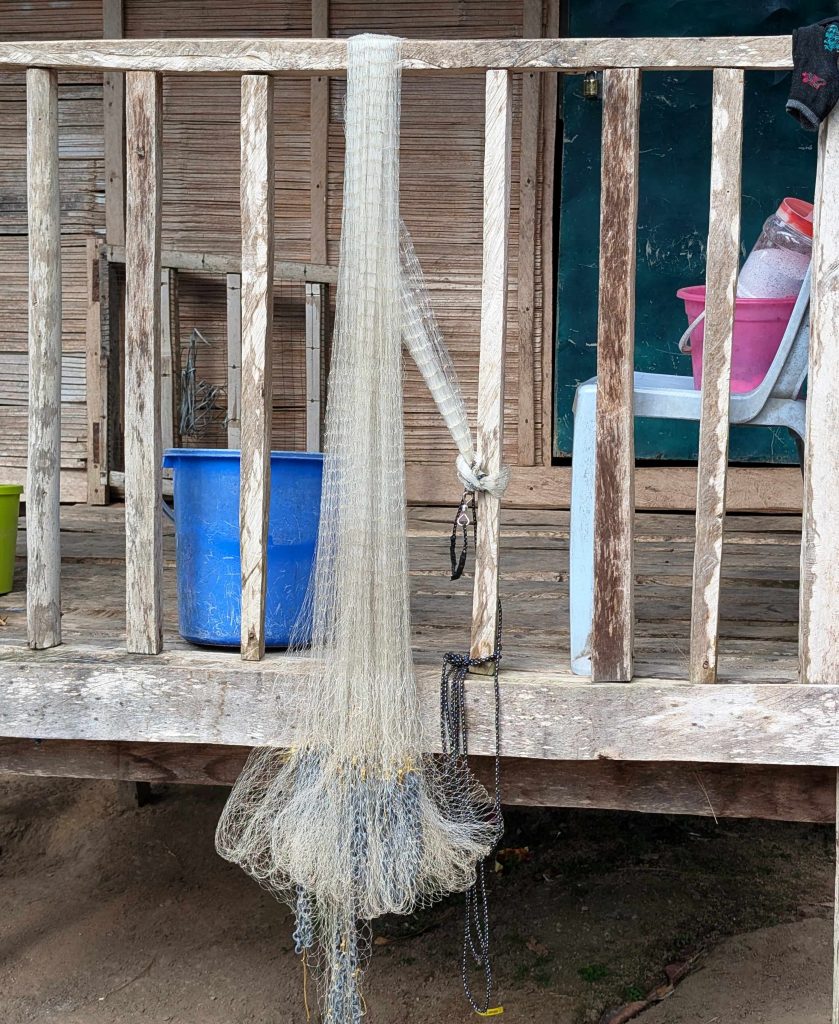
At Kampung Yum, cast netting is a daily routine task done by women for subsistence. Because Tengas have incredible eyesight in these crystal-clear waters, the netters will wade upstream or slip behind large rocks. They use a fine-mesh cast net (1-inch mesh, 10-foot net) and throw it over rapid breaks or shallow gravel sections where schools of smaller Tengas forage for algae and insects.
Preparing Tengas fish for food
Grilling over an open fire
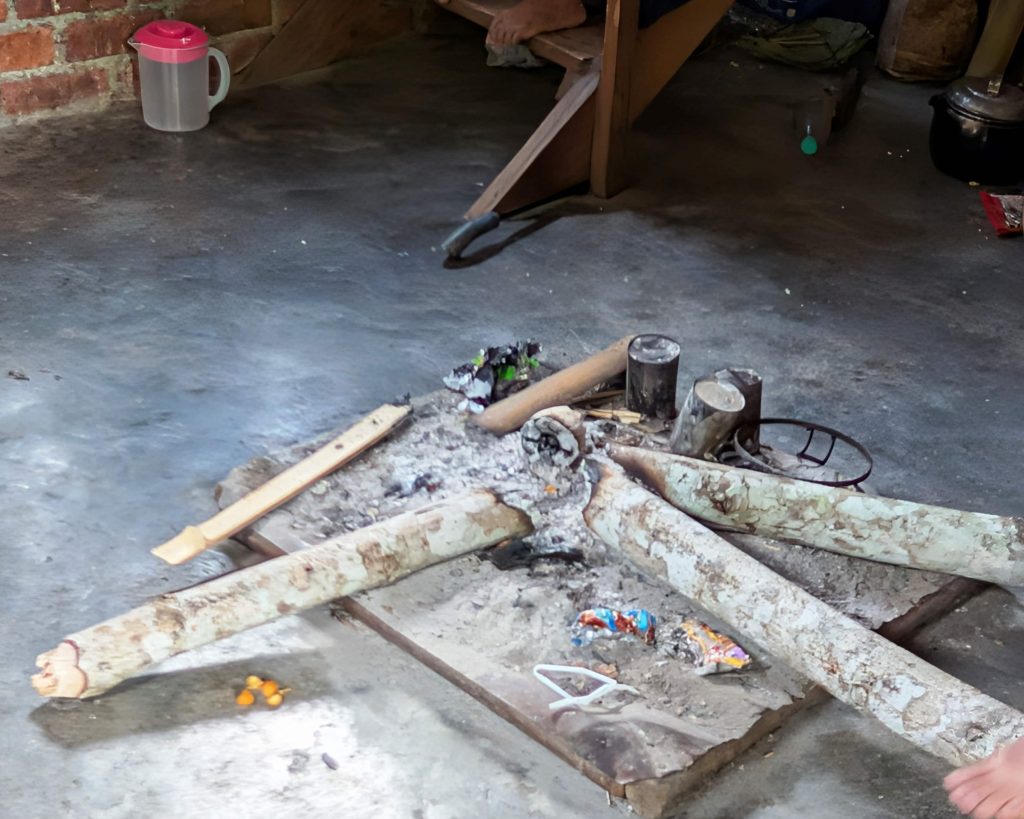
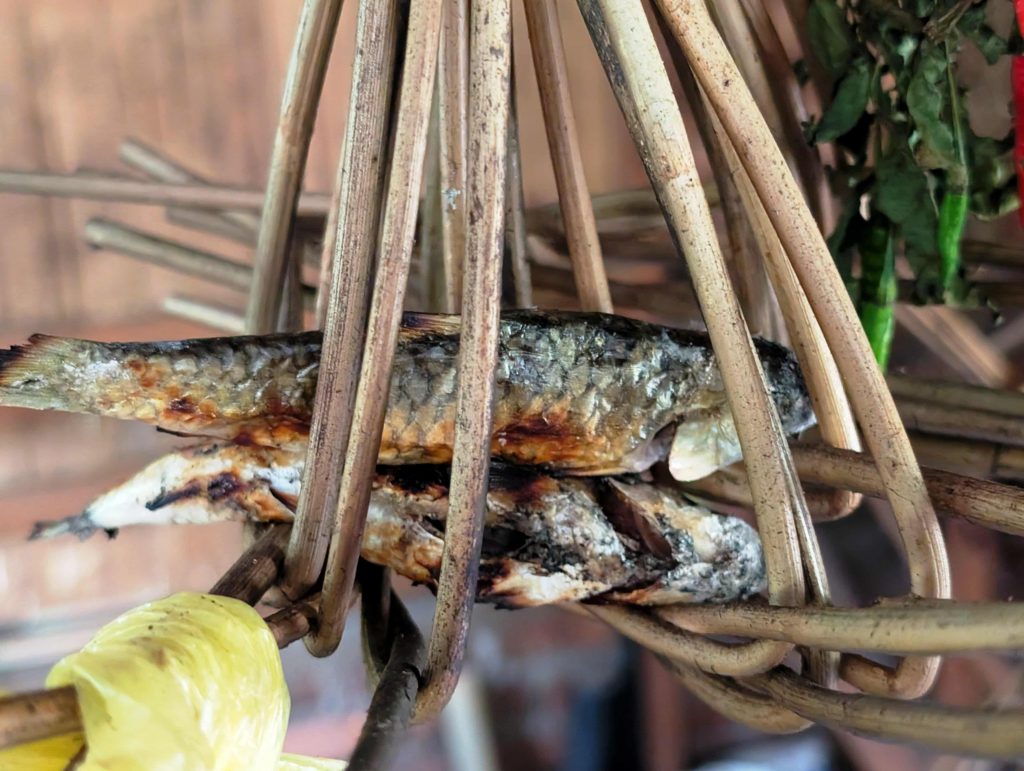
When cooking a quick meal by the riverbank or preparing food to preserve at home, the Temiar will skew Tengas fish on sharp bamboo skewers. They place them over a low, smoky wood fire. This infuses the fish with a deep wood-smoke flavor while crisping up the skin. Fish that are not eaten on the spot will be kept in rattan hoops over the fireplace for later use.
Crispy fried in oil
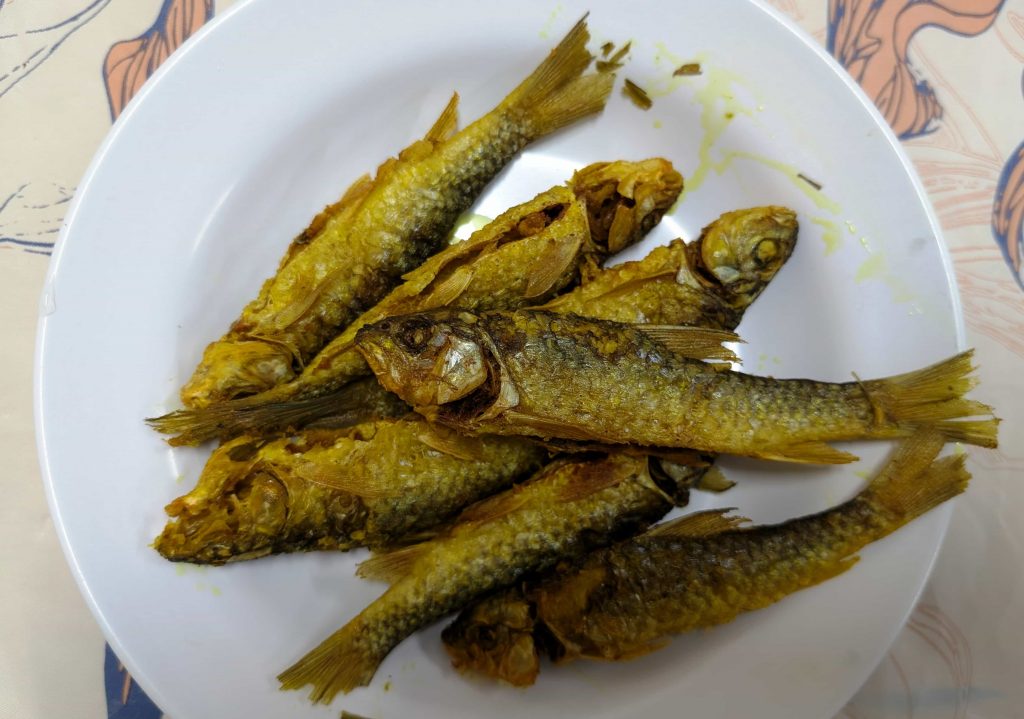
My favorite method is flash-frying small Tengas in a wok. They are crispy outside and have sweet, fresh-tasting meat inside. The fish taste best when gutted and are battered before frying in a masala curry mix.
Stewed in a spicy sauce
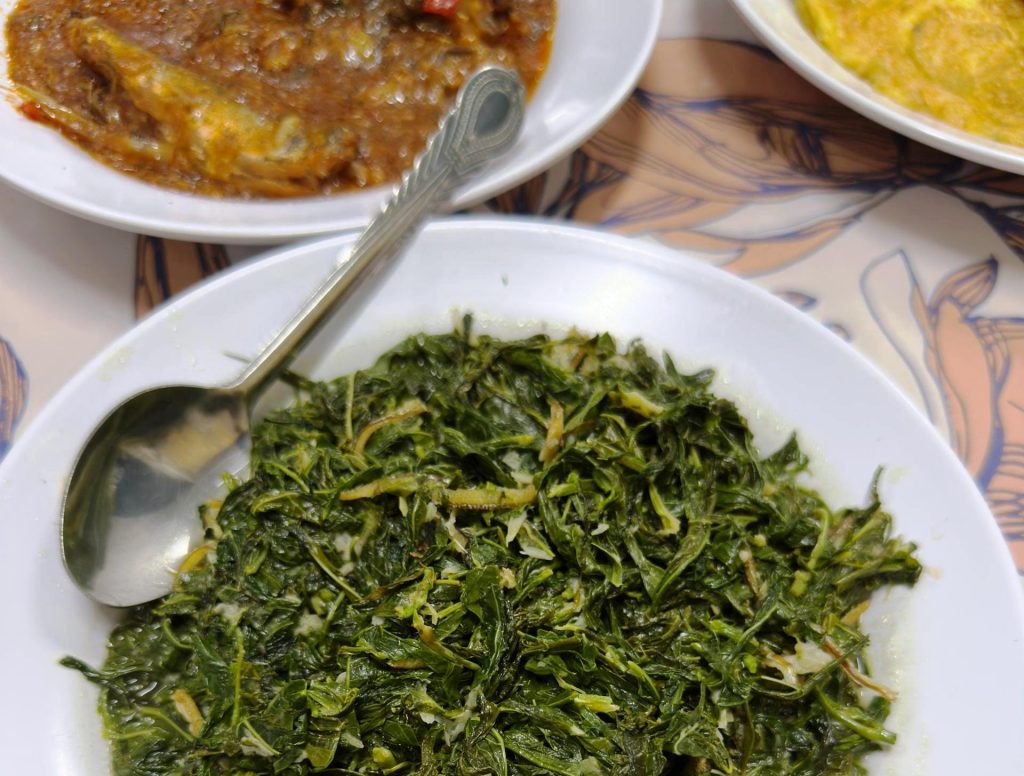
Broiling the whole small fish in a spicy tomato-chili-curry sauce infuses them with an explosion of flavor, which should be balanced by a dish of sauteed tapioca leaves.
Cooking in a bamboo tube
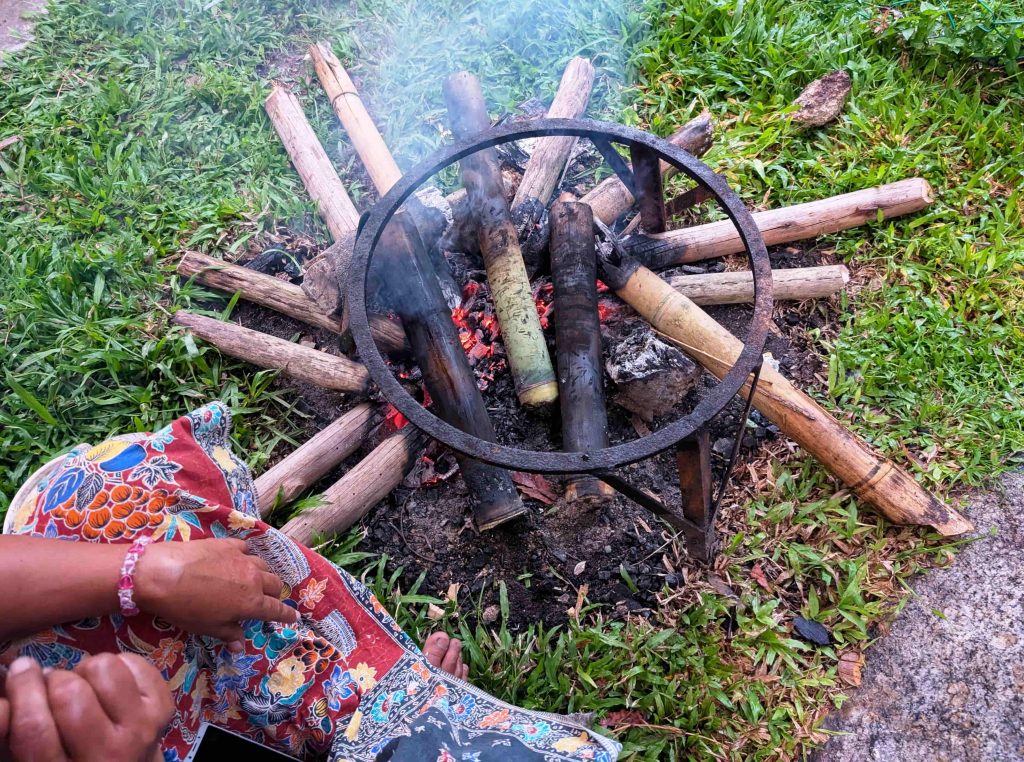
Cooking Tengas fish in green bamboo tubes is the old, traditional method of preparing them. It is a steaming method that results in tender, juicy meat. But nowadays it is mainly used to steam rice in these pipes, which adopts a smoky, natural bamboo smell and flavor. I really like steamed rice in bamboo, but prefer the fish roasted or fried.
Lessons learned about fishing for Tengas (Copper Mahseer):
- Most Tengas, which are caught by the Temiar Orang Asli people, are surprisingly small.
- Larger fish are nearly impossible to catch with nets or angling, as they only leave their lair under boulders after dawn.
- For angling, the Orang Asli only need to buy fishing lines, sinkers, and hooks. Rod and spool (if any) provide the jungle.
- Tengas taste best when either grilled or fried.
.