
Coastal Foraging
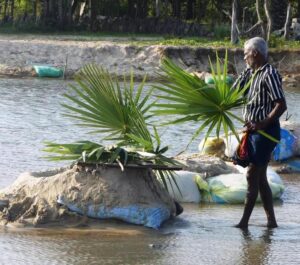
Shrimp pit traps on Sri Lanka’s east coast
Fish, crabs, and shrimp provide the livelihood of small-scale and artisanal fishermen on the east coast of Sri Lanka. Due to specific local conditions, various fishing and gathering techniques have evolved, including the use of shrimp pit traps. Tidal situation at Pottuvil lagoon Pottuvil is located on Sri Lanka’s southeastern coastline. North of the town is Pottuvil lagoon, which is fed by freshwater from inland and saltwater from a long and narrow channel connecting the lagoon to the Indian Ocean. All incoming waves towards the lagoon will be broken first by the surrounding rocks and another rock in the middle…

How to Find Venus Clams on Sandy Beaches
Venus clams (Meretrix meretrix), correctly named ‘Asiatic hard clams’, are one of Thailand’s most sought-after clams for food. They occur both in the Gulf of Thailand and on the coasts of the Andaman Sea. Fully grown species are large; their length can exceed 64 mm / 2 ½ ’’. They exhibit significant variations in coloration but are stable in form and proportions. The pallial sinus line inside the shell is always curved inwards. See the following picture. Venus clams prefer long, open coastlines with sandy beaches or sandy beaches with mixed mud. Completely muddy beach bottoms are not to their…
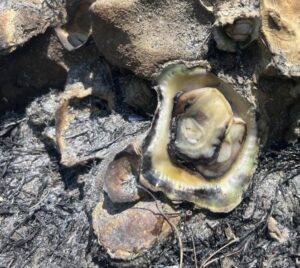
Smoked Rock Oysters: A Bardi Method from the Dampier Peninsula
In the spring of 2025, I traveled to Western Australia to document local survival techniques used by Indigenous people. Across Australia, Indigenous groups are generally categorized into three main types: the so-called ‘Saltwater mobs,’ who live along the coast; the ‘Desert mobs,’ who inhabit the arid inland regions; and the ‘Freshwater mobs,’ who settle along major rivers. My teacher I had the opportunity to meet members of three different ‘Saltwater mobs’ and was fortunate to go on a foraging trip with Terry Hunter, a Bardi man, at the remote northern tip of the Dampier Peninsula. Terry had worked for many…

Collecting sea urchins in the lagoons
The Collector urchins (Tripneustes gratilla) are a sea urchin species around Zanzibar. Its gonads, which contain either the roe (females) or milk (males), are a delicacy. This sea urchin species is harvested in the hot months of the year, and the gonards are only eaten fresh. Distribution and habitat requirements This urchin species is widely distributed across the Indo-Pacific region, including the Red Sea, East Africa, India, Southeast Asia, Australia, and the Pacific Islands. It inhabits shallow coastal waters, typically at 0–30 meters, thriving in seagrass beds, coral reefs, and sandy or rocky substrates. On Zanzibar Island, the ‘Collector urchin’…

Black Lollyfish for food
The Black Lollyfish (Holothuria atra), the Black sea cucumber, is found primarily in the Indo-Pacific region and Zanzibar. It has a distinct cylindrical body, typically black or dark brown in color, with a smooth, leathery texture. It is commonly covered with sand as its most preferred habitat substrate. Description of the Black Lollyfish The species can grow up to 30 cm in length. Its body is covered with soft and small protrusions that give it a rough appearance. At one end, it features a cluster of tentacles used for feeding; on the other end, there is the anus without anus…

Wild sandfish sea cucumbers
Sandfish sea cucumbers (Holothuria scabra) are the most valued species in many tropical coastal regions, particularly Asia. This is based on their use in traditional medicine and as a delicacy. Overexploitation has led to population declines in some areas, prompting conservation efforts to protect this critical species. Therefore, sandfish sea cucumbers are no longer caught in the wild; most are reared on specialized farms. The sandfish in these pictures were collected in lagoons outside farms and returned unharmed to their habitat. Description of sandfish Sandfish have a cylindrical body with smooth, leathery skin and can grow up to 30 cm…

Coastal foraging at Zanzibar
Coastal foraging and fishing are the foremost traditional activities people do on the coasts of Zanzibar. These activities are not restricted to this island or country but everywhere worldwide with a suitable coast. In English, coastal foragers are also called seashore harvesters, tidewater gatherers, beachcombers, intertidal collectors, or strandloopers. Fishing and gathering provide nutrition through animal proteins and oils. They also offer employment, which constitutes a key source of income for these people living on meager terms. As the fleshy part of gastropods and bivalves is eaten, the cleaned shells are often sold to middlemen, who sell them to tourists…

Spearing of African blue swimming crabs
Africanan blue swimming crabs (Portunus segnis) are speared by beachcombers in the lagoons of Zanzibar. These crabs, however, are not the prime target when spearing but only an opportunistic by-catch. The prime target when using spears for fishing is octopuses. There are no official records of how many of these crabs are caught, nor which gender, age, or weight they are. They are just speared artisanally and used as subsistence food by the families. Official statistics of Zanzibarian fisheries authorities and research papers only contain records of mud crabs (Scylla serrata) caught in mangrove growing areas and fattened on crab…

Conch collection for food
Humpbacked conch shells (Gibberulus gibberulus) are true conchs based on the type species Strombus gibberulus. In Swahili, they are called Chuale and are primarily collected by women, who use them for their family’s subsistence and cash income. They are harvested in the highest numbers of all species on each beachcombing trip and are the second most collected species, behind Tiger conchs (Cypraea tigris). However, these are only collected for cash income, not food. Global distribution Gibberulus gibberulus occurs from the eastern shores of Africa, throughout Southeast Asia and north-eastern Australia, and in the Pacific islands. Women in Zanzibar collect them…
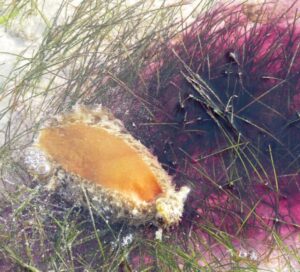
Sea hare without caviar
Sea slugs of the taxonomic family Aplysiidae are commonly called ‘sea hares’, because when underwater, their rounded body shape and the long rhinophores on their heads resemble that of a sitting rabbit or hare. Unlike other sea slugs (nudibranchs), they have shells, which are reduced to a small plate hidden in their back. All sea hares excrete ink when feeling threatened. In the lagoons around the island of Zanzibar, we found the ‘Wedge sea hare’ (Dolabella auricularia). The local ladies collected this species when beachcombing in the intertidal flats for food. Description of sea hares The common name of ‘sea…

Catching octopuses in the lagoons
Catching octopuses in the lagoons of Zanzibar is an age-old and sustainable activity mainly carried out by adult women. Depending on the number of caught animals, they are used to feed the family and sold to restaurants and fishmongers. As such, it is one of the few sources of income for this gender group. Geolocation and characteristics of the lagoons The island of Zanzibar is surrounded by coral reefs in the east, southwest, and northwest directions, as well as around the eastern islands. The western coastline from Potoa in the North to Fumbe in the South is mainly devoid. These…

Sea lettuce for salad
Sea lettuce (Ulva lactuca) is common on most shorelines worldwide. This article focuses on the island of Zanzibar in Tanzania. There, sea lettuce is used as an export article and supplementary food for humans. In addition to being collected in the wild, (Compton, 2024) reported about trials of cultivating and farming U. lactuca for higher yields in this country. Description and distribution According to (Braune & Guiry, 2011), the color of U. lactuca is light green to deep green. When dried by the sun, the colour of the seaweed can range from white to black. Its leaf-like flattened thallus is…

Edible red seaweed on Zanzibar beaches
In Zanzibar, two edible red seaweed species are commonly used for food: Spinosum and Cottonii, also called ‘Elkhorn sea moss.’ Both species can be found wild in the coastal area and are also farmed intensively. In addition to these two species, a variety of other edible red seaweed species grow there. Spinosum (Eucheuma denticulatum) Spinosum is the most essential edible red seaweed species in Zanzibar. The thallus ranges from 35-74 cm / about 14-29‘’ long. These plants have a cartilaginous feel and structure. On their branches, thorn-like structures can be seen. Depending on the light conditions during growth, the color…
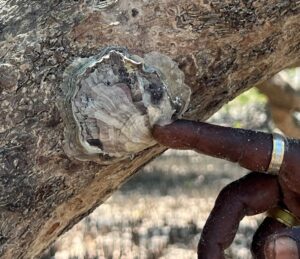
An oyster species growing on Mangrove trees
Mangrove oysters (Isognomon ephippium) are the species most commonly found growing on mangrove trees in Northern Australia. Its other common English name is ‘Saddle tree oyster.’ These oysters are one species eagerly collected and eaten by Bardi people at the northern tip of Dampier Peninsular, north of Broome in Western Australia. A member of the Bardi tribe showed us how to find and collect these bivalve mollusks. Description and behavior The shape of Mangrove oysters is nearly circular, and its valves are flattened. The dorsal margin is slightly convex, bulging slightly outwards. Its anterior margin (valve on the right side)…

Long-spine Porcupinefish on the coast of Zanzibar
The Long-spine porcupinefish (Diodon holocanthus) is one of the many seafood organisms local people catch or collect at low tide in shallow waters around Zanzibar island. This fish is not specifically searched for, but it will be happily speared and taken home for food if found in shallow waters. According to the local women we went beachcombing with, two species of pufferfish live in the lagoons. One is called ‘Nungu’ in Swahili, and the other ‘Bunju’. We caught and ate Nungu, the Long-spine porcupinefish (Diodon holocanthus), without any poisonous effect. Bunju is the ‘White-spotted pufferfish’ (Arothron hispidus) with no spines.…
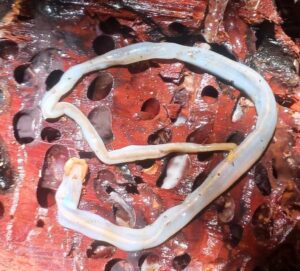
Harvesting Shipworms in a Thai Mangrove Forest
Edible shipworms, in this case Bactronophorus thoracites, are also known as Naked clams, Priyang talay (เพรียงทะเล), and various other common names throughout the region where they occur. They bore into wood immersed in salt water and are a major hassle for wooden ships, piers, and docks. Besides their habit of boring into wood, they are well-liked to be eaten by most Indigenous people within their distribution range in the Asia-Pacific, especially in Southeast Asia. What are shipworms? Shipworms belong to the phylum Mollusca and the class Bivalvia. Their two small shells only circumvent their anterior end and are used to…

Collecting Pipi clams at Rawai Beach
Pipi clams (Donax deltoides) are also known as Surf clams, Sandy Donax, and a wide range of other common names. In Thailand, they can be found on most beaches in the Gulf of Thailand and the Andaman Sea. They are called ‘Surf clams’ because they prefer sandy beaches with good surf. Description and Distribution These mollusks are small edible saltwater clams with shell widths between 15 and 25mm / 0.6 and 1 ’’. The outer shell surface is smooth with distinctive growth rings. The shells are robust and rugged, which has led to many shell middens on Australian coasts. Their…
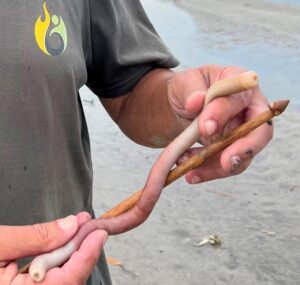
Collecting Bibi worms on Koh Lanta
Bibi worms (Sipunculus nudus Linnaeus, 1776) belong to the Peanut worm phylum. They can be dug up at the intertidal zone of flat, sandy beaches on temperate and tropical beaches. These worms are primarily used as top fishing bait. At least in Southern China and Southeast Asia, they are also used for human consumption. Global distribution Bibi worms occur circumpolar on temperate and tropical sandy beaches, as seen by the Computer simulation below of this species’ native habitats. Preferred habitat Bibi worms occur from intertidal zones to sea beds down to great depths. We caught them in southern Thailand’s Koh…

Catching Octopuses by Sea-Gypsies
Sea-Gypsies – Urak Lawoi, Moklen, and Moken – traditionally catch octopuses along the Andaman Sea’s rocky shores, which they call โวยวาย in the Thai language. Using a metal skewer and baited bamboo stick, they locate octopuses in holes with foam or clean pebbles. Patiently baiting them, they impale octopuses with the metal skewer, preventing contact to avoid their tentacles’ suction. This traditional method includes finding, baiting, and safely handling octopuses for sustenance. General Catching octopuses is a common pastime for Sea-Gypsies. These tribes migrated from the Myanmar archipelago on the Andaman Sea towards Thailand. The Thai government settled most of…

Catching Ghost crabs by digging
Ghost crabs (genus Ocypode) comprise 22 different species, and they are commonly also called `Sand crabs.` The scientific name Ocypode has Greek origin and means swift-footed. Ghost crabs are semi-terrestrial crabs that dig deep burrows in intertidal zones of sand. They can be found in all subtropical and tropical regions worldwide. Ghost crab comes from their swift movements over the sand during darkness and their whitish-colored claws. Appearance of Ghost crabs The following three characteristics characterize all species of Ghost crabs: Additionally, Ghost crabs can adapt their whole body coloring to the surrounding sand colors and the time of the day,…

Three-spot swimming crabs on surf-beaten sandy beaches
Description of the crab species Three-spot swimming crabs (Ovalipes trimaculatus) have a rounded triangular carapace with five legs on either side. The tips of the back pair of legs are flattened into paddles for better maneuvering in the water. Adorned with rusty-brown flecks, the carapace features three larger markings that curiously resemble a ‘sad’ face. Its nippers are equipped with ridges and sharp cutting teeth, ready for action. Uses of these crabs These Three-spot swimming crabs are widely sought after as fishing bait along the Namibian coastline. Anglers target the Westcoast Steenbras using this bait, while certain shark species, such…

Seekoraal plants in Southern Africa
Seekoraal is the Afrikaans term for the Salicornia natalensis plant, which belonged to the Sacocornia taxonomic genus before being reclassified under the Salicornia genus in 2017. Salicornia plants are succulent, halophytic (salt-tolerant) flowering plants in the Amaranthaceae family. They thrive in salt marshes, on beaches, and amidst mangroves. There are 53 known Salicornia species native to North America, Europe, Central Asia, and Southern Africa. In Southern Africa, these plants are commonly known as Seekoraal and Pickleweed. Historically, they were pickled and consumed as a salad with vinegar and olive oil dressing to prevent scurvy. In the United States, they can…

Beachcombing for Vongole clams in Northern Italy
Vongole clams (Ruditapes philippinarum) are the main bivalve species collected from the flat beaches of the Adriatic Sea in Northern Italy. Introduced to aquaculture facilities in the lagoon of Venice in 1983, they are now considered an invasive species, having often replaced the endemic clam Ruditapes decussate. However, despite being invasive, 95% of all Italian clam production comes from these lagoons, and 90% of the entire European harvest of clams is also sourced from there. What is the correct name for vongole clams? Due to their widespread distribution from cool to semi-tropical and tropical habitats in Asia, Europe, and the Americas,…

Limpets on rocky shorelines
Limpets (Scutellastra sp. and others) have conical, oval-shaped shells that range from 1-10cm in diameter depending on the type of limpet. Their shell is ribbed or smooth depending on the limpet species. The shells are normally brown, grey, or black with varying patterns. A limpet’s body fits snugly into its shell and has a well-developed head and eyes which they use to detect predators. They have a pair of tentacles that they use to source food and feel their surroundings. Their muscular foot allows them to attach to hard surfaces even in rough sea conditions. All limpets are herbivores and…

Seashore Survival: Where Your Salt Intake Comes From
The salt intake of a human in case of an actual survival situation or when living from the provisions of a shoreline by purpose is of utmost importance to its health. If too much salt is consumed, the body has adverse short-term effects, like dehydration, swelling, and kidney damage. Salt (Sodium chloride, NaCl) attracts water and holds it in human cells. It disrupts osmosis, which causes dehydration and symptoms such as headache, fatigue, and muscle cramps. Retaining body fluid also causes swelling in feet, ankles, and legs. Adverse long-term effects are high blood pressure, osteoporosis, and possibly stomach cancer. Health…

Purple Laver – cherished food in many cultures
Purple Laver (Porphyra capensis) belongs to a genus of cold-water seaweeds that grow in shallow seawater. More specifically, it belongs to the red algae phylum of laver species (from which comes laverbread), comprising approximately 70 species. It grows in the intertidal zone, typically between the upper intertidal zone and the splash zone in cold waters of temperate oceans. Description Purple Laver’s dark purple to purple-green blades are thin and membranous. Males have a yellowish, and females have a pinkish tinge on the edge. The blades get up to approximately 15cm in length. It looks almost black when dry. It becomes…

Black mussels at the Namibian coastline
Black mussels in Namibia include the following species: Ribbed mussel (Aulacomya atra), Black mussel (Choromytilus meridionalis), Mediterranean mussel (Mytilus galloprovincialis), Brown mussel (Perna perna) and Bisexual mussel (Semimytilus algosus). In one of my former articles on this website, I discussed also White mussels on the Namibian coastline. Description Black mussels are black or brown with a tinge of green or blue. They are enclosed by a pair of shell valves linked by an elastic ligament. The flesh of females is orange, and that of males is off-white. They are not very mobile and attach themselves with a ‘beard’ of byssal…

White mussels at the Namibian coastline
Description of White mussels White mussels (Donax serra) are wedge-shaped bivalves with coarse ridges across the posterior. The inner surface is smooth and has a purple tinge. It has a short, stubby inhalant and a long, thin exhalant siphon. It reaches a size of about 88mm (approximately at age 5). They can be found on wave-exposed sandy beaches. Please find further information at the following link. Black mussels were described on this website under this link. Use of White Mussels The white mussel, or wedge clam, is predominantly used as bait for fishing along the Namibian coastline. Their feet can…

How to Catch Beach Crabs with a simple snare
An advanced, industrially manufactured crab snare usually consists of a bait cage with about six wire snares around it. This setup is used on a fishing line and rod, or is just hung down from a boat to the sea bottom. This type of crab snaring is shown in this article. On tropical beaches, locals use a by far simpler set-up. They just collect a string from the flotsam on the beach, form a snare, and add a wooden stick. Beach flotsam provides the materials Beach flotsam will be found on nearly any beach in Southeast Asia, as the plastic pollution…

Catching Razor Clams with Quicklime at Don Hoi Lot, Thailand
A mudflat full of razor clams ‘Don Hoi Lot’ is a mudflat in the Thai Province of Samut Songkhram with a size of about 15 km2 (about 9 square miles). ‘Don’ means ‘mudflat’ in English. ‘Hoi’ means ‘clam’, and ‘Hoi Lot’ are razor clams (Solen regulars). This razor clam species is endemic to the Gulf of Thailand, and the largest concentration of this species of clams exists at Don Hoi Lot. An extensive description of this mudflat and its razor clams can be found here. Bangkokians like to catch some of them on a family outing and have a feast…

Mudskippers for food
In Thailand, four mudskipper species can be found. These are the Giant mudskipper (Periophthalmodon schlosseri), Blue-spotted mudskipper (Boleophthalmus boddarti), Gold-spotted mudskipper (Periophthalmus chrysospilos) and the Indian Dwarf mudskipper (Periophthalmus novemradiatus). The Giant- and Blue-spotted mudskippers live at the Andaman Sea- and Gulf of Thailand coastline. The Gold-spotted mudskipper is restricted to the Andaman Sea and the northernmost coast of the Gulf of Thailand. The Indian Dwarf mudskipper settles around the Ranong area. They are all amphibious fish living in muddy estuaries and tidal brackish river zones around Asia-Pacific. They live in about 40 cm deep holes in the mud and…