
Cephalopods
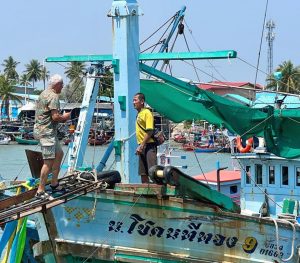
Conch Traplines for Octopus in the Gulf of Thailand
In the following, we will describe the catching operation of octopuses from a fishing vessel with the help of conch traplines. This is the high-end operation of catching these cephalopods, and, based on catching weight, the primary one. But the same technique of catching Marbled octopuses in Thailand is also used by artisanal fishermen, who are often alone on a boat, or only with one helper. These fishermen just use one conch trapline, and often, the distances between each conch shell are larger compared to those on fishing vessels. They operate close to the shore and bring in the catch…
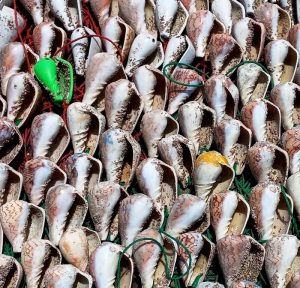
Octopus Traps Made from Conch Shells
Marbled octopuses like to hide in small caves at the seafloor. Fisherfolk use this behavior and offer artificial caves, which they populate. Even while retrieving, the octopuses will not leave their shelter and can be easily caught. Since ancient times, Noble volute conch shells have been used as artificial hiding places due to their easy availability and robustness. Before using these shells, however, they have to be prepared and optimized for the task, which will be described in the following article. Which octopus species is targeted? The primary target of this cephalopod trapping method is the Marbled octopuses (Amphioctopus aegina),…

Rectangular squid traps in Thailand
Rectangular squid traps are used in the Gulf of Thailand and along the coastline of the Andaman Sea in the same way as semi-circular traps. Both types are used mainly for catching Bigfin reef squid (Sepioteuthis lessoniana) but will also catch Pharaoh cuttlefish (Sepia pharaonic) and various finfish species. For more details, see our article about semi-circular squid traps on our website here. Trap design The physical outer dimensions of these traps are roughly 0.8×0.6×1 m / 2.6x2x3.3 ft. The wooden sticks used to build the trap are often shoots and sticks of various mangrove species. Sequence of building the…

Catching Octopuses by Sea-Gypsies
Sea-Gypsies – Urak Lawoi, Moklen, and Moken – traditionally catch octopuses along the Andaman Sea’s rocky shores, which they call โวยวาย in the Thai language. Using a metal skewer and baited bamboo stick, they locate octopuses in holes with foam or clean pebbles. Patiently baiting them, they impale octopuses with the metal skewer, preventing contact to avoid their tentacles’ suction. This traditional method includes finding, baiting, and safely handling octopuses for sustenance. General Catching octopuses is a common pastime for Sea-Gypsies. These tribes migrated from the Myanmar archipelago on the Andaman Sea towards Thailand. The Thai government settled most of…
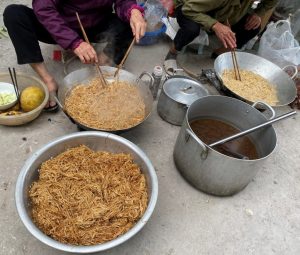
Canh Măng Mực: The Royal Dried Squid and Bamboo Soup of Bát Tràng
Experience the sophisticated flavors of Northern Vietnam with Canh Măng Mực, a rare, traditional Vietnamese squid-and-bamboo soup. Deeply rooted in the culinary heritage of the ancient Bát Tràng ceramic village near Hanoi, this dish is far more than a simple meal—it is a centerpiece of the Vietnamese Tet (Lunar New Year) feast. Combining the earthy crunch of sun-dried bamboo shoots with the savory depth of shredded dried squid, this authentic Vietnamese soup recipe offers a unique “forest meets sea” profile that has delighted travelers and locals for generations. Whether you are exploring Hanoi’s traditional food specialties or looking to recreate…

Semi-circular squid traps in Thailand
Squid is a main source of income for many fishermen in villages around the Gulf of Thailand and the Andaman Sea. Because fish are becoming increasingly rare, whereas Cephalopods maintain their population. Only certain types of finfish are sold profitably, and the rest are processed into fish sauce or fishmeal. On the other hand, squid of all sizes are always in demand. Which kind of animals are caught in those squid traps? SEAFDEC, the Southeast Asian Fisheries Development Center, presented a study in which it was found that in Rayong province, 94% of animals caught in squid traps were Bigfin…