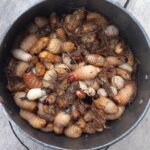
In our previous article, Hornet Larvae for Food in Vietnam, we described the harvesting of Lesser-banded Hornet (Vespa affinis) nests for their grubs and pupae. Here, we take a closer look at giant hornet combs and explain how they differ from those of the Lesser-banded hornet.
Description of the Asian Giant Hornet
Vespa mandarinia is a spectacular insect. Workers commonly reach around 3.5 cm in length, while queens can approach 5 cm or more. The huge orange head and powerful orange mandibles are among its most obvious features. The abdomen is dark brown to black with contrasting yellow-orange bands.
This impressive size is not just for show. The Asian Giant Hornet is an apex predator among social wasps. Workers hunt a wide variety of insects and other arthropods, chew their prey into a protein-rich paste, and carry it back to the nest. The larvae are then fed this material.
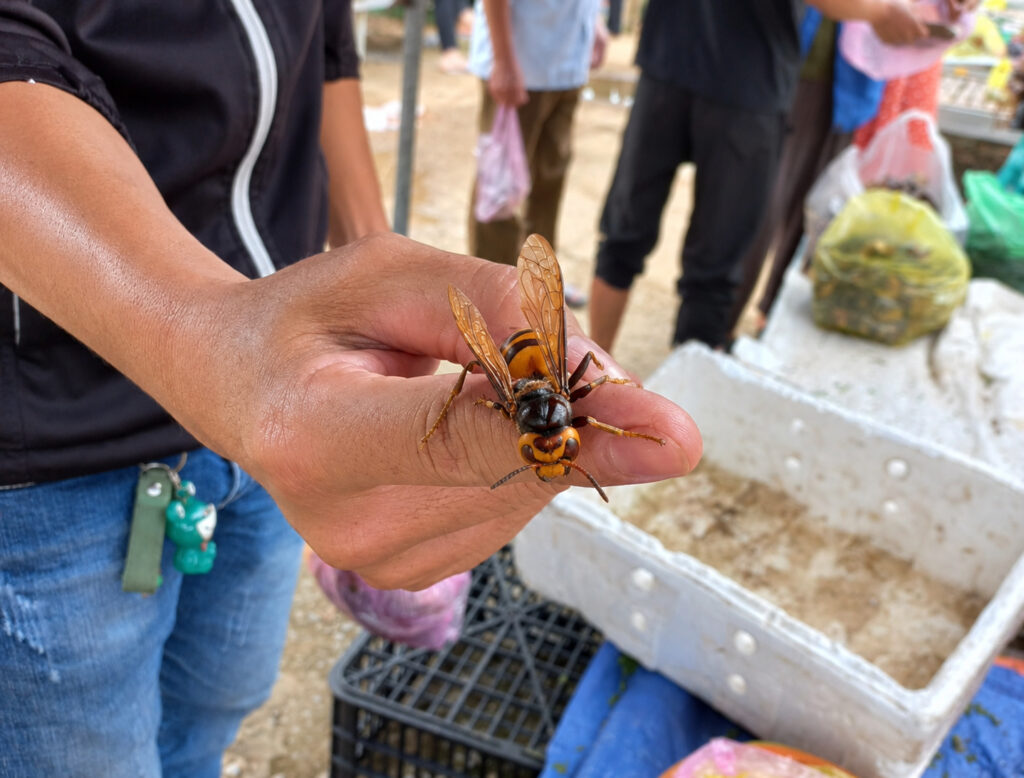
During late summer and autumn, the colony’s demand for protein increases considerably because it raises large numbers of larvae, including developing reproductive individuals. This is also the period when giant hornets can become particularly important predators of other social insects, including honeybees.
Where Does the Asian Giant Hornet Occur?
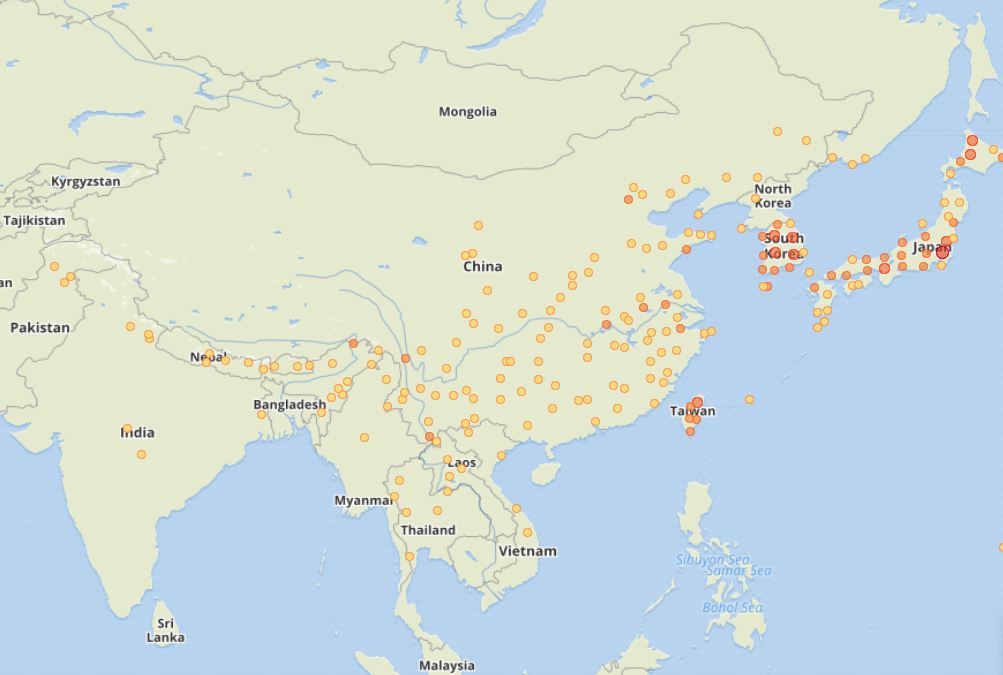
The natural distribution of Vespa mandarinia is entirely Asian. Its range extends through parts of South and Southeast Asia and eastward through China, Korea, and Japan, with populations also recorded in parts of the Russian Far East. Vietnam lies within its broader native range. Today, the Asian Giant Hornet is an invasive species in Africa, North America, and Europe, where it threatens local honeybee populations.
A Brief Look at Their Behavior
Giant hornets are social insects living in annual colonies. A fertilized queen begins the nest in spring, usually in a cavity in the ground. She initially raises the first workers herself. Once enough workers are present, they take over most nest-building, hunting, and brood-care duties while the queen focuses on laying eggs.
The underground lifestyle is one of the most characteristic features of Vespa mandarinia. Nests are commonly established in abandoned large rodent burrows, cavities beneath roots, or other subterranean spaces. Occasionally, nests occur in tree cavities or human structures.
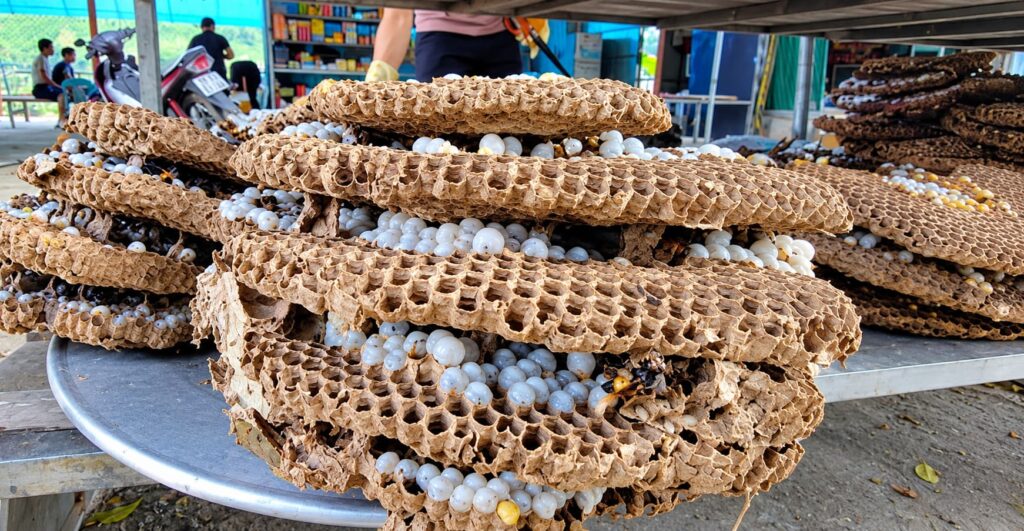
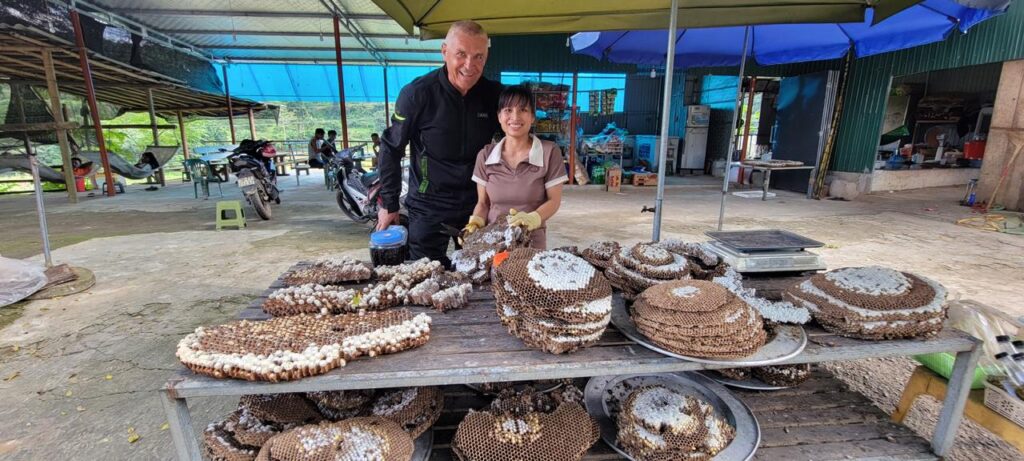
In some areas of northern Vietnam, Hmong people make a living from rearing and harvesting Asian Giant Hornet nests and combs. As shown in this video, they dig a deep pit and cover it with a sturdy bamboo lid, which they also seal watertight with corrugated iron, tarpaulins, and mud. They transfer a wild nest with a queen from a wild population to a rearing station at home and feed it with sugar water. After the nest reaches a certain size, they move it to the pit and let it develop for about one year. After harvesting the combs and selling them at road stalls, they receive about 50,000 Vietnamese Dong (VDN) per kilogram of comb, which is about 2 USD (Nov 2026).
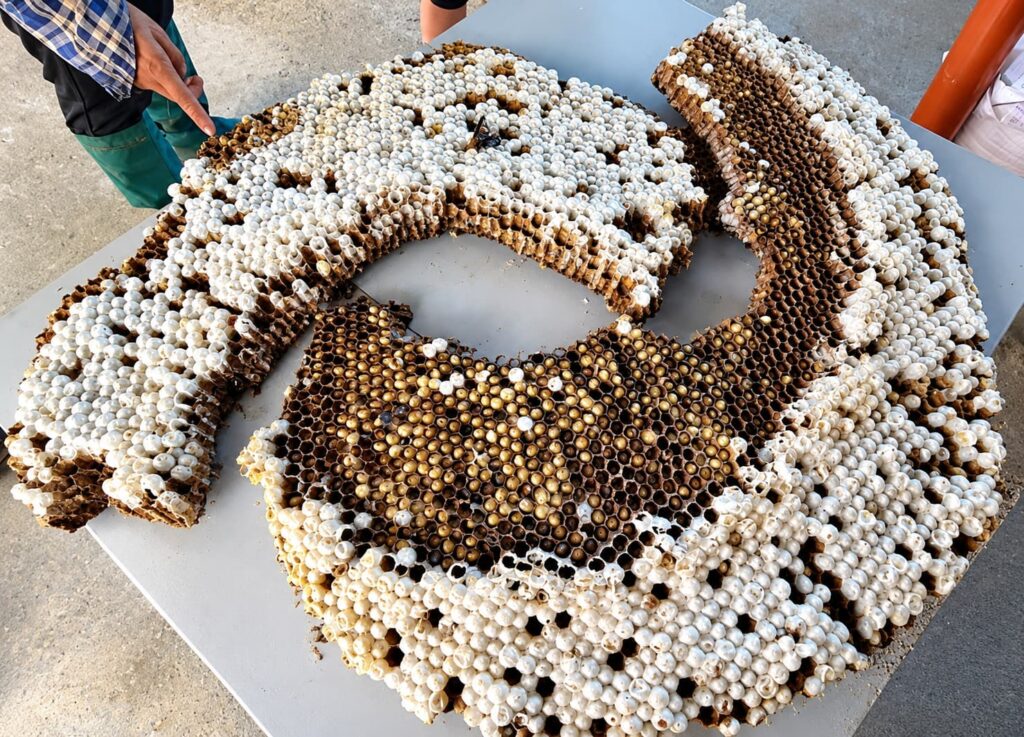
A colony may become surprisingly large before the end of its annual cycle. Workers gradually expand the underground cavity and build additional horizontal combs beneath the protective nest envelope.
What Do Asian Giant Hornet Nests and Combs Look Like?
From the outside, an underground giant hornet nest can be difficult to recognize. The entrance may be little more than a small opening in the soil, sometimes surrounded by freshly excavated earth.
The real surprise comes when you open the nest. Inside are several horizontal paper combs arranged one above another. The combs contain hundreds or thousands of hexagonal cells where the brood develops. Small supporting structures connect the individual combs, while an outer envelope provides additional protection.
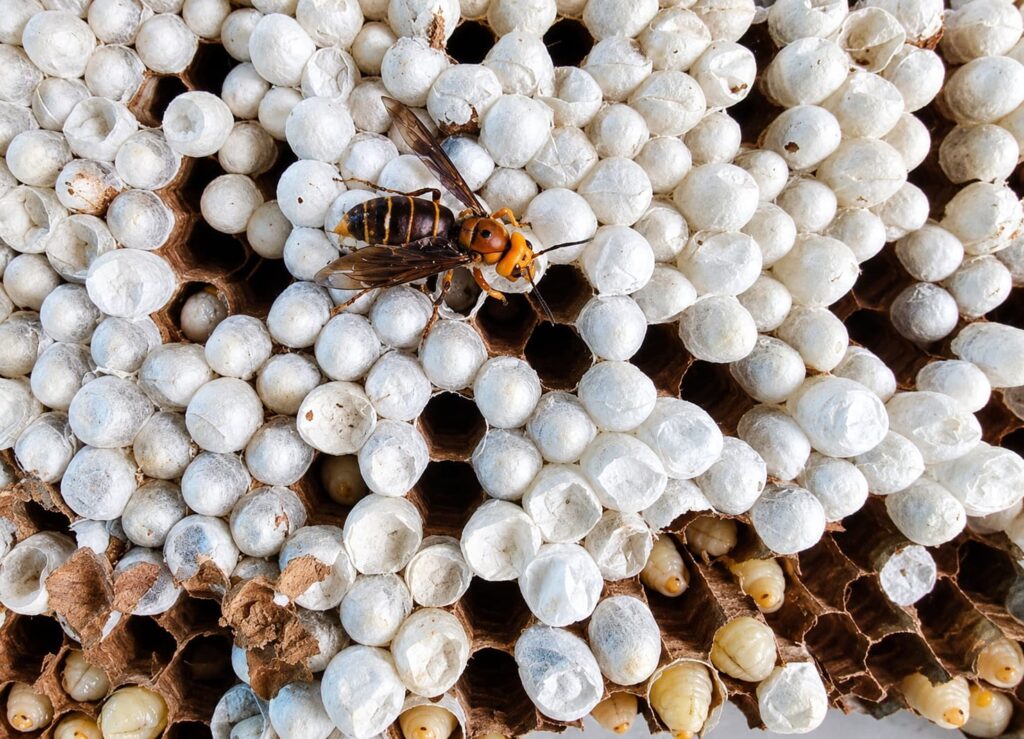
A mature Vespa mandarinia nest may contain between four and twelve combs and thousands of cells. The comb’s appearance is particularly interesting compared with smaller hornets’ combs. The cells are packed tightly in the familiar hexagonal pattern, but the entire structure looks much more substantial because of the colony’s enormous size and developing brood.
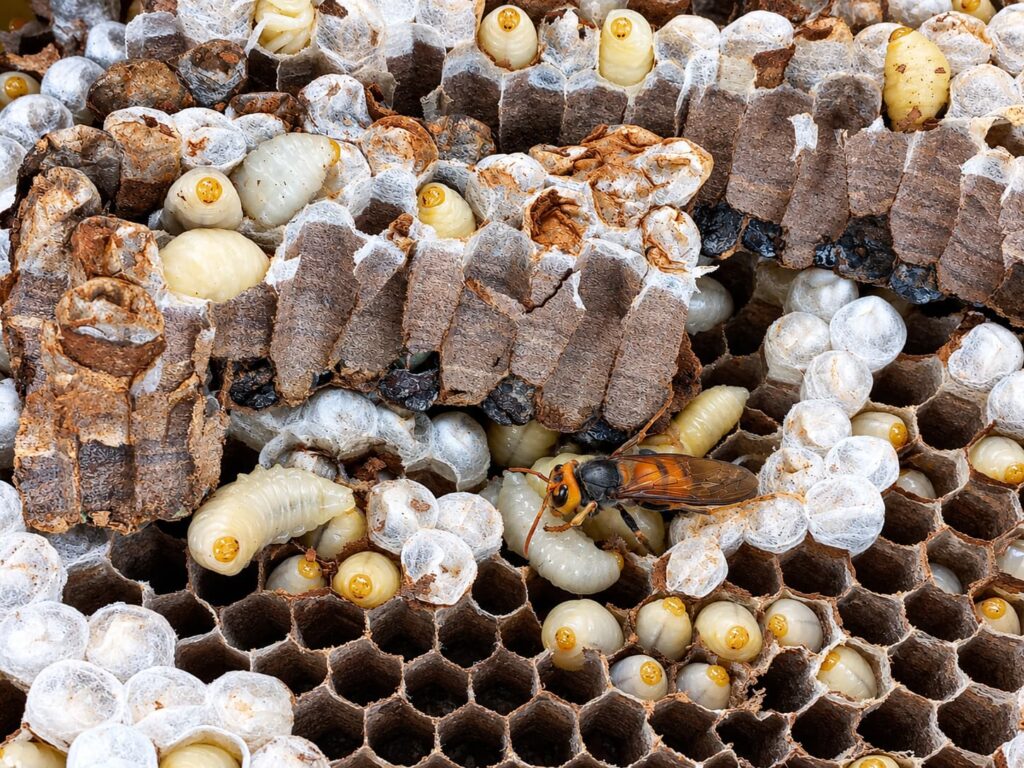
The combs also tell a story about the colony’s age. Older combs are generally found higher in the nest, while newer combs are added below. Within a single comb, you can find empty cells, eggs, larvae, and capped pupae at different stages of development.
Grubs and Pupae as Food in Vietnam
As we described in our earlier article Hornet larvae for food in Vietnam, people in parts of Vietnam eat hornet larvae and pupae. Local people have long recognized insect larvae as a valuable source of animal protein, and hornet brood can be particularly attractive because of the larvae’s substantial size.
Danger of Asian Giant Hornets
Giant hornets are considerably more dangerous than the smaller hornet species whose larvae are traditionally collected. Their size, powerful sting, and defensive behavior make approaching an active colony hazardous. Observations of traditional harvesting methods should therefore not be taken as a recommendation to try the same without appropriate expertise and protection.
Lessons Learned About Asian Giant Hornet Nests
- Giant hornets commonly nest underground.
- The comb records colony development. Different sections can contain eggs, larvae, pupae, and empty cells at the same time.
- Large brood means large protein requirements. Giant hornets are ferocious predators because their larvae require substantial quantities of animal protein.
- Never underestimate an active colony. A beautiful comb is fascinating to examine, but approaching an active giant hornet nest is an entirely different matter.
.