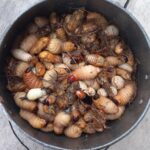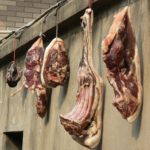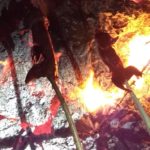
Vietnam’s culinary landscape is legendary for pushing boundaries, offering everything from savory phở to exotic highland delicacies. One such food is hornet larvae, which we harvested during a long stay with local rice farmers in the central highlands, far from any city. For them, harvesting and eating hornet larvae is neither an ancient survival tradition nor a modern delicacy. These larvae and pupae are a normal part of their diverse animal protein diet, complementing their farmed rice.

Larvae from Which Hornet Species Are Eaten in Vietnam?
Across Southeast Asia, people eat several stinging insects, but hornets (Vespa) are especially favored for their large size, rich fat content, and meaty texture. In Vietnam, especially in the central highlands and mountainous northern regions, foragers primarily target the Lesser Banded Hornet (Vespa affinis).
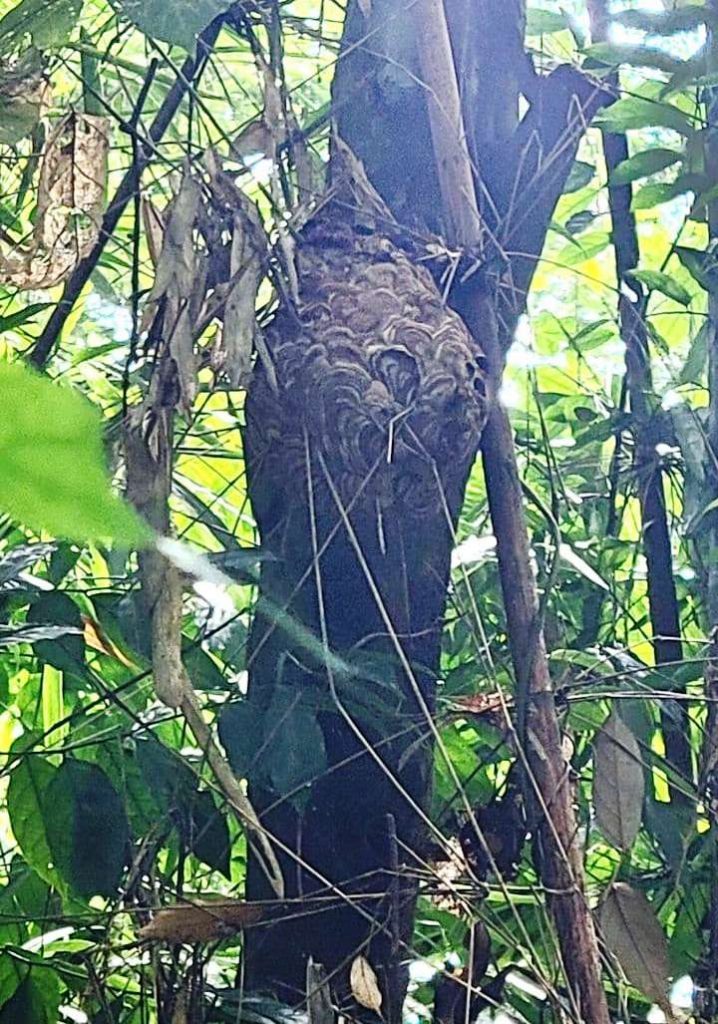
The Lesser Banded Hornet is easily identifiable by its distinct orange-brown band across the abdomen. Its larvae and pupae—milky-white, plump, and high in lipids and proteins—are considered a prized seasonal delicacy. On occasion, foragers also harvest from the Greater Banded Hornet (Vespa tropica), though Vespa affinis remains the gold standard because it’s abundant and has a rich, nutty flavor when cooked.
Where to Find Lesser- and Greater Banded Hornet Nests?
Locating active hornet nests requires a sharp eye, patience, and an understanding of insect behavior. Unlike honeybees, which prefer hollow trees or managed hives, hornets build complex, multi-tiered paper nests from chewed wood pulp mixed with saliva.
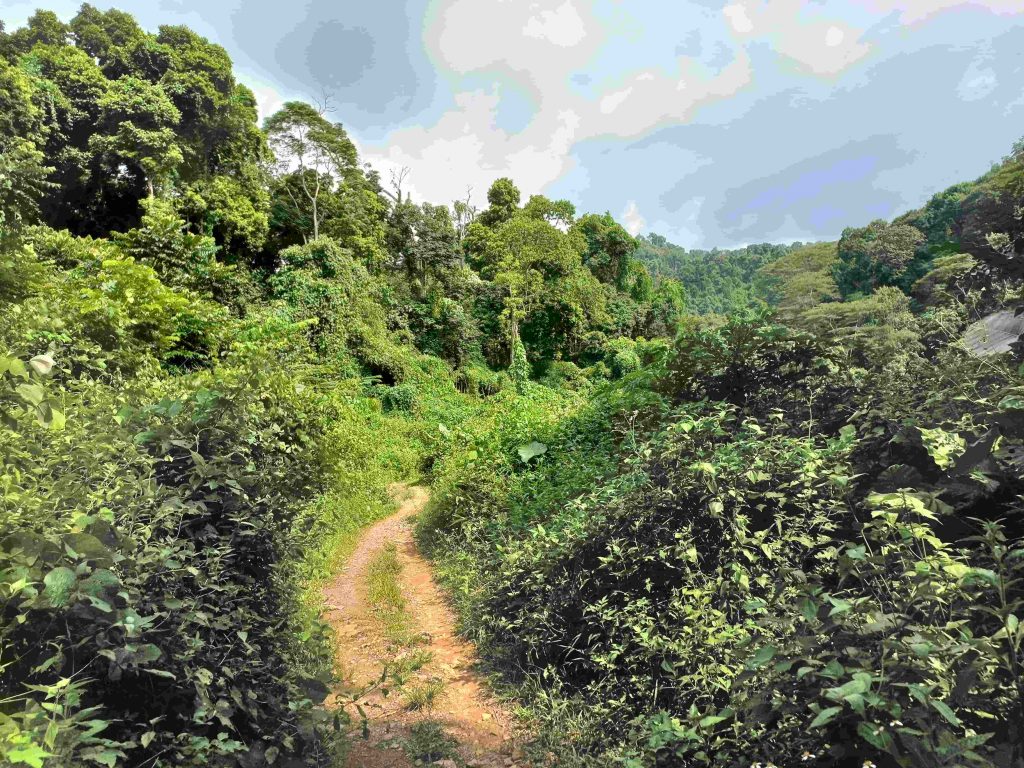
Lesser Banded Hornets (Vespa affinis): These hornets are remarkably adaptable. You can find their nests hanging from high tree branches in secondary forests, nestled within bamboo groves, or even attached to eaves and roofs of rural farmhouses. They frequently thrive near agricultural fields and forest edges where food sources like other insects and fallen fruit are plentiful.
Greater Banded Hornets (Vespa tropica): These larger cousins tend to prefer deeper, more secluded forest environments. They often build nests underground in cavities, abandoned rodent burrows, or inside decaying tree stumps near the forest floor.
Foragers usually track hornets during the morning or late afternoon by following their flight paths as they hunt for prey or return to the nest loaded with nectar and organic matter.
How Do Lesser Hornet Nests Look?
Recognizing a Lesser Banded Hornet nest is crucial—not just for a successful harvest, but for your personal safety.
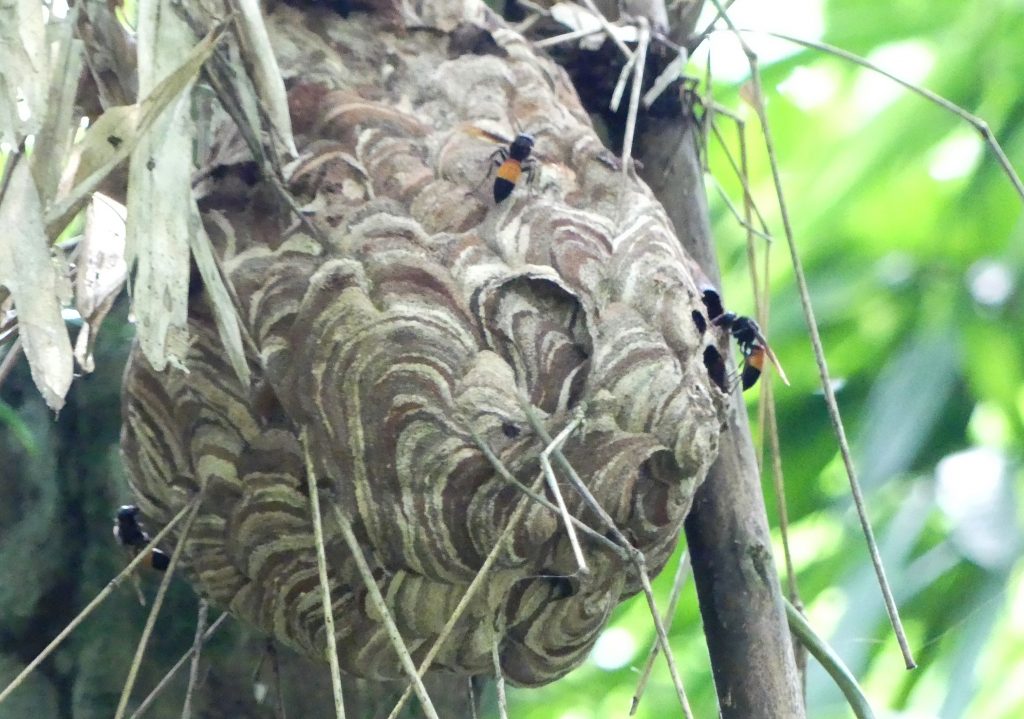
The nest typically starts pear-shaped and expands into a large, bulbous, or oval structure as the colony grows. The outer envelope consists of delicate, papery layers with a characteristic marbled pattern of grey, brown, and tan wood fibers. A single, well-guarded entrance hole is usually located near the bottom or side of the nest. A mature nest during peak season can range from the size of a football to a massive basketball, housing hundreds or even thousands of stinging inhabitants across multiple internal combs.
Burning Hornet Nests to Harvest Their Larvae
The most traditional and effective method local Vietnamese foragers use involves smoke and fire. The villagers I walked with used a torch of completely dry fan palm leaves bound to a bamboo pole about 6 m long.
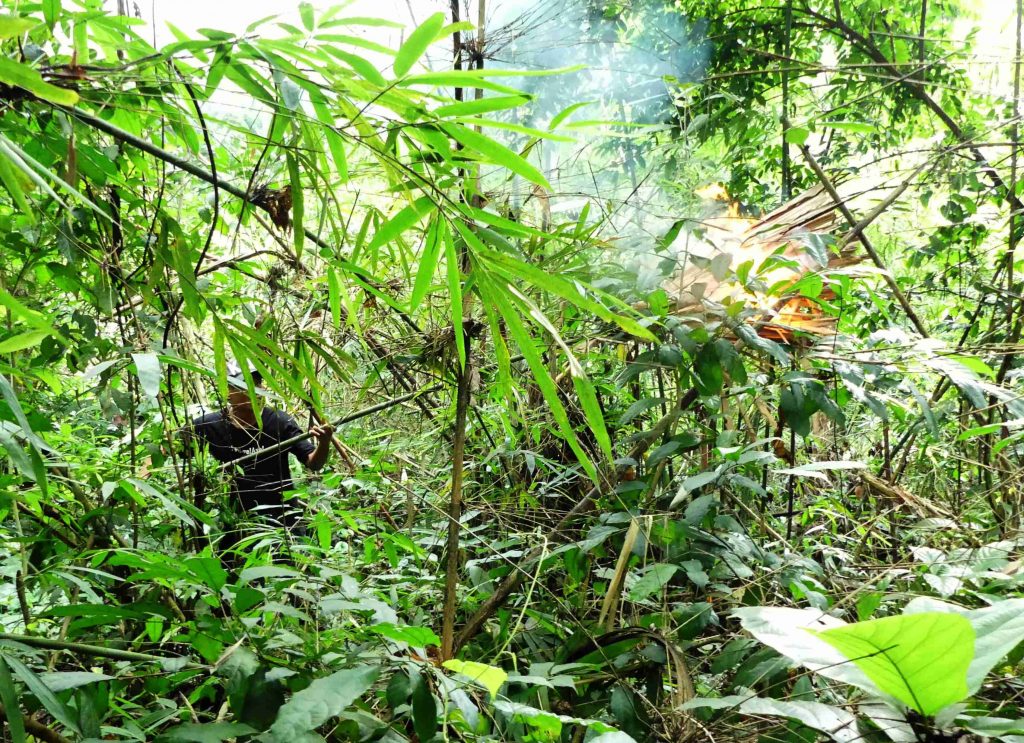
Foragers often wait until nightfall to start burning the nests. At night, nearly all adult hornets return to the nest and become sluggish, cold, and far less aggressive than under the blazing sun. But in our case, my local friends started around 4 pm, when it was still very light out. We needed to do this because it was hard to find the hornet nest among the bamboo and secondary rainforest vegetation. Handling the long torch on the pole we used would not have been practical among the intertwined vegetation.
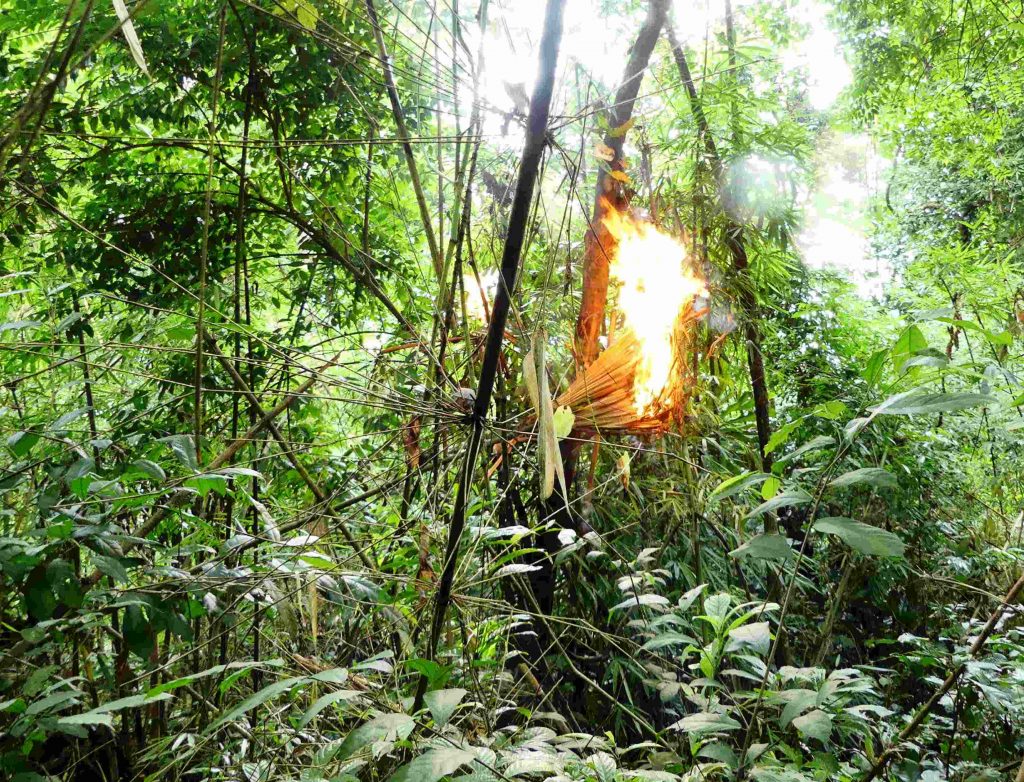
We quietly approached the nest and burned the paper nest from underneath with our fan-palm torch. We didn’t need to sedate the colony with smoke, as the open flame killed most hornets nearby.
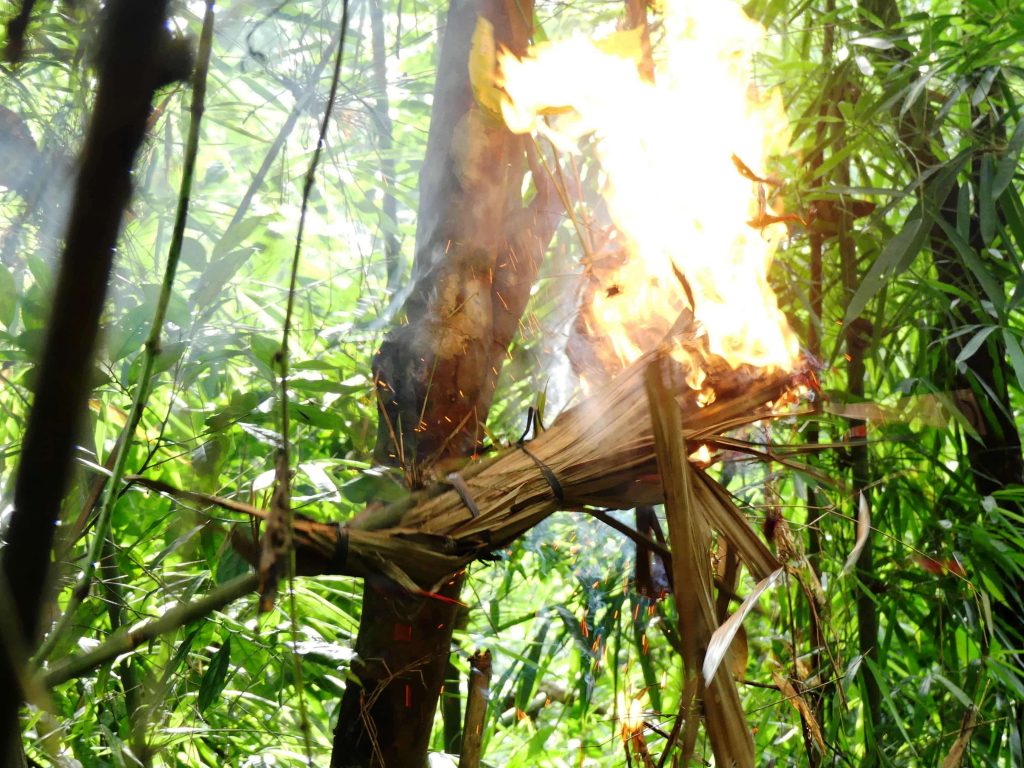
After thoroughly burning the nest, we let it smoke for a while, then detached the entire nest and placed it in a large sack.
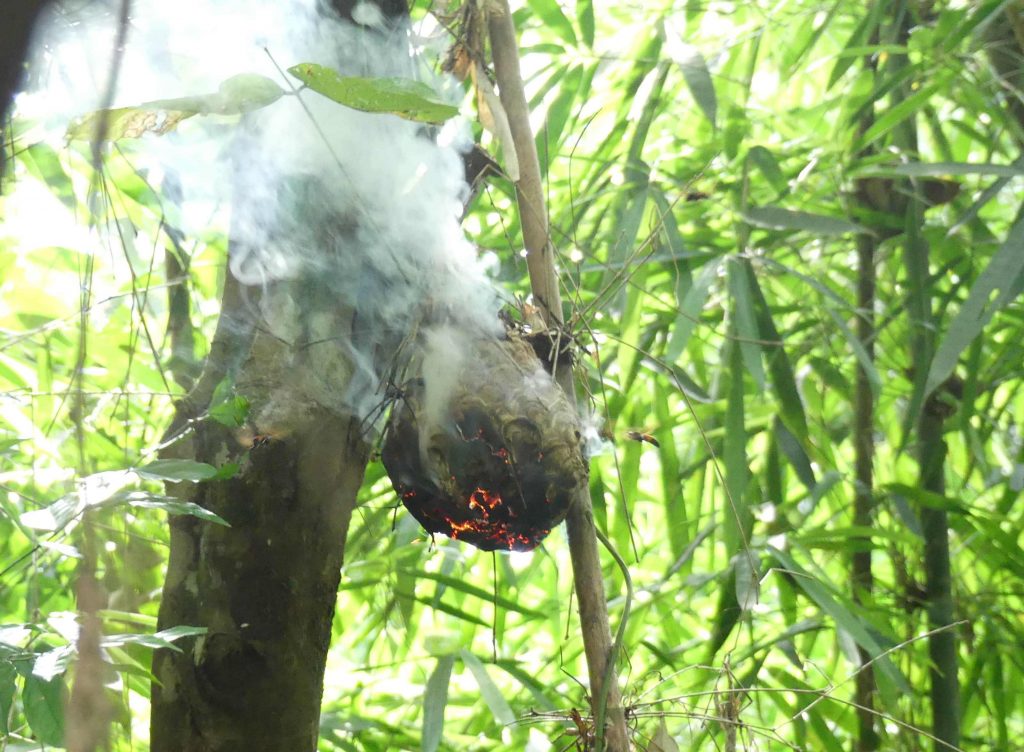
Back at the farmhouse, we sliced it open layer by layer and uncapped the comb cells. We plucked out the white larvae and pupae, ready for the kitchen.
Recipes for Using Hornet Larvae for Food
Hornet larvae have a buttery, creamy texture with a savory, nutty aftertaste that absorbs local spices exceptionally well. In Vietnam, people prepare them in three traditional ways: stir-fried with lemongrass and chili (Nhộng ong xào sả ớt), as hornet larvae porridge (Cháo nhộng ong), or crispy batter-fried.
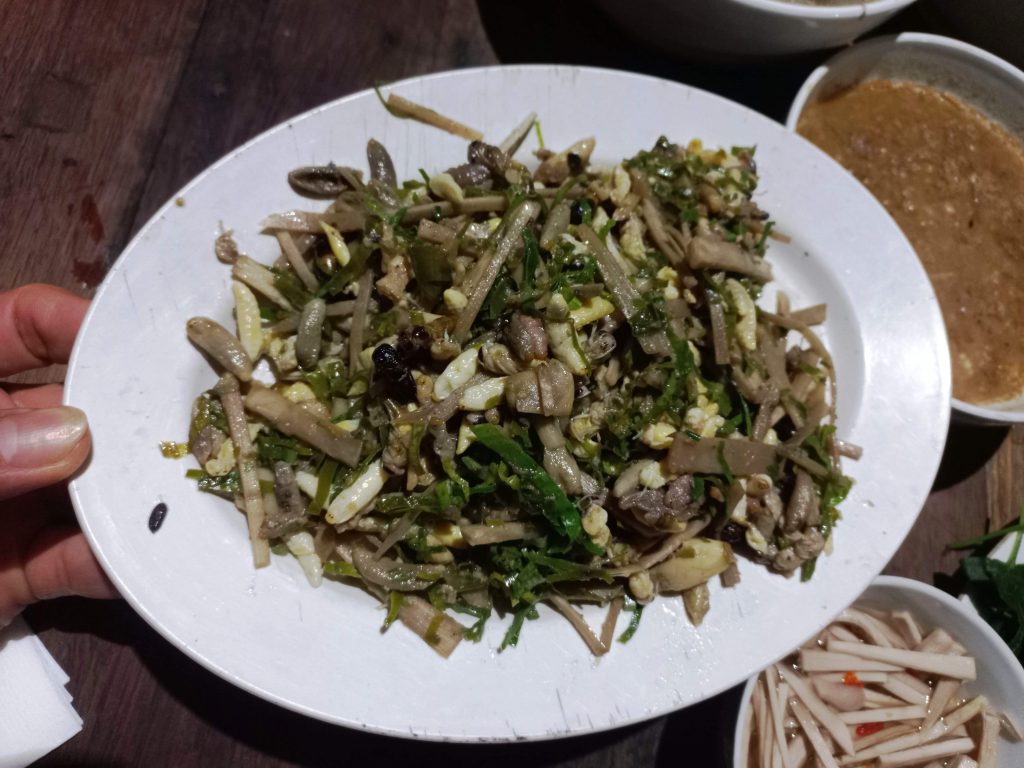
Our lady of the house prepared them differently. She stir-fried the hornet larvae and pupae with turmeric leaves and bamboo shoots.
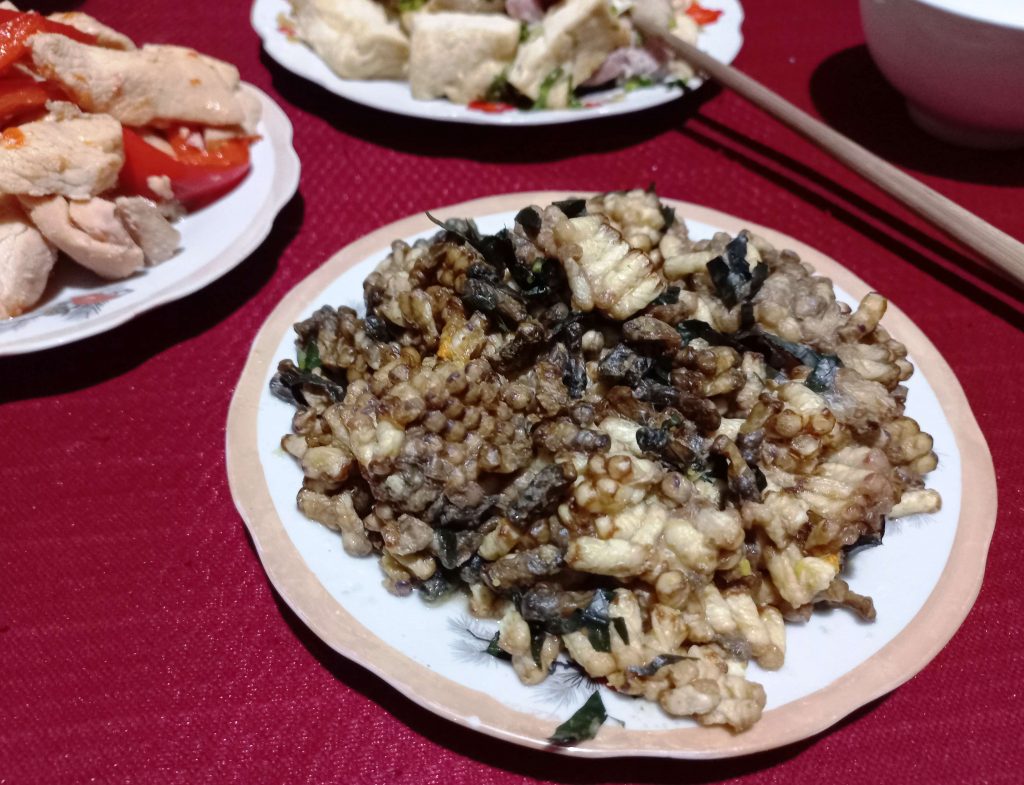
But the most valuable parts of the nest, densely packed with larvae and pupae, were broken into small pieces and flash-fried in a hot wok. The larvae-holding cells were paper-thin and unnoticeable when eaten. To ease digestion, we complemented the food with a whole jug of homemade rice wine. This eased the tension of our hornet nest raiding party, who wore no protective gear during the harvest.
Lessons Learned About Hornet Larvae for Food in Vietnam
- Hornet larvae and pupae are a valuable source of protein for the rice-based diet of small-scale farmers in Vietnam’s central highlands.
- Villagers are seeking out hornet nests and harvest them when these nests reach their maximum size. Smaller nests will be left undisturbed for sustainability.
- During my stay in a small village, I did not see any protective gear for harvesting hornet nests. The only protection was a 6-meter distance between the lit torch and the pole handler.
- Strong protective gear was only used for harvesting wild honeycombs on trees.
Bushguide101 Tip
When exploring wild ecosystems, always travel with experienced locals who know the dangers, like stinging insect behavior, and who suggest safe techniques for harvesting wild protein.
.