
When we talk about wilderness survival and emergency shelters, we usually think of debris huts, tarp configurations, or lean-tos. But if you want to look at one of the greatest large-scale survival construction feats in North American history, you must look back to December 1777.
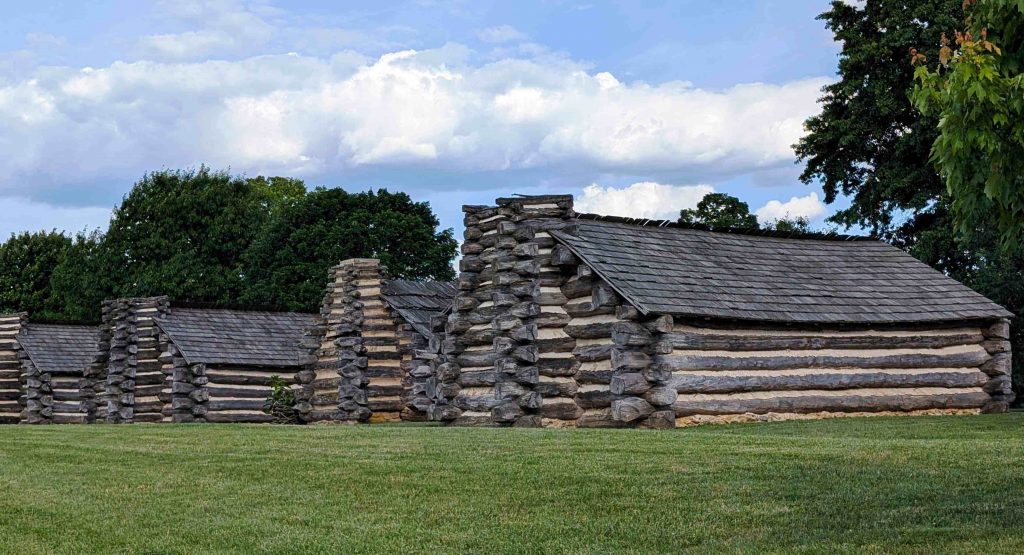
When General George Washington’s Continental Army marched into Valley Forge, they didn’t find a fortified base. They found a windswept, frozen plateau. Within days, thousands of regular citizens-turned-soldiers had to use basic hand tools to engineer a massive, improvised city out of the standing timber around them.
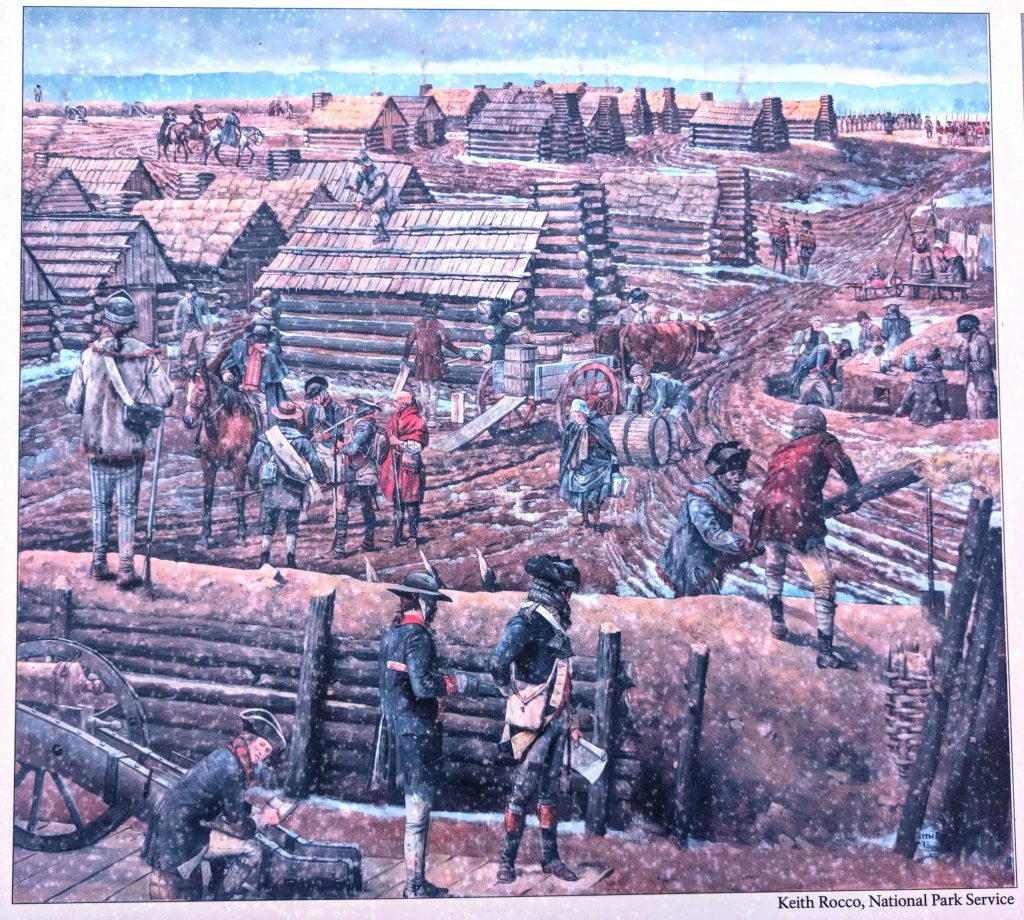
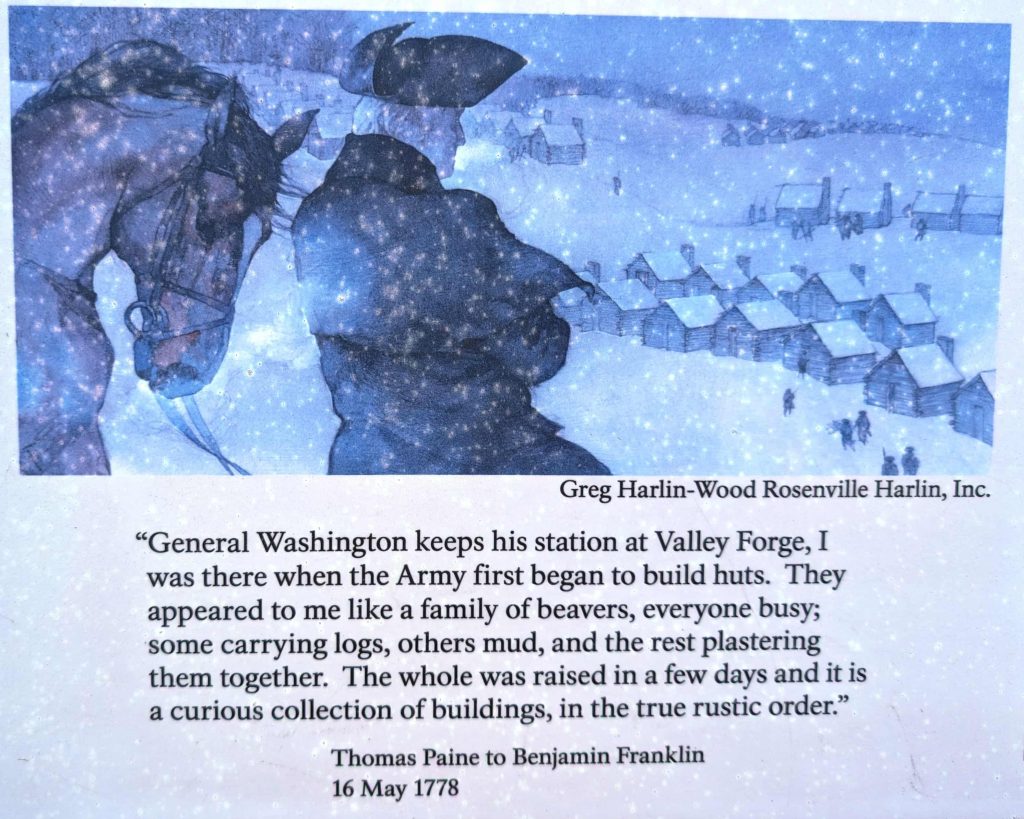
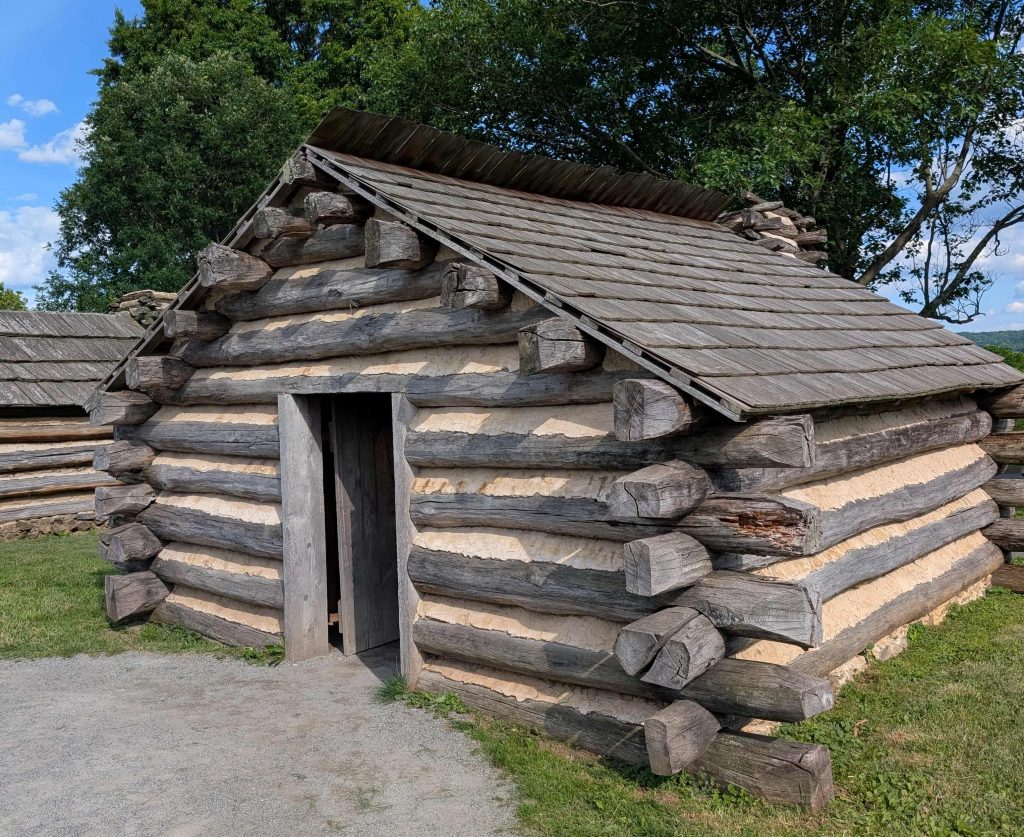
The Valley Forge log cabins (historically called “huts”) are a masterclass in primitive building under extreme pressure. Let’s have a closer look of how these historical survival shelters were constructed, why the design worked, and what modern bushcrafters can learn from them.
The Ultimate Group Shelter Blueprint
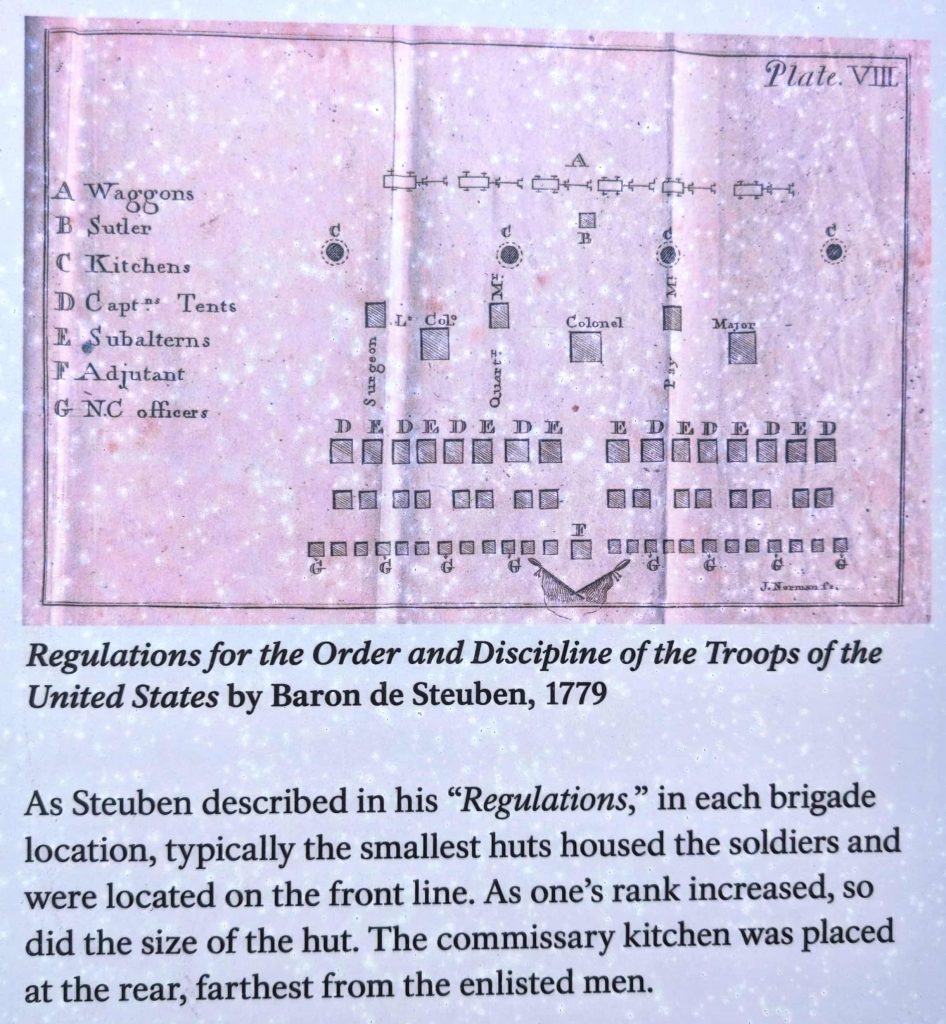
Washington didn’t let the men just build whatever they wanted. To maintain order and ensure safety, he issued strict, standardized blueprint specifications on December 18, 1777. If a squad deviated from the blueprint, they were ordered to tear it down and start over.
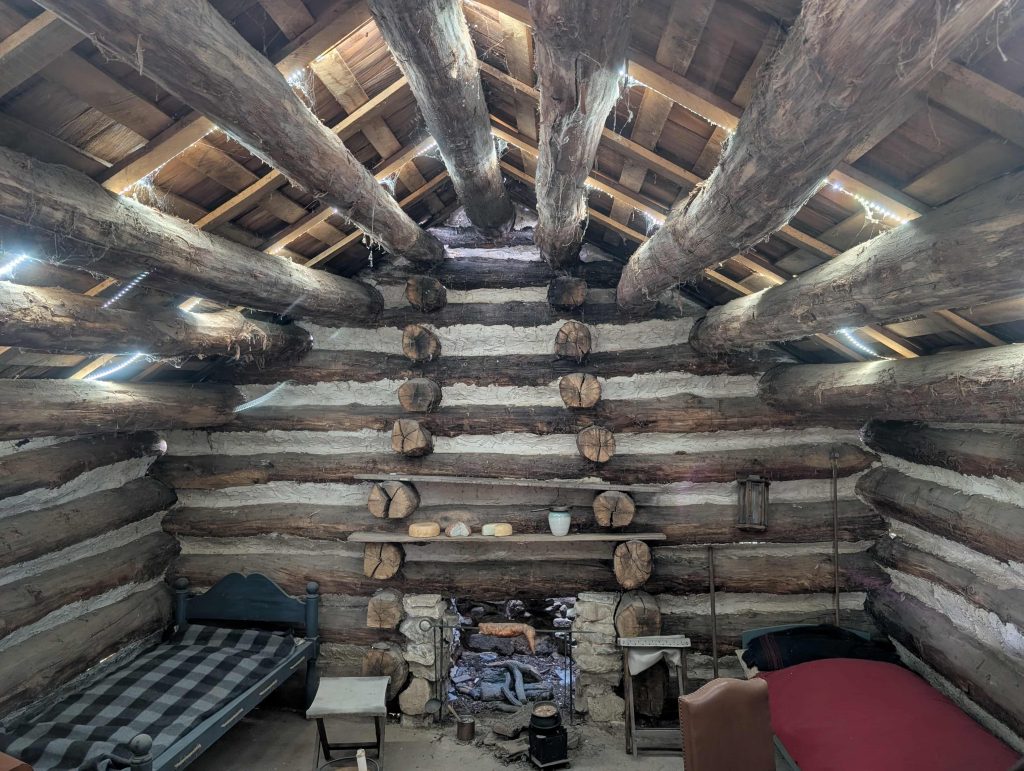
The official military survival specs for each hut were the following:
- Footprint: 14 feet wide by 16 feet long.
- Wall Height: 6 and a half feet high.
- Material: Logs measuring roughly 6 to 8 inches in diameter.
- Roofing: Split logs or slabs, covered with earth or straw.
- Capacity: Exactly 12 enlisted men.
Imagine squeezing 12 fully grown, unwashed men into a 14×16-foot box. It sounds miserable—and it was—but from a pure body-heat retention standpoint, it was brilliant.
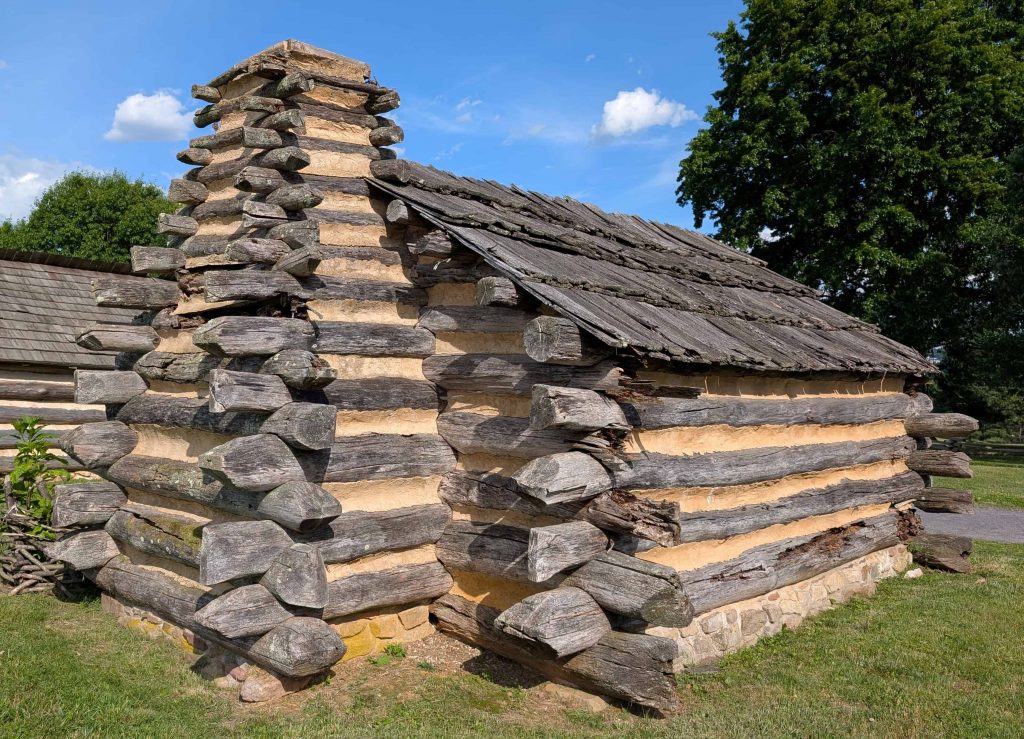
How were the Valley Forge huts build?
The army had to clear hundreds of acres of oak, walnut, and chestnut trees to build roughly 1,500 to 2,000 huts in just a few weeks. Here is how a squad of twelve soldiers built their winter survival home using little more than felling axes, crosscut saws, and standard iron wedges.
1. Timber Selection and Notching
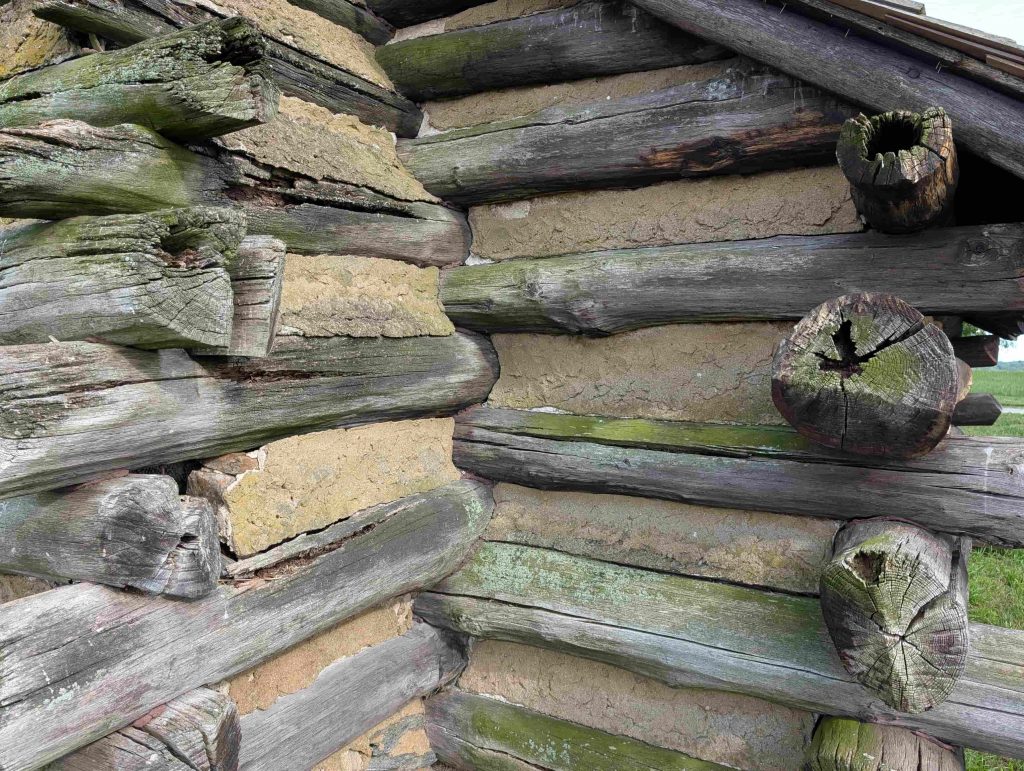
Soldiers selected straight, uniform logs. They used a simple saddle notch (or a crude V-notch) at the corners. By interlocking the logs at the corners, the structure gained immense structural integrity without requiring a single metal nail or spike—materials that were in critically short supply.
2. Raising the Walls
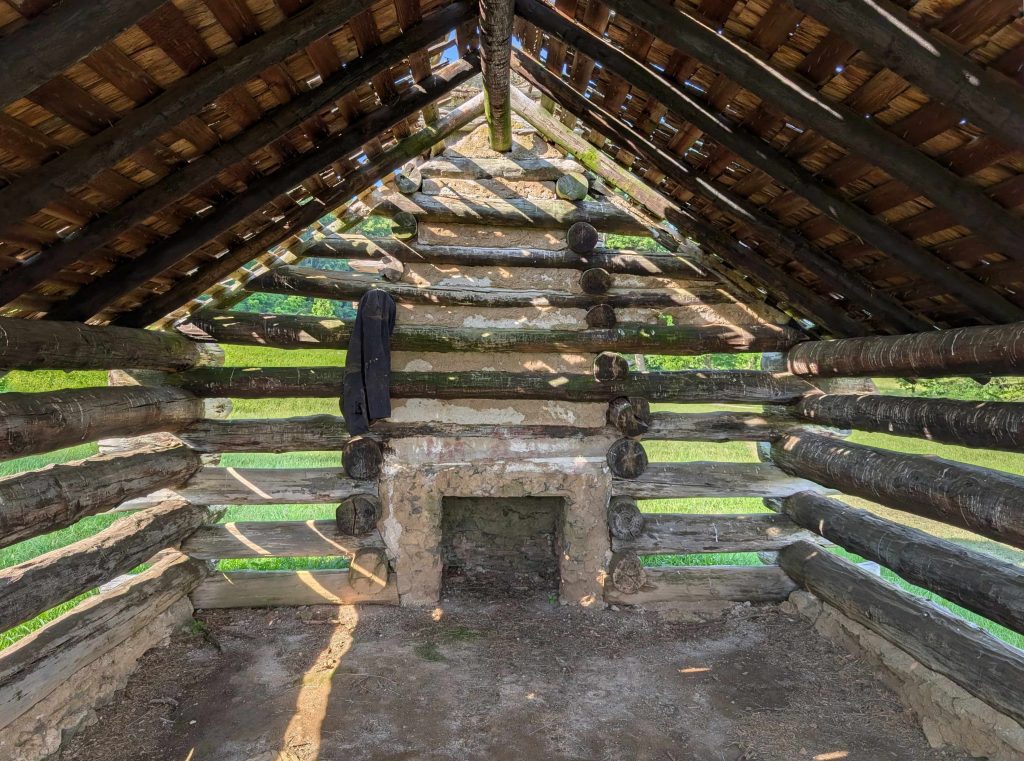
The logs were stacked horizontally up to the 6.5-foot mark. To maximize interior space, the walls were kept entirely vertical. Because the logs weren’t perfectly uniform, large gaps were left between each layer. This is where the survival art of chinking and daubing came into play.
3. The Chinking and Daubing Seal
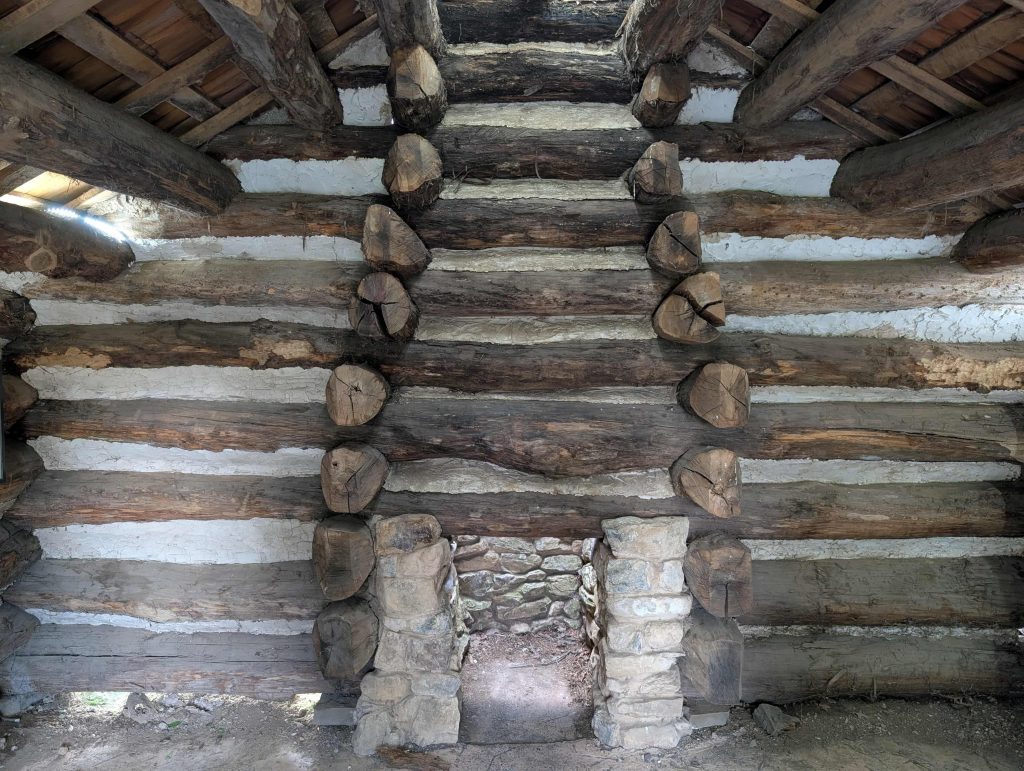
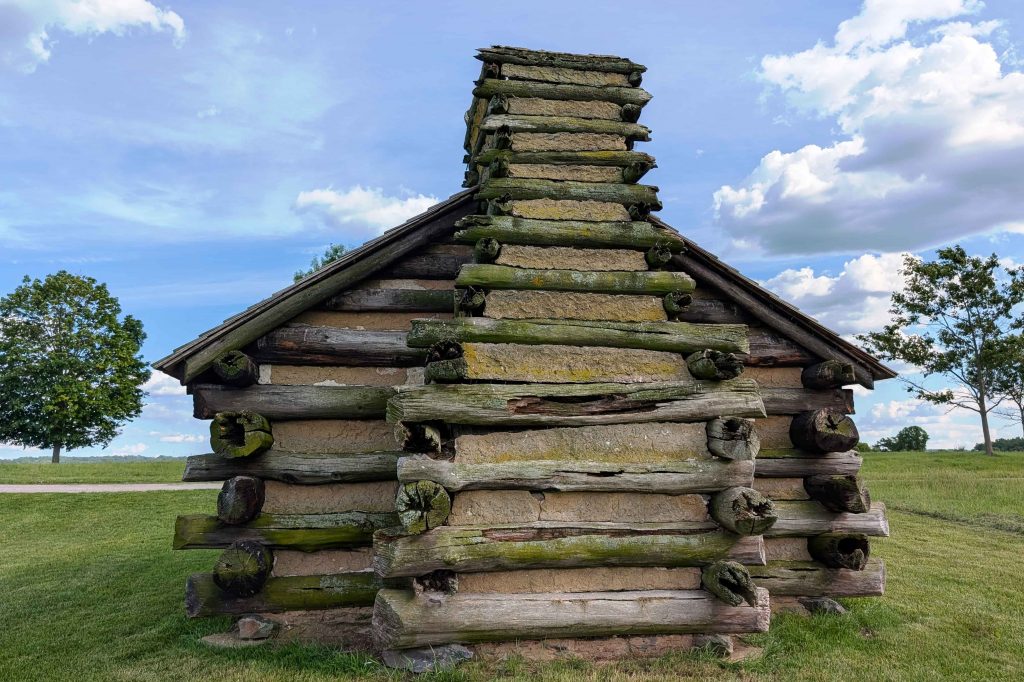
To stop the bitter Pennsylvania winds, soldiers filled the gaps between the logs. First, they wedged stones, wood chips, and branches into the spaces (the chinking). Then, they mixed a thick mortar of mud, clay, and straw to smear over the wood chips (the daubing). This created an airtight seal that locked out the wind, though it required constant maintenance as the mud dried and cracked.
4. The Fireplace and Chimney

Every hut had a fireplace built into the rear or side wall. The fireplace itself was lined with fieldstone to prevent the structure from catching fire. However, because stone was heavy and slow to build with, many chimneys were cat-and-clay style. This involved building a wooden framework of split sticks and coating the entire inside and outside with a 3-inch layer of thick clay to fireproof it.
Inside the Hut: Managing the Microclimate
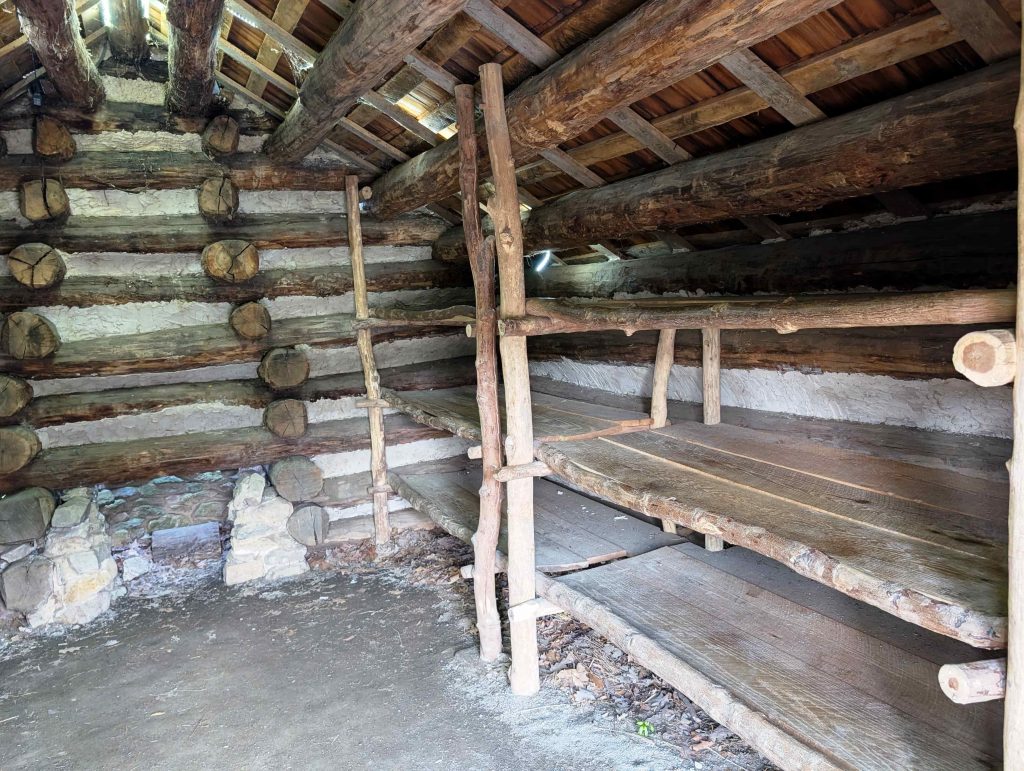
The interior of a Valley Forge cabin was a lesson in layout efficiency and survival realities. To sleep 12 men, triple-tiered bunks were built along the walls. The floor was nothing but packed earth, which quickly turned into cold mud if water seeped in.
While the fireplace kept the space warm, the lack of windows meant the cabins were perpetually dark and incredibly smoky. If the chimney didn’t draw properly, the room filled with carbon monoxide and wood ash. Yet, compared to a linen tent flapping in a blizzard, these drafty log boxes were absolute lifesavers.
3 Bushcraft Lessons from Valley Forge
What can a modern outdoor enthusiast take away from the winter of 1777?
Lesson 1: Standardized Design Saves Energy
When you are exhausted, starving, and cold, you do not want to spend mental energy inventing a new shelter design. Having a proven, repeatable blueprint allowed the Continental Army to build an entire city in under a month.
Lesson 2: Mud is Your Best Friend
In a cold-weather emergency, blocking the wind is just as important as keeping rain off your head. Natural insulation materials like wet clay, leaf litter, and packed mud can turn a drafty wooden cage into a heat-retaining capsule.
Lesson 3: Tool Maintenance is non-negotiable
Accounts from the encampment note that progress ground to a halt whenever axes became dull or broken. In any long-term bushcraft scenario, your tools are your lifeline. Keep your blades sharp and your handles secure.
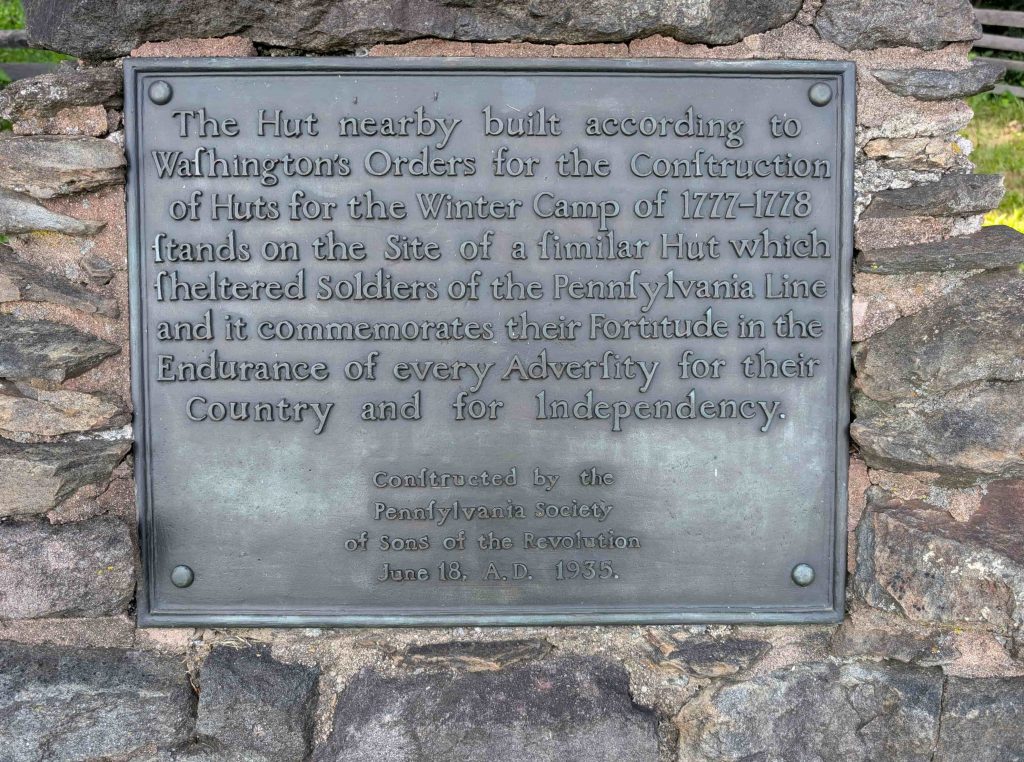
The huts at Valley Forge, which are now reconstructed at the Valley Forge National Historical Park near King of Prussia, Philadelphia, PA, weren’t comfortable, but they represent the pinnacle of utility-driven wilderness engineering. They were built for one reason only: to keep human beings alive until spring.
.