
This is the second installment of our three-part series on ancient weapon technology. While part one explored global history, this article breaks down the engineering, dimensions, and parts of traditional North American atlatls and darts. Part three will cover launching mechanics and modern survival applications.
Anatomy of the Atlatl Throwing Stick
A traditional atlatl is not just a piece of wood—it is an engineered system consisting of three core elements: the handle, the shaft (stick), and the spur. Together, they transform manual muscle movement into high-velocity kinetic energy.
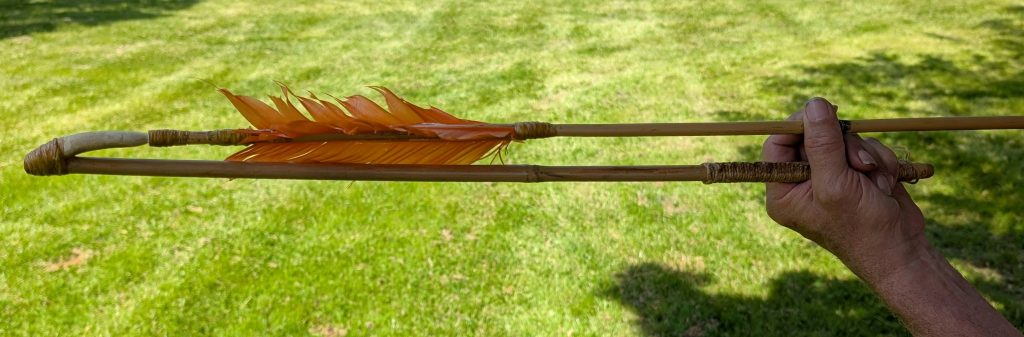
Generally, an atlatl’s length is roughly the distance from your inner elbow to your fingertips, though it can be up to 4 inches longer, depending on personal preference. Historic artifacts measured at the Museum of Indian Culture in Allentown, Pennsylvania, range from 17.5 to 23 inches in length. While most ancient models were carved from dense hardwoods, unique specimens were occasionally fashioned from local materials, such as genuine buffalo rib.
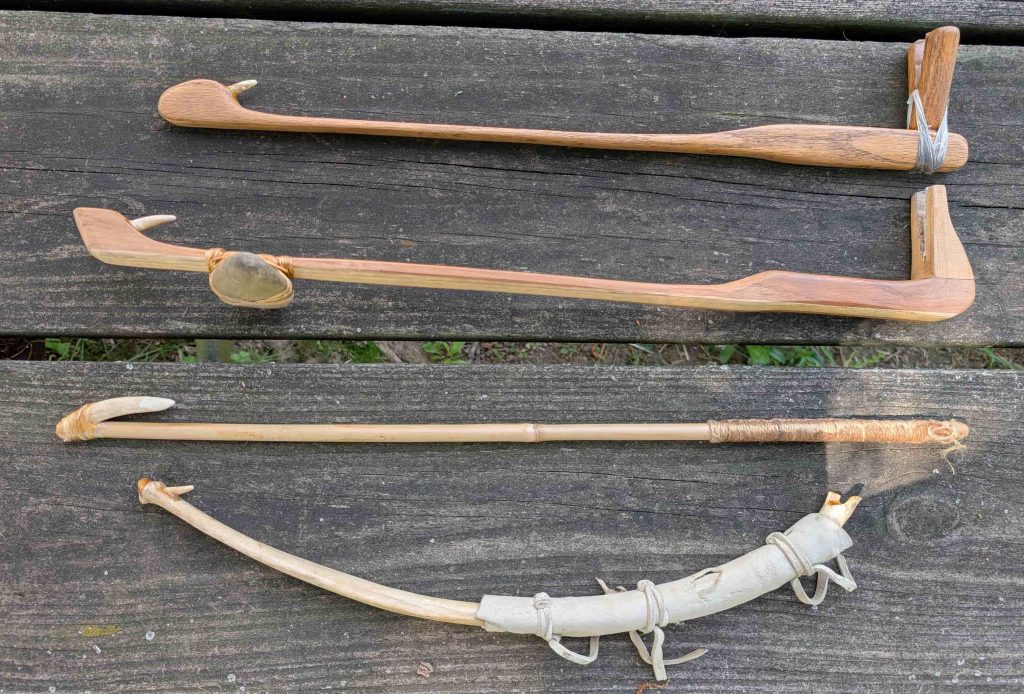
1. The Handle and Grip
The grip area varies widely depending on tribal tradition. Some designs feature a complex “dart rest”—a deeply notched shelf or bench with leather-lined sidewalls to cradle the projectile before launch. Simpler sticks rely on a crude carved depression. If a design lacks a dedicated rest entirely, the hunter manually pinches the dart shaft between their thumb and index finger while holding the handle with the remaining fingers.

2. The Shaft: Flex vs. Curve
While an atlatl can be straight or naturally curved, straight shafts provide a massive mechanical advantage. During a throw, a straight, flexible wooden shaft bends slightly backward under load. This allows the stick to act like a leaf spring, storing elastic potential energy that snaps forward at the apex of the swing, launching the dart with incredible whip.
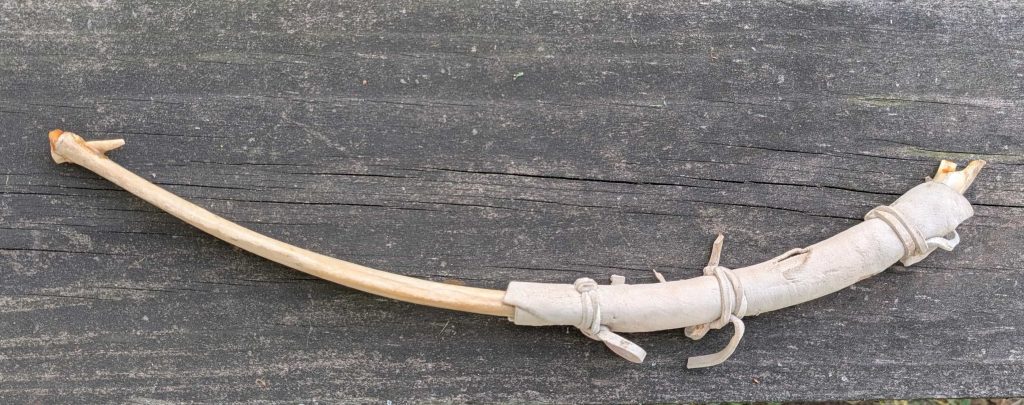
Conversely, naturally curved materials (such as rib bones) pose a severe design flaw. The natural bend introduces an excessive angle of departure. When you add the pitch of the spur, the release angle often spikes between 50 and 65 degrees. Because of this, a dart thrown from a sharply curved stick loses contact with the launching hook prematurely, causing it to wobble, tumble, or veer off target.
3. Male vs. Female Spurs (Hooks)
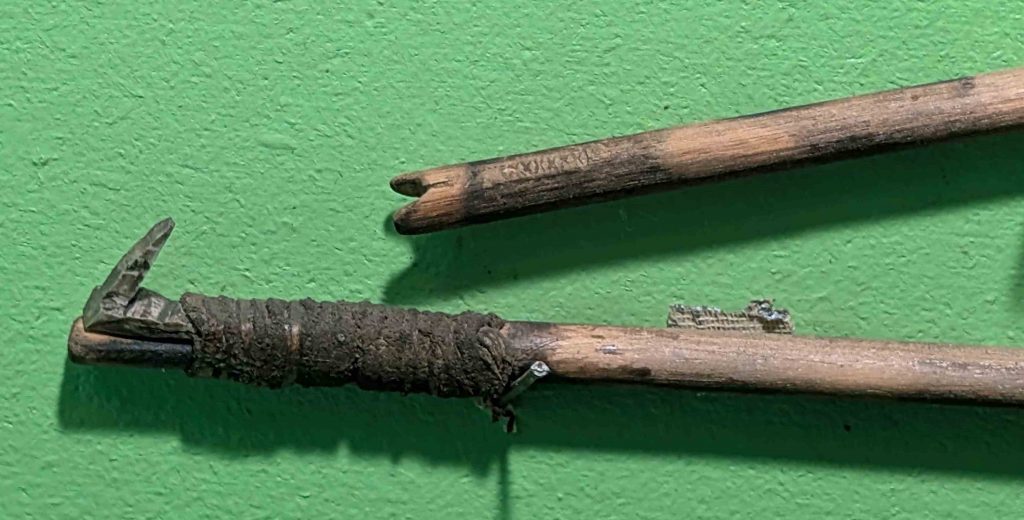
The point of connection between the throwing stick and the projectile dictates the design classification:
- Male Atlatls: These feature a prominent spur (or hook) at the rear tip that seats into a hollow cup carved into the tail end of the dart. The spur can be carved directly from the shaft wood or fashioned from rigid attachments such as antler tips, bone fragments, or metal nails. The optimal spur angle is generally fixed between 30 and 45 degrees relative to the shaft.
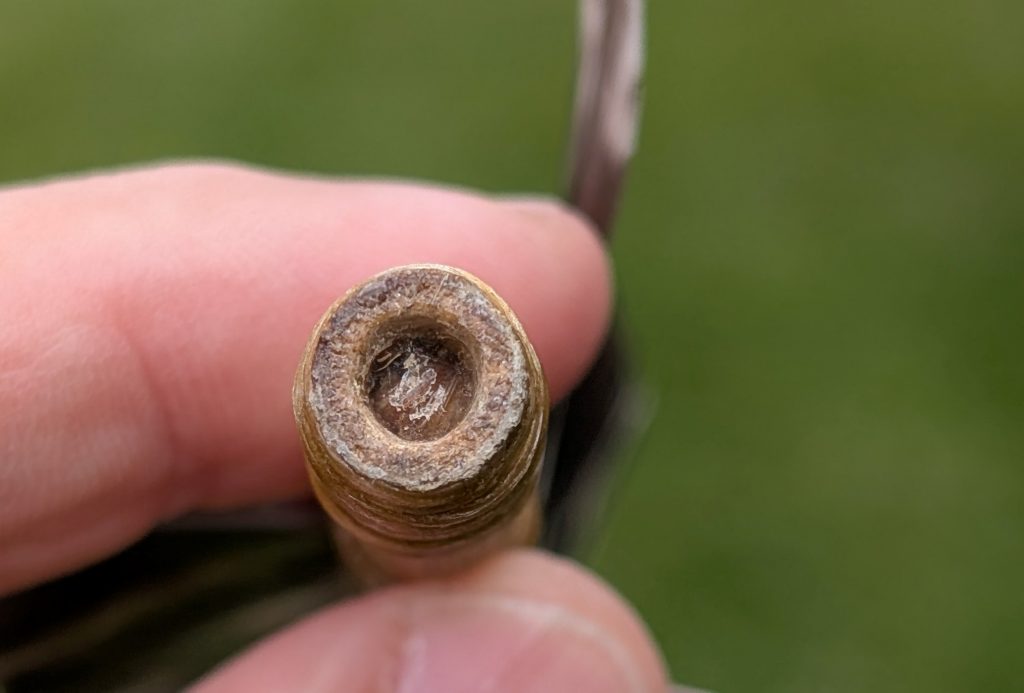
- Female Atlatls: These reverse the mechanic entirely, featuring an integrated cup or socket at the rear of the stick that accepts a pointed or narrowed tail end of the dart.
What are Atlatl Bannerstones?
One of the most defining characteristics of prehistoric North American atlatls is the banner stone. Historically, early archaeologists named these beautifully polished stones because they believed they were ceremonial objects held aloft like tribal banners or flags—like a modern tour guide raising an umbrella to keep a group together.
Today, we know banner stones served a critical mechanical purpose. They act as tuning weights.
The Two Types of Bannerstones
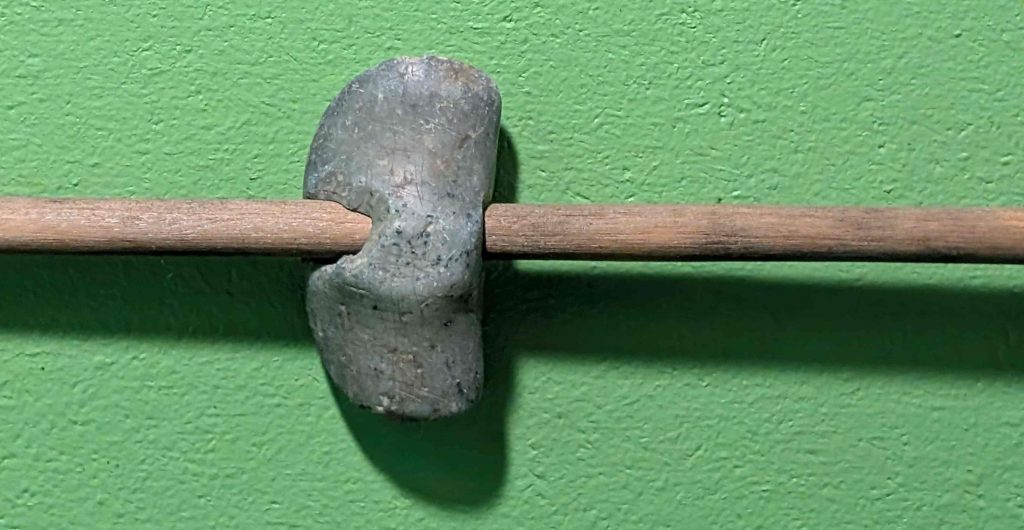

- Perforated Bannerstones: These stones feature a precisely drilled center hole or deep groove. Because the stone must slide onto the shaft from the back, these systems require a detachable or modular hand grip, as the stone cannot pass over the thick rear spur.
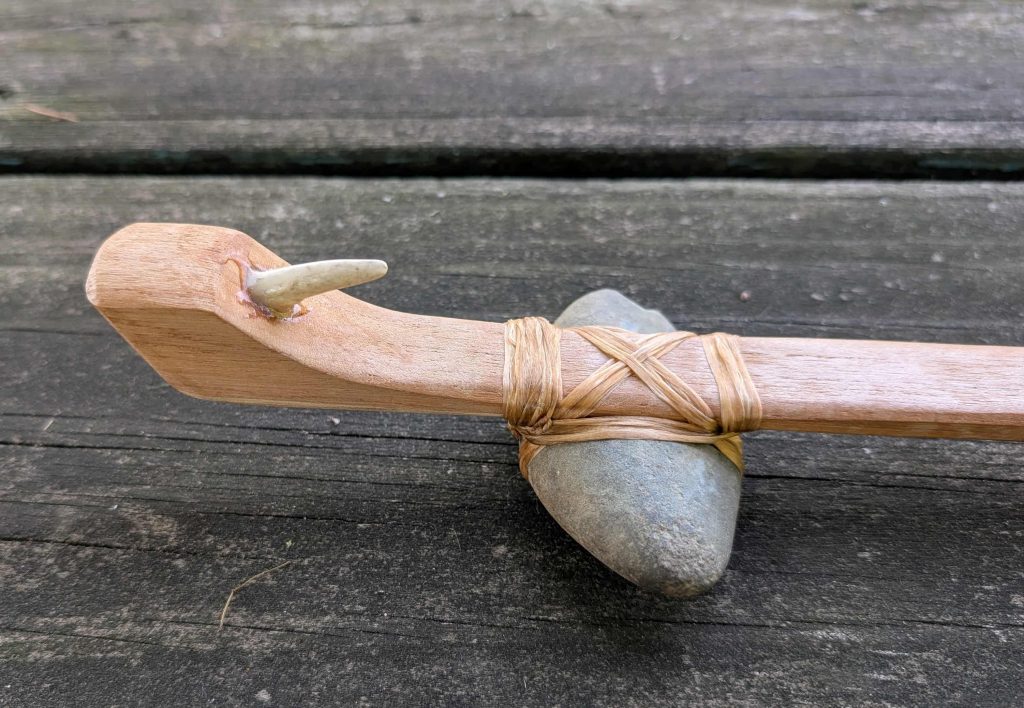
- Bound Bannerstones: These are un-drilled stones lashed securely to the back of the atlatl shaft near the spur using animal sinew or raw hide.
By adding a counterweight to the upper half of the throwing stick, banner stones resist the rapid forward acceleration of the arm, forcing the wooden shaft to bend further backward during the initial swing. This stores substantially more energy in the wood’s spring, which snaps forward with higher force upon release.
Anatomy of the Atlatl Dart
Despite the common English translation of “spear-thrower,” an atlatl does not throw a spear. It launches an oversized arrow known as a dart.

Data from the Museum of Indian Culture show dart lengths ranging from 4 feet 10 inches (1.47 m) for shorter systems to 5 feet 11 inches (1.8 m), 6 feet (1.83 m), and 6 feet 7 inches (2 m). In practice, an atlatl dart is closely tuned to the user’s physical stature; a six-foot-tall hunter typically throws a six-foot dart.

The Shaft and Spine
With a uniform thickness of roughly 3/8 of an inch (1 cm), these long projectiles are highly flexible. Because a standard spear must be rigid enough to withstand hand thrusts or heavy impacts, an atlatl dart cannot function as a spear—it would shatter immediately under compression. Ancient crafters sourced these long, perfectly uniform shafts from flexible river reeds, robust grasses, bamboo, or painstakingly whittled straight-grained wood.
Fletching
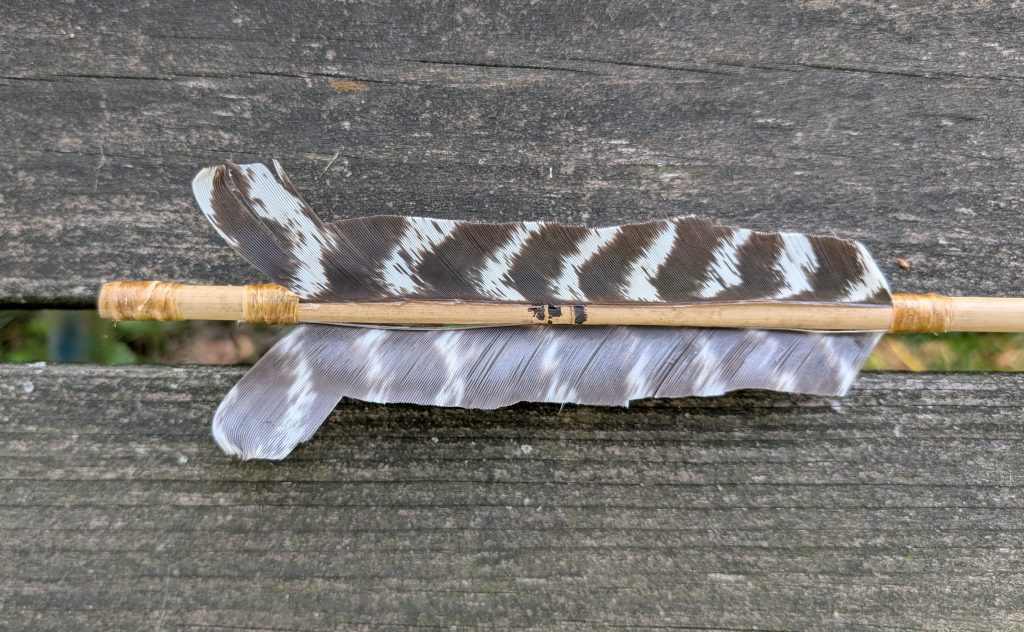
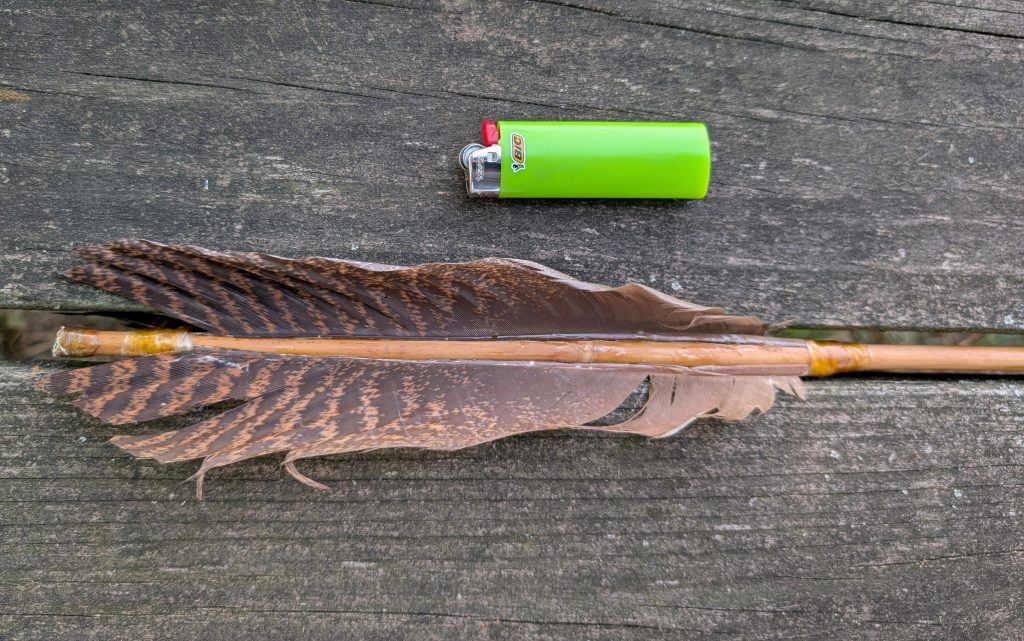
Just like a modern archery arrow, the tail end of a dart relies on feathers to stabilize its flight. Crafters use stiff, pennaceous feathers harvested from large birds like turkeys, geese, or vultures. These fletchings generally range between 7 and 10 inches (17.8 to 25.4 cm) long and are trimmed straight or styled into decorative patterns according to the thrower’s preference.
The Foreshaft and Dart Head
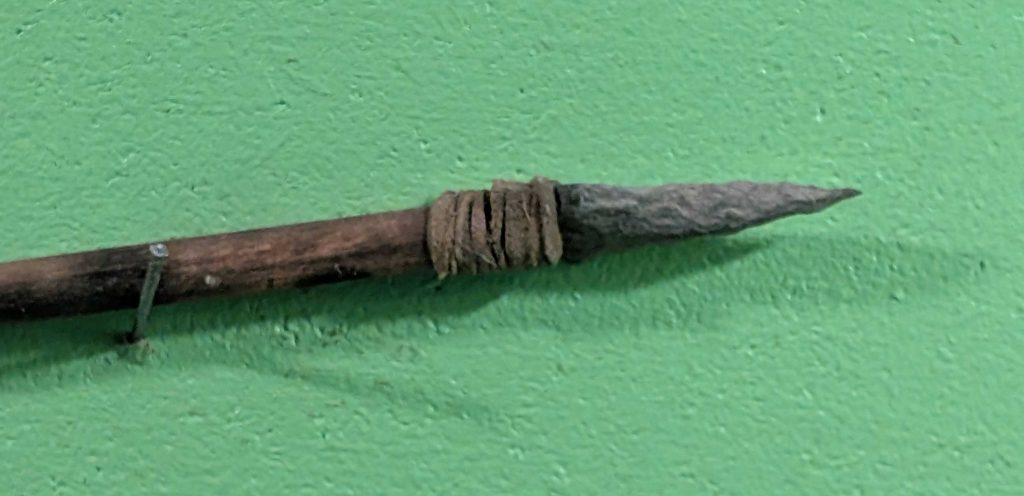
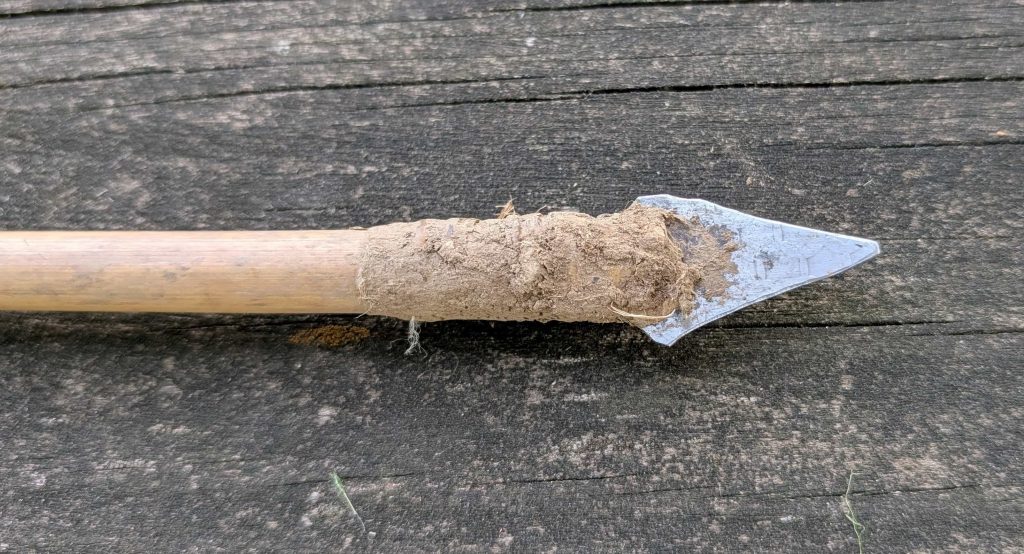
At the business end of the weapon sits a piece of modular engineering: the foreshaft. Instead of gluing the dart head directly to the main 6-foot cane shaft, the stone or metal head is attached to a separate, 7-inch piece of hardwood called a foreshaft. This foreshaft plugs into a socket at the front of the main dart.
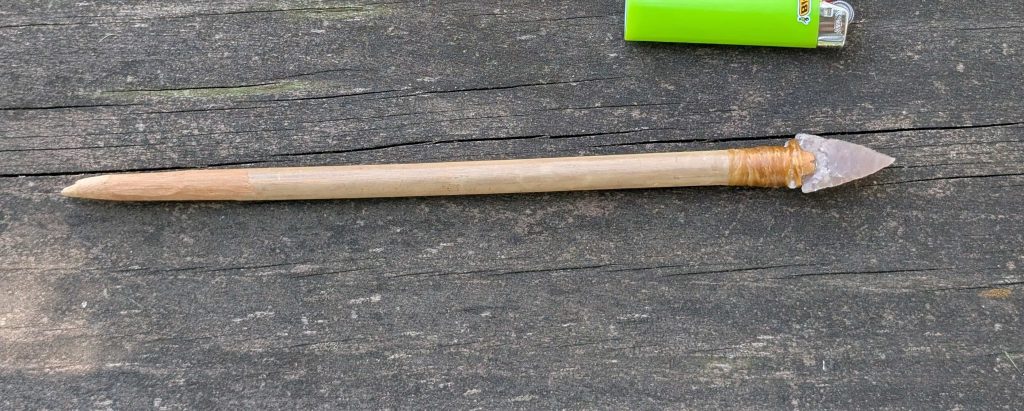

Upon impact with a large animal, the foreshaft breaks free or detaches from the main shaft. This allows the valuable, hard-to-craft main shaft to fall safely away to the ground rather than getting snapped by a thrashing animal, while the detached head remains deep inside the target to do its work.
Key Takeaways: Atlatl Components
- Three-Part System: A functional atlatl comprises a handle/grip, a flexible shaft, and a specialized spur (hook) set at an optimal 30-to-45-degree angle.
- Bannerstone Physics: Far from being simple ornaments, banner stones serve as mechanical weights that help store dynamic energy in the flexible spine of the throwing stick.
- Oversized Arrows: Atlatl projectiles are highly flexible darts—not rigid spears—complete with feather fletching and modular, breakaway foreshafts designed to protect the weapon from damage during a hunt.
.





2 comments
Sean
This is a surreal experience, I am writing this comment after reading your article which was shown to me by an AI language model when i was asking it questions about Stone Age engineering. It was telling me of the Atlatl, something i haven’t heard of before and didn’t realise was such a monumental piece of technology for our ancestors. The AI gave me a link to this article, and i read through it and appreciated the thoroughness, approachability and pictorial inclusions to give me an idea of how this technology works. I can’t imagine how genius the people who discovered this were, how they experimented and altered the design over such a period to perfect this. Transferring biomechanical potential energy of the bicep muscle into kinetic energy of the flying dart. I need to see this in action!
Lucas
What I find fascinating is that they suddenly appear in the Americas around 7000 BC along with agriculture