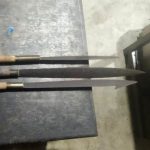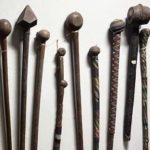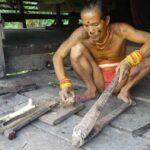
The blowpipe dart is a precise and fragile object. Its shaft is only about 3 mm thick, its pith cone must remain undamaged to function, and its tip carries a poison that acts within seconds of entering the bloodstream. Carrying ten to twenty such darts through dense, humid rainforest demands a container that protects the darts from physical damage and keeps the poisoned tips isolated from the hunter’s hands.
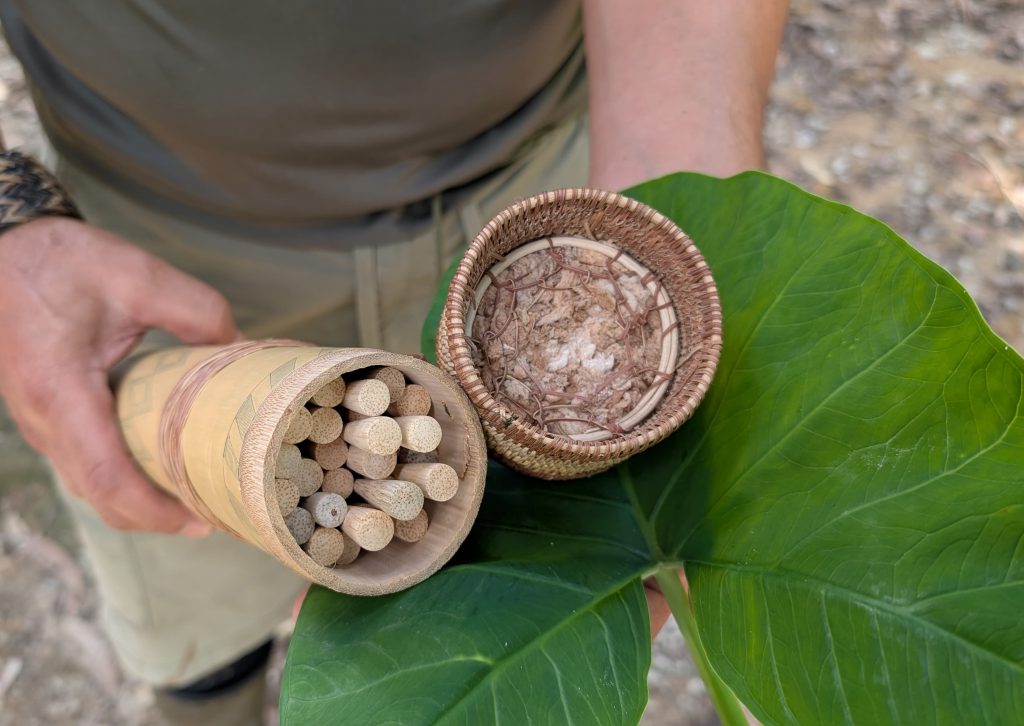
That container is the quiver, known in various Orang Asli dialects as the tembung or tabung. We have handled and examined quivers from several Orang Asli communities in Peninsular Malaysia, and what strikes you immediately is that the object is more than a tube with a lid. It is a considered piece of kit, designed around the specific hazards of carrying poisoned darts, and often decorated intrinsically.
Construction
The body of the quiver is almost always made from a single section of the Bamboo species Buluh Tawar (Schizostachyum zollingeri) or Buluh Minyak, both of which produce straight, smooth-walled culms well suited to the purpose. Unlike the blowpipe barrel, which requires exceptionally long internodes, the quiver only needs to be around 30 to 40 cm in length. The bamboo is cut so that a natural node forms the sealed base — no additional material is needed to close the bottom end.
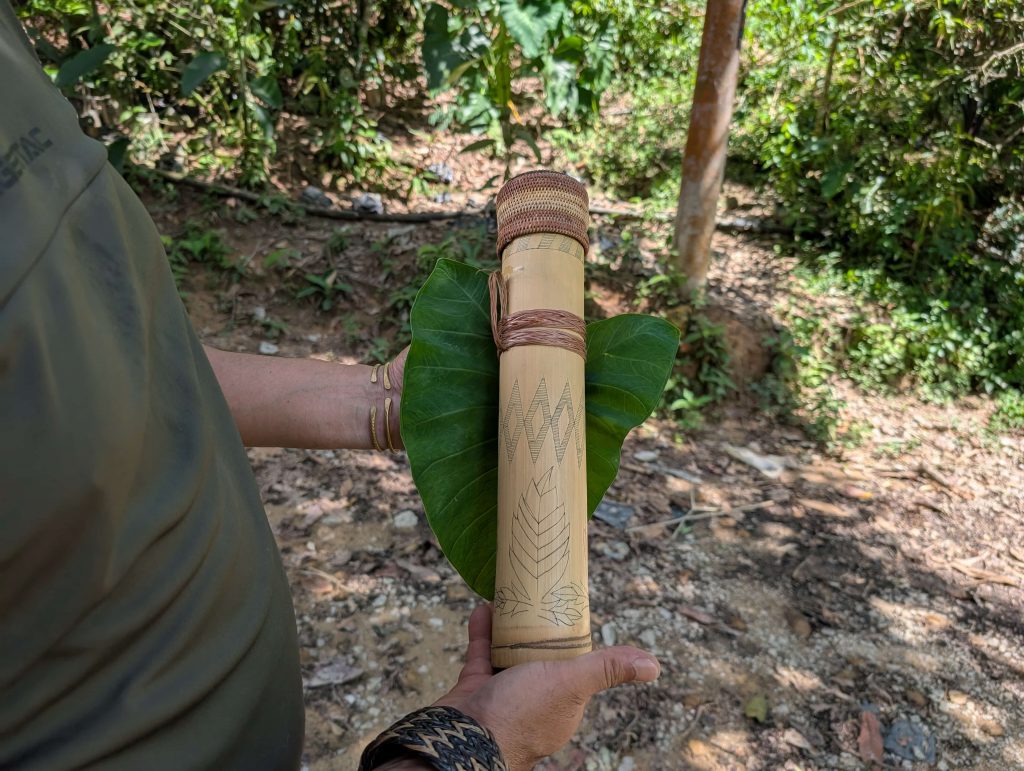
The cap is made to fit tightly over the open end, carved either from the same bamboo or from a piece of soft wood. To improve the seal against humidity, the cap is sometimes wrapped with woven rattan or covered with a small piece of animal skin. A quiver that admits moisture risks softening the pith cones, warping the shafts, and degrading the poison — all of which represent serious losses of time and material to prepare.
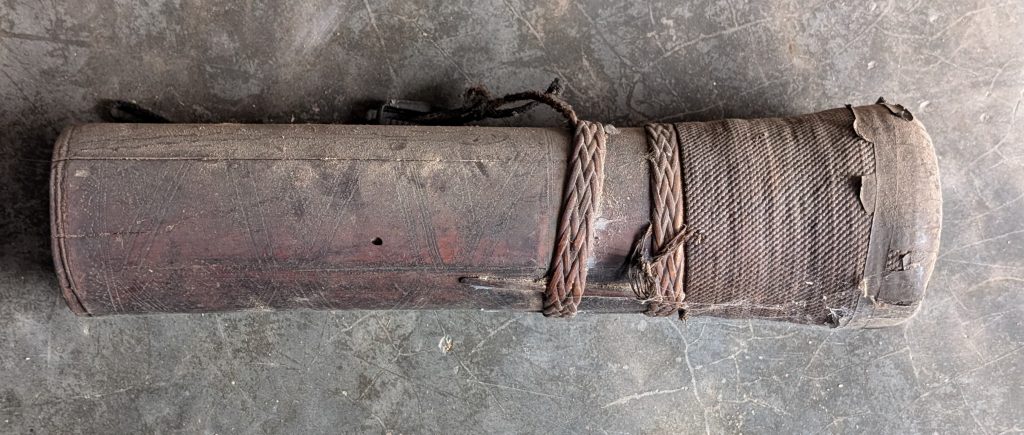
The exterior of the quiver is frequently carved with geometric patterns. Among the Orang Asli communities we have encountered, this decoration is not purely aesthetic. The patterns often carry clan associations or are understood to offer spiritual protection for the hunt. A quiver that has been well used is typically smooth and dark from handling, with the carved surfaces worn to a low relief.
Internal organisation
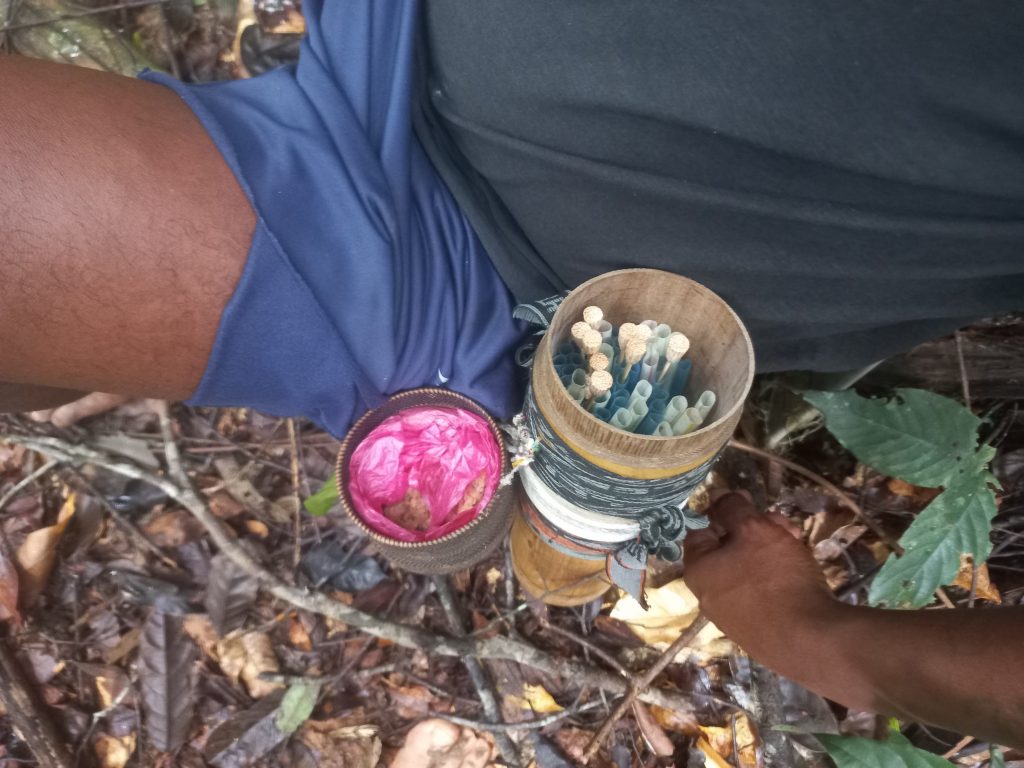
Loose darts in a bamboo tube would be a serious hazard. Poisoned tips contacting each other can cause the dried resin to flake off; more critically, a hunter reaching into an unsorted container risks pricking a finger on a poisoned tip. The consequence would be fatal.
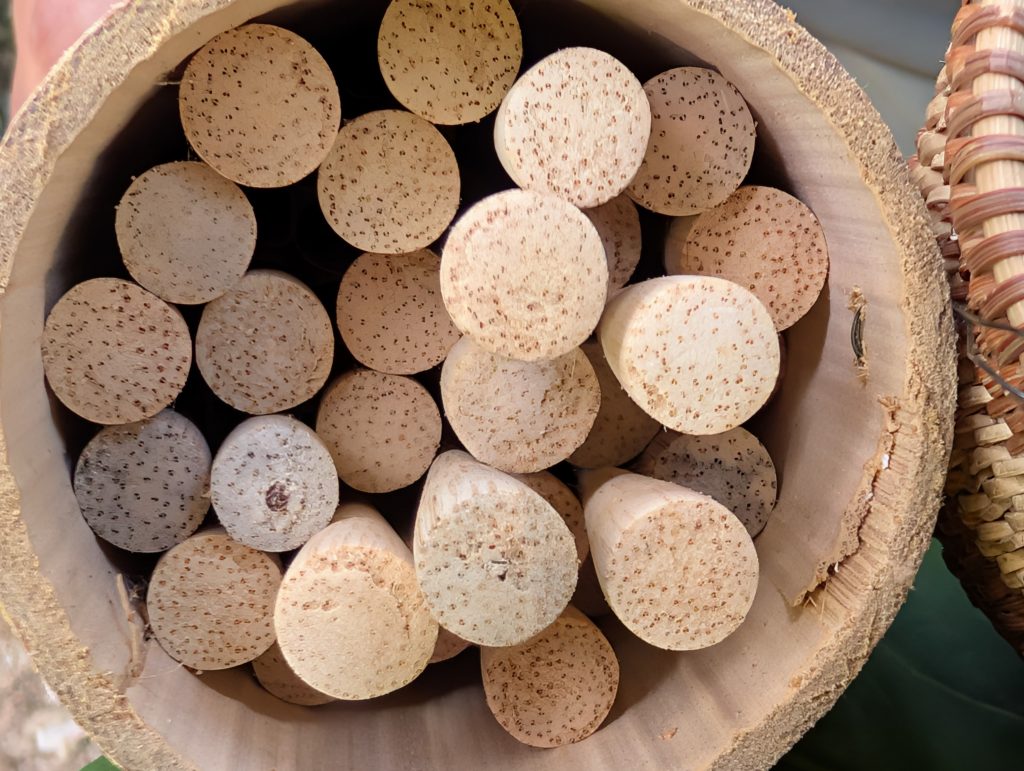
To prevent this, the inside of the quiver is either fitted with fitted with a fluffy plant material — into which each dart is pushed individually, tip downward. This keeps the poisoned ends separated, protected, and pointed away from the hunter’s hand. The blunt pith-cone ends face upward, allowing a dart to be drawn cleanly by the safe end in a single movement.
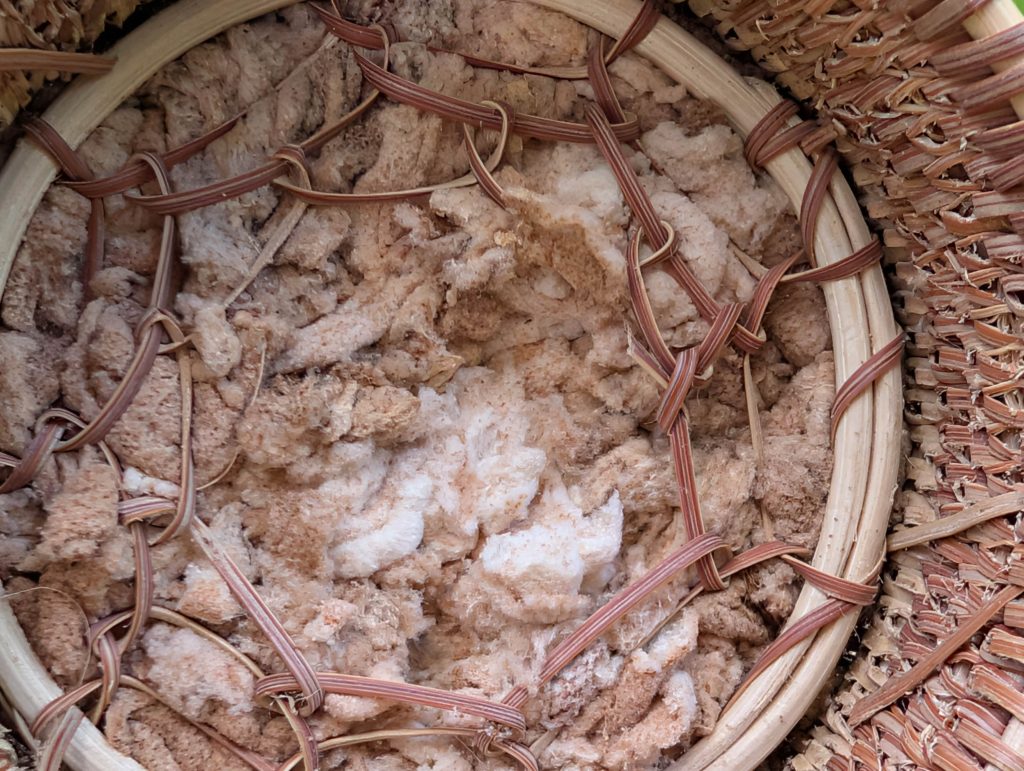
A specific and interesting material used for this internal padding — noted among several groups — is the dried fibrous felt found at the leaf sheaths of the sugar palm (Arenga pinnata). This material has a soft, slightly compressible texture that holds the dart shafts firmly without crushing the pith cones, and it is readily available in the forest. Notably, the same fibre also serves as the stuffing material carried in the quiver’s cap, from which the hunter takes small amounts to fine-tune the fit of individual dart cones before loading.
Accessories and carrying
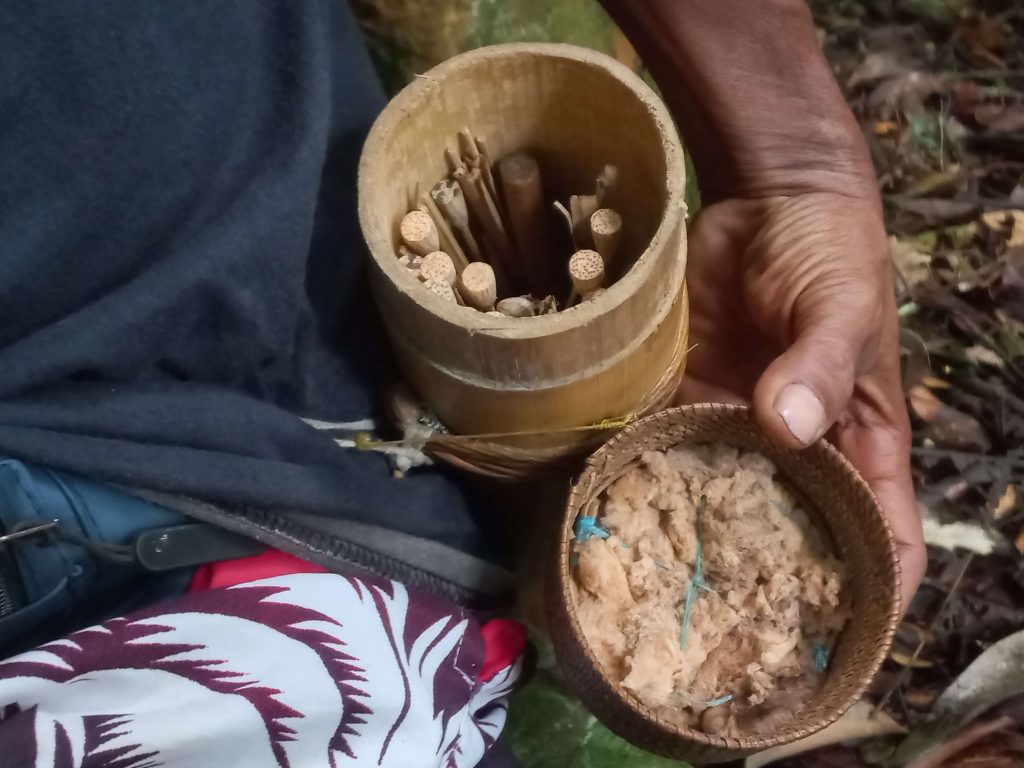
The quiver is worn at the waist, fixed to a belt of Terap bark or rattan. Most examples we have examined also carry one or more smaller secondary tubes or pouches attached to the side of the main body. These contain the consumables needed to maintain and reload the dart kit in the field: spare pith from the sago palm for replacing worn or damaged cones, a small quantity of unprocessed Ipoh resin, and sometimes fire-starting materials. The quiver, in this respect, functions as a complete hunting kit rather than simply a dart container.
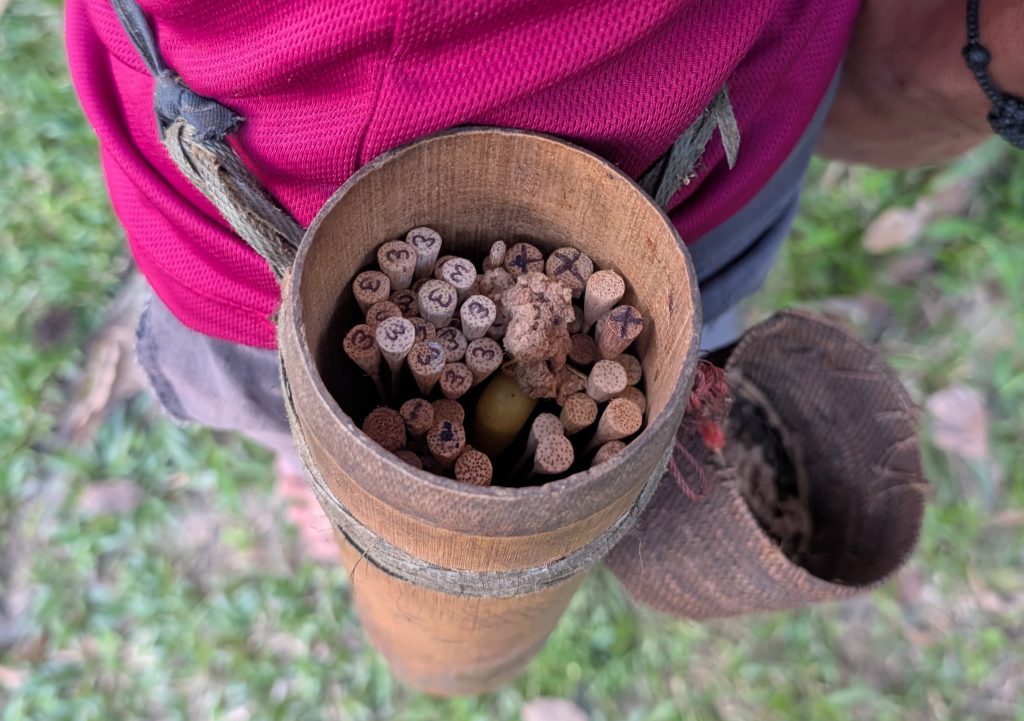
When climbing trees or moving through low undergrowth, the quiver can be slid around to the back of the body using a wooden hook attached to the belt. This keeps it clear of branches and vines while the hunter moves and prevents the cap from being knocked loose or the darts from shifting in the padding.
Handling the darts
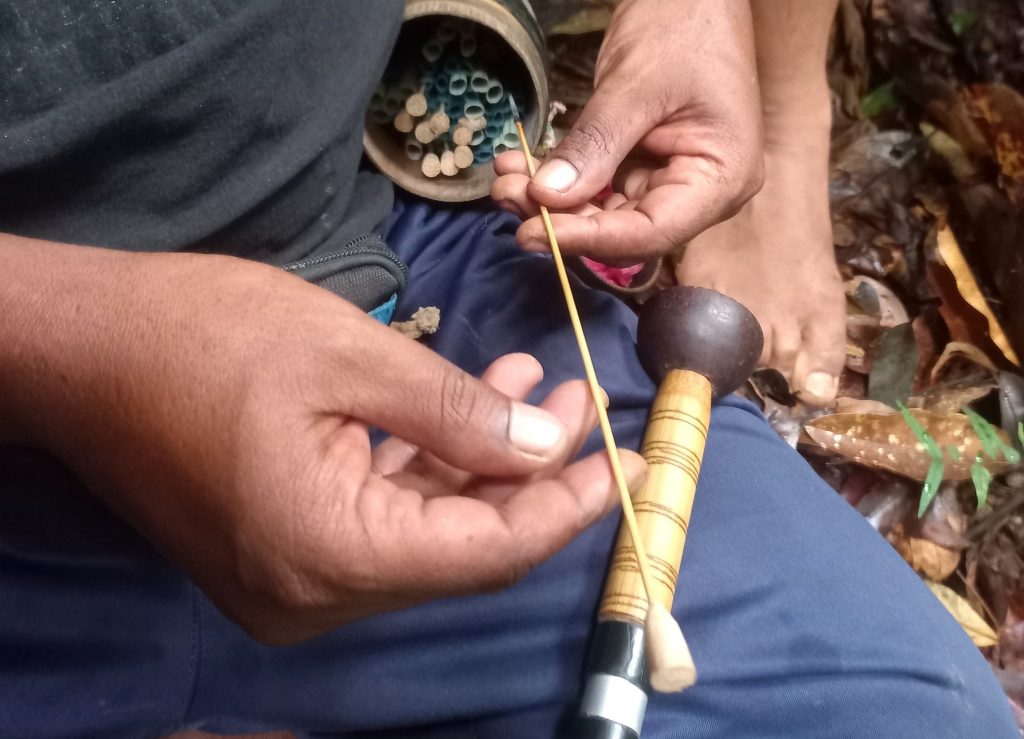
The handling discipline around a loaded quiver is strict and consistent across all communities we have observed. When drawing a dart, the hunter tilts the quiver so that a single dart slides forward just enough for the safe, unpoisoned shaft to be gripped. Some hunters use a small forked wooden tool to guide a dart out without any direct contact with the tip. Once loaded into the blowpipe, the dart is handled only at the pith end.
This discipline is not ceremonial — it is practical. The Ipoh poison (Antiaris toxicaria resin, mixed with additional compounds) is lethal at very small doses, and there is no antidote available in the forest. Hunters begin handling darts carefully from the time they first learn to use the blowpipe, and the movements become automatic.
Lessons learned about Orang Asli blowpipe dart quivers:
- Quivers are made from a single section of Buluh Tawar or Buluh Minyak, with a natural bamboo node forming the sealed base.
- Either small pipes or an internal padding — often the fibrous felt from sugar palm leaf sheaths (Arenga pinnata) — holds each dart tip-down and individually separated.
- The cap is fitted tightly and often sealed with rattan wrapping or animal skin to exclude moisture.
- Exterior carving typically carries clan associations or spiritual significance related to the hunt.
- A secondary pouch or tube attached to the quiver body holds spare pith cones, unprocessed resin, and fire-starting materials — making the quiver a complete field kit.
- Poisoned tips are never touched directly; darts are drawn tip-down and gripped only at the safe, pith-cone end.
.