In the dense rainforests of Southeast Asia, surface water is rarely far away. Streams, rivers, and standing pools are common. But there are situations — traversing a steep ridge, moving through thick secondary growth, or simply being caught without a container — where a reliable water source is not immediately accessible. In these moments, certain woody lianas can provide a surprisingly generous and clean supply of drinkable water, drawn directly from the cut stem.
We have encountered this technique in the forests of Peninsular Malaysia and Sumatra, where indigenous communities use it as a standard practice. It is not a survival myth or a last resort — it is a practical and well-understood method, applied with knowledge and confidence by people who spend their lives in the forest.
What are woody lianas?
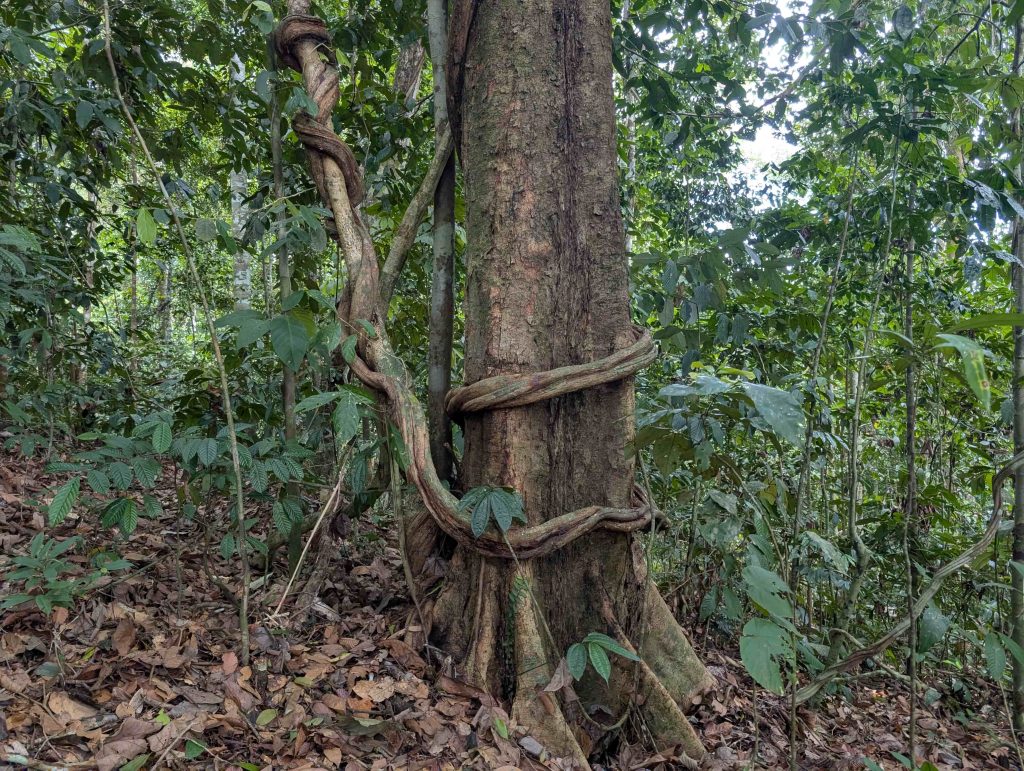
Lianas are climbing woody plants that use trees as structural support to reach the forest canopy. They are a defining feature of tropical rainforests worldwide, and in Southeast Asian lowland and montane rainforests, they are abundant. Unlike herbaceous vines, woody lianas have thick, hardened stems that can persist for decades, growing to lengths of many tens of meters. Their root systems reach deep into the forest floor, and their vascular tissue — the xylem — transports large volumes of water upward from root to leaf, particularly in the early morning hours.
It is this upward water flow that makes certain lianas a viable water source. When a stem is cut, this hydraulic pressure causes water to flow freely from the cut end, sometimes in a steady drip or even a small stream, for several minutes.
Which lianas provide safe drinking water?
This is the critical point, and it cannot be overstated: not all lianas are safe to drink from. Some contain latex, alkaloids, or other compounds that are toxic or highly irritating. The rule we follow, and that we have observed indigenous people apply consistently, is straightforward:
- Clear water = generally safe to drink. If the liquid flowing from a cut stem is clear and odourless, it is typically potable.
- Milky, coloured, or sticky liquid = do not drink. White latex, yellow sap, or any viscous discharge indicates the presence of compounds that are likely harmful.
- Bitter taste = stop immediately. A small cautious taste test on the tip of the tongue can confirm suitability. Any bitterness, burning, or unusual taste is a clear warning to discard the stem and try another.
Among the most reliable and widely used genera in Southeast Asia are members of the Gnetum family and various species within the family Vitaceae (the grape family). The stems of Cissus species, in particular, are well known among indigenous forest communities as a water source. These plants are widespread in lowland and hill forests and are readily identifiable by their jointed, somewhat angular stems and tendrils.
Another commonly used liana is Entada phaseoloides, the sea bean or matchbox bean, a large woody climber found throughout Southeast Asian forests. Its thick stem, when cut, yields clear water in useful quantities.
How to harvest water from a liana
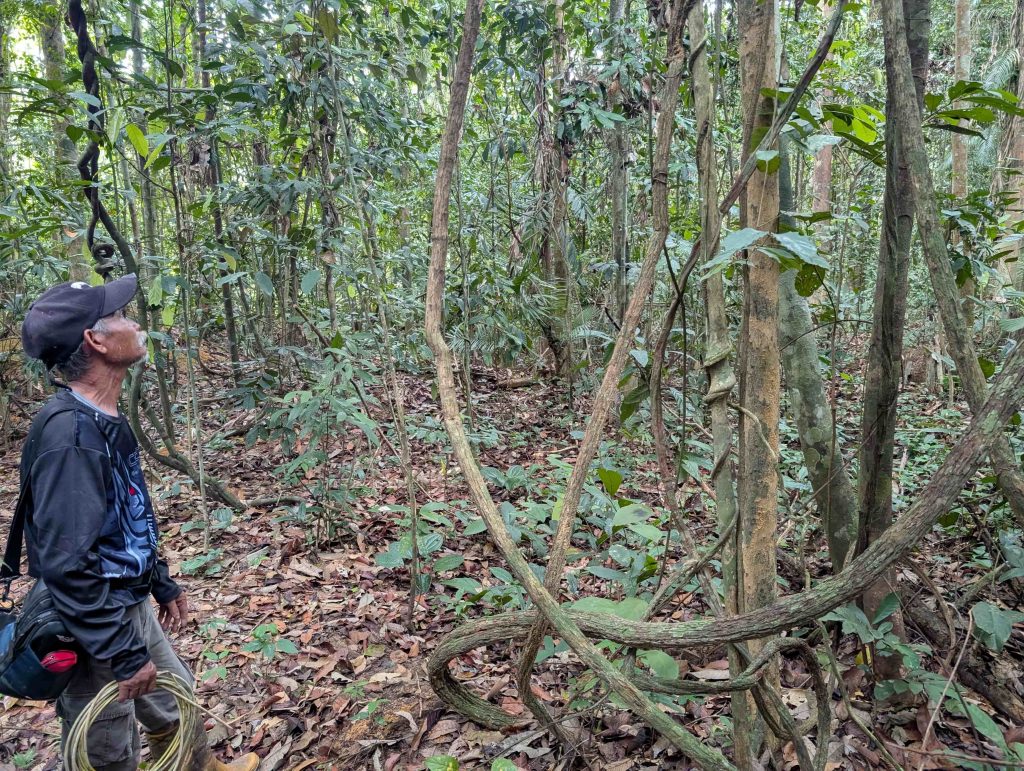
The technique itself is simple, but the sequence matters. We observed the following method used consistently by Orang Asli people in Malaysia
Step 1 — Cut high first. Make the first cut as high up the stem as you can comfortably reach, using a parang or sharp knife. This is important: if you cut the lower end first, capillary tension causes the water column inside the stem to retract upward, and little or nothing will flow from the lower cut. By cutting high first, you release the tension from above and allow the water to flow freely downward.
Step 2 — Cut low. Immediately after making the high cut, cut the stem again close to the ground, or at a convenient drinking height. Water should begin to flow from the lower cut end within seconds.
Step 3 — Assess the liquid. Before drinking, observe the colour and consistency of the liquid. Clear and watery is the indicator to proceed. Check for any smell. If satisfied, taste a small amount on the lip or tongue before drinking fully.
Step 4 — Drink directly or collect. The cut stem can be held above the mouth and the water drunk directly, or it can be directed into a container. A section of stem 50–80 cm long can yield between 100 and 300 ml of water, depending on the species, stem diameter, time of day, and recent rainfall.
Yield and timing
Water yield from lianas is not constant. The highest flow is typically observed in the early morning, when overnight transpiration has drawn water up through the stem and hydraulic pressure is at its peak. By midday, particularly in dry conditions, the flow from a cut stem may be significantly reduced. After rain, stems rehydrate quickly, and yield improves within hours.
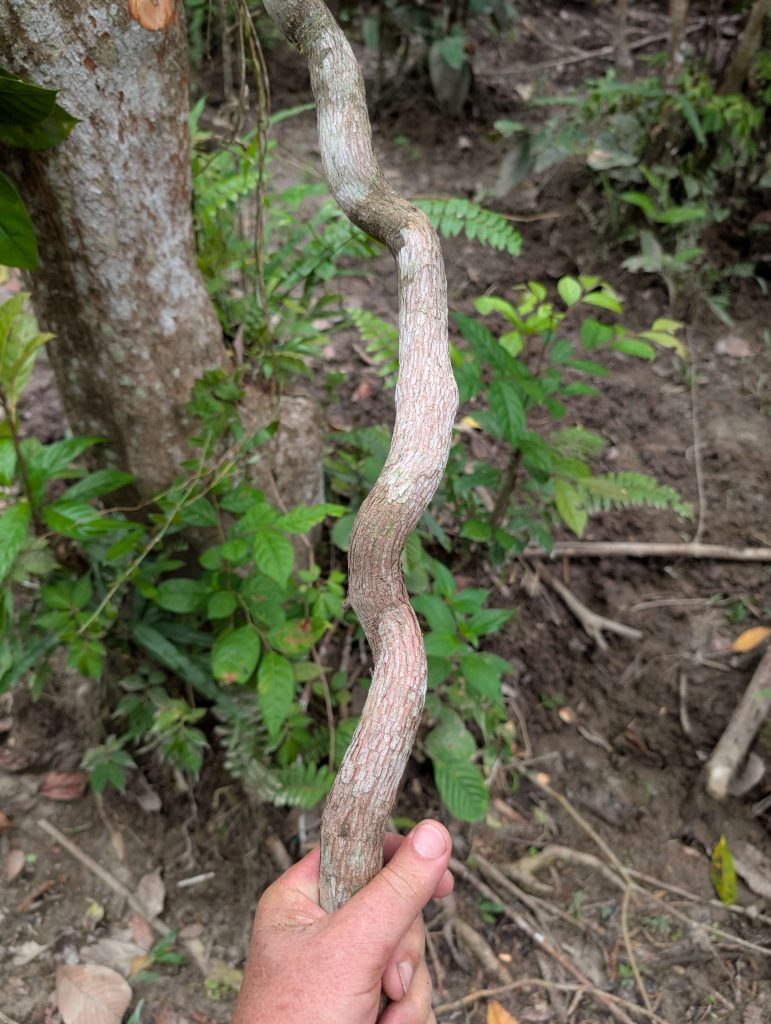
Stem diameter directly affects yield. Thicker stems, naturally, hold more water. A stem with a diameter of 3–5 cm is a practical minimum for a worthwhile harvest. Larger stems of 8–10 cm diameter, which are common in mature forest, can yield considerably more.
What the water tastes like
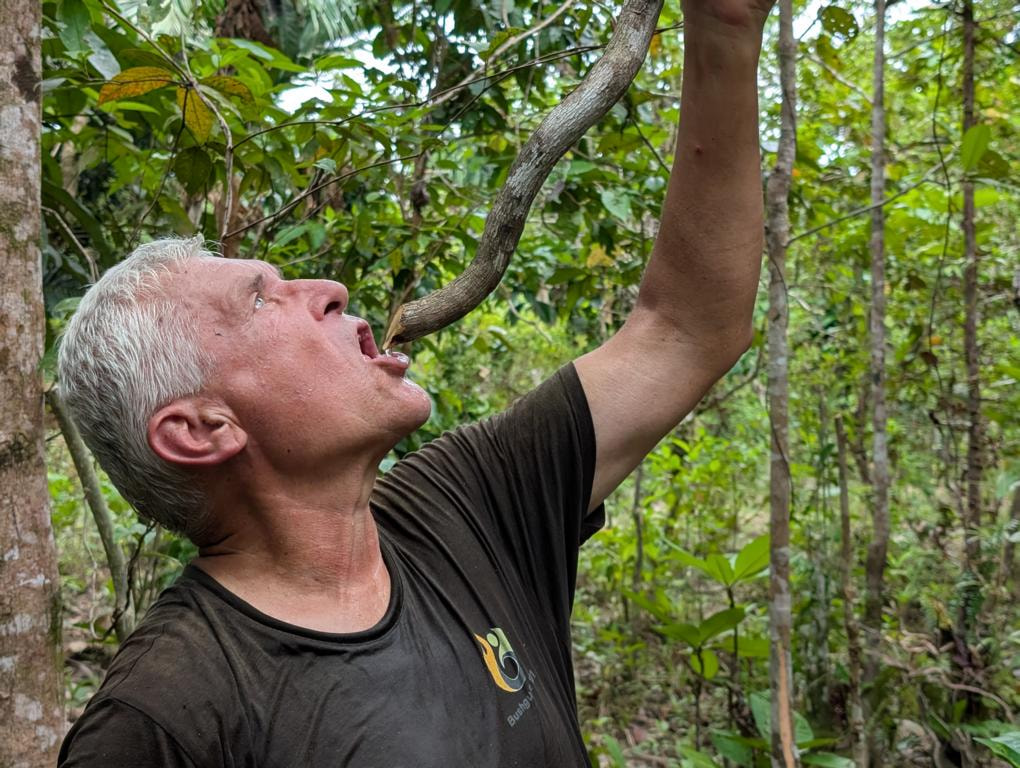
In our experience, the water from suitable lianas is mild and essentially tasteless, similar to slightly flat water with a very faint earthy or green note. It is not unpleasant. Mentawai people we have walked with drink it without hesitation and regard it as clean forest water — which, for practical purposes, it is. Unlike surface water collected from streams, liana water has been naturally filtered through the plant’s vascular tissue and does not require boiling or purification under normal circumstances, provided the visual and taste checks confirm its suitability.
Identifying lianas safely
The ability to identify safe liana species takes time and is best learned directly from experienced guides or community members in the relevant forest environment. As a starting framework, avoid lianas with:
- Any visible latex or milky sap at a cut or scratch
- A strong or unusual smell from the stem
- Markedly hairy or spiny stems, which are sometimes associated with more toxic species
- Coloured inner wood visible at a fresh cut
Lianas with smooth, grey-brown bark, clear wood at a fresh cut, and no visible sap are the candidates worth investigating further.
Lessons learned about drinkable water from woody lianas:
- Always cut the stem high first, then low — never the reverse.
- Clear, odourless, tasteless liquid is the indicator of a safe water source.
- Milky, coloured, or bitter liquid must be discarded immediately.
- Cissus species and Entada phaseoloides are among the most reliable and widely used water-bearing lianas in Southeast Asian forests.
- Water yield is highest in the early morning and after rainfall.
- This technique is standard practical knowledge among indigenous forest communities in Peninsular Malaysia and Sumatra, not a last-resort survival trick.
.