
Papua New Guinea

Edible Ferns of Papua New Guinea
Some times ferns are eaten in large quantities. At highland pig kills, ferns are one of the most common edible greens. Some ferns are only eaten with meat. Some other ferns are eaten more regularly and are very much liked. Ferns used as edible greens in Papua New Guinea The ferns marked with an asterix * are probably the ones most commonly used. Other ferns as well are used. Most of these ferns are not planted but are left when clearing land and are maintained and sometimes transplanted. Normally they are eaten with meat. In some areas they are eaten…
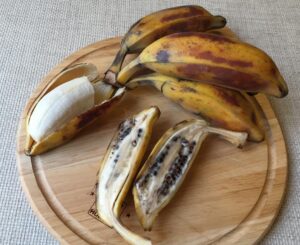
Origin of Bananas
Most areas of Papua New Guinea have bananas. Some people have them as their main staple food while in other areas they are just a snack food. There is a very large amount of variation within the banana varieties in Papua New Guinea. It is important to understand something about these types of bananas. Within some of these groups, Papua New Guinea has more varieties than any other country in the world. Within the banana group of plants there are several wild ones. In Bougainville the rainforest has many wild inedible bananas. But this article is about the main group…
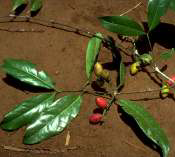
Tu-Lip trees in Papua New Guinea
Tok Pisin: Tu lip; Scientific name: Gnetum gnemon What does a tu-lip tree look like? It is a small tree often only 8-10 metres high. It is a fairly straight tree with one trunk that has branches spread out along its length. The branches are not very long so that the tree does not spread out very wide. The tu-lip tree In Tok Pisin this small tree is called tu-lip. As people in Holland and other countries grow a flower called tulip, we need to point out that the two plants, or their names have nothing in common. The “tu-lip”…

Fongaar: The Coastal Morning Glory That Feeds Papua New Guinea’s Drylands.
When people talk about traditional root crops in the Pacific and Papua New Guinea, yams, taro, and sweet potatoes usually steal the spotlight. Yet tucked away in the drier coastal woodlands and sandy lowlands of southern Papua New Guinea is a lesser-known sweet potato relative that plays a vital role in local food security: Fongaar (Ipomoea macrantha). Known in other parts of the tropical Pacific as beach moonflower, this vigorous climbing vine produces massive, starchy underground storage roots that bridge the gap between harvests and store remarkably well in traditional yam houses. Understanding how local communities identify, cultivate, and preserve…

Pitpit – Edible grasses in Papua New Guinea
Three types of pitpit grow in Papua New Guinea: Coastal pitpit The pitpit plant looks like sugarcane to which it is related. Normally the stalk is thinner than sugarcane. It can grow up to 3 metres high and produces suckers near the base so that normally a clump is produced. At one season of the year, it produces a seed head or flower that remains inside the top of the plant and is the part that is eaten. Where is coastal pitpit grown? Coastal pitpit is grown throughout Papua New Guinea from the sea level up to about 1700 metres…

Wild Karuka and another pandanus fruit species
The Pandanaceae botanical family comprises the following six species in Papua New Guinea: ‘Karuka’ and ‘Marita’ were already discussed on this website in two former articles. ‘Karuka’, see here, and ‘Marita’ see there. In the following, ‘Wild Karuka’ and Pandanus antaresensis will be presented. Wild Karuka (Pandanus brosimos) Tok Pisin: Karuka The wild Karuka plant. The wild Karuka plant looks a lot like the cultivated Karuka. The leaves are bigger and normally they point straight up instead of bending over at the top. The trunk of the tree is straight like a palm, but it can have some branches near…

Karuka – cultivated pandanus fruits and nuts
Tok Pisin: Karuka Scientific name: Pandanus jiulianettii Two species of pandanus are commonly used for the nuts that are eaten. They are Karuka (Pandanus jiulianettii Martelli) and wild Karuka (Pandanus brosimos Merr & Perry). At least 3 other species of pandanus are used occasionally in Papua New Guinea for edible nuts and marita pandanus is used for the long red fruits. The leaves of many other pandanus species are used for rain capes, sleeping mats, canoe sails etc. This article is about cultivated Karuka. The Karuka plant The Karuka tree is a tall palm like tree with a straight trunk…

Giant Taro – a plant with a giant root
English: Giant taro; Scientific name: Alocasia macrorrhiza (L.) Schott; Synonyms: Alocasia indica (Lour.) Spach; Plant family: Araceae Description of Giant Taro plants A very large herb of the taro family. It has a stout erect trunk up to 4 m tall. This has upright leaves which are arrow-shaped. The leaves have round lobes at the bottom. The leaves are leathery and are often wavy around the edge. The secondary veins are not prominent. The leaf blade can be 1.0 – 1.2 m long. The leafy structure around the flower is yellow in the upper section. It forms a hood and…

Marita – a lesser known pandanus fruit
English names: Marita or ‘Red Fruit’ Tok pisin name: Marita Bahasa Indonesia name: Buah Merah Scientific name: Pandanus conoideus Lamarck The marita pandanus plant A short much branched screw pine with many prop roots. The prop roots have prickles. Trees may have up to 8 or 10 main branches. Trees grow up to about 5 metres tall. There are many short sharp spikes on the trunk and branches. The leaves are between 1 and 2 metres long and about 10cm wide. The leaves grow opposite each other but are twisted to look like a spiral. There are thorns along the…

Yam varieties in Papua New Guinea
Four species of yam are commonly grown and used for food in Papua New Guinea – but often naming in villages and naming by scientists do not agree. Many village people regard potato yam and 5-leaflet yam as varieties of greater yam. All yams have long creeping vines that wind around sticks. Tok Pisin language: Yam tru; Mami. Scientific names: Greater yam The greater yam has a stem with wings on the sides making it square. The heart-shaped leaves are in pairs along the vine. Under the ground, it normally produces one fairly large tuber. These tubers can be many…

Solomon’s Sago Palm: How it differs from True Sago
How is this sago different? The Solomon’s sago palm that occurs in the North Solomon province and the Solomon Islands is quite different from the sago that grows in other areas of Papua New Guinea. It has a different scientific name. The scientific name is Metroxylon salomonense. Originally, the sago in North Solomon Province was called Metroxylon bougainvillense, but now that name is not correct as the plant is the same as the one in the Solomon Islands. How is it different? The leaves or fronds of this sago palm are much larger than those of the other Papua New…

Sago – staple food in parts of Papua New Guinea
There are two Sago palm species in Papua New Guinea. Metroxylon sagu Rottb. and the other one occurs in North Solomons Province and the Solomon Islands. Its scientific name is Metroxylon salomonense. The sago palm plant The sago palm grows up to 10 or 25 m tall and is nearly a meter across the trunk. It produces suckers around the base. After about 15 years the main trunk produces a very large flower at the top and then the trunk dies. The center of the trunk is filled with starch. The plant also produces useful building materials. The fronds are…