An advanced, industrially manufactured crab snare usually consists of a bait cage with about six wire snares around it. This setup is used on a fishing line and rod, or is just hung down from a boat to the sea bottom. This type of crab snaring is shown in this article. On tropical beaches, locals use a by far simpler set-up. They just collect a string from the flotsam on the beach, form a snare, and add a wooden stick.
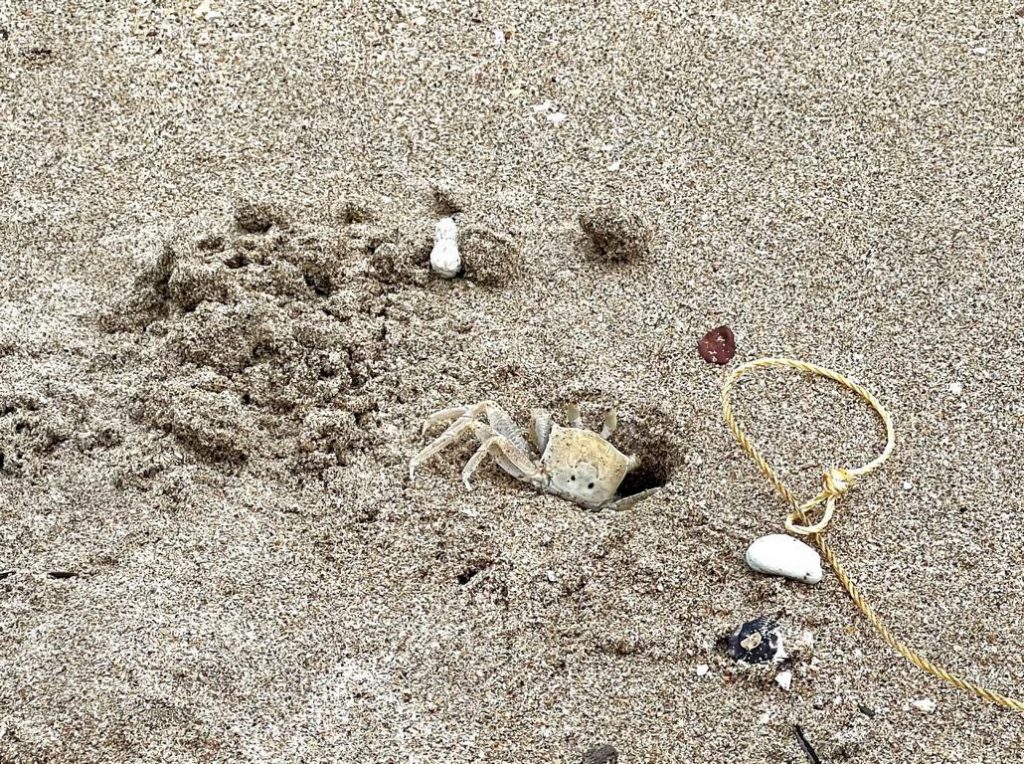
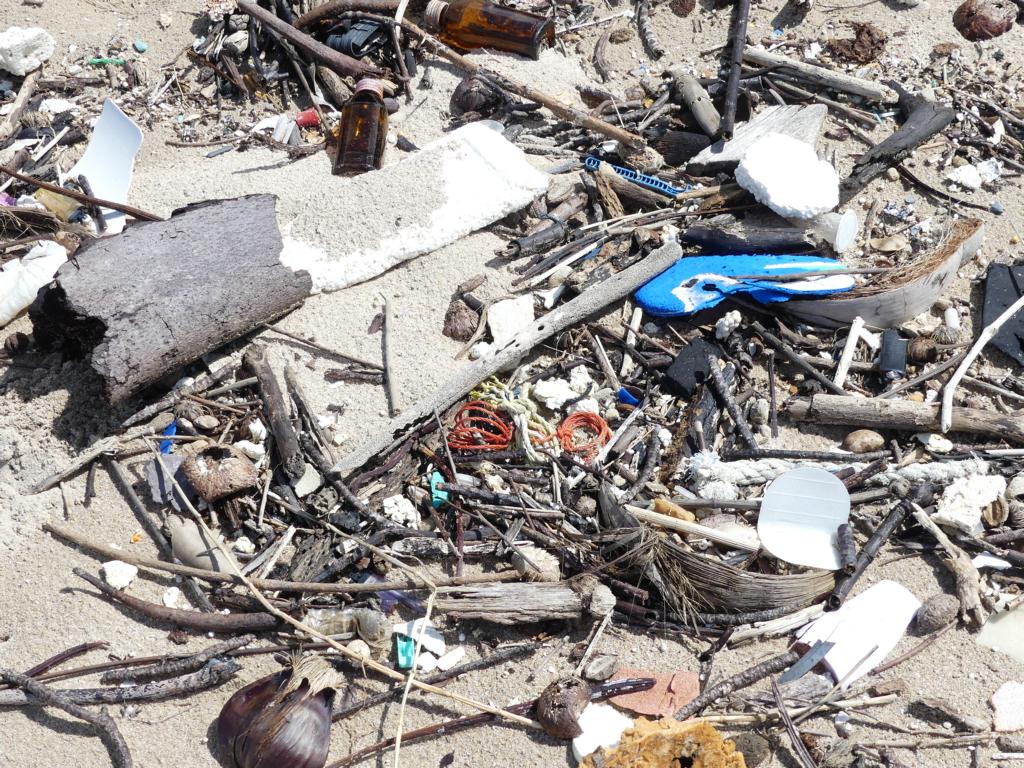
Beach flotsam provides the materials
Beach flotsam will be found on nearly any beach in Southeast Asia, as the plastic pollution from the seas is just cleaned up on tourist beaches. Most polluted areas are at the ends of bays and inlets with the least water drift, and around fishing communities. The most common artificial materials in this flotsam are bottles, lighters, flip-flop sandals, styrofoam plates and boxes, and strings and nettings. Therefore, suitable snaring strings can be found practically on every beach.
Catch Ghost Crabs with String & Stick
With a local friend, I went crab snaring at a non-touristy spot on Koh Samui. He used a setup with a red string and a very short line towards the wooden stick. His snare diameter was about 5 cm (2 inches).
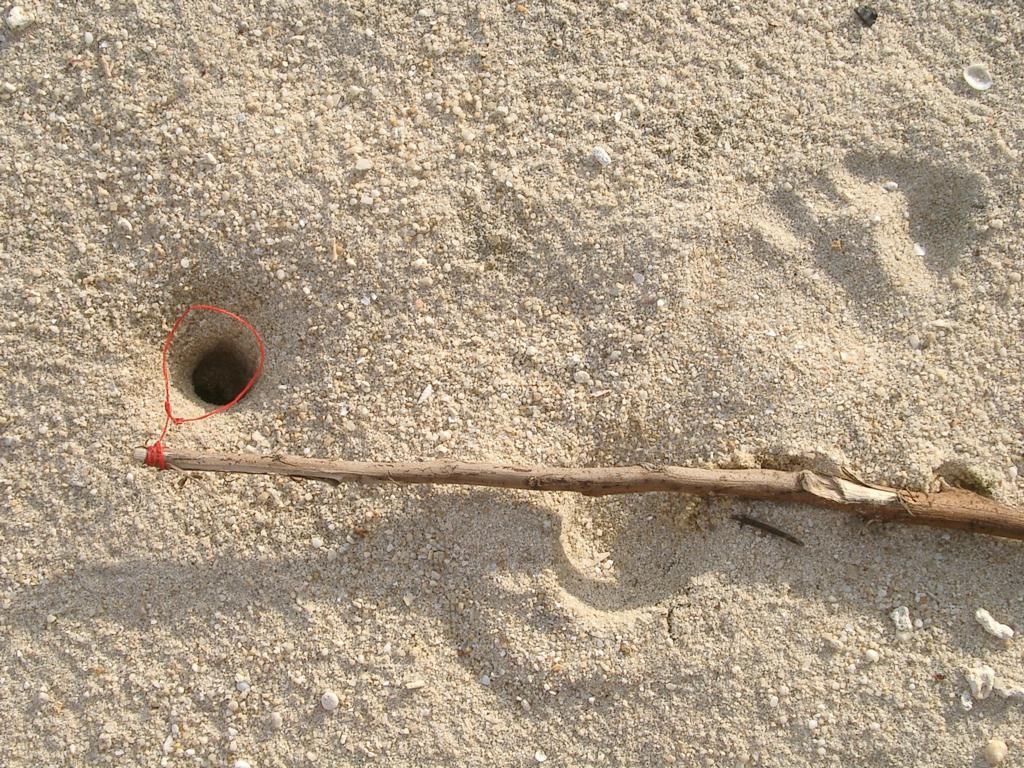
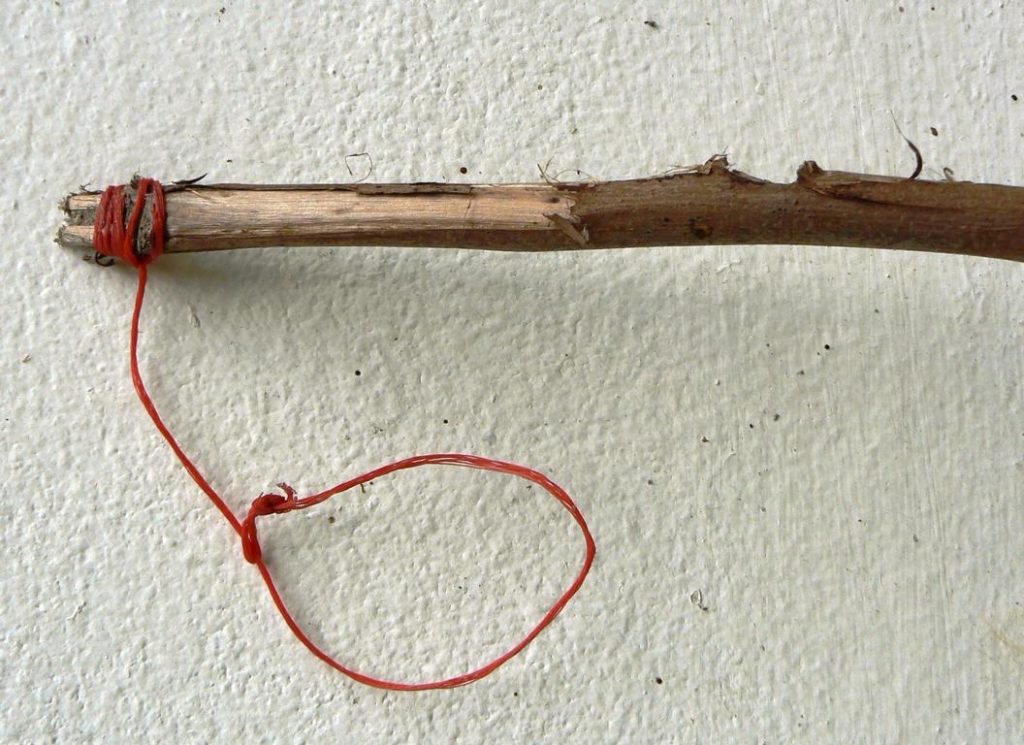
He was lying on the ground with an extended arm holding the wooden stick, so that the ghost crab couldn’t spot him. With a short flick of his arm, he was able to catch one, but lost it after lifting up the crab. And I didn’t have time to take a photo.
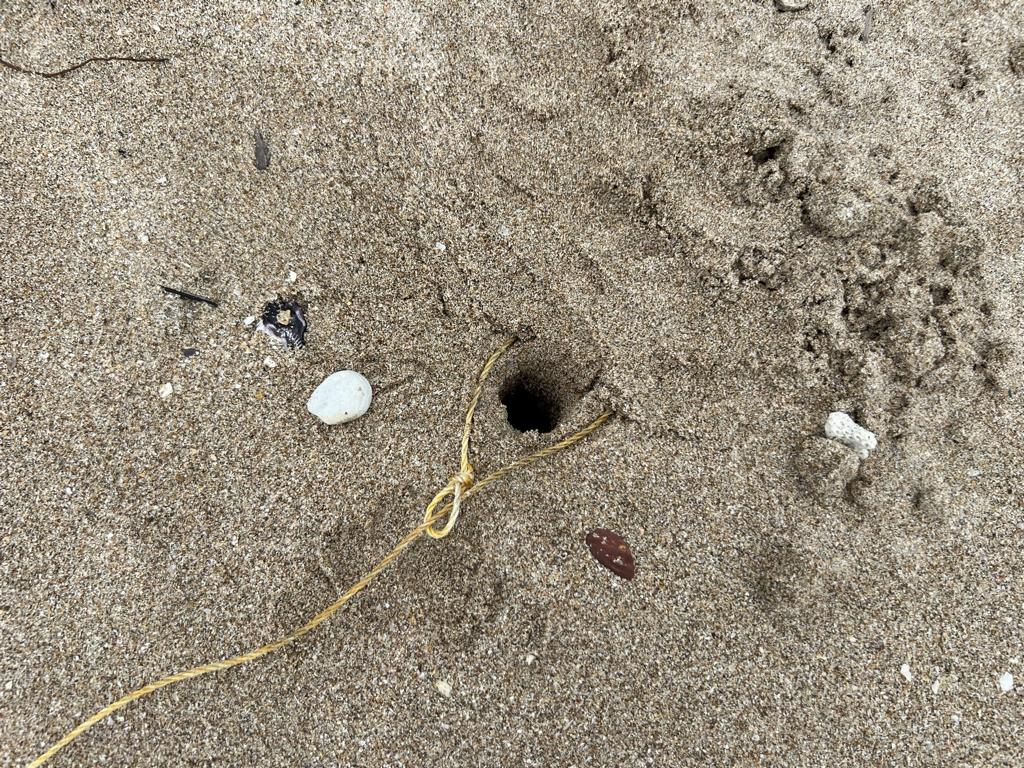
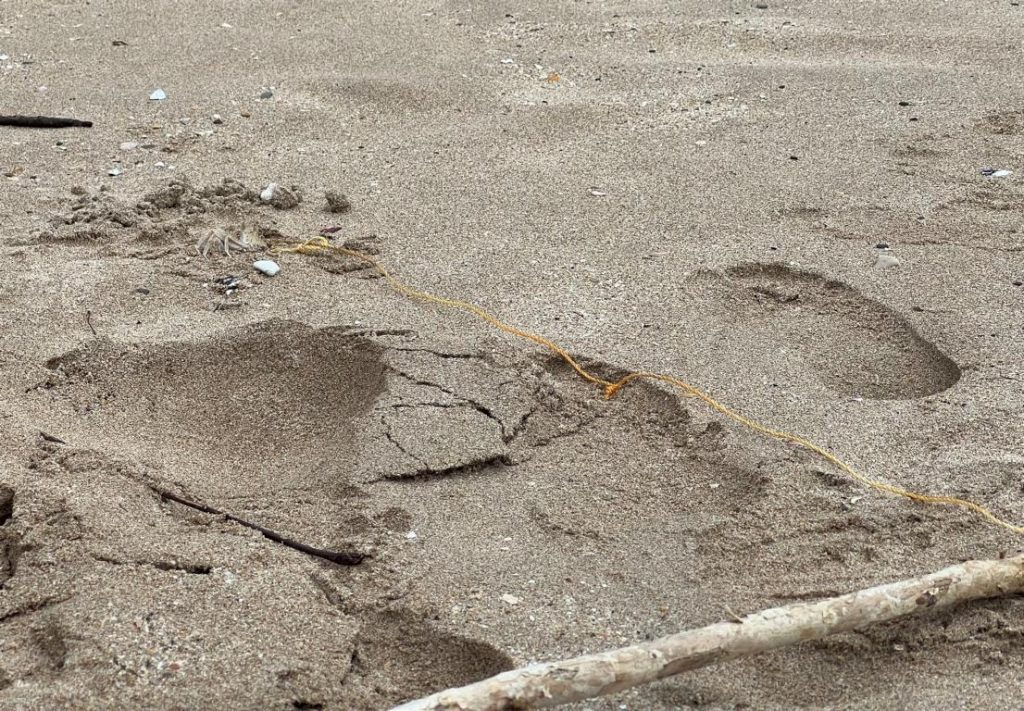
I was choosing a different setup using about 1 m of yellow string with a snare in the shape of an elongated loop that encircled the ghost crab hole. After several failures to catch an emerging crab due to the time delay of the closing snare on the long string, I cautiously buried the string on the side behind the crab hole. This did the trick, and the emerging ghost crab was no longer able to retract without being snared.
Lessons learned about crab snares on tropical beaches:
- Beach flotsam provides valuable resources (strings, containers, fishing implements, …) in case of emergencies.
- Crabs can be easily caught with sticks and snares.
- Snare opening size and location depend on the hole size and the crab’s behavior.