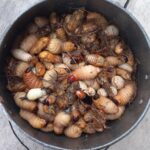
The Malgana Aborigines in Shark Bay are one of the coastal Aboriginal tribes in Western Australia. One of their traditional food sources is the eggs of Pied cormorants (Phalacrocorax varius). Still nowadays, this Aboriginal community has the right to collect these cormorant eggs. As the community is small, with only a few members relishing this food source, and cormorants are plentiful, there is no threat to the Pied cormorant population.
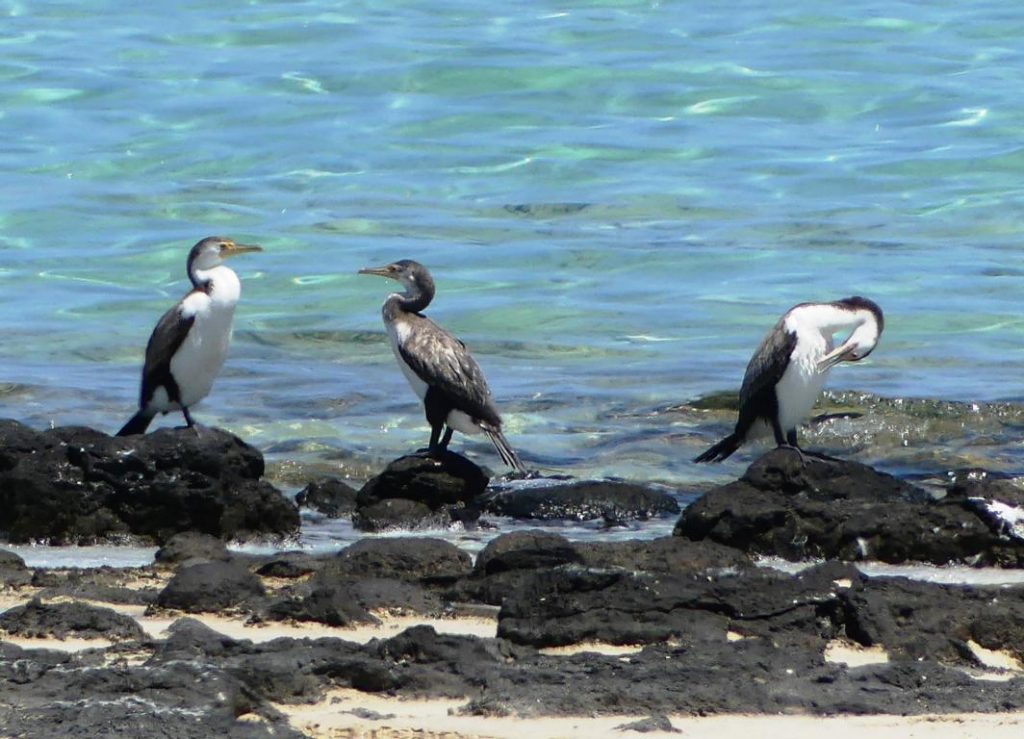
Description and distribution
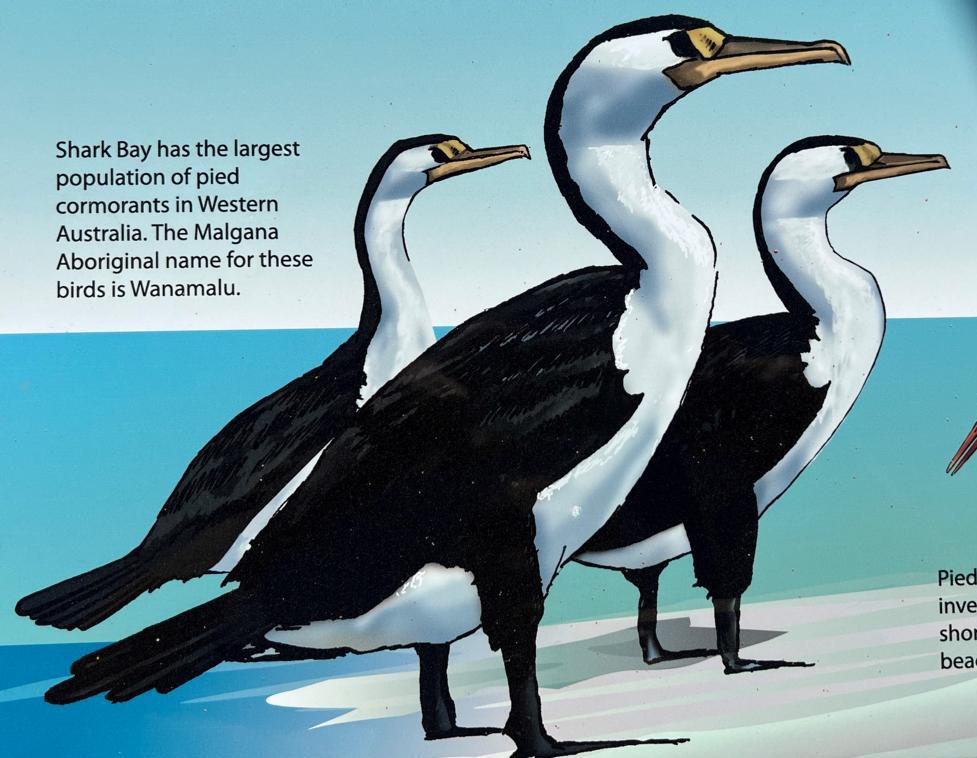
Pied cormorants prefer shallow seagrass beds to catch their favorite prey, which are slow-moving leatherjackets. Often, two of them are swimming side by side. And it is interesting to observe that often only one of them dives, while the other waits for his chance to steal the fish from the successful bird.
This species is often preyed upon by tiger sharks in the shallow waters of Shark Bay. Pied cormorants, therefore, prefer to swim and dive in the middle of seagrass beds, where there are more leatherjackets, and they avoid the seagrass bank edges, where there is less prey and more tiger sharks.
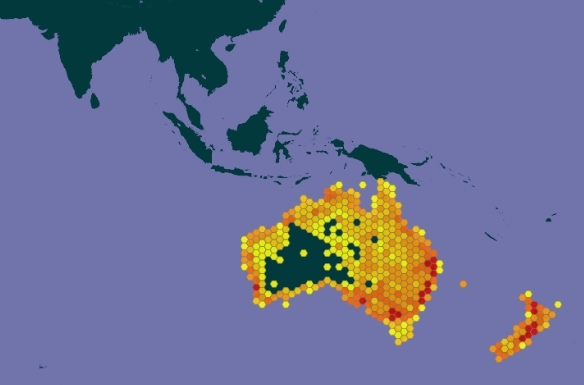
Phalacrocorax varius cormorants are widely distributed in Australia, except in the Great Sandy Desert, and in New Zealand. The global population is restricted to these two countries.
Ecology of egg laying
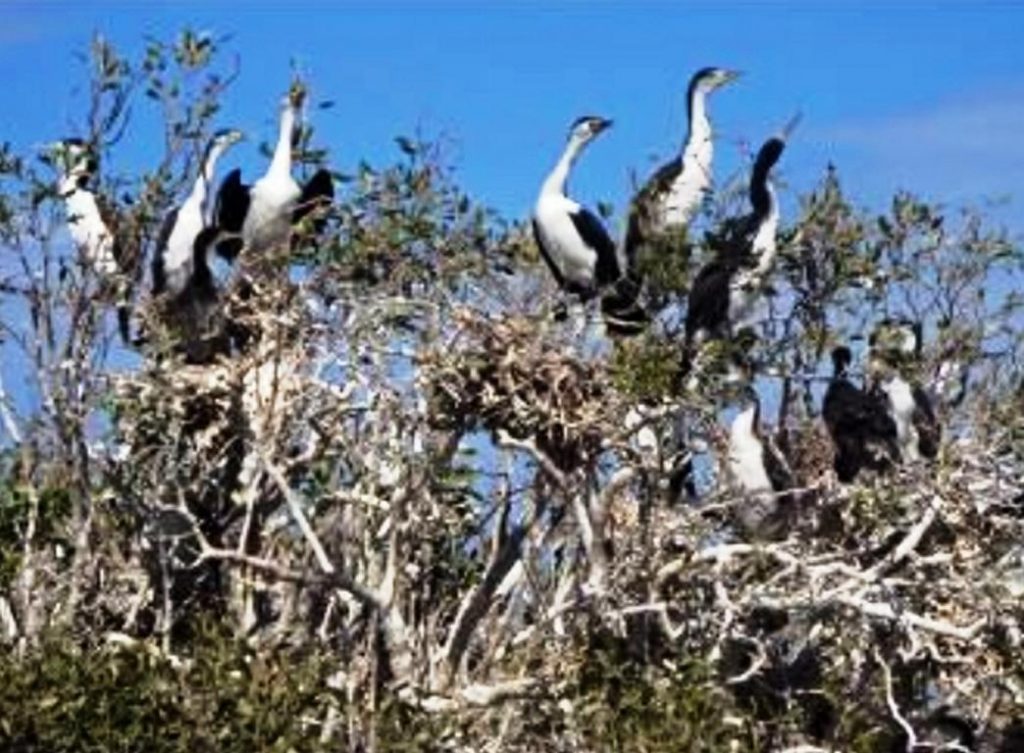
When the rainy season begins in April, the cormorants start building their nests in the mangroves and on isolated small islands. Pied cormorants generally breed in colonies, often alongside other waterbirds. The nests are large platforms up to 80 cm in diameter, built on mangrove trees, on the ground, or on coastal cliffs. They are made of sticks, seaweed, and foliage, often cemented together with droppings.
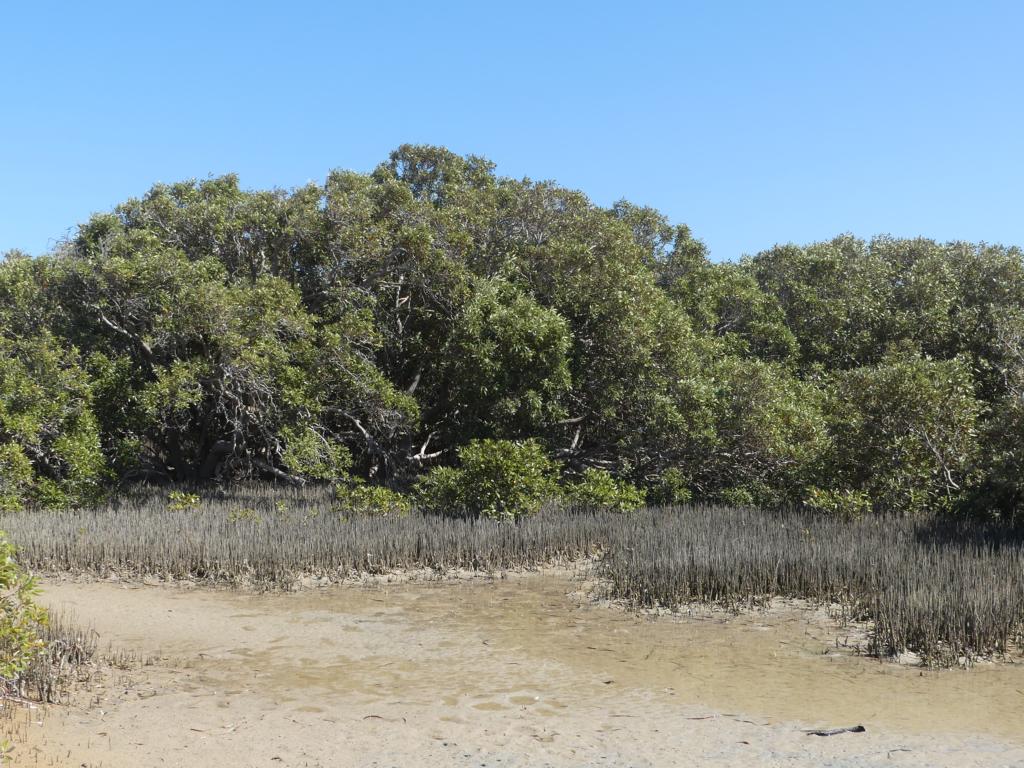
When nest building, Pied cormorants use twigs and small branches from mangrove trees and fly with them to their new nests. When the Aborigines see this, they wait 14 days and then search for these nests in the mangrove forest.
Pied Cormorant eggs are typically laid in clutches of 2 to 5. The eggs are oval-shaped, pale blue-green, and covered with a thin, chalky white coating. Their size is slightly larger than that of chicken eggs. Both parents incubate the eggs for approximately 25–33 days. If these nests only contain one or two eggs, the Aborigines will harvest them. Nests with more than two eggs are not taken because the eggs are already too well developed to be eaten. The area around the nests smells bad because the droppings are splattered all around.
Pied cormorant eggs for human consumption
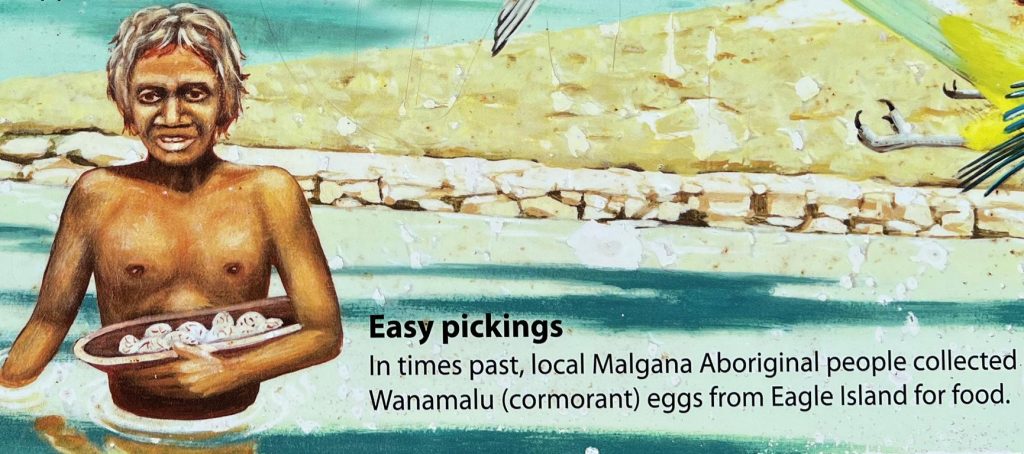
The Malgana people also collected cormorant eggs on Eagle Island, next to Eagle Bluff. Nowadays, egg collection on Eagle Island has discontinued; only a sign on Eagle Bluff reminds one of this former activity.
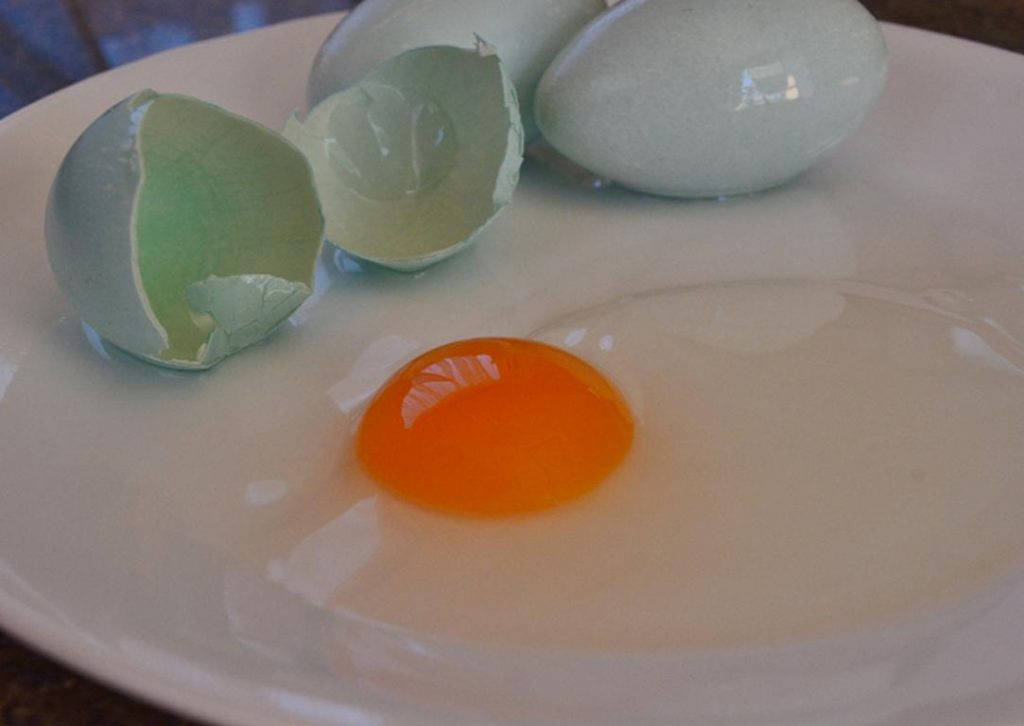
Traditionally, the eggs are boiled for around 10 minutes. The egg white does not curdle, however, and remains clear and liquid. The yolk turns from orange to a grey colour when cooked. Both egg white and yolk smell strongly fishy, but are very much enjoyed by the Malgana Aborigines.
Lessons learned about Pied cormorant eggs for food:
- When cormorants started to build their nests, Malgana Aborigines waited 14 days before collecting the eggs.
- They only harvested the eggs when one or two were in the nest.
- After boiling, the egg-white will not curdle, but remains clear and liquid.
- The egg yolk after boiling turns from orange to a grey color.
- All edible parts of Pied cormorant eggs smell strongly fishy.