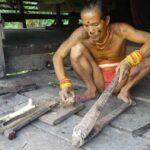
Deep in the lowland dipterocarp forests of Peninsular Malaysia, long before you see rattan, you feel it. Hooks catch on shirt sleeves, flagella tug gently at your backpack, and the forest floor is littered with the thorny sheaths of climbing palms. For the Orang Asli, these plants are not a nuisance. They are one of the most important raw materials of their junglecraft: rattan.
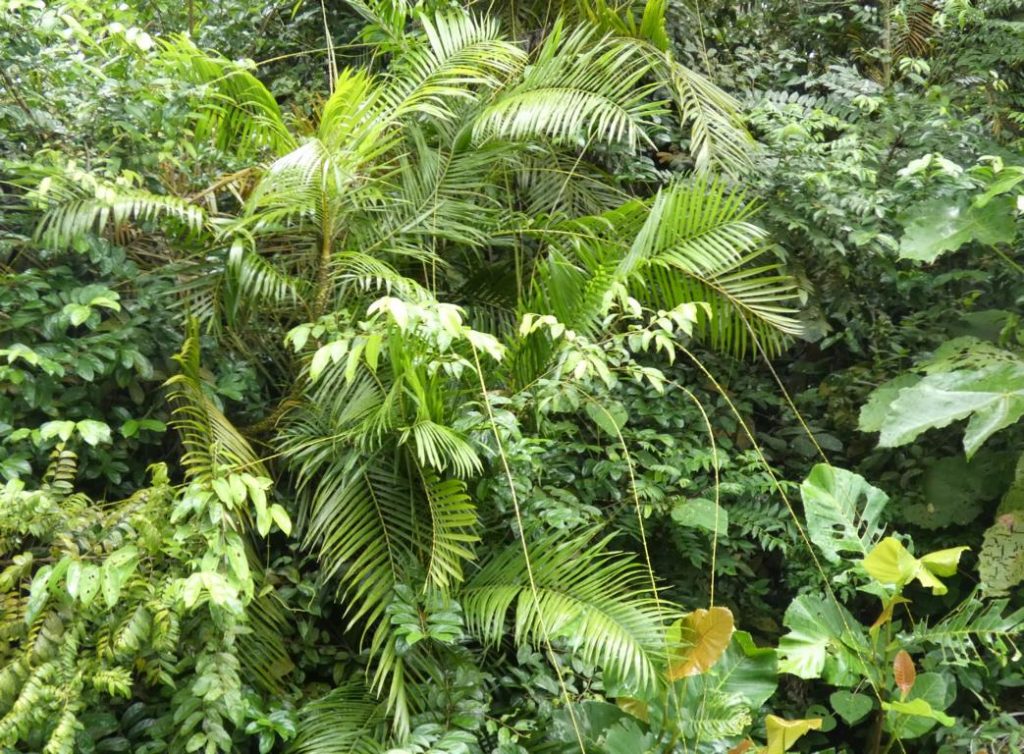
Where most outsiders just see “Rotan”, Orang Asli see a whole toolbox of distinct species, each with its own character, strengths, and proper use. Over generations, they have learned to read the forest like a catalogue of canes.
Knowing the vines by heart
Malaysia hosts more than 100 rattan species, mainly in the genera Calamus, Daemonorops, and Korthalsia. Orang Asli junglecraft starts with being able to tell them apart in the dim light under the canopy.
Identification is rarely done with botanical keys. Instead, they look at:
- the distribution of the species in the landscape
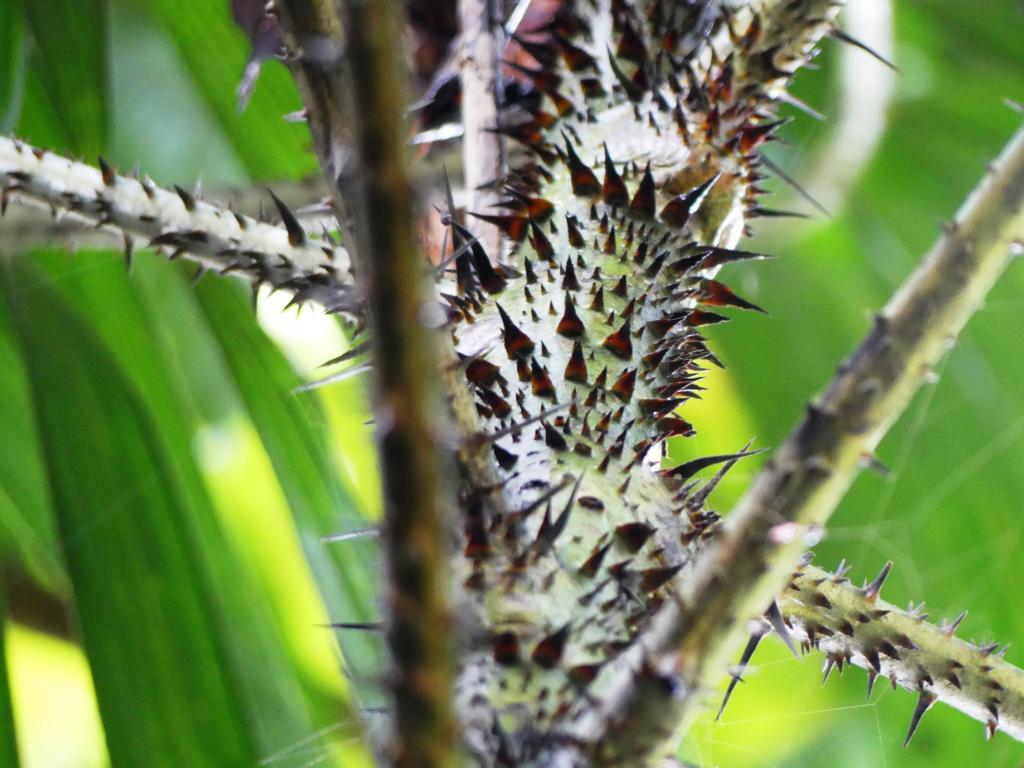
- the pattern and sharpness of the thorns
- the feel of the leaf sheath
- the way the vine climbs and branches
- the hardness and colour of the core
- the taste of the sap on the tongue
- how cleanly it splits and how far it can bend
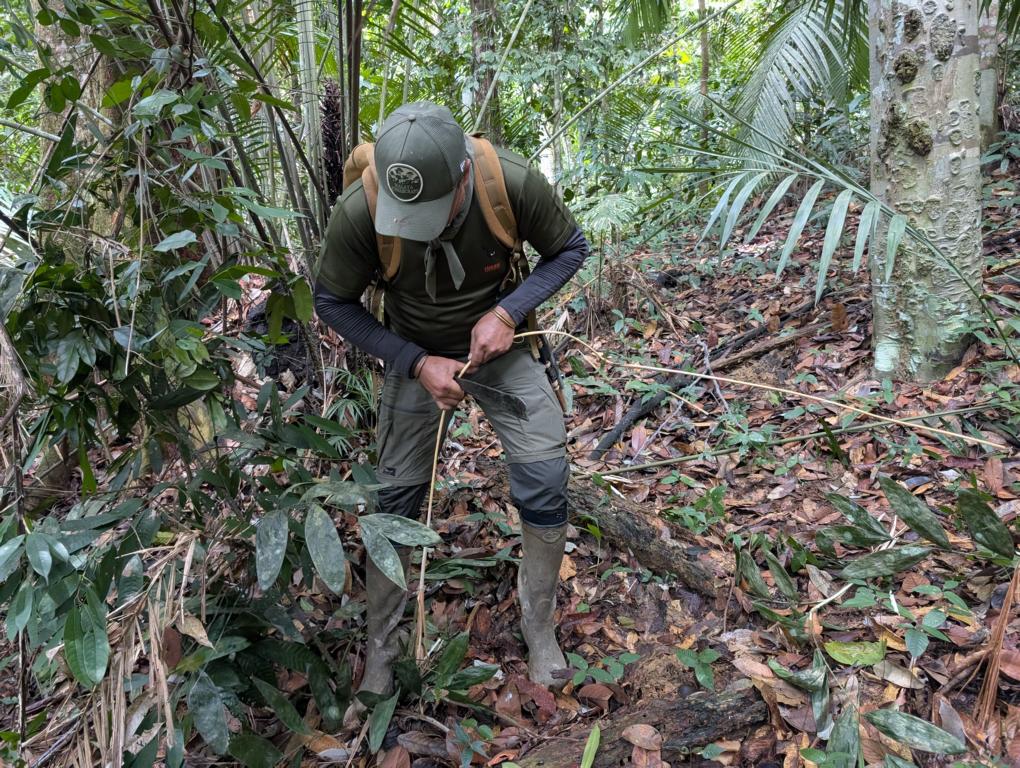
From several metres away, an experienced harvester can look up a tree, spot a vine snaking around a Meranti trunk, and already know whether it will make a good trap, a carrying basket, or a structural beam.
Among the many species, a few are especially important in Orang Asli daily life:
- Calamus manan – Rotan Manau
Thick, straight, and incredibly strong, this is the “king” of canes. It is prized for furniture, heavy-duty frames, and any structure that needs to carry weight. - Calamus caesius – Rotan Sega
A riverine species valued for its flexibility. When shaved into fine strips, it makes superb lashings, fish traps, and cordage that can withstand years of use. - Calamus scipionum – Rotan Dok
Lighter in build but strong enough for basketry and traditional carrying packs, where weight matters as much as durability. - Korthalsia rigida – Rotan Duri
Recognizable by its barbed sheaths, which can be turned into natural hooks. The cane itself serves in frameworks and simple constructions. - Daemonorops draco – Rotan Jernang
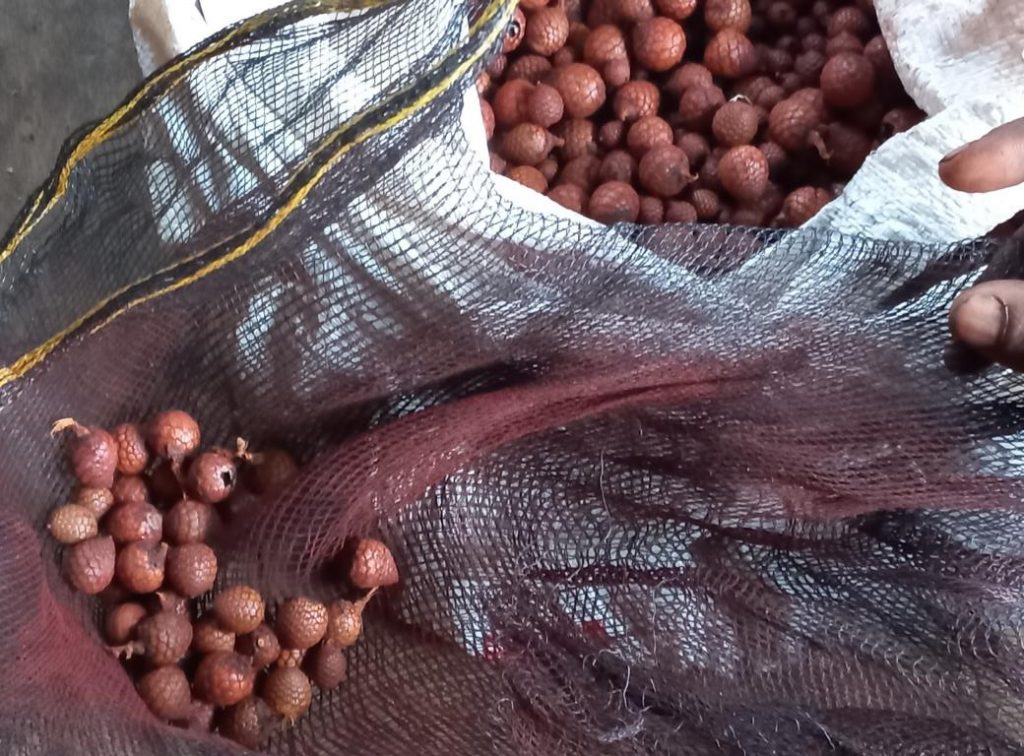
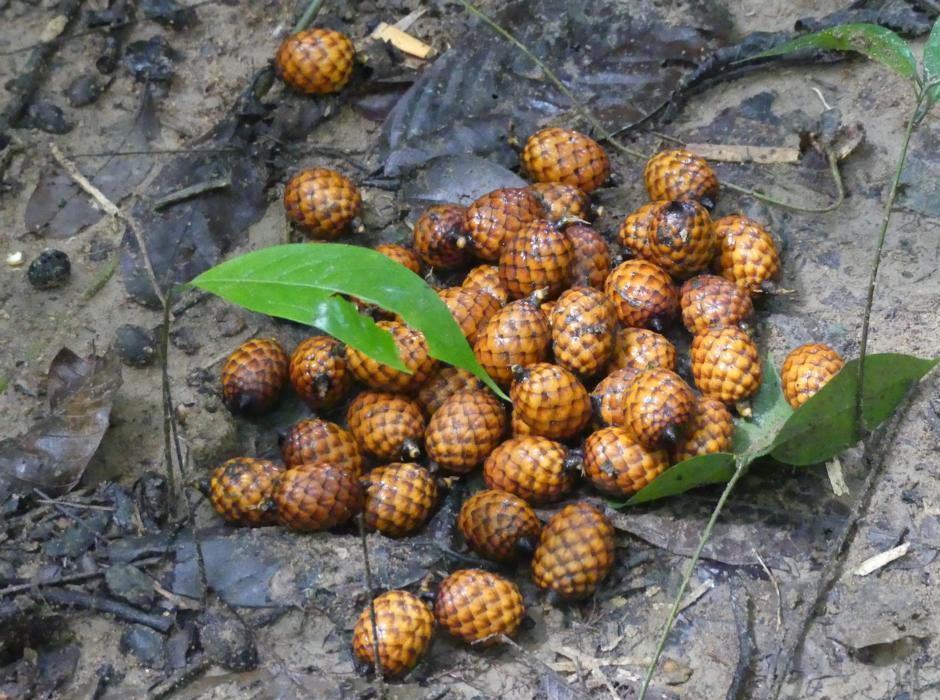
Harvested primarily for its fruits, that provide dark-red resin, used as dye, varnish, and in traditional medicine.
Selecting the right stem for the job
Harvesting rattan is as much about what you leave behind as what you take. Orang Asli do not simply cut any vine they find. Before a parang touches the cane, they will quietly check:
- the age and thickness of the stem
- how tight and regular the nodes are
- the colour and smell of the inner core when lightly scraped
- whether the sheath pattern indicates the right species
- if the vine has grown in a straight, usable section
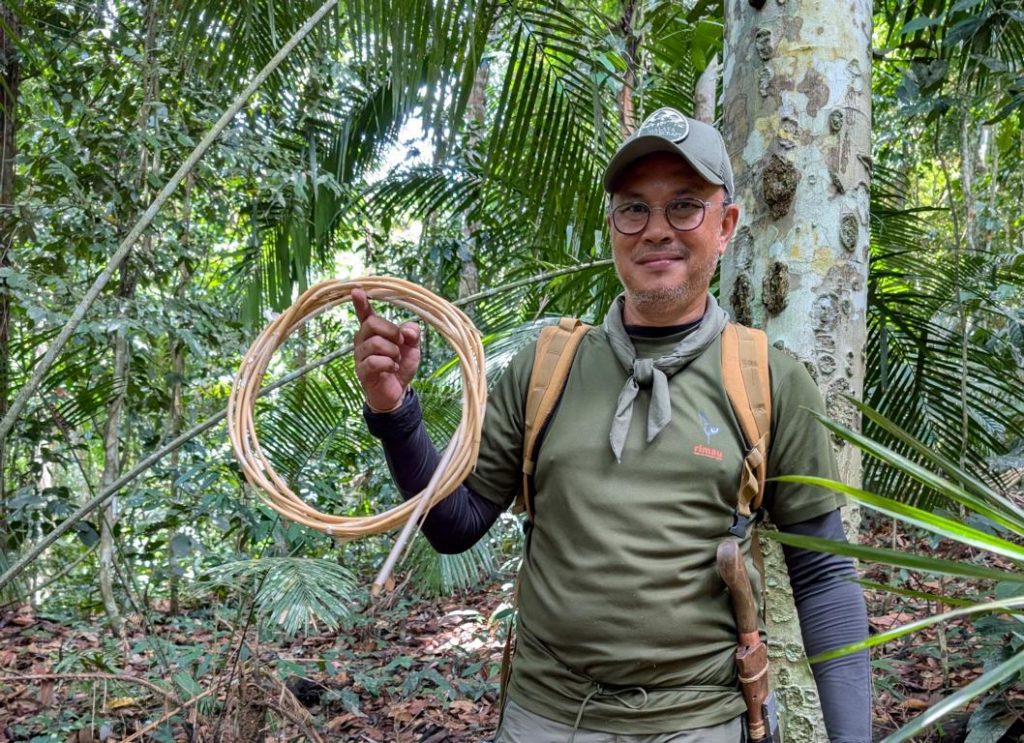
Young stems may be too soft and fibrous, while very old ones become brittle and prone to breaking. For fine weaving, they prefer stems that split into long, even ribbons. For frameworks, they look for older, tougher canes with a dense core.
The forest itself becomes the workshop. Once a suitable vine is found, it is cut, cleaned of its thorns and sheaths, and partially processed on the spot. Only what can be carried and used is taken; the rest is left to continue growing.
A skeleton of junglecraft
For Orang Asli people, rattan forms the “skeleton” that underpins much of their jungle life. With it, they make:
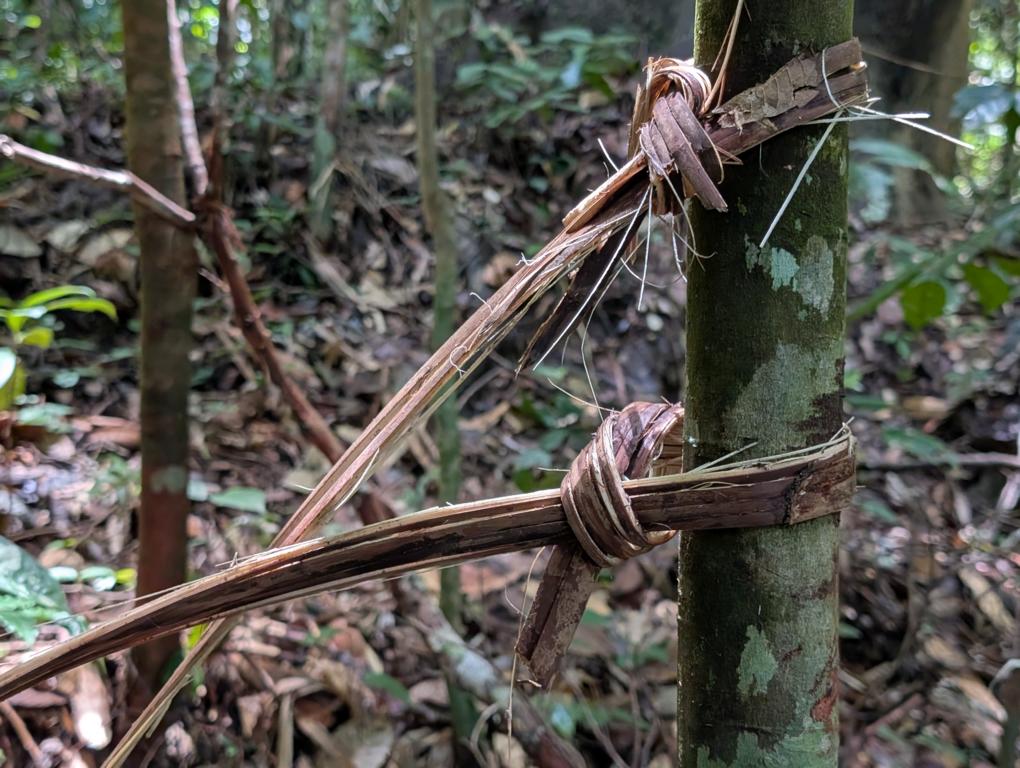
- lashings that often outlast modern rope
- finely tuned animal traps, sensitive enough for mouse-deer
- blowpipe quivers for darts
- carrying baskets and pack frames
- floor mats
- fishing gear, from traps to replacing the lines themselves
- shelter frames and roof bindings
- ceremonial objects and items used in rituals
Rattan’s combination of flexibility and strength makes it irreplaceable. When bent, it springs back instead of breaking. When split, the fibers interlock tightly and grip whatever they bind. It can function as cordage, as a structural beam, as weaving material, and even as food in the form of palm hearts and fruits in some species.
Harvesting with respect
The relationship between Orang Asli and rattan is not extractive. It is based on intimate knowledge and restraint:
- mother plants and productive clumps are left intact
- only certain stems of a clump are removed
- harvesting avoids sensitive periods such as flowering
- areas are revisited in rotation, allowing regrowth
- sacred groves and ancestral sites are off-limits
This careful approach ensures that rattan remains available year after year. It also means that rattan landscapes are living archives of family knowledge: a grandfather may remember which clump of Rotan Sega his father cut for traps decades ago.
An ancient craft facing a modern future
As modern materials reach remote villages, the temptation to swap rattan lashings for plastic rope or metal wire increases. Younger people may not immediately see the need to distinguish Rotan Manau from Rotan Dok, or to spend hours preparing cane by hand.
Yet among those Orang Asli who still practice the old skills, the depth of their rattan and bamboo knowledge is astonishing. For junglecraft practitioners, rangers, and conservationists, their expertise offers something no synthetic material can: a way of working with the forest that strengthens both people and landscape.
In the end, every rattan strand holds more than mechanical strength. It carries the memory of the forest and the hands that shaped it, binding together generations of Indigenous engineering and ecological understanding.
.