For effortless movement in streams, rivers, lakes, mangrove areas, and shorelines, two types of vessels are used. One is a dugout canoe, and the other is a boat. Both boats and canoes are hewn from single tree trunks, made of the same material and using the same manufacturing method, and are of similar design. In the following, we discuss the specific types of freshwater and brackish-water designs, the adaptations for their use at sea, and the manufacture of these boats and canoes.
Dugout canoes
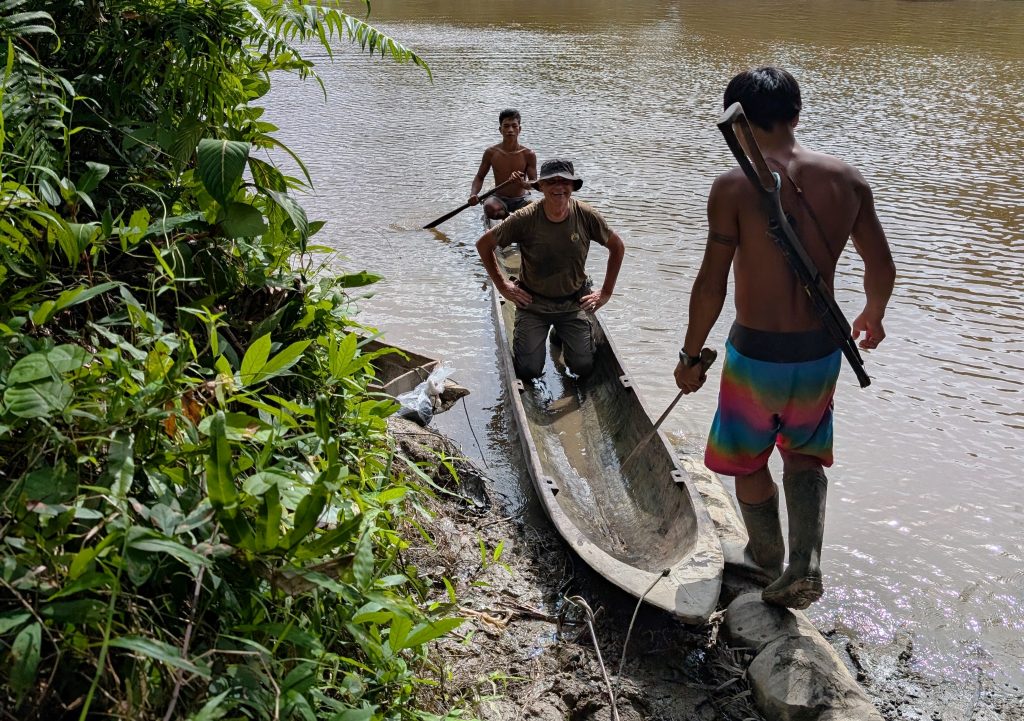
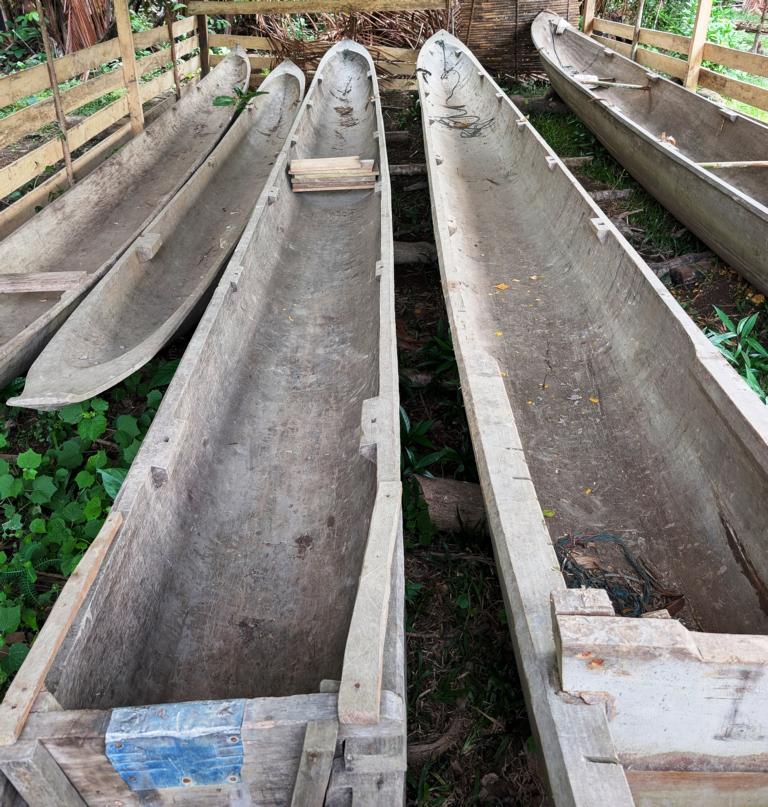
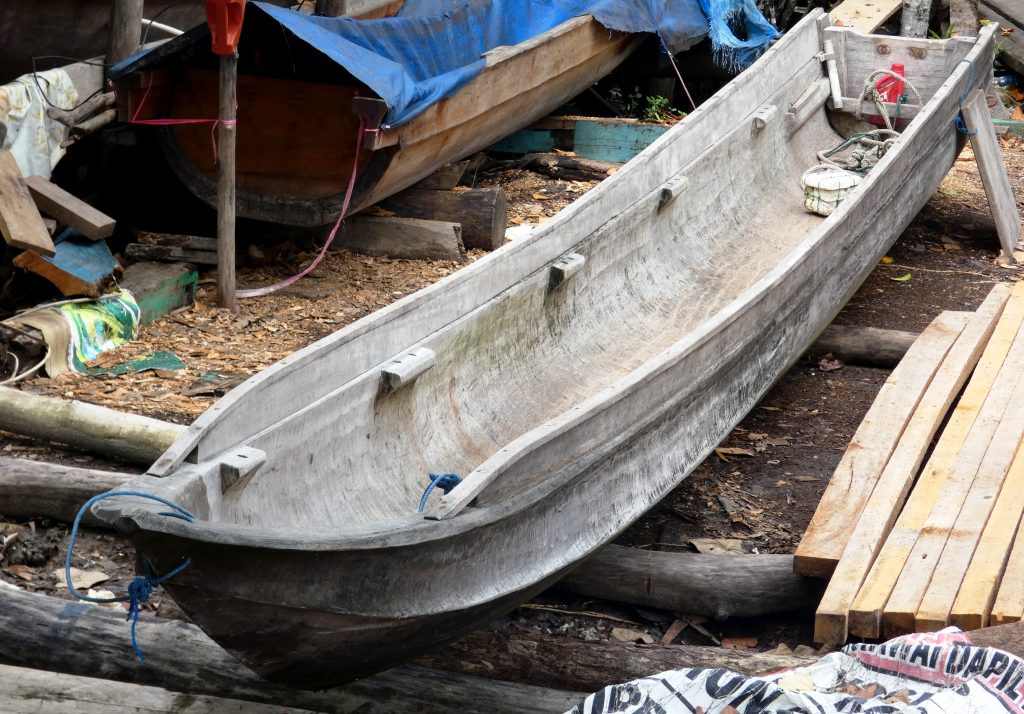
Dugout canoes (locally called Aba) are the standard vessels for water transport. They are made from single tree trunks and are all of the same design. The length from head to bow is between three and seven meters; inner width is about 60 cm or two feet, which is the shoulder-width of an average person. The sidewalls are about 4 cm (1.6 inches) thick, with carved-out extensions every 1.2 meters (4 feet). These extensions have a central hole and serve as fixation points for seating boards and ropes.
The primary purpose of these canoes is to transport people for fishing, collecting shellfish, reaching their gardens, foraging, and hunting. Fishing for the forest-dwelling people is, like tending their forest gardens, typical women’s work. They are therefore very proficient in handling the dugout canoes. Whenever possible, they prefer to fish or gather with other women to help one another.
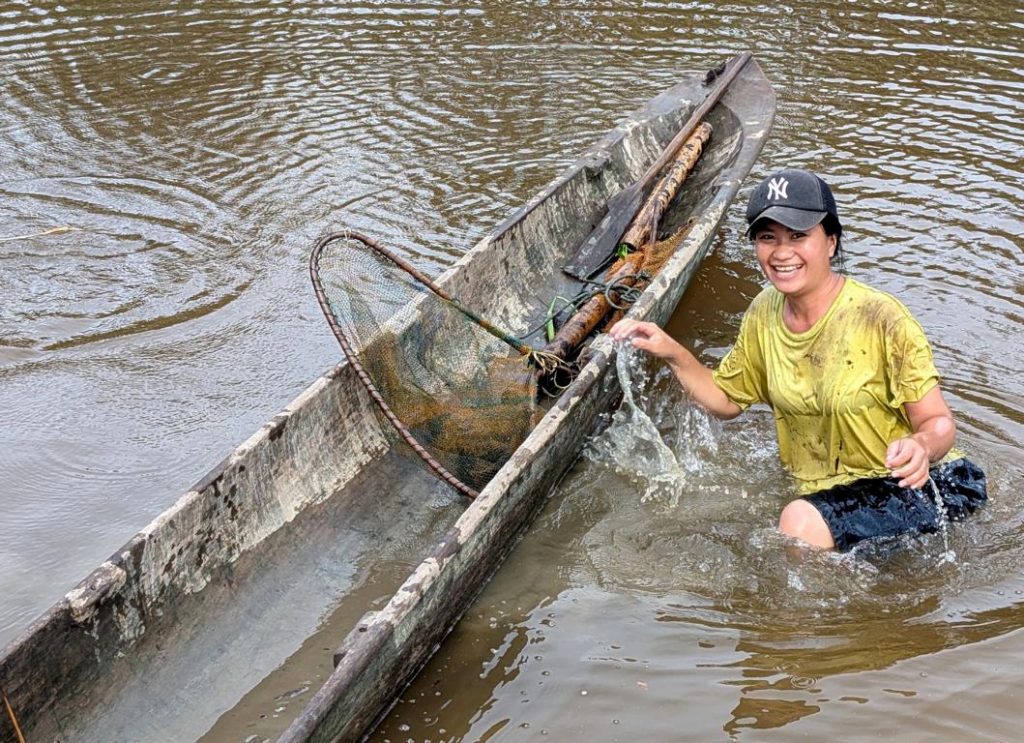
Canoes are also used as base stations when collecting river clams, as explained earlier in the chapter on mollusks. In this case, two women often share one boat and either separate their catch within the canoe or split it evenly after returning to land. When doing individual hand-net fishing, each woman commonly uses her own dugout canoe.
Building material for dugout canoes
For building boats and canoes, most often meranti (Shorea pauciflora) trees are used. Its wood is medium-hard and can be visibly compressed by a nail. It is, however, structurally very stiff and resistant to water rot. Moreover, due to their available straight lengths and large trunk diameters, plus their wide availability, they are the tree of choice for building canoes. Moreover, they are easy to fell with hand axes.
On Siberut Island, the following meranti species are additionally used for building canoes: four red meranti species, known locally as Katuka, Karai, Menegat, and Kaboi. And also yellow meranti, called Jining by them. If no suitable meranti trees are available, the trunks of membulan trees (Endospermum diadenum), locally known as Alibakbak, can also be taken.
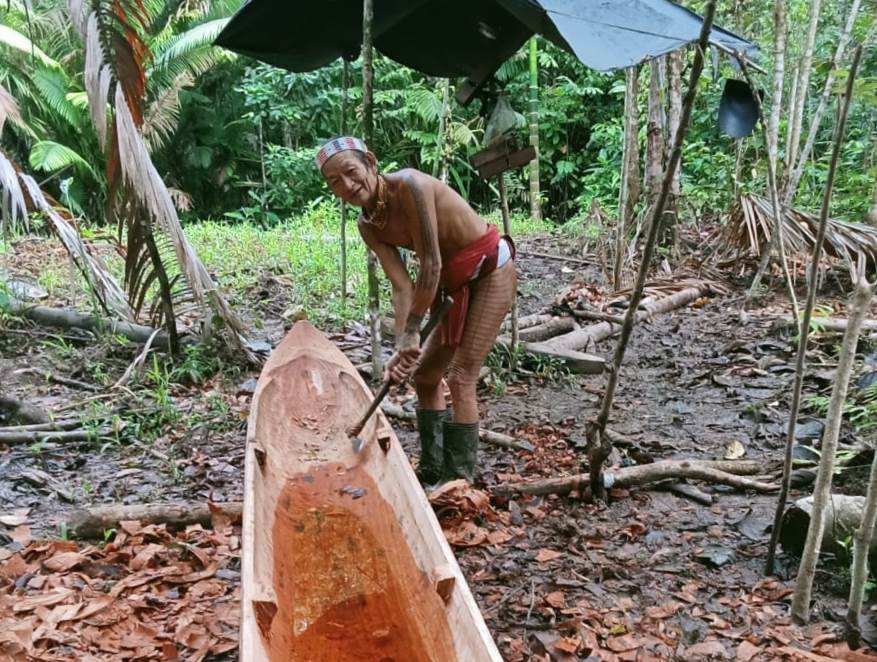
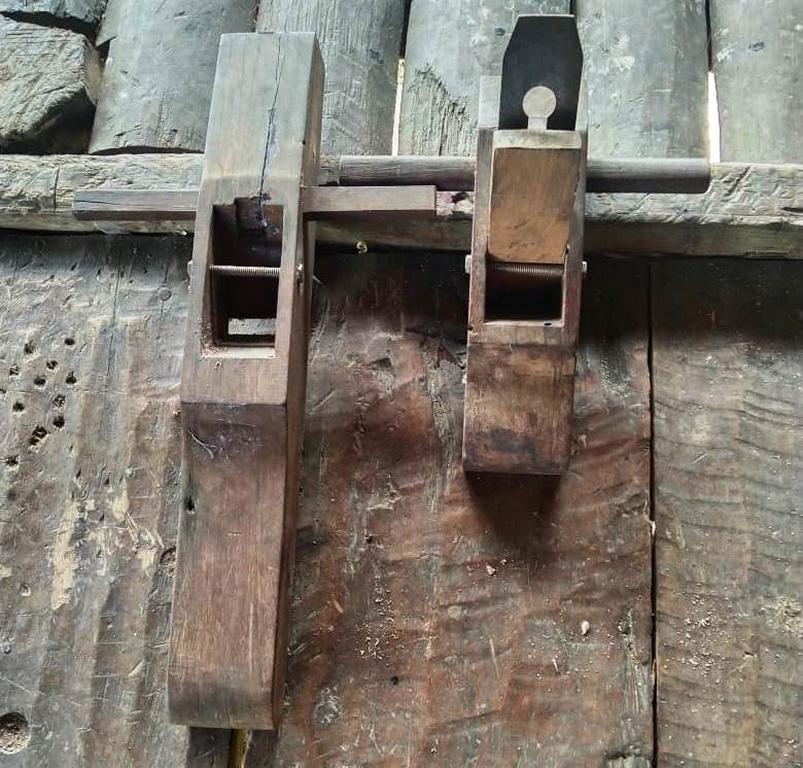
As for the tools for making canoes, the people traditionally use only the Baliok (a combined axe and adze) from felling the tree through rough shaping. For flattening and smoothing walls and the bottom on the inside and outside, a carpenter’s plane is used.
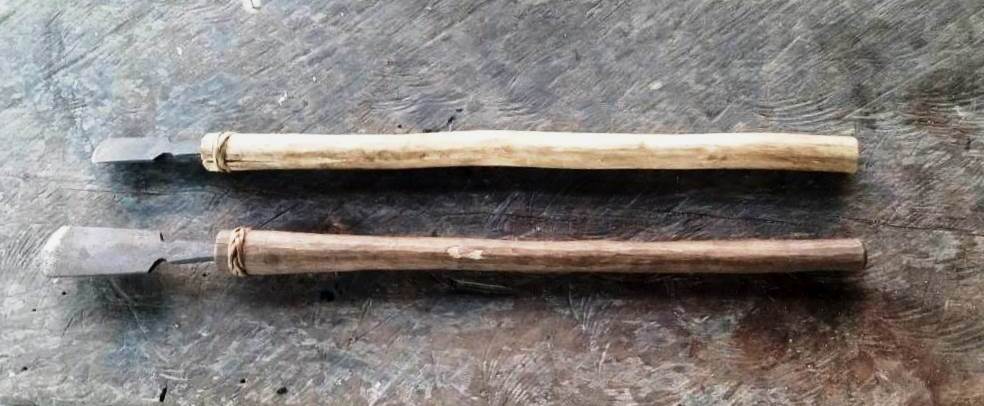
Fine shaping of the roughly cut-out notches for latching on the sidewalls is performed with a chisel with long wooden handles.
Manufacturing of Mentawai dugout canoes
Manufacturing the canoe proceeds as follows: the family head fells a suitable tree in the forest. At the place of felling, he will rough-shape it. If finished, he will begin fasting and call either a male family member or a colleague to help move the future canoe near his Uma. This is locally called Masinuruk. To move the heavy, roughly shaped canoe, banana trunks are preferably used as rollers. The person who was requested to assist in moving the canoe will be responsible for food, drink, and meat during this laborious work (Balit). Finishing the canoe will be done near the Uma, on a flat, shady place (Ka bakkat Bagok).
Dugout Boats
Boats are similar in design to dugout canoes but feature a flat aft for either an outboard or an inboard engine. Preferred compulsion is inboard engines mounted on the first sidewall extension, with a long propeller shaft extending above the aft wall. To protect the aft wood from the turning shaft, a metal sheet will be mounted over the wall.
Inboard engines with a fixed axle through the aft wall are unsuitable for inland rivers and tidal waters, as the propeller must often be lifted from the water due to floating debris or low water levels during low tide. Moreover, outboard engines are too expensive for this purpose.
Boats have only one purpose: to transport people across large bodies of water, such as rivers, canals, and lakes. They are considerably longer and broader than canoes. A typical size comparison between these two vessel types is shown in the picture above.
Dugout boat manufacturing
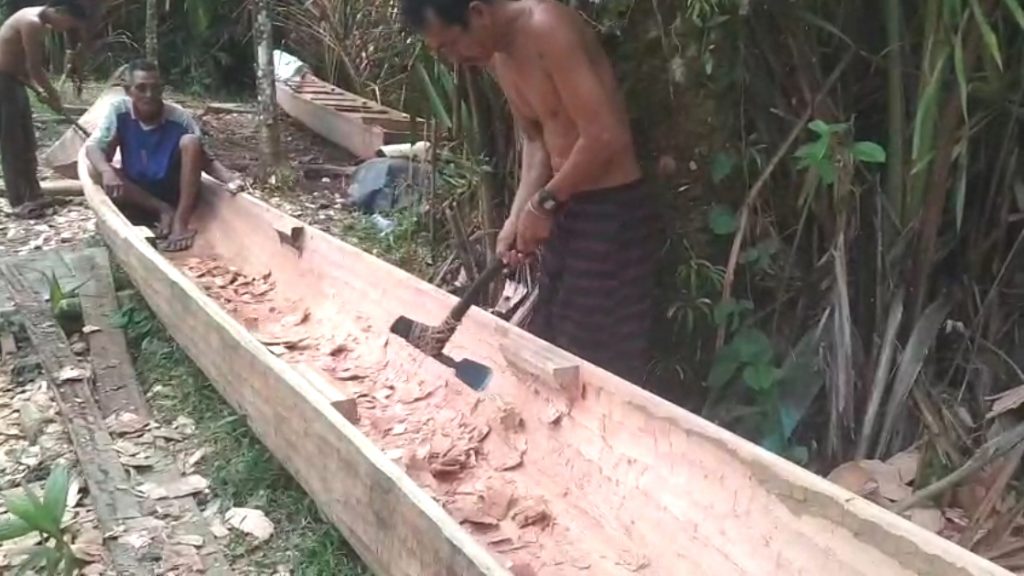
Individuals no longer manufacture boats; they are now produced by specialized gangs of craftsmen of mostly non-Mentawai origin. Due to the increased size and weight of the boats, chainsaws are used for logging and rough shaping. These very rough-shaped boats will be transported primarily on waterways, such as rivers and channels. Final rough- and fine-shaping will be done at the locations of these manufacturing gangs. However, the tools remain the same as those used in canoe manufacturing: Balioks, carpenter planes, and chisels.
Special boat adaptations for use in the sea
This article focuses on the lives of the people living in the forests of Siberut Island. As outlined earlier, they primarily use dugout canoes on waterways, and for longer, heavier loads, they use boats based on the canoe design. Villagers living on the coast use the same canoes and boats as the forest-dwellers.
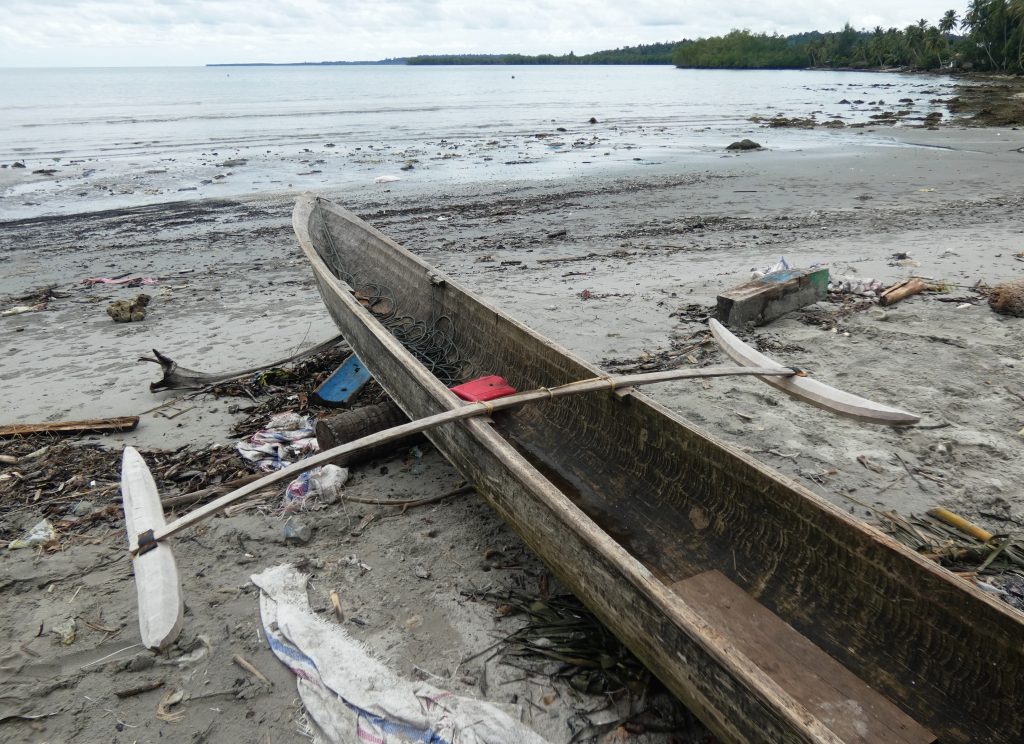
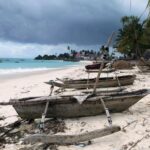
Sometimes, however, they add specialized features to these traditional boats and canoes, as documented here. These special adaptations are outriggers, height-increased sideboards, and, in some cases, robust inboard engines.
Lessons learned about Mentawai dugout canoes and boats:
- For manufacturing their canoes and boats, Mentawai people use traditionally only single tree trunks and not wooden planks.
- All Meranti tree species are used for manufacturing these dugout vessels.
- Main tool for felling and shaping the canoes is the Baliok, a chopping tool, which can be used as an adze or axe.
- Boats are considerably larger than canoes and will be manufactured by specialized gangs from outside the Siberut island.
.