Beekeeping provides two valuable harvests: honey and beeswax. While honey is the primary product for many, beeswax is a versatile byproduct used to make candles, waterproof coatings, and medicinal salves. However, raw honeycomb is often contaminated with impurities, including bee parts, cocoons, and pollen. To turn this raw material into a usable product, you must extract and purify it.
The Water Boiling Method 1
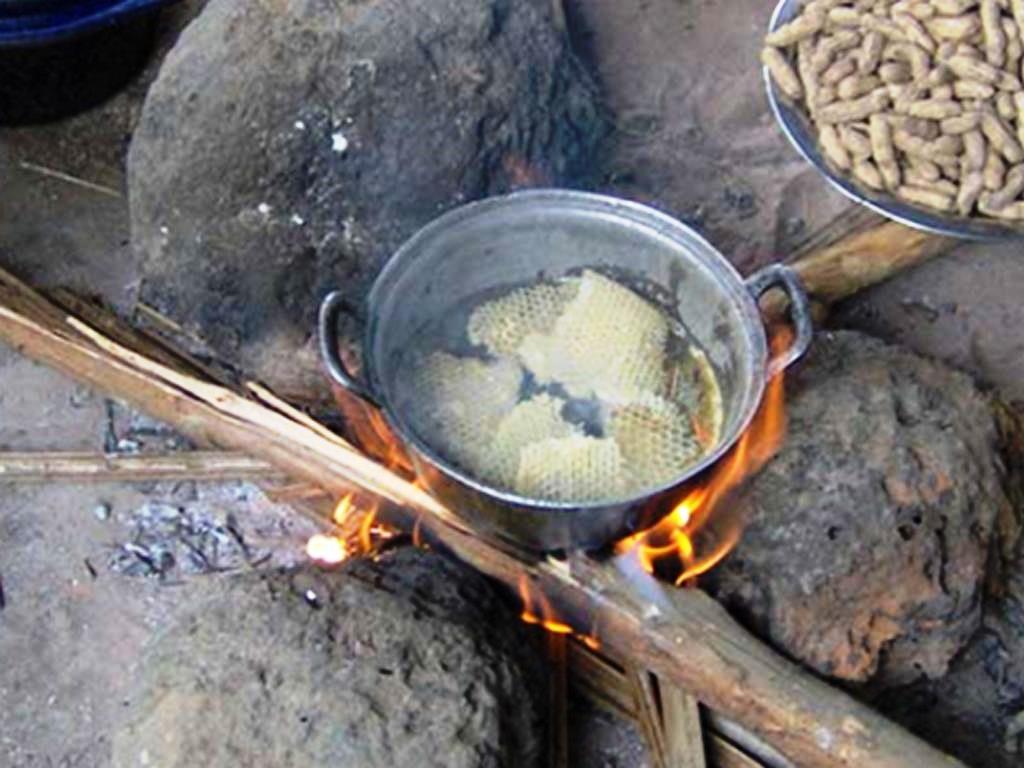
The preferred method for extracting wax in the D.R. Congo is the direct water method.
The Melt: Put the honey combs in a pot of water and heat them slowly. As the water warms, the wax melts and remains on the surface. The debris will sink to the bottom. Important: Never boil wax over an open flame without water, as beeswax is highly flammable and can reach its flashpoint quickly.
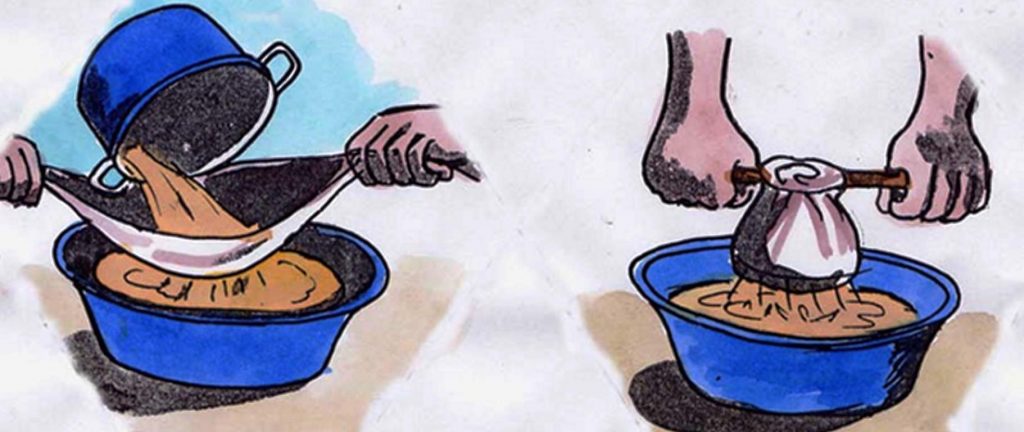
The Filter: The liquid is then poured through a piece of coarse cloth, and while still hot, this is twisted or squeezed until as much wax as possible is squeezed out into a clean metal pot. The wax then floats on the surface, and when solidified, the water can be poured off. The process may need to be repeated until the wax is clean.
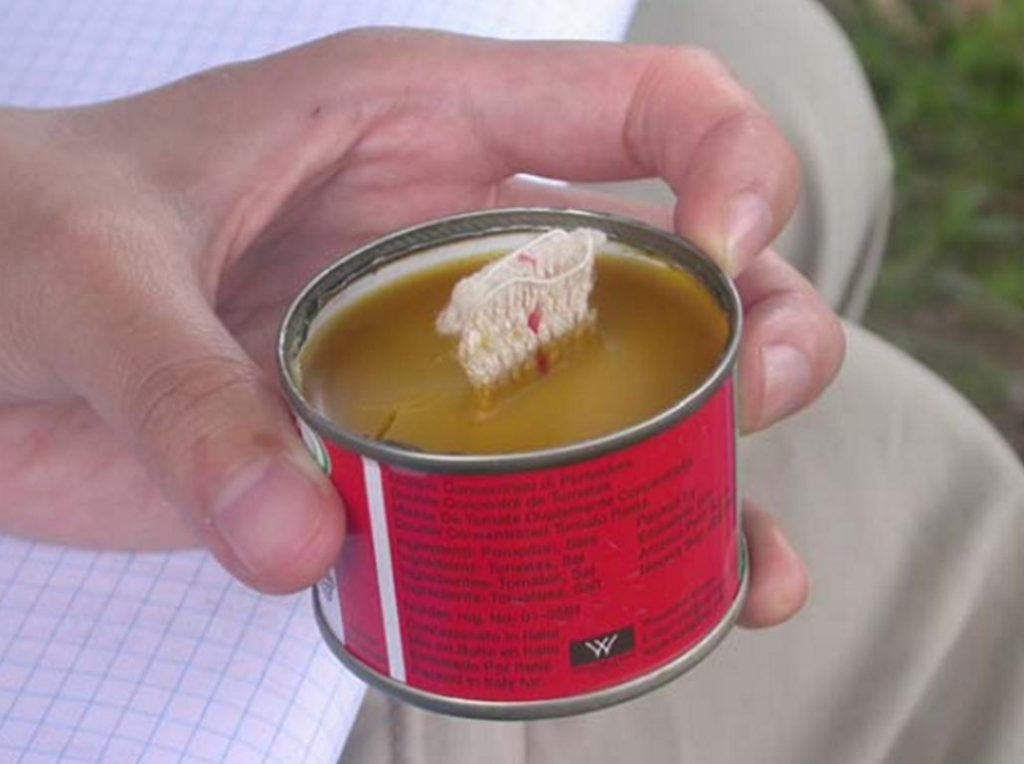
The wax can then be melted and poured into suitable containers, with a wick centrally placed, to make candles.
The Water Boiling Method 2
Another method for extracting wax in the bush is the indirect water method. Because beeswax has a lower density than water, it floats to the surface when melted, allowing impurities to sink or be filtered out.
Preparation: Place your old honeycombs or wax cappings into a porous bag, such as a clean burlap sack or a piece of mosquito netting.
The Melt: Submerge the bag in a large pot of water and heat it slowly.
The Filter: As the water heats, the wax melts and seeps through the bag, rising to the surface. Use a stick to gently press the bag to ensure all the wax is released.
Cooling: Remove the pot from the heat and let it sit undisturbed. As the water cools, the wax will solidify into a clean “cake” on top. Once hard, lift the cake out and scrape any remaining debris (slumgum) off the bottom.
The Solar Method
If you have consistent sunlight, a solar wax melter is a “set it and forget it” alternative. Place your combs in a glass-covered box tilted toward the sun. The internal heat melts the wax, which drips through a mesh filter into a collection pan below. This method is slower but requires no fuel and produces very high-quality, sun-bleached wax.
Pro-Tips for Purity
For the cleanest result, repeat the melting process a second time using fresh water and a finer filter, such as a nylon stocking. Always use rainwater or distilled water if possible; “hard” water containing minerals can sometimes discolor the wax or cause it to form a crumbly emulsion.
Lessons learned about how to extract pure beeswax:
- There are two simple methods of extracting pure beeswax, which are the water boiling method and the solar method.
- The water boiling method can be done either with a bag filled with soiled wax or by boiling the wax directly in water and then filtering it afterwards.
- In D.R. Congo, the direct melting method is the preferred one.
- For boiling rainwater should be used, as minerals in the water will sometimes darken the wax.