Most Thai waterways, khlongs (canals), and streams are clogged with aquatic plants, predominantly Common Water Hyacinth (Eichhornia crassipes), commonly known as Phak Top Chawa in Thai. This invasive species was introduced in 1901 by Thai Royalty from Indonesia and was intended for eradication under the Water Hyacinth Disposal Act of 1913, but it had no effect. Currently, a substantial effort is required to partially remove them from navigable rivers.
The only known uses of this plant are to produce biofuel and as an alternative weaving material for bags and handicrafts. Fishermen often don’t like Eichhornia crassipes, as it hinders angling and netting and hides away a variety of aquatic animals. But using hand-dragged seine nets around these water plants is productive. To further attract fish, floating plant mats are established on many larger khlongs.
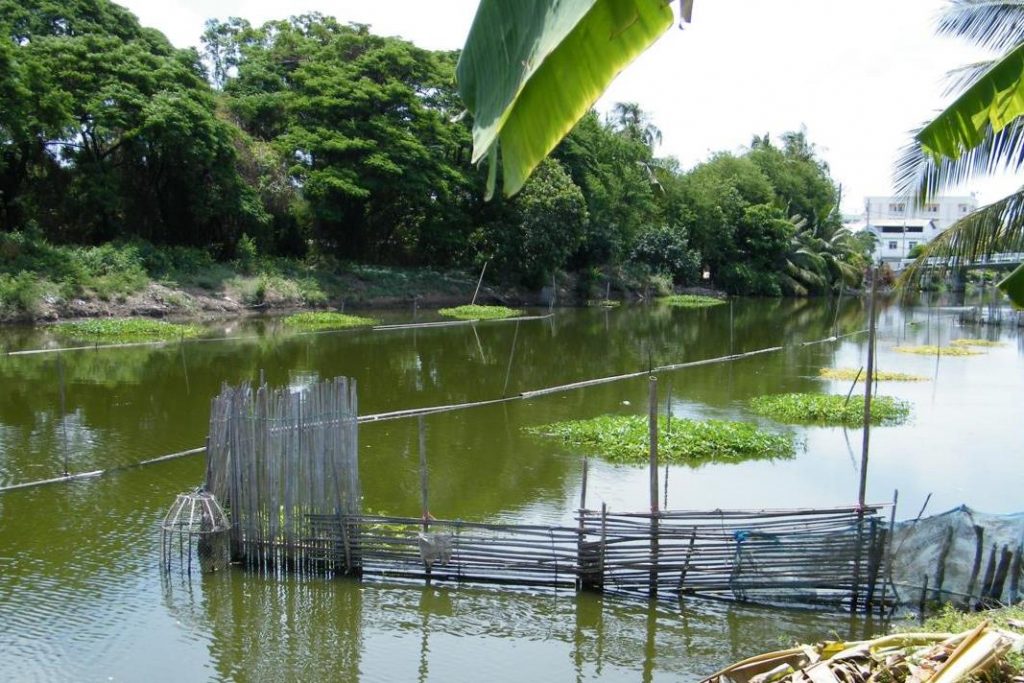
Gear for Seine Net Fishing in Thailand
In Thailand, the standard mesh size is 25 mm (1 inch) to allow smaller juveniles to escape while retaining marketable fish. Hand-dragged surrounding seine nets, however, target smaller fish species; mesh sizes are therefore commonly around 10 mm (0.4 inches).
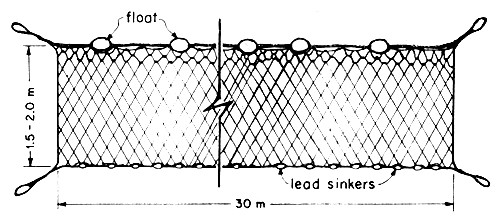
The length of hand-dragged seine nets is limited by the physical strength of the people pulling them. Typical lengths are 20 or 30 m, with a depth of 1.5-2 m. The net must be deep enough to touch the bottom, while maintaining a ‘belly’ in the water. The upper line of the surrounding net will be kept afloat by empty water bottles, which serve as buoys. Lead weights weight down the bottom line.
What is the surrounding-water-plant method?
This is the practice of netting around aquatic plants. Unlike open-water netting, this technique requires treating vegetation as a container rather than an obstacle. Follow these steps to ensure a successful harvest:
Step-by-Step Guide to the surrounding-water-plant method.
Identifying the Target Patch
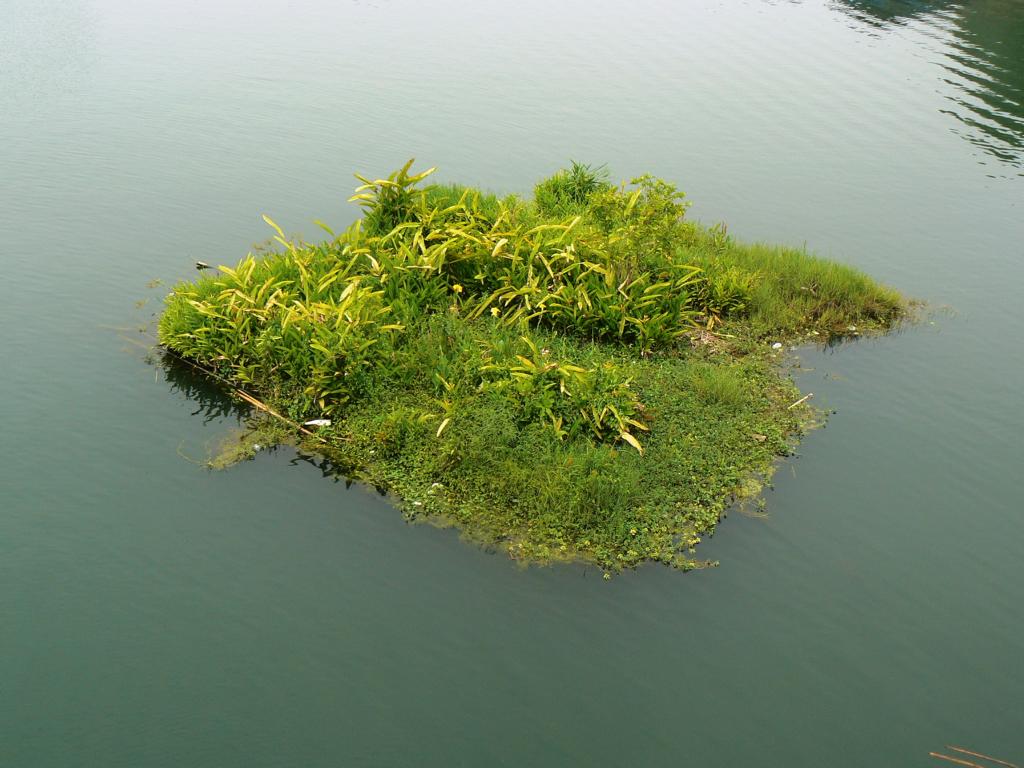
Not all water plant mats are equal. Look for an isolated patch of Eichhornia crassipes roughly 3 to 5 meters in diameter. Smaller patches are easier to surround, while larger mats often require more people. Ensure the water depth is manageable—ideally waist-deep—so you can maintain leverage on the hand-dragged seine net.
Setting the Perimeter
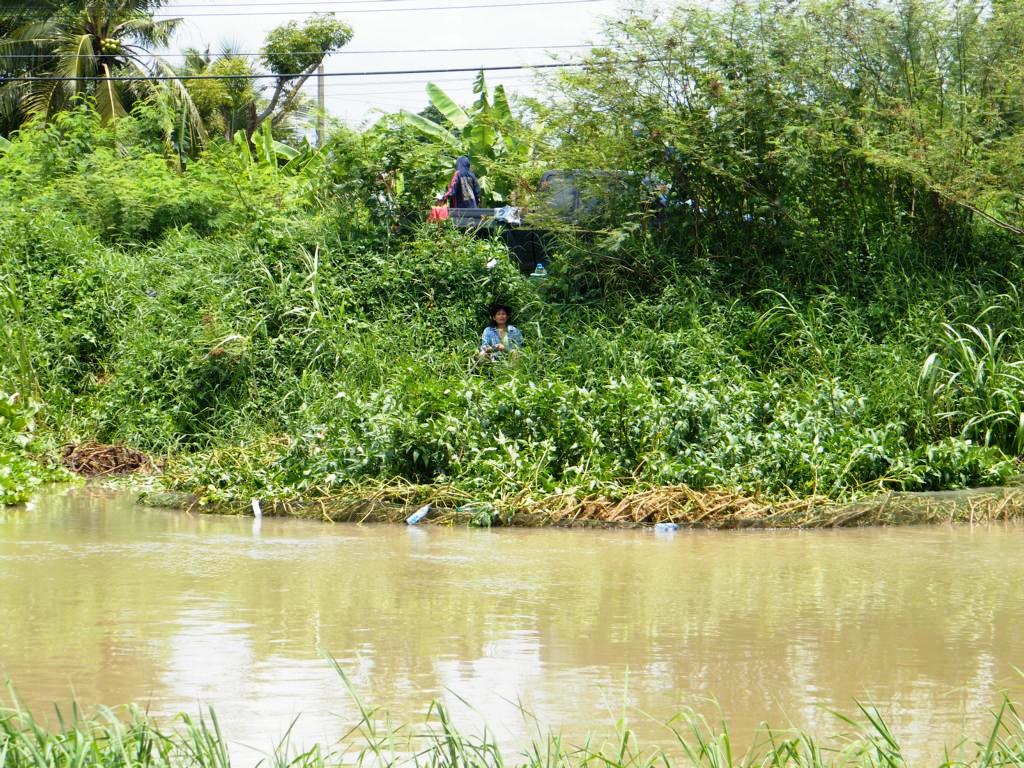
The key to traditional Thai fishing is stealth. Two fishers should take opposite ends of the seine net and approach the plant mat from the downstream side to avoid disturbing debris and warning signals in the roots. Slowly “walk” the net in a wide arc around the plants, ensuring that the bottom lead line remains in constant contact with the muddy floor to prevent fish from diving beneath it.
Closing the Circle
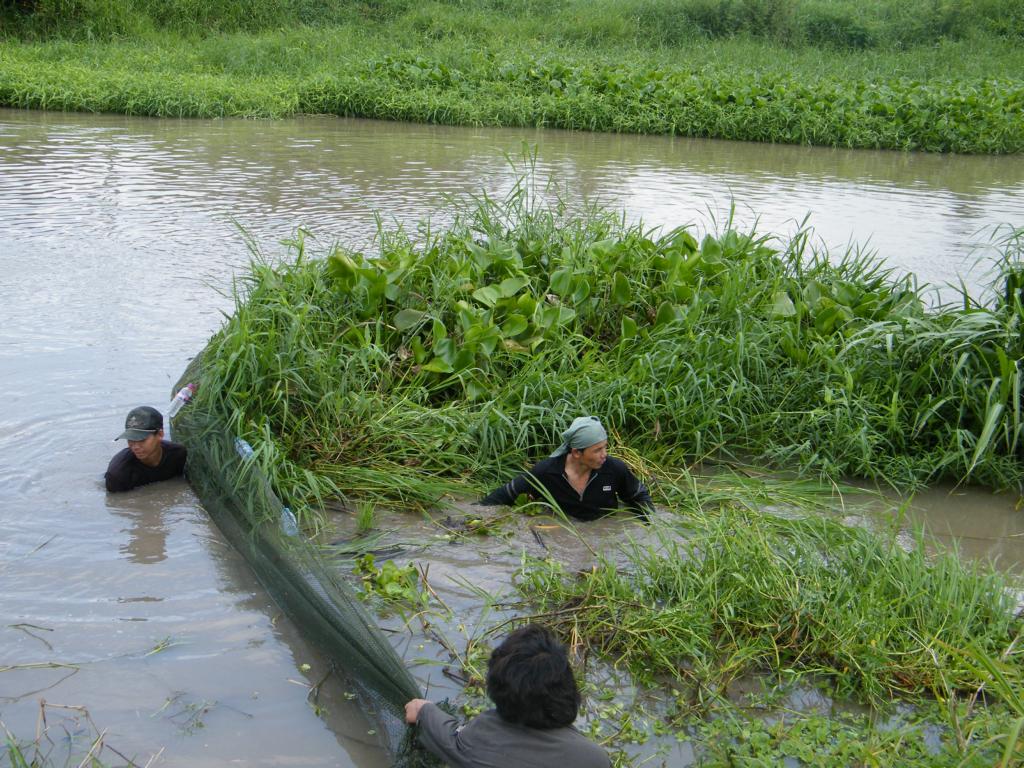
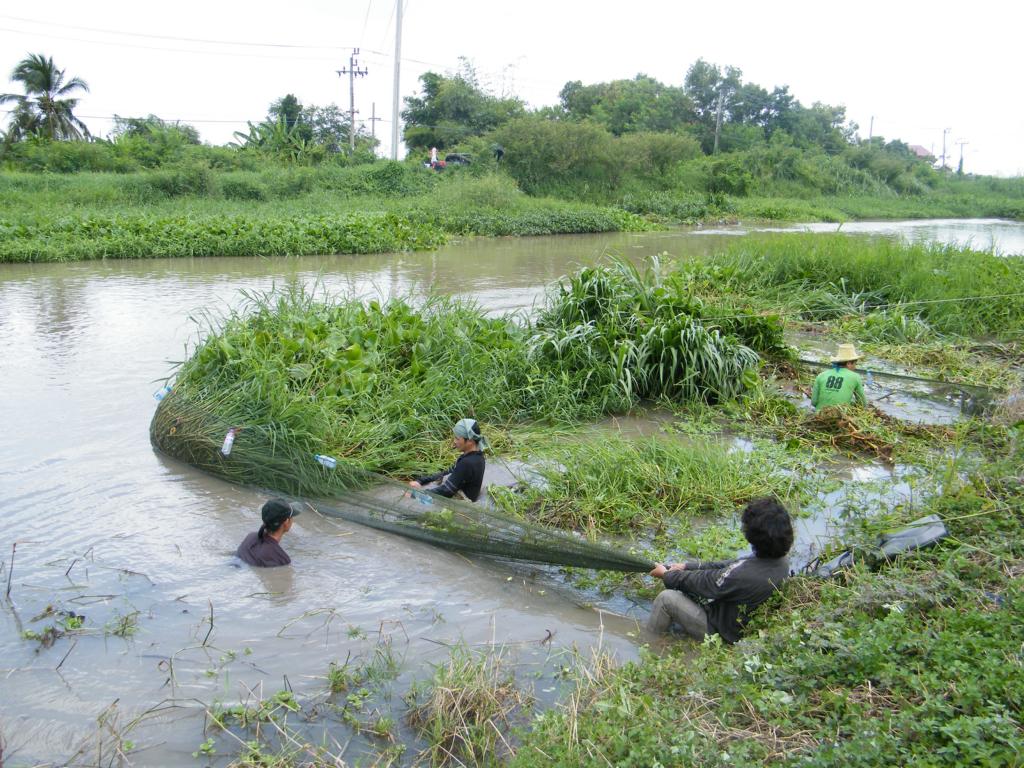
Once the water hyacinth is completely surrounded, both fishers must meet and overlap the ends of the net. At this stage, the fish are trapped between the net’s “wall” and the plants’ “roof”. Tighten the circle slowly, pulling the bottom line inward to create a bowl shape beneath the vegetation.
Clearing the Debris
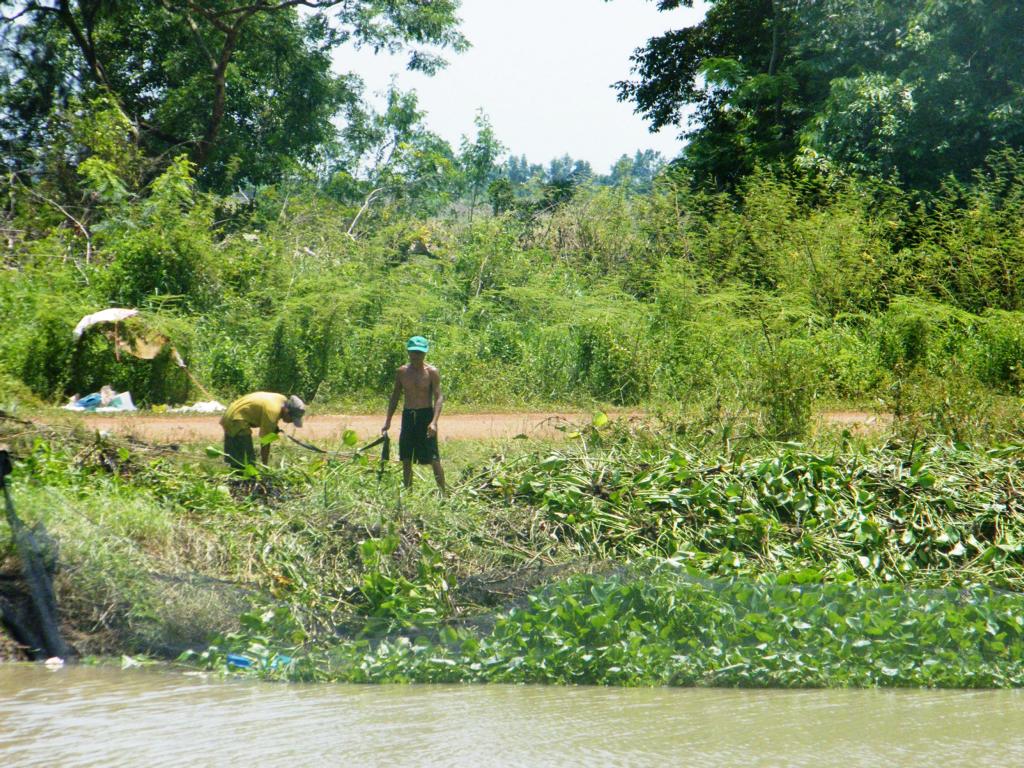
With the net cinched tightly, remove the aquatic plants. Lift the plants out of the water one by one, shaking the roots vigorously inside another fine net. This dislodges freshwater shrimp and climbing perch, which often cling to root hairs. Discard the cleared plants outside of your netted area.
The Harvest
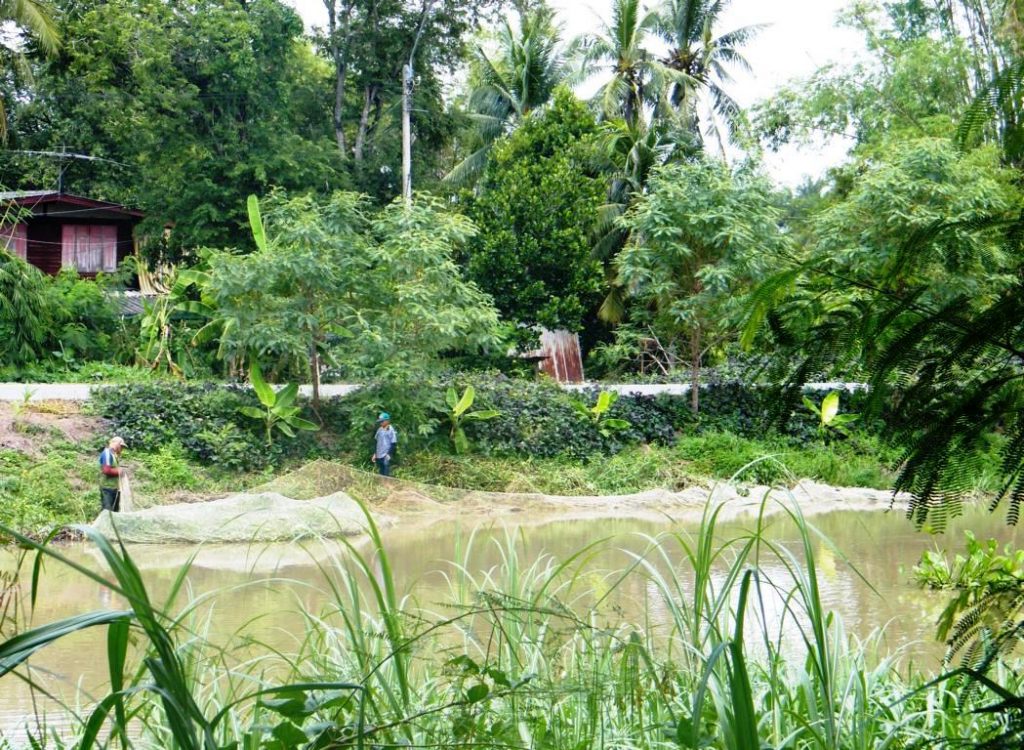
As the last of the plants are removed, the remaining water will be murky. Slowly lift the seine net upward. This is when the “hidden bounty” of the Thai khlongs is revealed. You will typically find a concentrated mix of shrimp, small fish and crustaceans flapping in the center of the mesh. Sort your catch quickly and keep them in a bucket of water covered with plants to keep them alive.
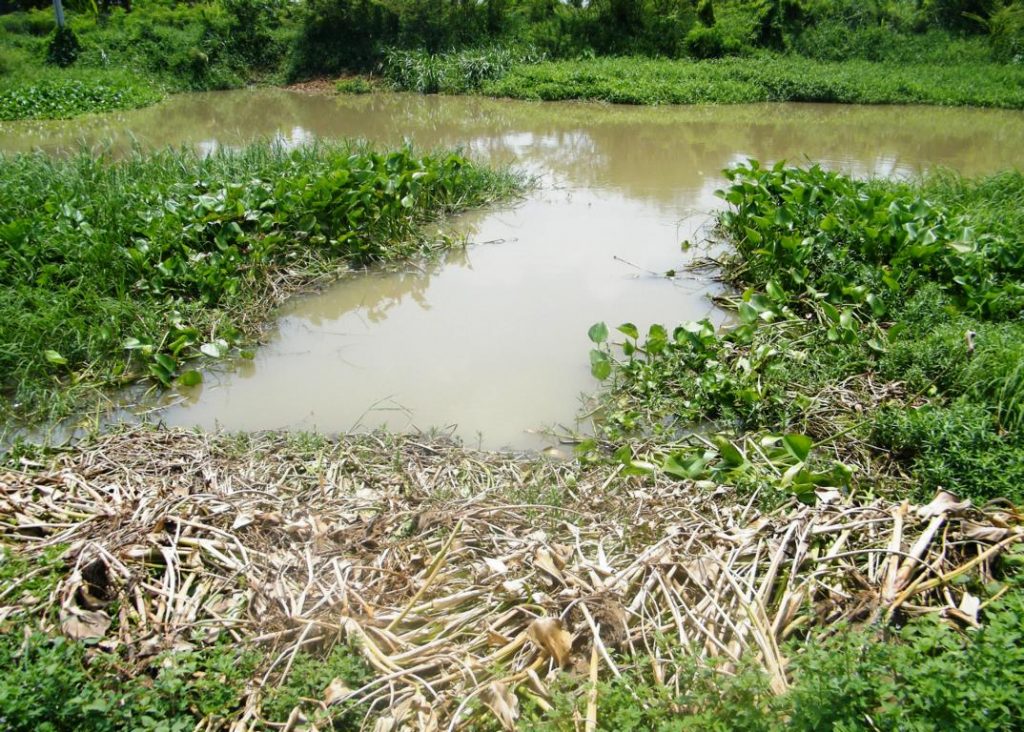
What can you catch using this method in the Khlongs?
Khlongs in the Chao Phraya River Delta host approximately 60 fish species, depending on their connection to the main river and water quality. The species most frequently encountered are those with accessory air-breathing organs, which allow them to survive in the low-oxygen environments common in urban canals. These are the gourami, snakehead, catfish, knifefish, and families of introduced or invasive fish.
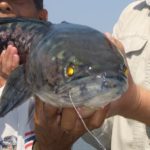
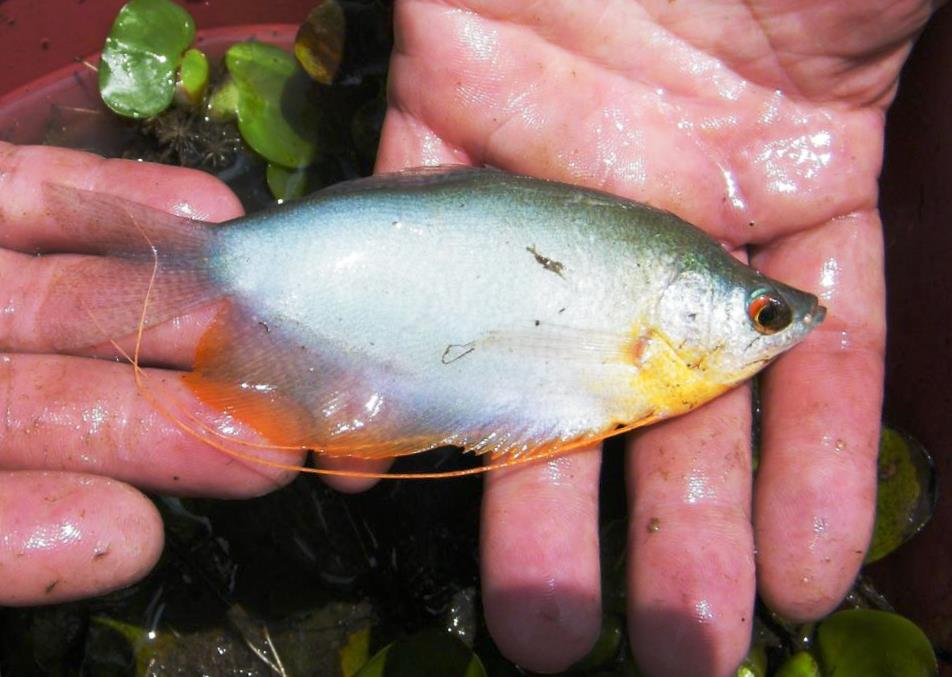
When I was fishing with my Thai friends at Nong Chok in the Khlong Pracha Samran, we caught the following fish species from within the water plants :
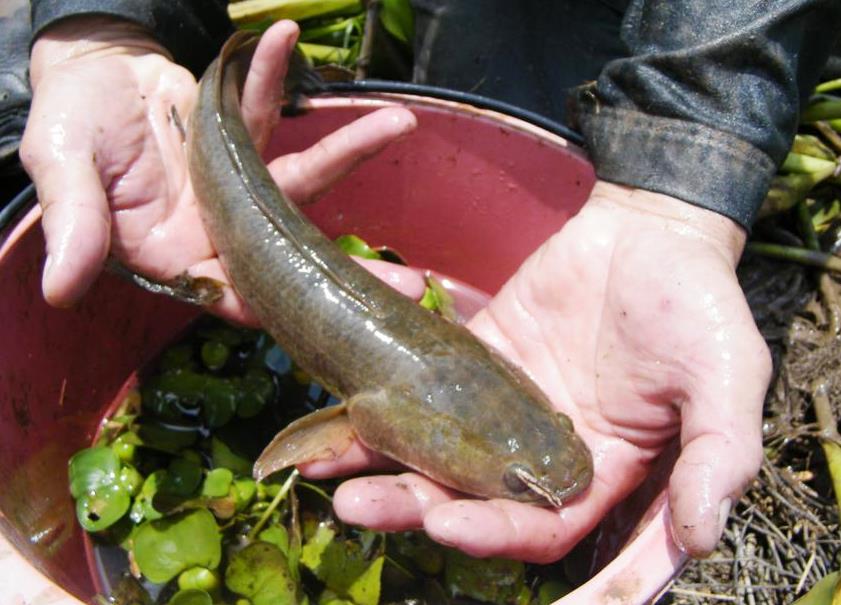
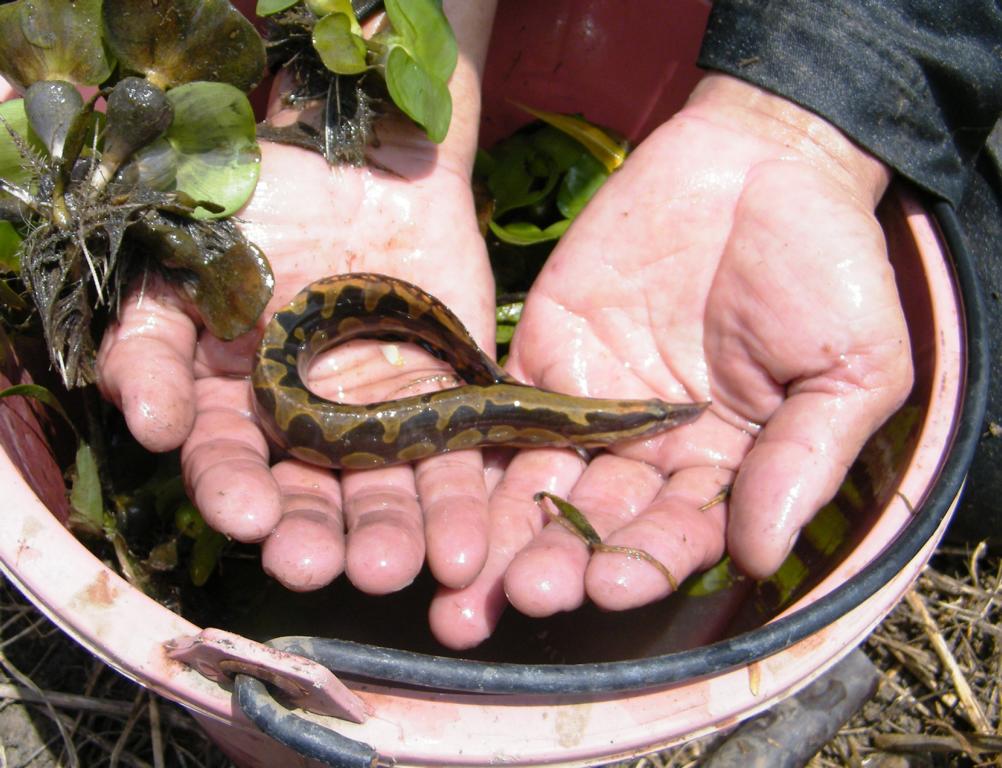
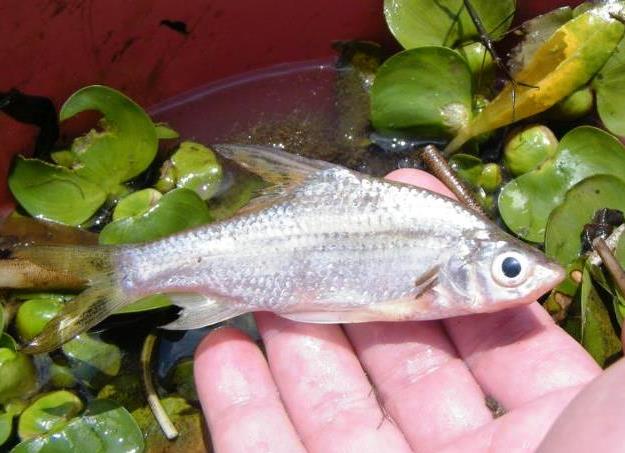
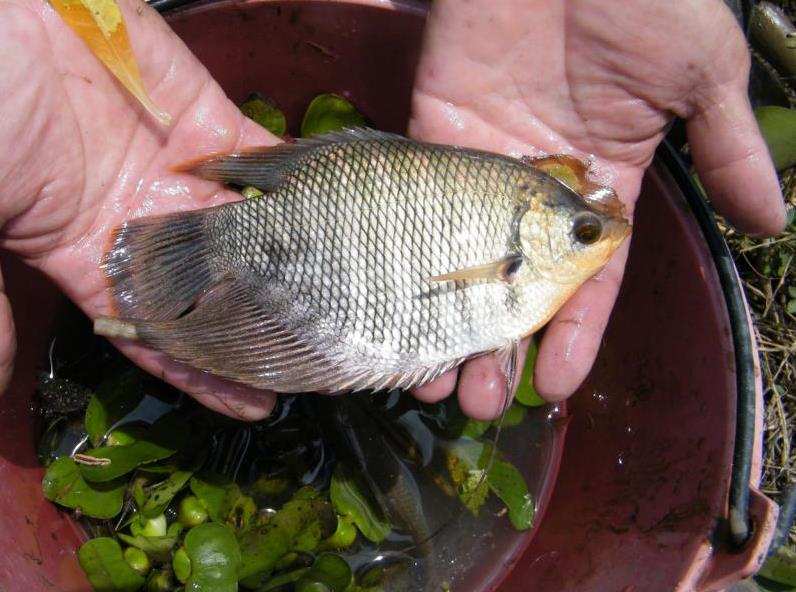
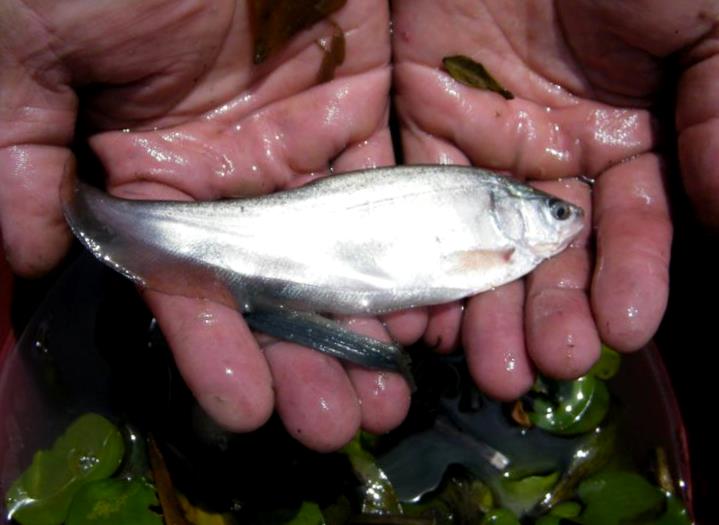
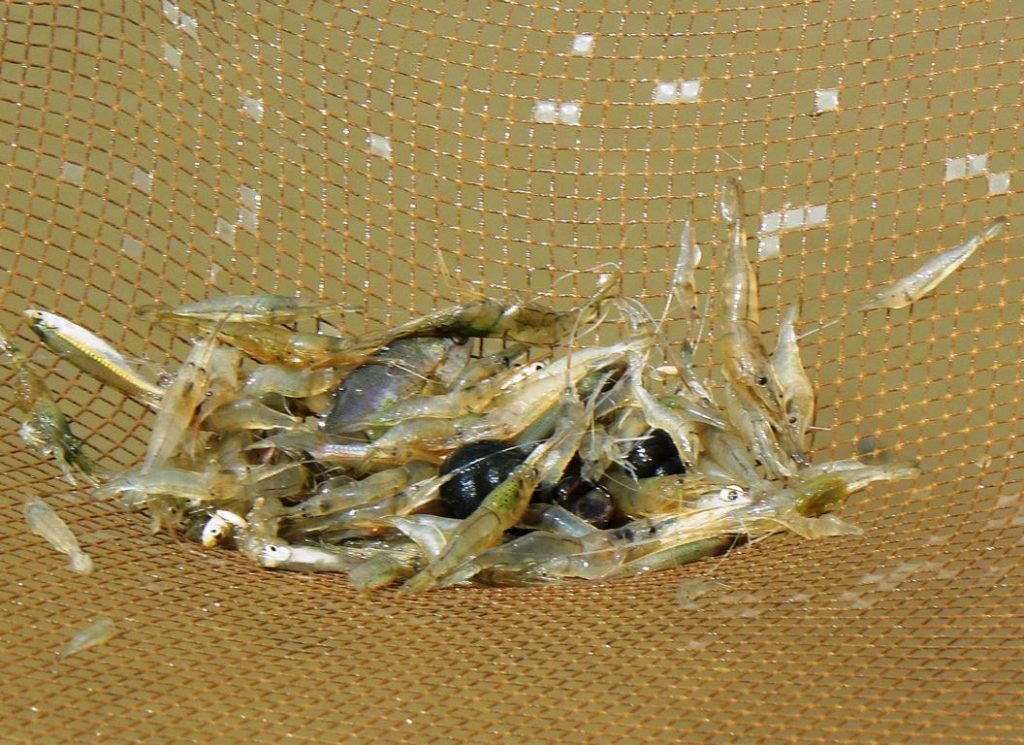
In addition to these fish species, we also caught many ricefield shrimps clinging to the fine rootlets of Eichhornia plants.
Lessons learned about seine net fishing of khlongs covered by water plants:
- “Surrounding” involves surrounding floating mats of Eichhornia crassipes (Water Hyacinth) with a seine net to trap aquatic life hiding in the root systems.
- This method is exceptionally effective for catching various fish species.
- Ideal for the slow-moving khlongs and ponds of Thailand, where invasive plants create natural oxygen-rich shelters for fish.
- Requires a fine-mesh hand-dragged seine net and at two to six people to ensure the “circle” is closed before the fish can escape into deeper water.