
Blowpipes were traditionally the primary hunting weapon among the Orang Asli people in Peninsular Malaysia. Few sub-tribes still use them regularly nowadays, such as the Jahai and Bateq. But for most others, blowpipes are merely a relic of the past. Often, they are still used for ceremonial purposes or as a ‘Stone Age’ activity for schoolchildren. Other traditional hunting weapons used by hunter-gatherer societies, such as bows and arrows or lances, never achieved the same level of popularity as blowpipes.
The information presented in this article is based on my various encounters with knowledgeable Jahai, Semai, Temiar, and Semelai people. But specifically, I want to thank Shaik Reismann, the founder of ‘Malaya Junglecraft’, for his input.
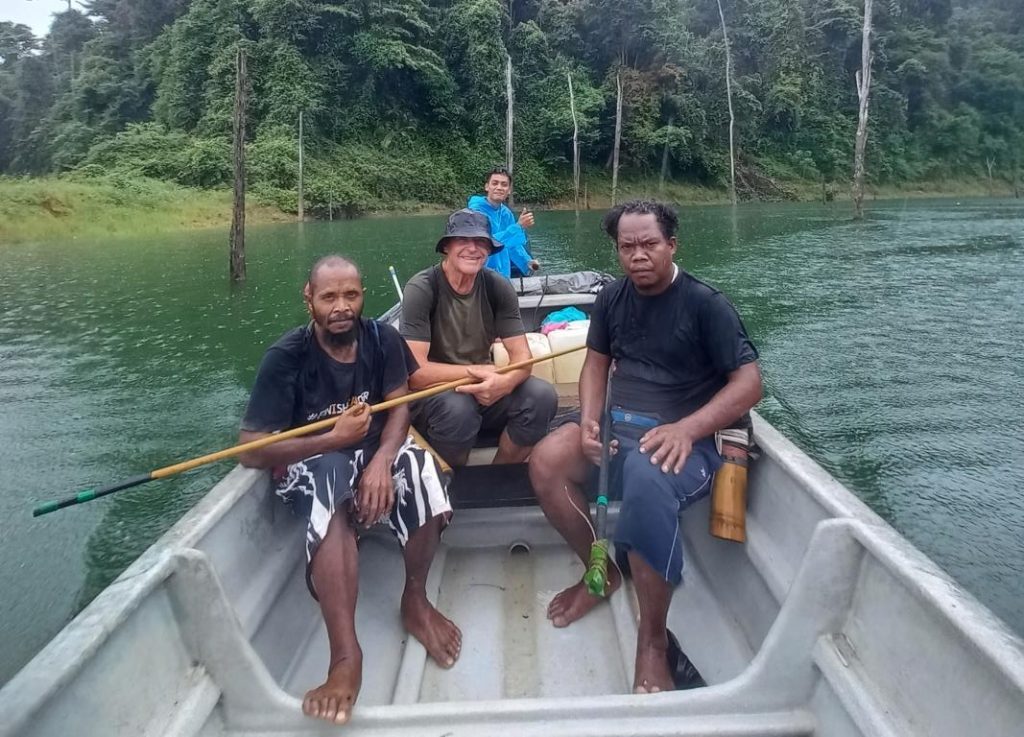
Generally, the Orang Asli tribes in Peninsular Malaysia use lightweight double bamboo tubes as blowguns. In contrast, the Penan, Murut, Iban, and related tribes in Borneo use blowpipes made of solid wood. In both regions, similar darts, coated with the same poison, are used.
All Orang Asli blowpipes in Peninsular Malaysia are between 1.5 and 2.2 meters long. They are lightweight, with an inner diameter of 12-15 mm. The main differences lie in designs, materials, and decorations. In addition to bamboo blowpipes, two Orang Asli tribes previously used composite wooden designs. Modern materials are increasingly popular as demand for traditional hunting tools declines.
Bamboo blowpipes
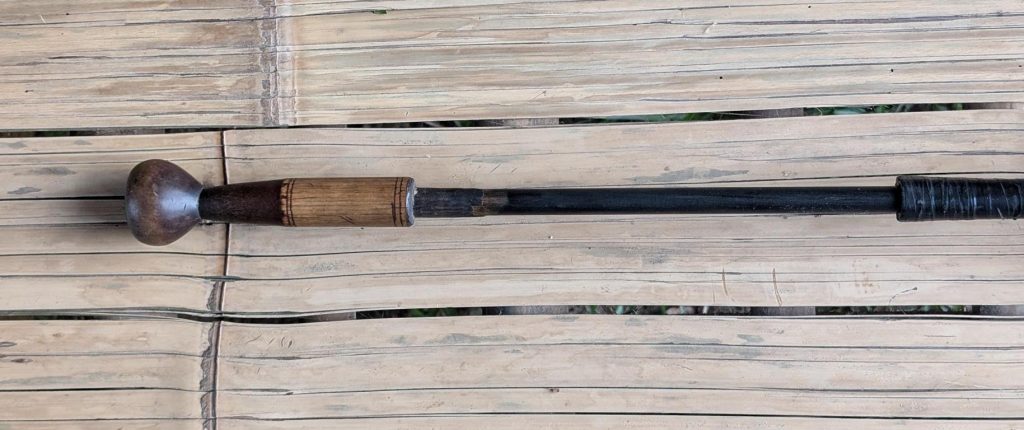
This is the most common, traditional blowpipe design in Peninsular Malaysia. It consists of a slender inner tube made of two bamboo sections, a wooden mouthpiece, and a protective outer sheath.
Inner tube
For the two sections of the inner tube, Buluh Sewor (Schizostachyum jaculans) is the preferred bamboo species. The internodes of this bamboo are exceptionally long, up to 1.2 meters apart. The common English name is even ‘Blowpipe bamboo’. Buluh Sewor is relatively challenging to find and typically grows deep in the hills.
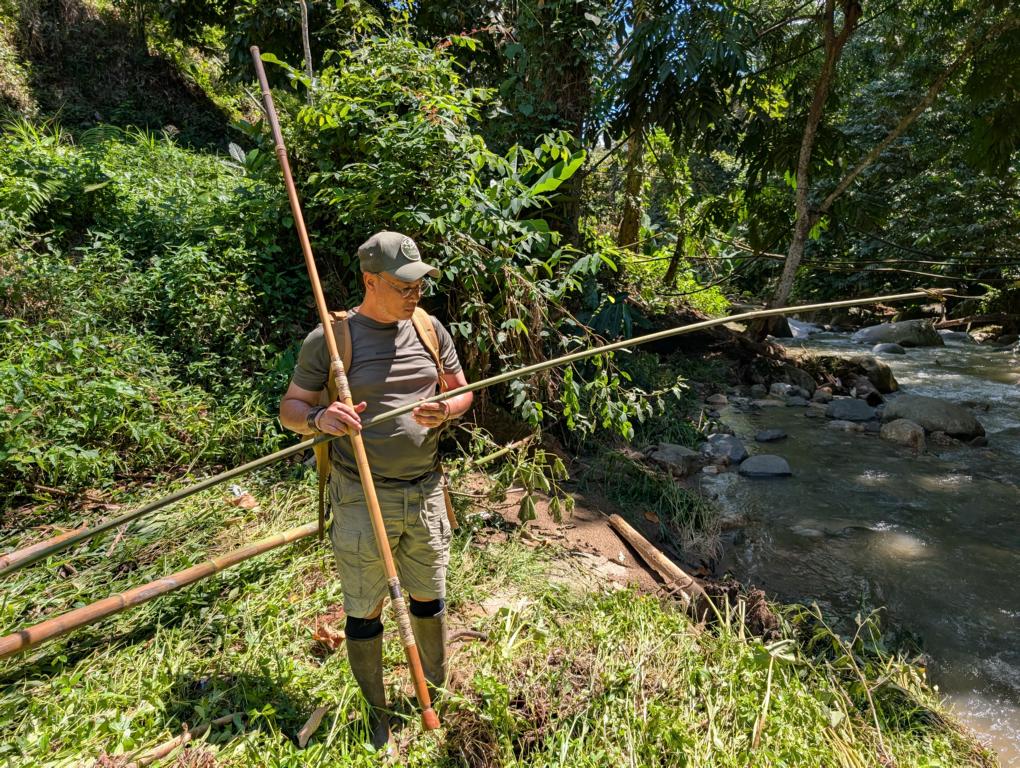
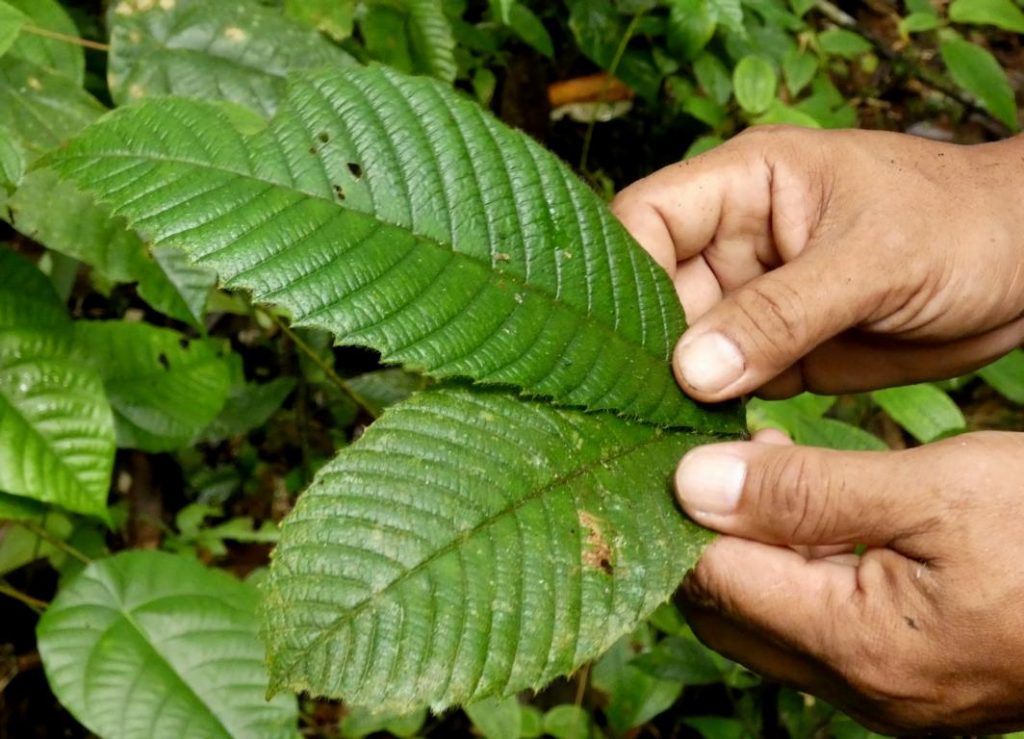
If Buluh Sewor is unavailable, another similar bamboo species is Buluh Temiang (Schizostachyum blumei), which is thin-walled and also has long internodes. After felling a suitable bamboo culm, it will be cut to size and slightly roasted to straighten it. Thereafter, the two tubes will be joined.
Joining of the inner tubes
There are two different methods for joining. Either a tapered fit or using a bamboo collar and one method of producing it from one culm.
A tapered fit is done in such a way that one end is tapered (male end) and the other is hollowed conically (female end). The joint will be sealed air-tight by either stingless bee resin (Kelulut) or Jelutong (Dyera costulata) gum. After joining this so-called invisible joint, the interior of the blowpipe tube will be smoothed with the leaves of the sandpaper plant (Tetracera scandens), resulting in a mirror-like interior.
The second method of joining two separate bamboo tubes into one uses a tightly fitting bamboo pipe as a collar that surrounds the two pieces to be connected. Additionally, Jelutong gum will be used to air-tighten the connection.
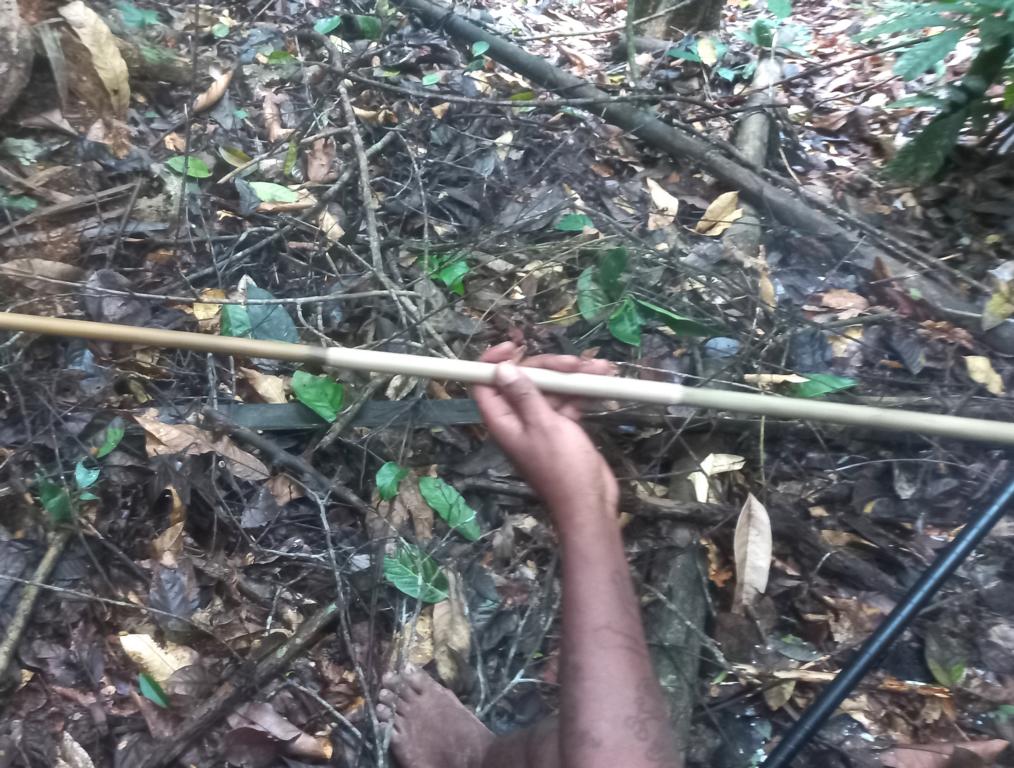
A third alternative is to cut the barrel in its full length from the culm and to drill through the internodes. In this case, obviously, no jointing method is necessary.
The two joined pieces of bamboo originate from one single culm, from which the internode between them was removed. Due to the growth of the culm, the inner diameter of the whole tube is slightly conical towards the muzzle. Therefore, a wad behind the dart is essential to prevent air leakage at the lower end while ensuring the dart’s passage at the muzzle.
Inner tube centering
The most challenging part is ensuring the two joined pieces remain perfectly straight. Therefore, before the inner tube is inserted into the outer casing, strips of cloth will be tied around the middle of the inner tube around the joint, and the inside of the outer tube will be lubricated. The fabric will maintain a constant distance from the wall and will plug the ring gap towards the bottom. Melted natural resin will be poured into the gap above the fabric, filling a height of approximately 30 centimeters (1 foot). After hardening, both tubes will be separated. The resin will now adhere to the inner tube, maintaining a constant distance from the outer tube and therefore remaining perfectly straight.
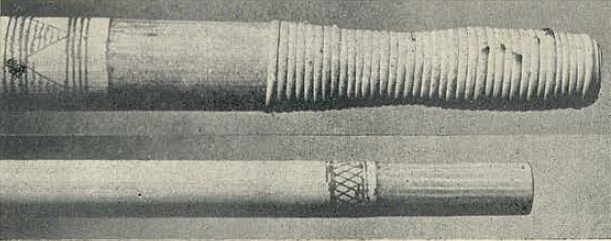
Some blowpipe designs also feature a holding and centering device on the outer tube for the inner tube, as shown in the figure above. The outer tube was notched tightly and circumferentially behind the muzzle, and bound with a rattan string in such a way that its diameter was decreased, holding the inner tube in the same position.
Other inner-tube topics
After the blowpipe is finished and used in the field, the inner bamboo tube will periodically be removed from the outer casing and smoked over a fire to deter insects and their larvae. This is why the inner tubes of old bamboo blowpipes are often black.
It also has to be mentioned that neither the inner nor the outer bamboo pipe carries any bead or other sighting aid on the muzzle end to facilitate aiming.
Outer tube
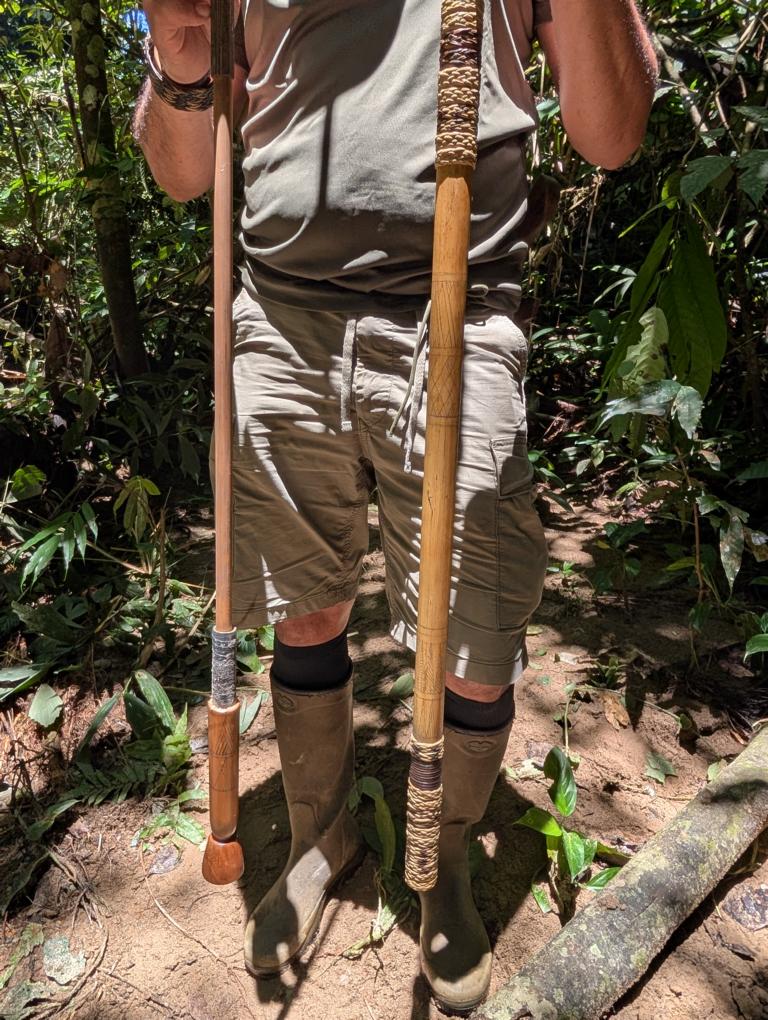
The outer tube is essential, as it mechanically protects the fragile inner tube. Additionally, the humid jungle heat could warp the thin inner tube without a central distance holder and a strong sidewall. The outer tube is made of various types of bamboo, from which the internal node walls were removed, and the exterior is often engraved or otherwise decorated.
Mouthpiece
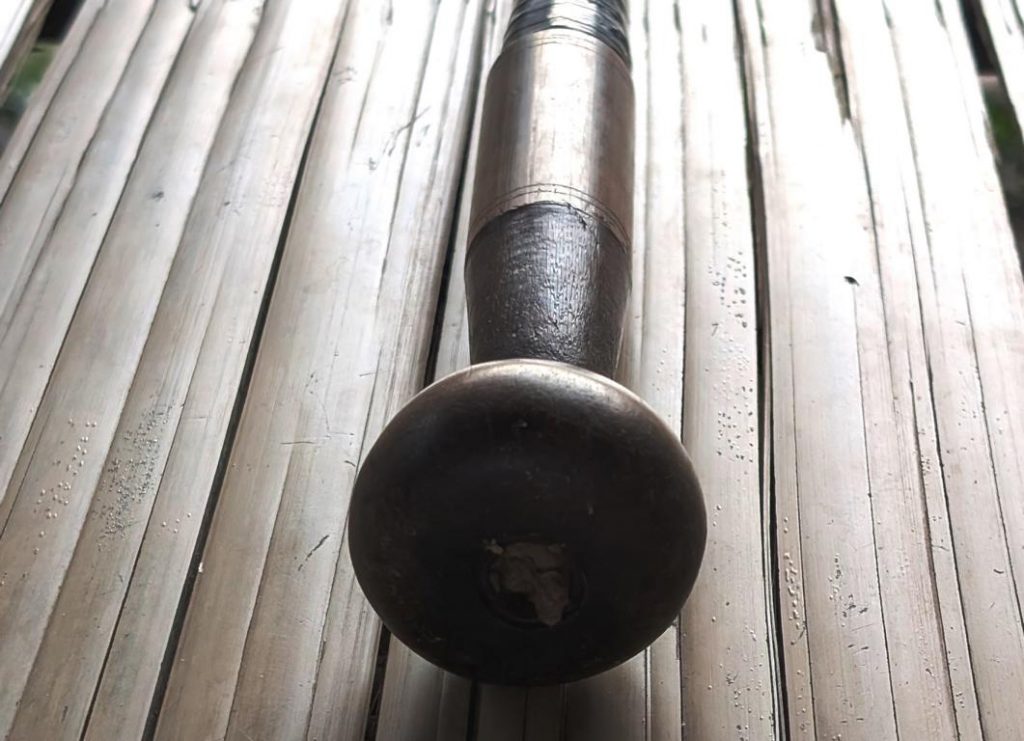
A mouthpiece will be carved to the user’s preferred shape, ensuring that 100% of the lung pressure is directed into the tube. The most popular design has a flat end and is afterwards curved inwards. Meranti (Shorea spp.) wood is commonly used for this purpose because it is lightweight, easy to carve, and strong. Alternatively, either Pulai (Alstonia spp.) or Jelutong (Dyera costulata) wood is used. In this article on our website, various mouthpiece shapes of Orang Asli blowpipes are shown.
Composite wooden blowpipes
Bamboo blowpipes, as presented above, are the undisputed primary design for nearly all Orang Asli tribes in Peninsular Malaysia. Only two tribes employed a completely different design. These tribes are the Temoq and Semelai Orang Asli. Both belong to the Proto-Malay class and are located in southern Pahang province, near Tasik Bera. As of 2026, the Temoq tribe is no longer officially recognized, suggesting that it is either extinct or has merged with the Semelai.
In 1949, the reputable Bulletin of the Raffles Museum reported that both mentioned Orang Asli tribes used wooden blowpipes similar to those in Borneo, and described them.
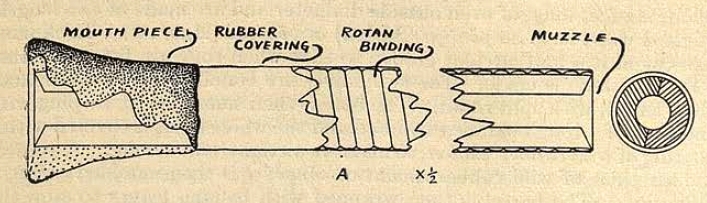
Wooden Orang Asli blowpipe design
The design comprises two wooden pieces with a half-circular groove, so that, when fitted together, a straight bore is formed. The two halves are bound together throughout their length with split rotan. The bore is then smoothed by rasping with the rind of a rough-skinned bamboo, and the whole piece is coated with wild rubber to make it airtight and strong. A conical mouthpiece of wild rubber is then molded onto it.
The barrel is then wrapped in banana leaves to prevent the rubber from sticking to the hands; over time, the leaves wear away, leaving a hard, smooth surface.
The length of one of these blowpipes was around 7 feet (abt 2.1 m) or longer and of even outside diameter. For the two wooden barrel half-shells, hardwoods were used: Penaga/Ceylon Ironwood (Mesua ferrea) and Beberas hutan/no common English name (Aporosa prainiana). Compared to bamboo blowpipes, these wooden blowpipes had a straight barrel groove design, and not a conical one. Wading was therefore less critical.
Interestingly enough, for these blowpipes, a small tooth or beetle wing-case was stuck near the mouthpiece to show which way up the blowpipe should be held.
Blowpipes made of modern materials
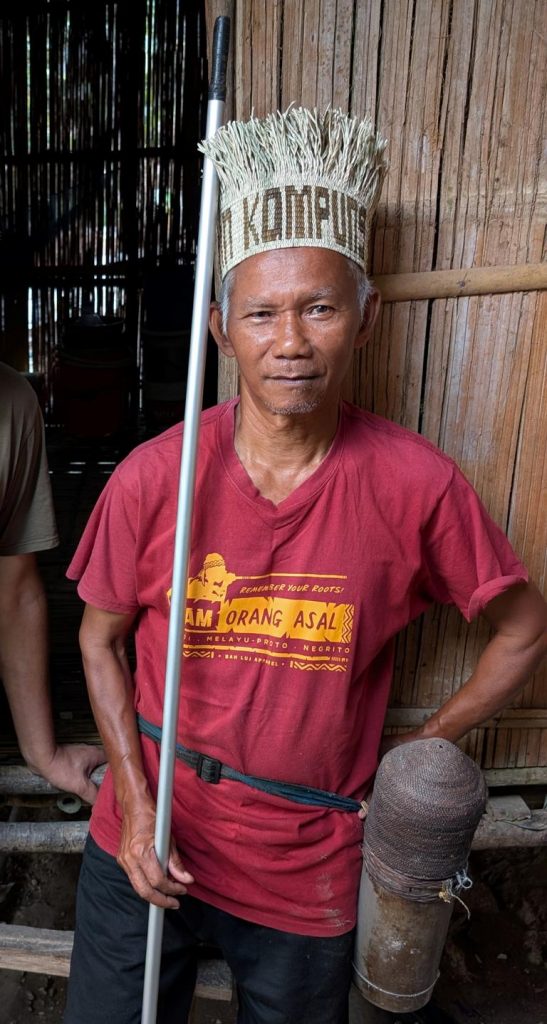
Modern materials, such as aluminum pipes, are fitted with a mouthpiece and stored either with or without an outer protective sleeve. These blowpipes primarily serve ceremonial or representative functions, demonstrating and reinforcing the importance of local leaders. There is little practical value in these gadgets, as hunting is done anyway and primarily in the village trading shop for instant noodles.
Lessons learned about Orang Asli blowpipes:
- The Senoi group of Orang Asli people in Peninsular Malaysia still uses traditional blowpipes for hunting.
- Bamboo blowpipes, consisting of an inner and an outer barrel, are most popular.
- There are bamboo species available in the forests, which fit the requirements perfectly.
- Composite wooden blowpipes were only used in small numbers and lost importance.
- Aluminum pipes seem to be the newly accepted form of blowpipes in the future.




2 comments
Keith Wood
Hi,
A very comprehensive website – Thanks.
I have an Orang Asli blowpipe that I collected over 50 years ago in the north if Malaysia. It belonged to the tribal chief and was in daily use by him. I also have the accompanying dart holder (bamboo with woven top), with poison darts (I believe the poison is Ipoh) and wadding material.
If you know of anyone who may be interested in buying these items, then I might consider selling it (I do have provenance photos).
Kurt Hoelzl
Keith,
At the moment, I don’t know anybody looking to buy an original blowpipe with accessories. That’s really a hard sell, as the market for blowpipes is very restricted. Tourists buy cheap copies; serious users in Malaysia have them built for RM250 by Temiar or Jahai Orang Asli, and museums only look for antique pieces. I’m very sorry, but there is no potential buyer of your items in my mind.
Kindest, Kurt