If rattan is the skeleton of Orang Asli junglecraft, bamboo is the toolkit. From riverbanks to misty hill slopes, clusters of bamboo mark places where people have worked, cooked, travelled, and sheltered for countless generations.
To an untrained eye, most bamboos look alike: tall, hollow, and green. But for Orang Asli communities in Peninsular Malaysia, each species is a different tool waiting to be used in the right way and at the right time.
Mapping bamboo to the landscape
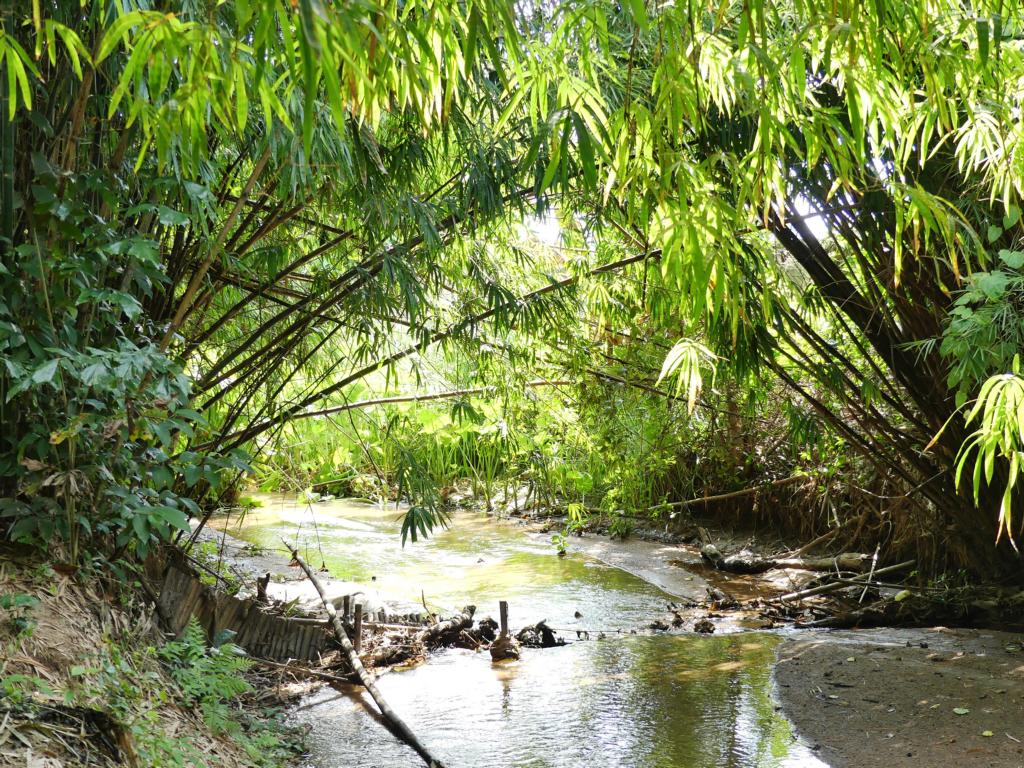
Around 70 native bamboo species occur in Malaysia. The most important genera for junglecraft include Gigantochloa, Schizostachyum, and Dendrocalamus. Orang Asli elders can often tell where to find each species without seeing a single culm.
Their mental map of bamboo is tied to:
- altitude and slope
- proximity to streams and rivers
- soil type and drainage
- old garden sites and former camp locations
- signs of past landslides or clearings
Certain bamboos prefer lowland river terraces, others cling to steep, eroded hillsides, and some favor damp valley bottoms. When a family needs building poles or cooking tubes, they do not simply walk into the forest hoping for the best. They head straight to the right patch.
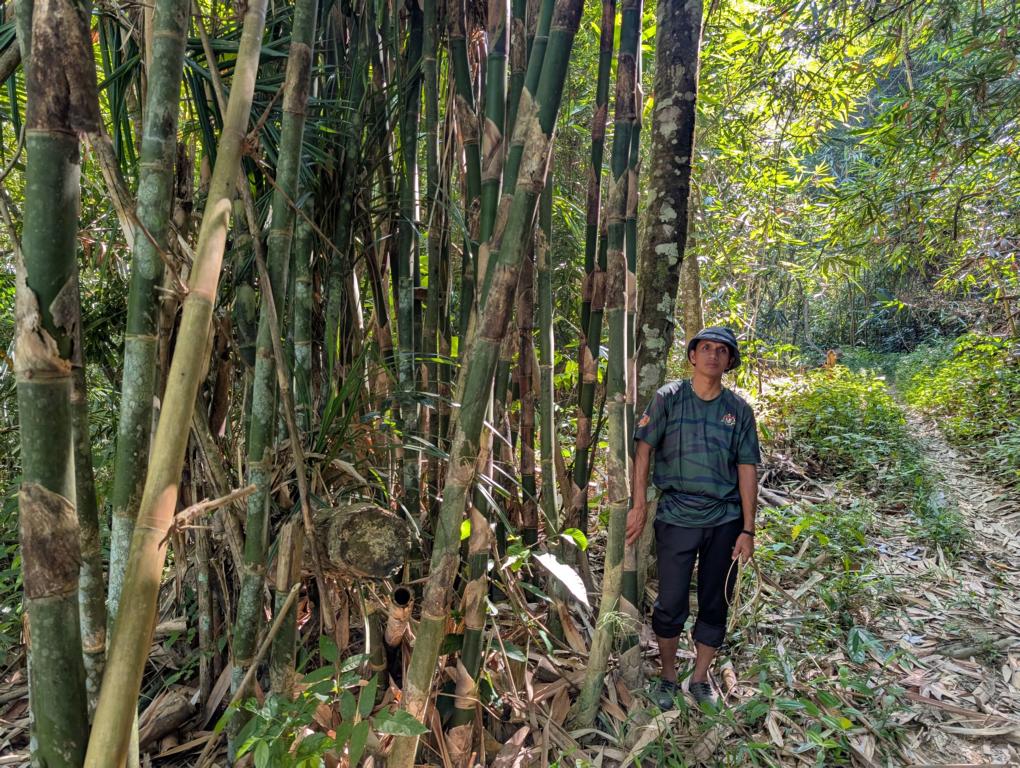
Key bamboo species in Orang Asli junglecraft
A few species stand out as everyday workhorses:
- Gigantochloa levis – Buluh Lemang
A well-known lowland species along rivers and village edges. Its culms have relatively thick but not overly fibrous walls, making it ideal for cooking. Sections of this bamboo become cooking tubes, containers, watertight vessels, and even blowpipe dart shafts. - Schizostachyum brachycladum – Buluh Betong
Found in hill forests up to around 800 m. The large diameter culms lend themselves well to house posts, platform beams, rafts, and simple barricades. - Schizostachyum latifolium – Buluh Semantan
Favoring moist valleys, this species is famous for splitting beautifully. It produces smooth, even strips for weaving mats, baskets, wall panels, and trap bodies. - Gigantochloa scortechinii – Buluh Semeliang
Common across Peninsular Malaysia, this bamboo is often chosen for weapons, blowpipes, arrow shafts, and musical instruments. - Dendrocalamus asper – Giant Bamboo / Buluh Betong Hitam
A real giant of the bamboo world, used for heavy structural work: shelters, ladders, bridges, and water channels.
Each species behaves differently under the knife and over the fire. Some split cleanly into ribbons, others are reserved for thick, load-bearing elements. Some culms are better cut green, others after partial drying.
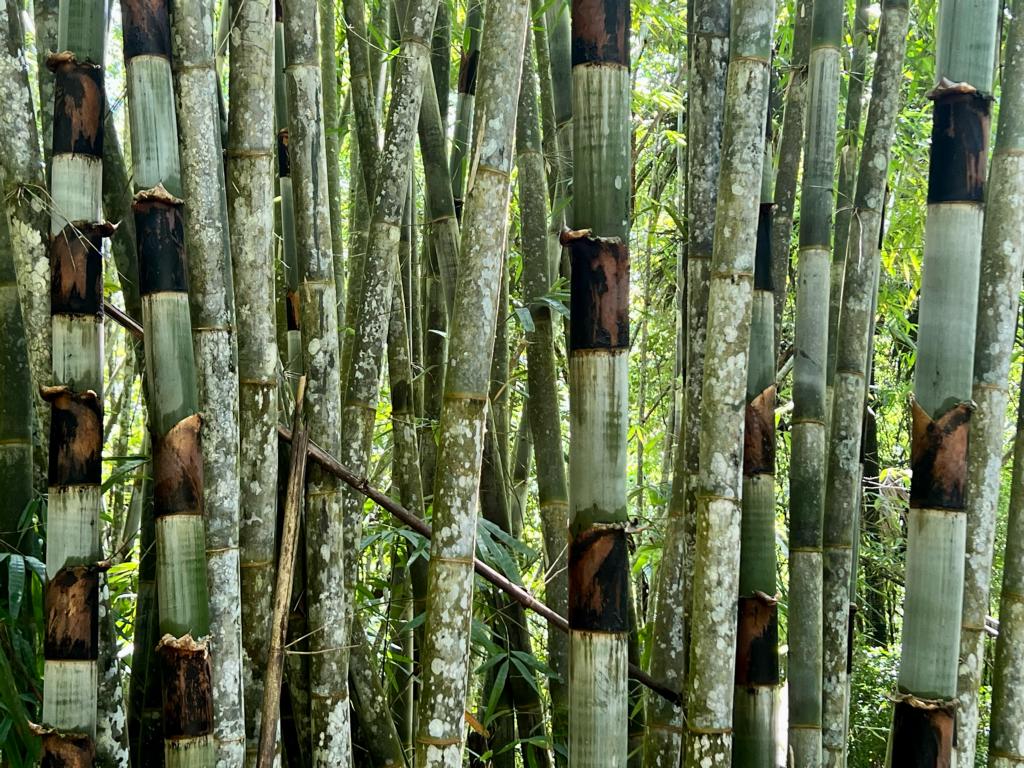
Why bamboo is an engineer’s dream material?
From a junglecraft perspective, bamboo ticks many boxes at once:
- It is naturally straight and grows in handy tubular form.
- Green culms are surprisingly fire-resistant on the outside.
- The inner cavity can safely hold water and food.
- It is extremely strong yet cuts easily with simple tools.
- Many species have mild antimicrobial properties.
- It grows quickly, making it highly sustainable.
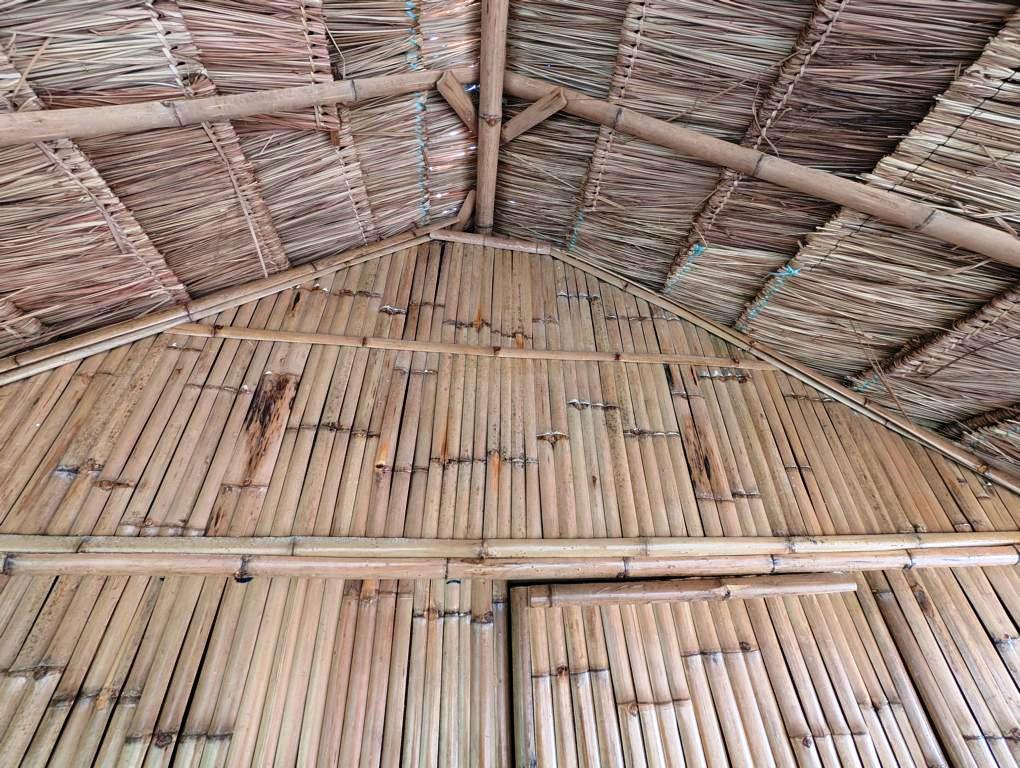
In Orang Asli hands, these properties translate into a long list of applications:
- Shelters and camps – frames, walls, floors, rafters, and ridge poles.
- Cooking gear – pots, rice tubes, roasting sticks, and steaming containers.
- Hunting and fishing tools – blowpipes, dart shafts, spear shafts, fish traps, and rod tips.
- Transport – water carriers, pack frames, and light rafts for river travel.
- Music and ceremony – flutes, rattles, and instruments used in dances and rituals.
On many campgrounds, it is possible to build an entirely functional overnight shelter, complete with cooking setup and basic tools, using nothing but bamboo, rattan lashings, and a knife.
Working with the living plant
Harvesting bamboo is more than simply cutting a culm at ground level. Orang Asli attention to detail begins before the first cut:
- Culm age is checked by colour, presence of lichen, and tightness of the sheath rings.
- Younger culms are reserved for weaving and fine work, older ones for structural elements.
- Cuts are made at specific nodes to reduce splitting and to allow the clump to recover.
- Only a few culms are taken from each clump to prevent dieback and erosion.
Once cut, the culms are cleaned, split, or sectioned directly in the forest. For weaving, poles are split again and again into narrow slats, then shaved smooth. For cooking, short sections are cleaned and lightly scorched to drive out sap and improve durability.
Bamboo waste rarely goes unused. Thin offcuts become skewers or binding pegs; splinters can start fires; even the inner membranes can sometimes serve as wrapping material.
Bamboo and rattan: a perfect partnership
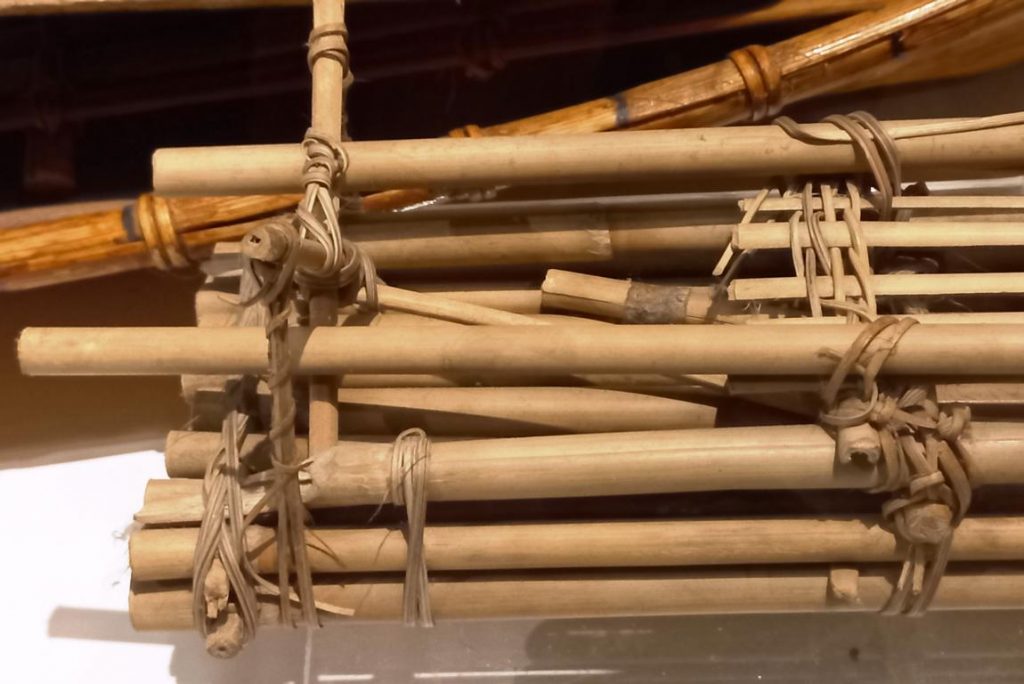
Bamboo on its own is strong but needs good joints. This is where rattan enters. Rattan lashings grip the smooth bamboo surface, cinch tight around nodes, and do not slip when wet. In many Orang Asli constructions, the two plants work together:
- bamboo as beams, poles, and planks
- rattan as rope, stitching, and locking joints
The result is a remarkably robust building system, entirely biodegradable yet able to withstand heavy monsoon rains and years of daily use.
Keeping an old craft alive
Modern life brings PVC pipes instead of bamboo culms, nylon rope instead of rattan, and aluminum pots instead of cooking tubes. Younger Orang Asli may not automatically know when a bamboo culm is ready to be harvested, or how to prepare it so it doesn’t crack in the fire.
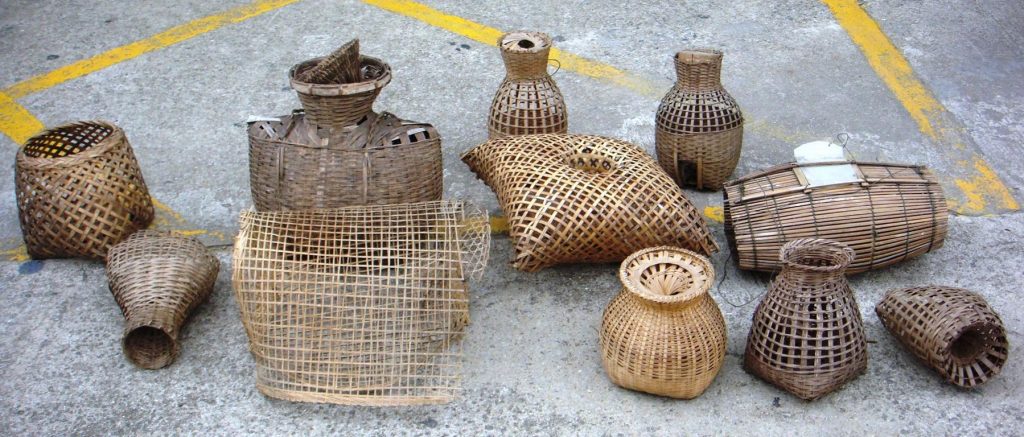
Still, in communities where the old skills are practiced, bamboo knowledge remains intact and highly refined. For junglecraft enthusiasts and field instructors, learning from Orang Asli bamboo workers offers not just a set of techniques, but a way of thinking: one where the forest is both supermarket and teacher, and where tools grow from the ground rather than arriving wrapped in plastic.
In the Malaysian rainforest, a single bamboo clump can become shelter, kitchen, weapon, and vessel. In the hands of those who know it well, bamboo is truly the forest’s natural toolkit.
.