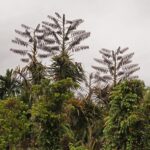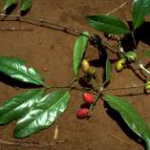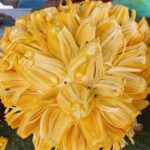
Inga edulis, the Ice Cream Bean, is also known as Snow fruit; and it has various other common names, like ‘Snow-white’ in Indonesia. We found these fruits at a wet market in Bedugul, above Danau Bratan, in the central highlands of Bali. From there, we searched for the trees on which these fruits were growing and found them between Tamblingan and Munduk. Only later were we informed that this is not an endemic fruit.
Distribution
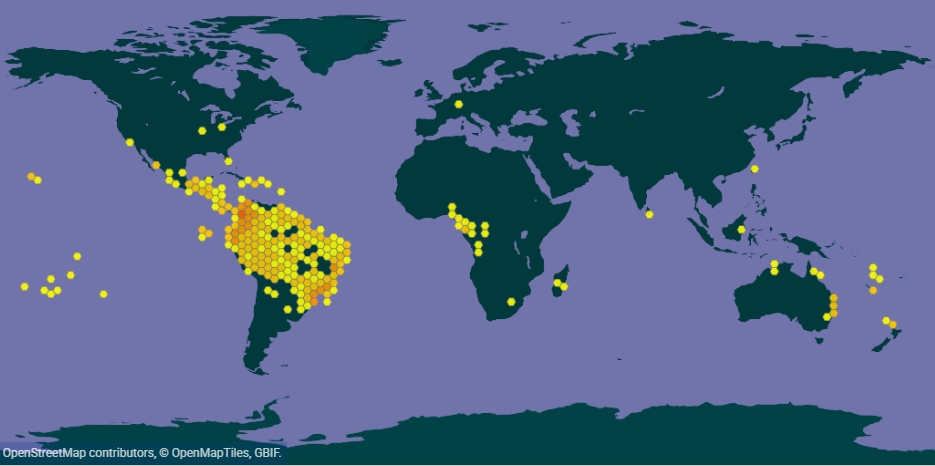
As shown in the map above, the Ice Cream Bean is native to Central and South America and is widely distributed across these regions. It was planted in many areas across tropical countries. In Bali, it is found only in the previously mentioned mountainous areas. In most countries, it is grown to provide shade for coffee and cacao trees because the Inga edulis tree doesn’t shed its leaves during the dry season.
Description
The leaves and fruits of Inga edulis are highly conspicuous. It is easy to distinguish Ice Cream Bean trees from other trees by the following features of their leaves:
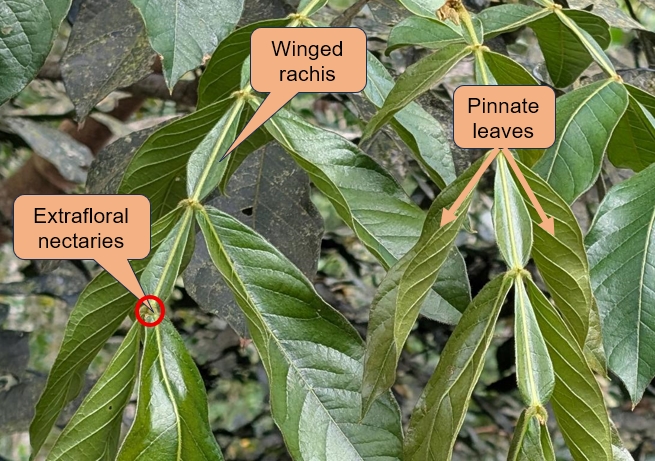
- Pinnate leaves. Several pairs of leaflets grow opposite each other along the leaf stalk. Each leaf typically consists of 4 to 6 pairs of these leaflets. At the tip of the leaf, the paired leaflets are usually much larger than the ones closer to the branch.
- Winged rachis. Between each pair of leaflets, leaf-like wings run along both sides of the leaf stalk (rachis). That is a unique and most distinctive feature of these trees.
- Extrafloral nectaries. These tiny, round bumps are located right between each pair of leaflets. They produce a sweet liquid that attracts ants, which in turn protect the tree from other pests.
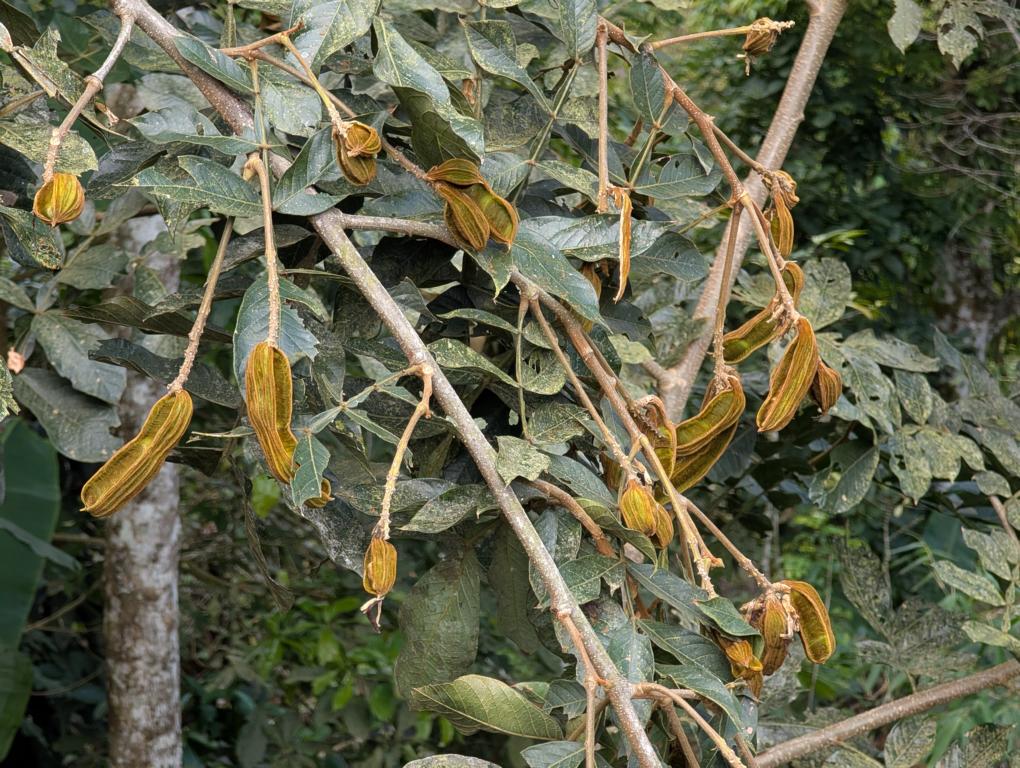
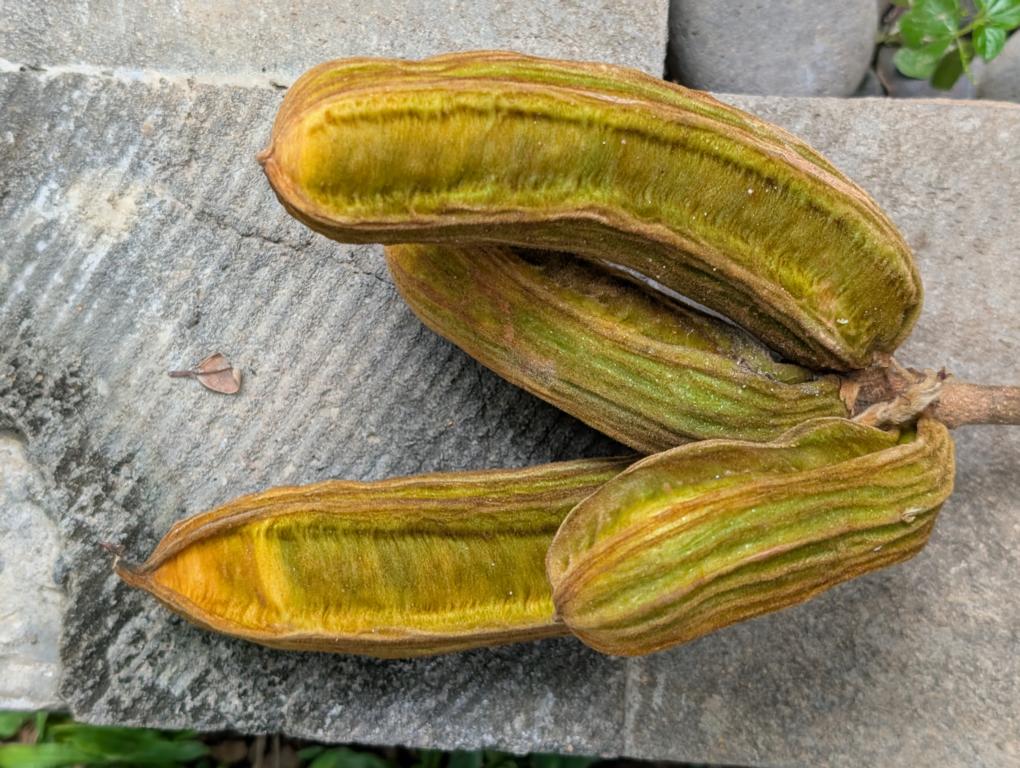
The fruits resemble, at first sight, tamarinds, but they are not round, but angular in shape, and their color is a noticeable yellow-green. They are often sold in bundles, comprising more than one pod on a wooden stem.
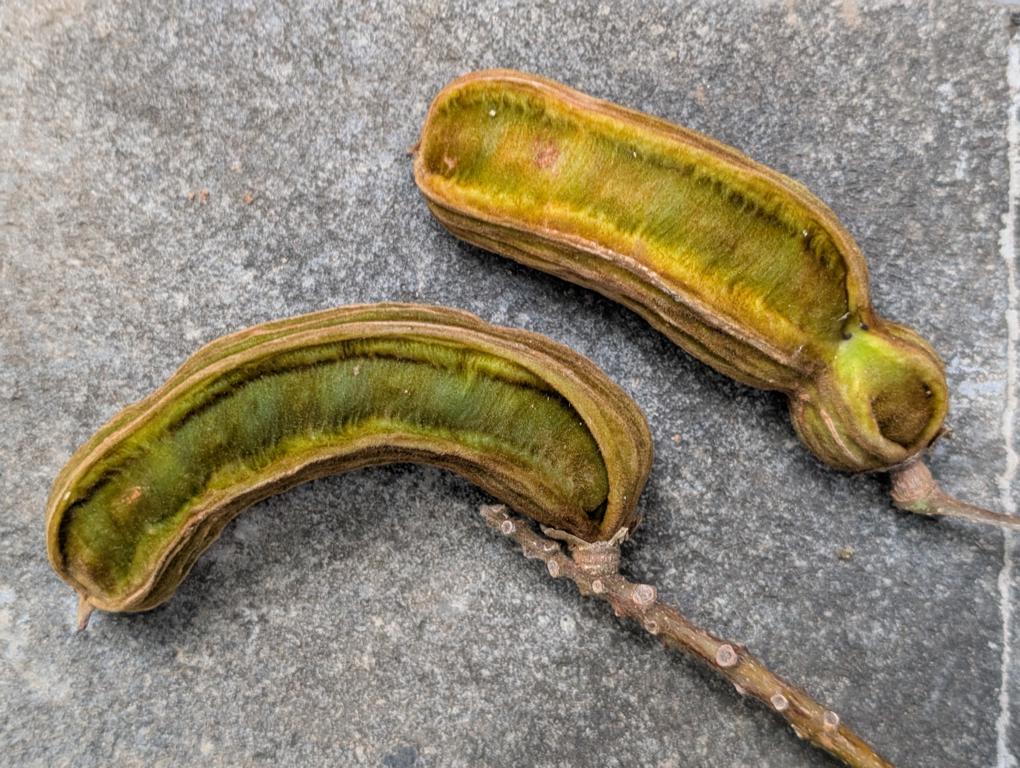
The fruits are opened by pulling up one angular side flap, and the row of ariels appears. The pulp (ariel) surrounding the large seeds is snow-white and has a texture akin to a fuzzy yet solid jelly. It is covered in a snow-white, hairy layer that adheres to the outer shell.
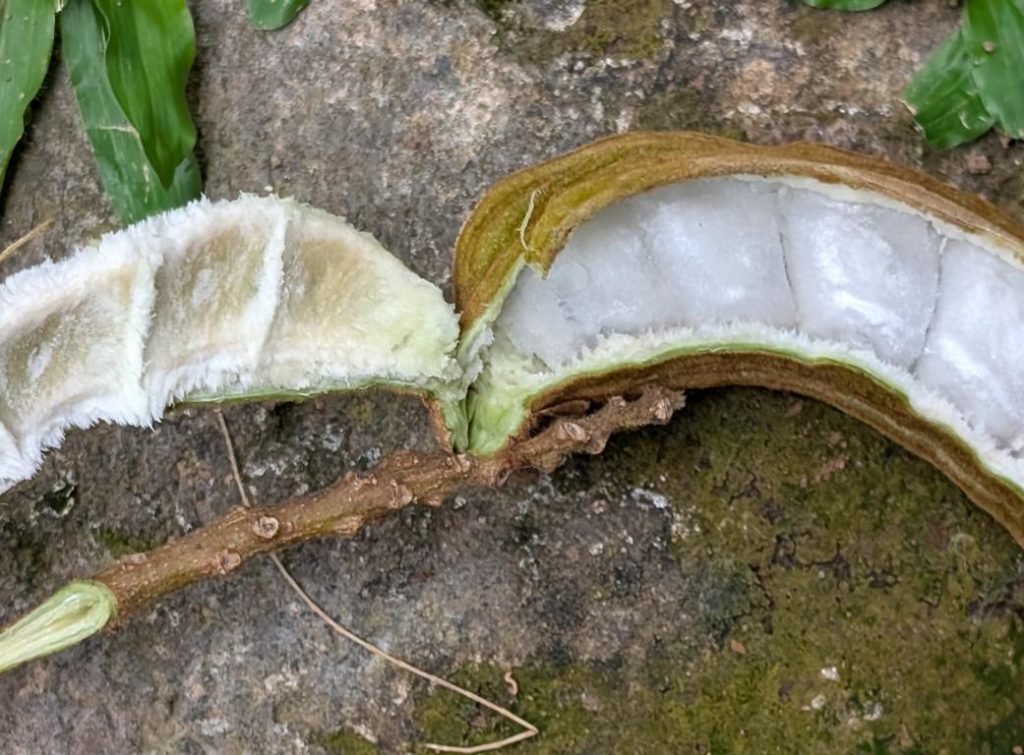
Uses of Inga edulis
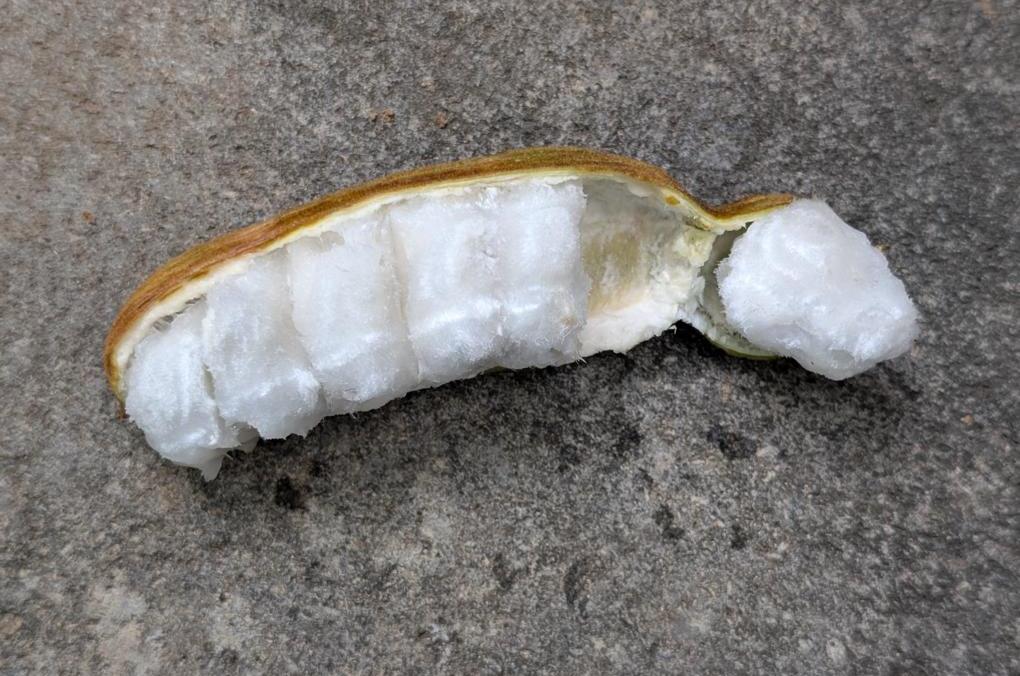
In addition to its use as a shade tree, the seed pulp and the seeds themselves are used for food. Every single seed with its tightly clenched pulp will be taken into the mouth, and the pulp will be sucked off the seed. The taste of this snow-white, moist pulp is neither intense nor sour, but slightly sweet. Perhaps similar to a honeydew melon without the honey flavor. However, it is not like a watermelon in texture, as it lacks the large, liquid-filled cells.
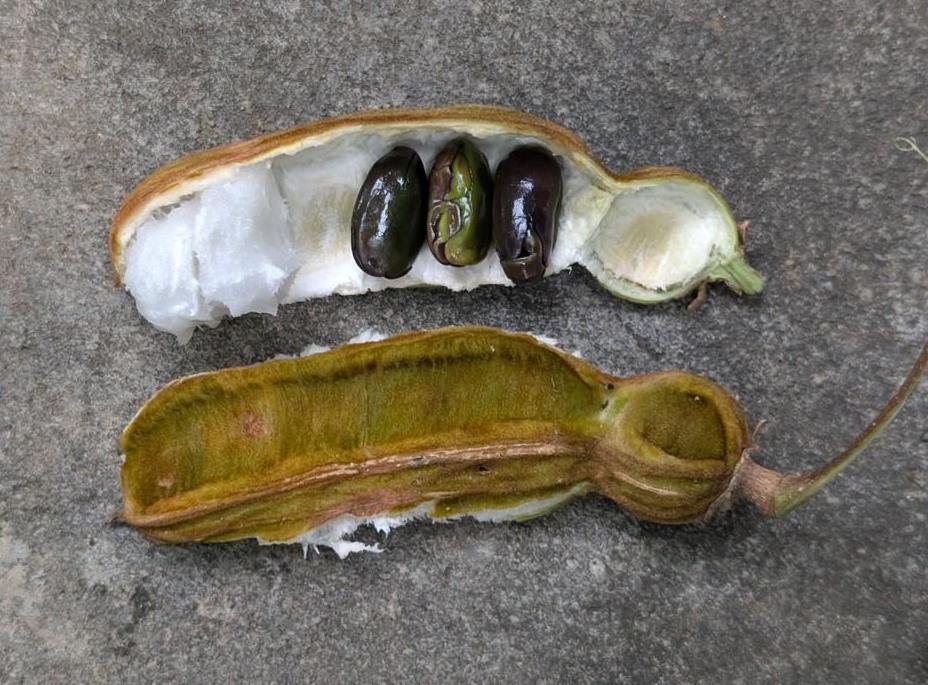
The green seeds are covered with a dark green to purplish skin. We did not eat them, but according to this source, they must be either boiled or roasted before consumption. The reason is that the seeds contain trypsin and chymotrypsin inhibitors (protease inhibitors that interfere with protein digestion), which are destroyed during cooking. According to another scientific source, cooked Ice Cream Bean seeds taste like chickpeas.
Nutritional value of pulp and seeds
Whereas the white pulp is mainly valued for its flavor and moisture, the seeds are a dense source of protein and energy when cooked.
The nutritional profile for 100 g of raw fruit pulp shows an energy content of 60 kcal, very little protein, fat, and fiber, approximately 15 g of carbohydrates, and a high moisture content (about 83%).
100 grams of seeds, which were cooked and thereafter dried, show an energy content of 339 kcal, and contain about 19 g of protein, 2 g of fat, 63 g of carbohydrates, and 3.4 g of dietary fiber. The moisture content in this dry state was 12.6%
Lessons learned about the Ice Cream Bean:
- The legume Inga edulis grows on trees and is native to South America.
- In Bali, there is only a small area, which has cool temperatures and is mountainous, where this fruit grows.
- The raw, snow-white ariel around the seeds is eaten, and tastes like a kind of melon.
- Cooked and dried seeds have high nutritional values, but should never be eaten raw.
.