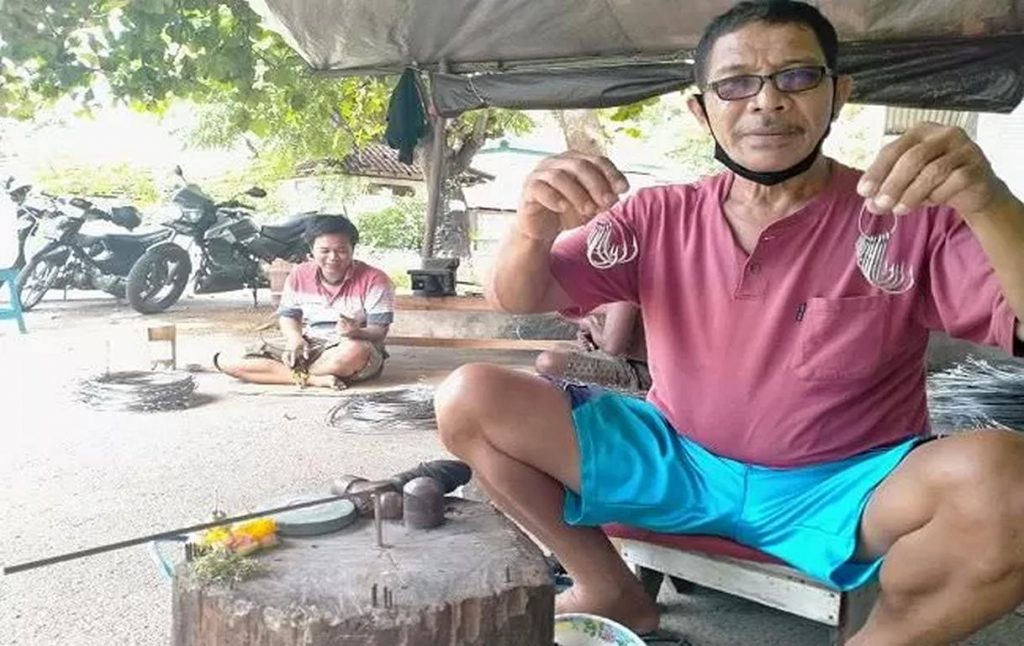
While travelling to the northern coast of Bali/Indonesia, we met the owner of a general store at the Banyuasri Singaraja Market, whose employee was hammering fishing hooks on a makeshift anvil outside. The owner, Pak (Mr.) Gede Suarka, nicknamed “Lolak,” was an exceptionally friendly man who showed us his products and how he and his employee produced them.

When younger, Pak Lolak was a traditional fisherman whose problem was that high-carbon steel fishing hooks rusted rapidly in seawater, requiring frequent replacements, which was costly. He therefore started about 30 years ago to produce hooks himself from stainless steel wire. Initially, the results were poor, but through continuous improvement and feedback from his fishing friends, he produced fishing hooks well-suited to local fishing conditions. Now, he can produce up to 400 hooks a day, or 12.000 hooks a month.
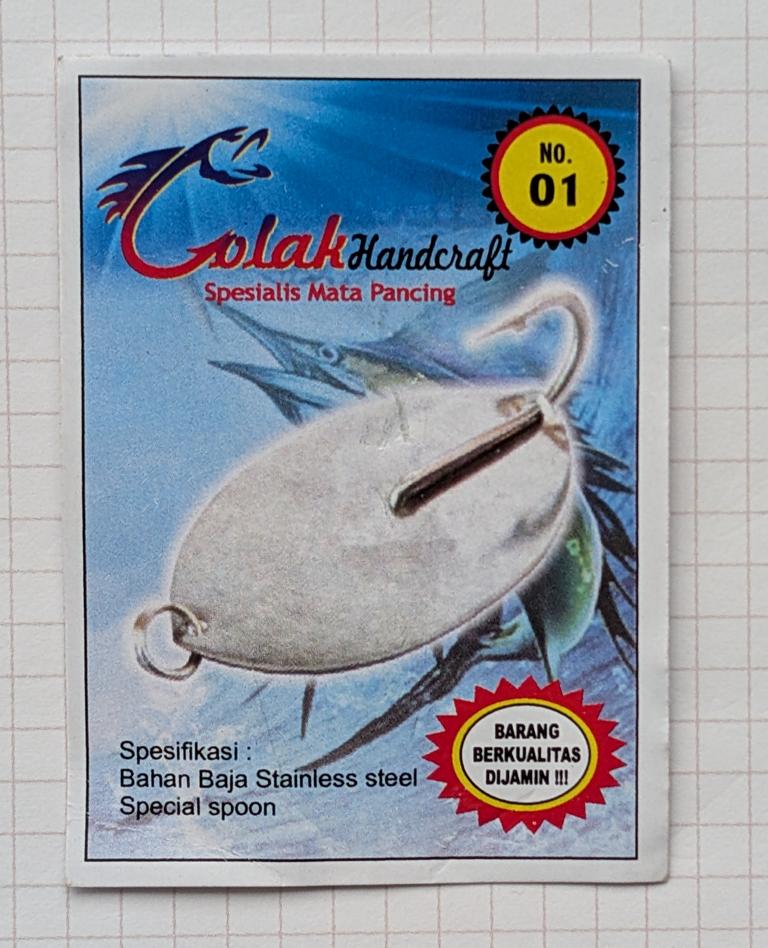
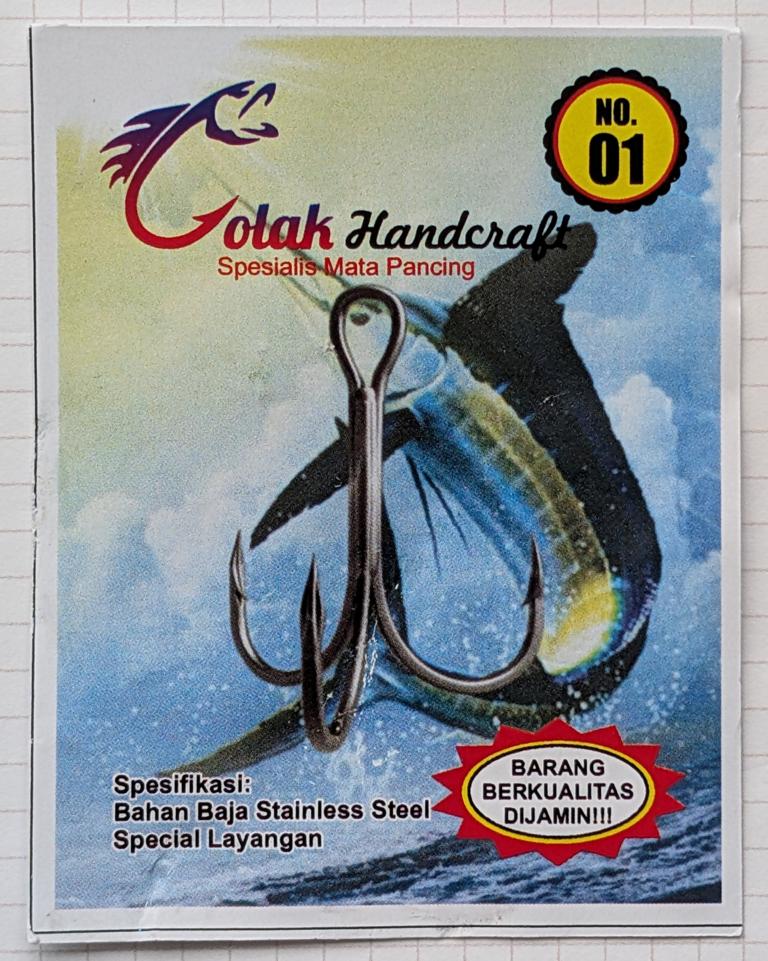
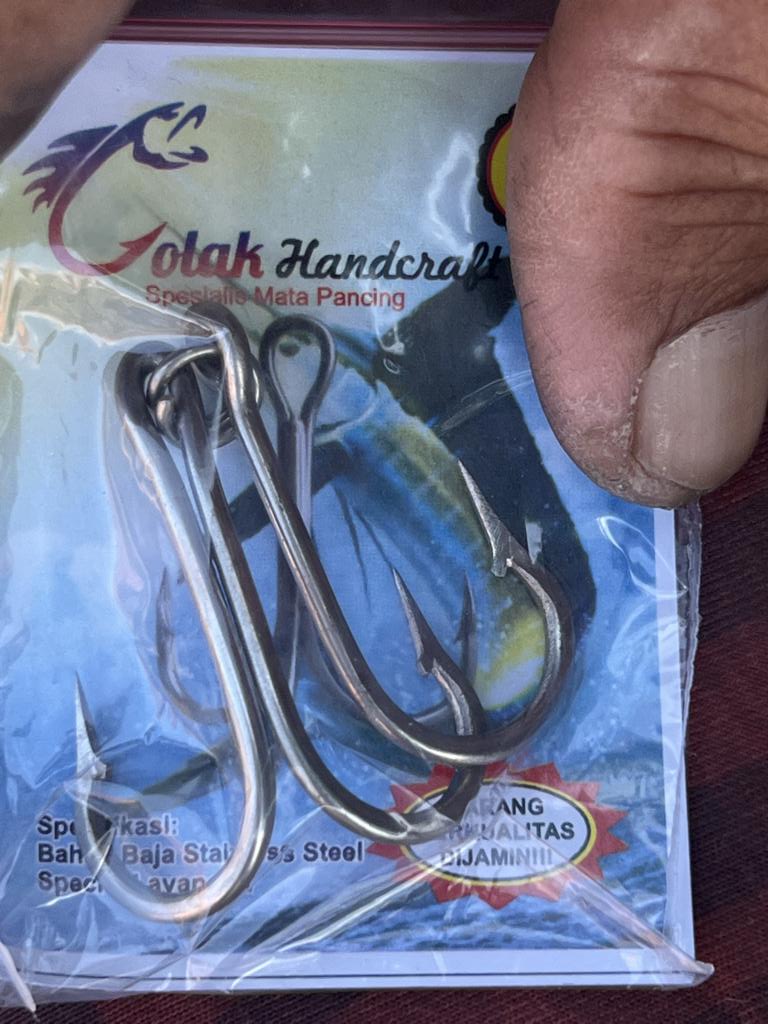
Pak Lolak is selling his hooks under the brand name of ‘Lolak Handcraft’, and fishermen and fish tackle shops all along the northern and eastern coast of Bali are buying the hooks from him.
Fish species on the northern Bali coast
From Singaraja, the 100m sea-depth line is about 2 km, and the 200m drop line is about 5 km north of the town. The coastline is dotted with coral reefs, and there are no islands towards the deep sea. Based on these environments, three general types of fish are caught by angling.
- The first type is reef and smaller fish near the coast. These are mainly Parrotfish, Snapper, Grouper, and Triggerfish.
- Secondly, Indian mackerel, Mackerel tuna, and Spanish mackerel occur from the outer reef line to the open sea, as well as around FADs (Fish Aggregating Devices).
- Around and beyond the 200m drop-off zone, pelagic, large game fish are caught by hook and line. These are the various billfish species, Tuna, Mahi-mahi, Giant Trevally, Wahoo, and Ruby Snapper.
Types of hooks manufactured
Pak Lolak produces hooks for all three general types of fishing for trolling and lure fishing, in sizes #1 to #10.
For Paternoster rigs, he only produces the hooks. If bait feathers or other attracting devices are necessary over the hook on Paternoster rigs for smaller mackerel species, these have to be assembled by the fishermen themselves.
Single hooks
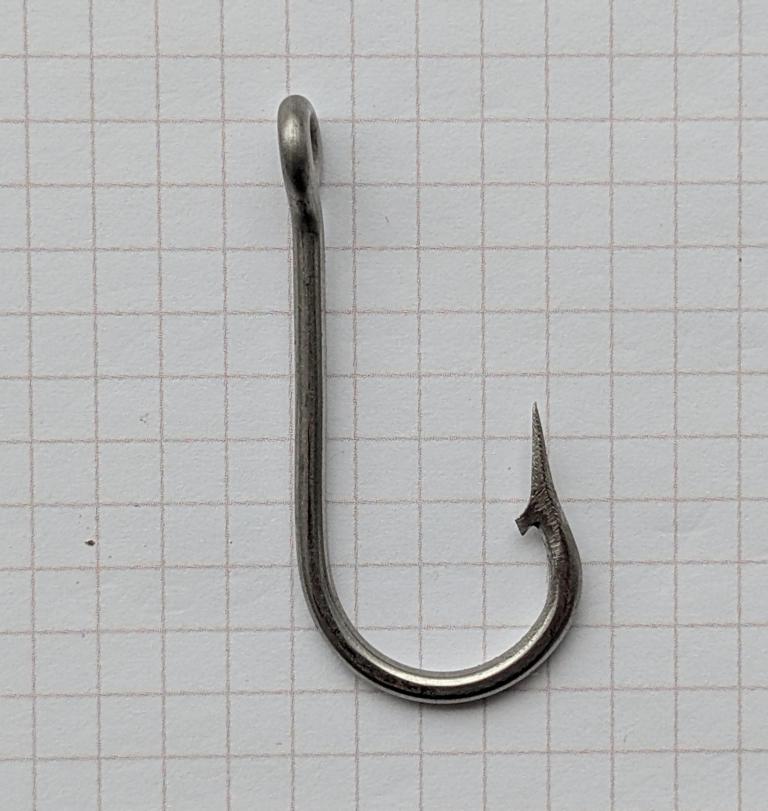
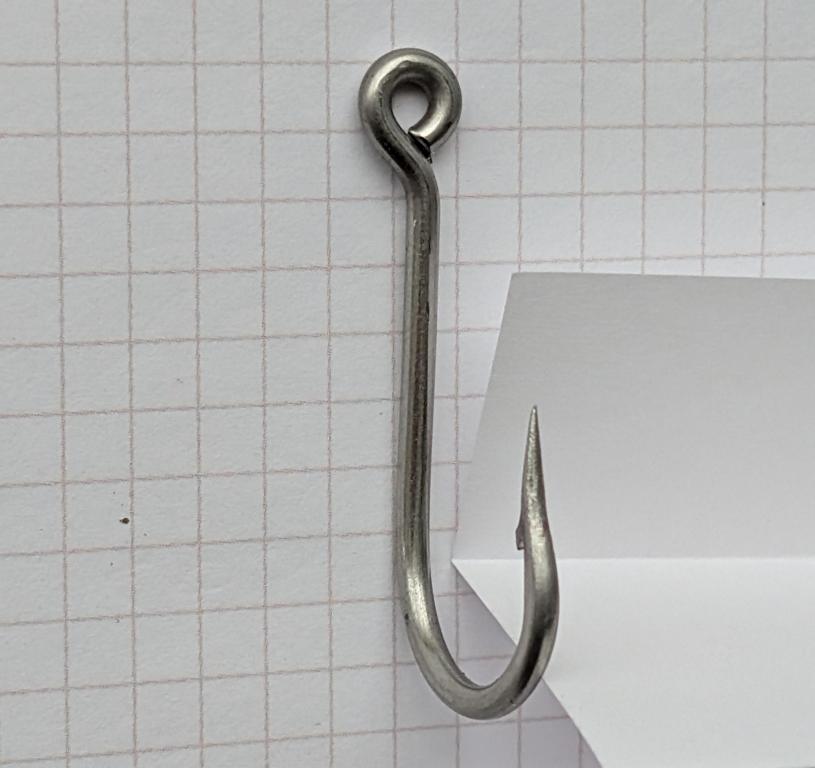
The general shape of Pak Lolak’s single hooks is evident in the photo above. The width of two squares in the background is 1 cm, so the width of 5 squares is approximately 1 inch.
His single hooks are made of 420 stainless steel, have a ringed eye, a long shank, and a spear-shaped barbed tip. All his hook points are in line and show no offset. The hook sizes he produces he calls: ‘…from 1 to 9…’, which means from 1/0 to 9/0. The wire diameter of the 3/0 hook shown in the pictures is 2 mm.
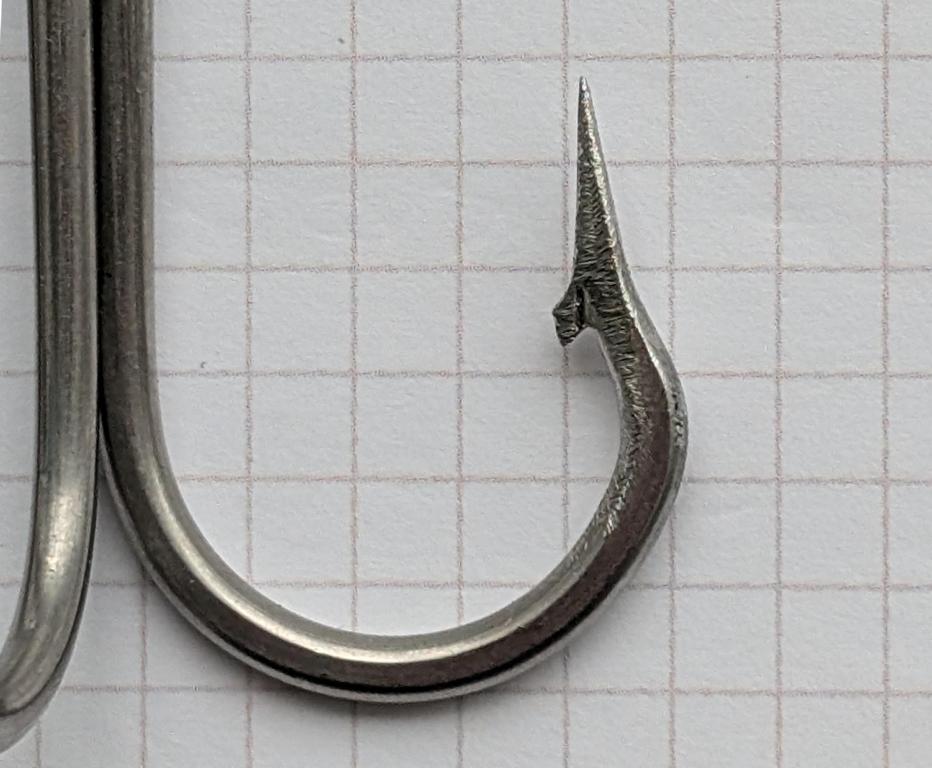
Pak Lolak’s hooks appear to be very solid and sturdy, with one peculiar element: the barb. Behind the spear-type tip, the barb is of a standard size, but cut off in the middle of its length. This shortens the barb length considerably, while still providing sufficient holding power, and allows the hook to be removed easily. An interesting design feature.
Special treble hooks
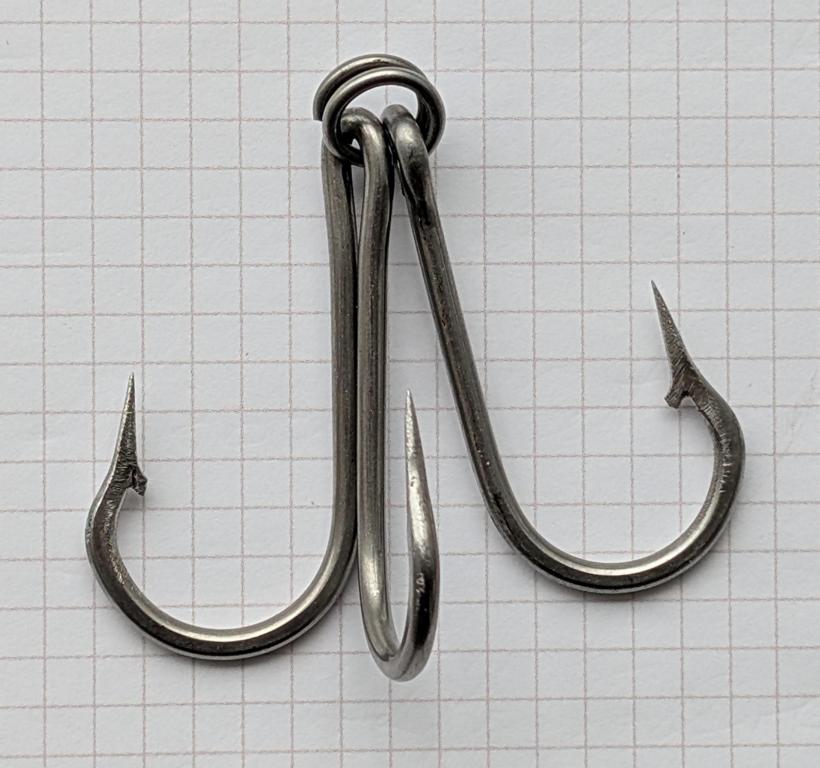
Pak Lolak’s treble hooks are very special. They are not a treble hook in the ordinary sense, but a double hook (two prongs on a bent wire) with one additional, free-moving hook. Both hooks, one double and one single, are held together by a non-stamped split ring. A conventional treble hook would have a double and a single hook soldered together at the shank.
The treble hook shown in the images above is size 5/0 and has a wire diameter of 2.5 mm. The main advantage is its versatility. These trebles can be used on a typical tuna lure and on live baits.
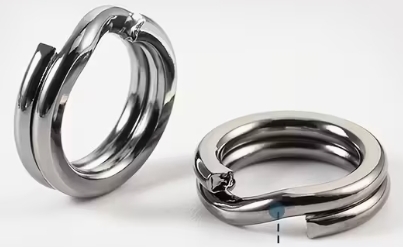
Their main disadvantage stems from the limitations of manufacturing. The split rings are not stamped but rolled up, and this was not done tightly. That means, they are at least one wire diameter thicker than stamped rings. This wide split-ring thickness impedes the free movement of the two hooks.
Typical applications of these treble hooks are on trolling baits and lures. And specifically for kite fishing, the Balinese way.
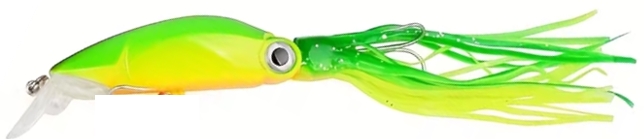
Traditional kite fishing in Bali is done by a boat looking for dolphins. Because dolphins can smell fish very well, larger predators, like tuna, will also be there. If they see dolphins, the fishermen will fly a fishing kite nearby. Directly from the kite, a 35 fathom (64 meters or 70 yards) long line is holding the heavily weighted artificial lure, which is fitted with Pak Lolak’s treble hooks. How this is done in practice can be seen in the linked YouTube video.
Spoons
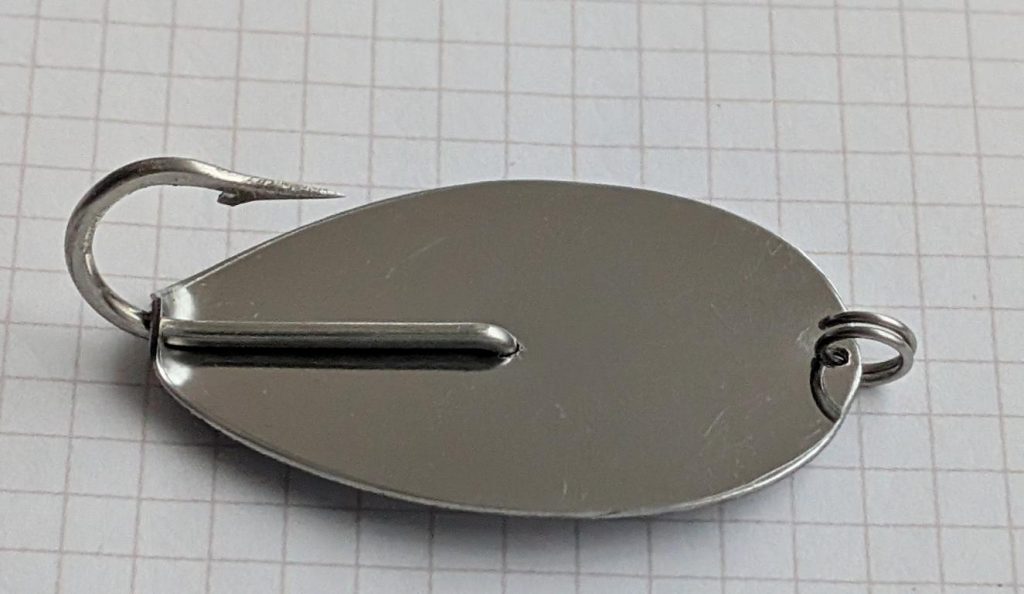
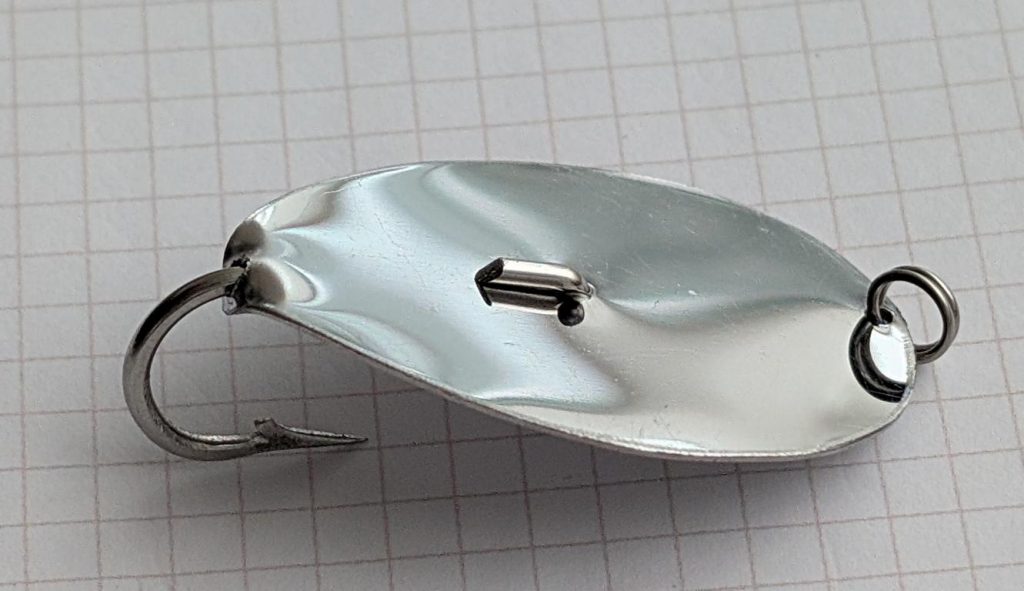
Also, Pak Lolak’s spoons are unique. The sample, which he gave me for reef fishing, had a number 4 hook (not 4/0), was permanently connected with a flat oval of shiny metal, and had a non-stamped split ring on the opposite side. The wire thickness was 1.5 mm.
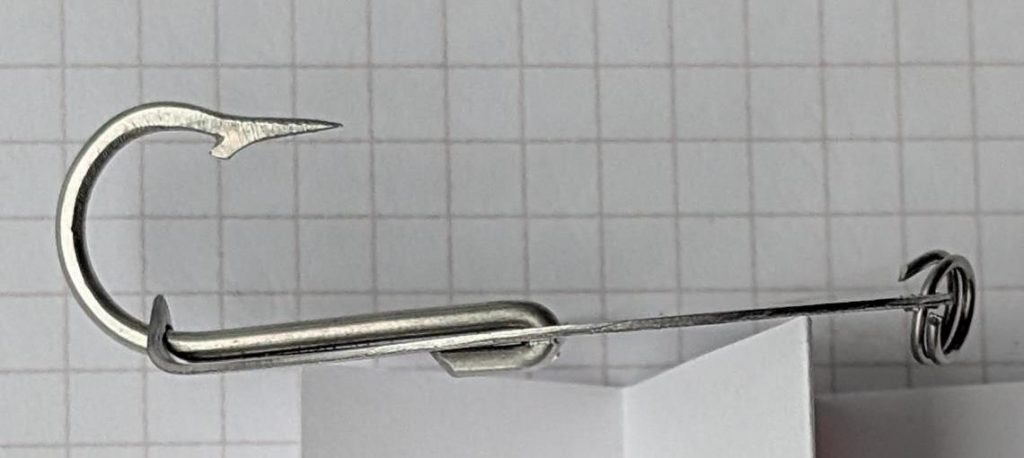
The type of fixation is evident in the side-view photo above. An advantage of this spoon is its effortless but effective design; its disadvantage is clearly the unsuitable split ring.
Interestingly, in Bali, these spoons are used for bottom fishing. A weight, most often a plastic bag filled with sand or a stone, will be attached to a sinker line. This line will, in turn, be connected to the leader line, but only about 4 cm from the spoon. The distance from the two-line attachment point to the top of the sinker is about 20 cm (8 inches).
How are the fishing hooks produced?
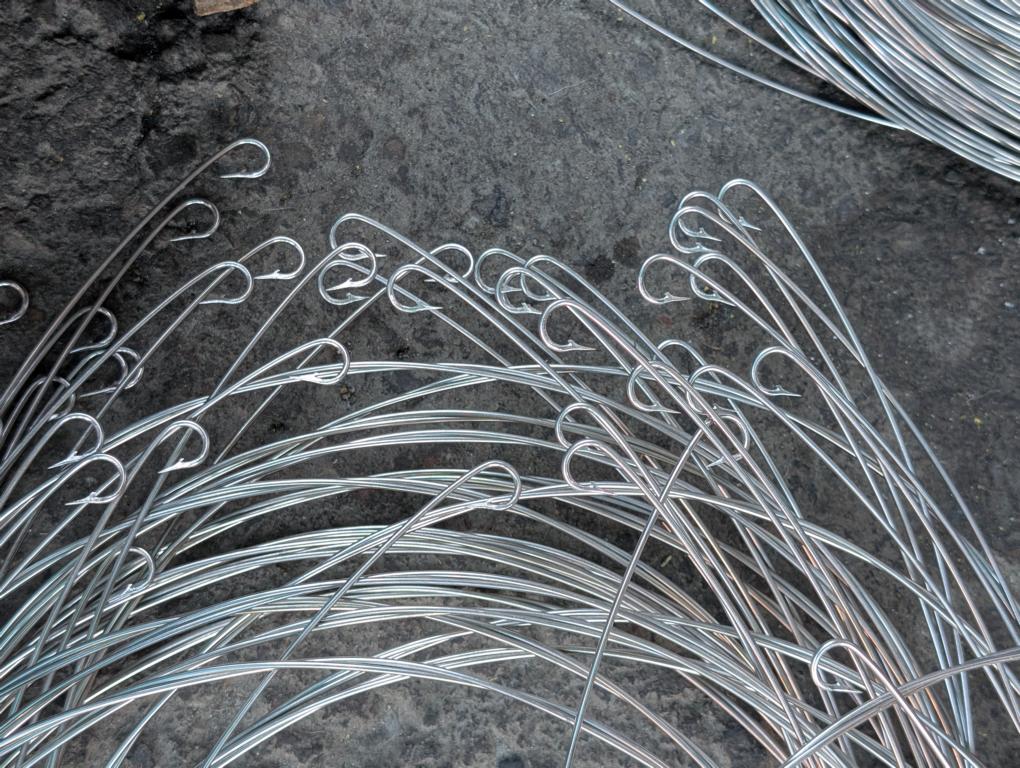
After procuring stainless steel wire rolls, the wire is cut into approximately two m-long sections. On either side of each section, a hook is bent into a half circle, and the tip and barb are formed by hammering, chiseling, and filing.
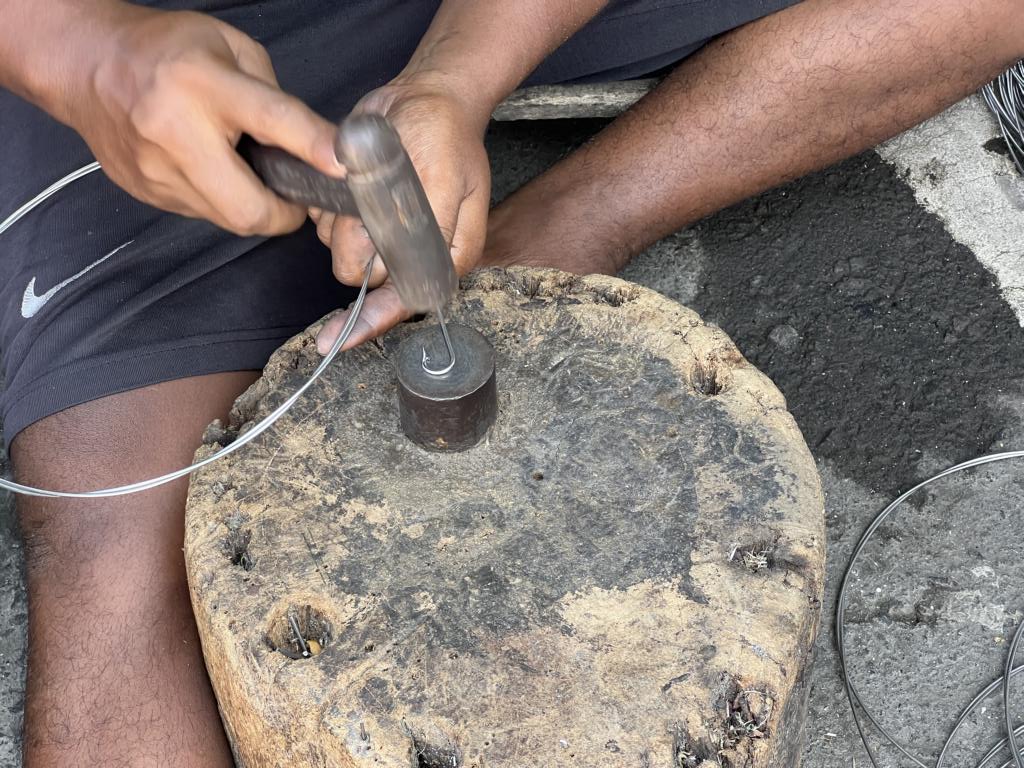
The tools used are fundamental and include hammers, files, chisels, pliers, and basic but specialized forming and holding devices. For handling the work pieces, there is a vice screwed onto a metal tire rim and a wooden stump with a mini steel anvil for hammering. Plus some nails in a wooden stump for bending. That’s the essence of simple living and manufacturing.
In an article of the Radarbali news agency in 2020, Pak Lolak and his work were presented, and not much has changed since then. In this article, he stated that, with the manufacture of 12,000 hooks per month, he can generate a turnover of 10 million IDR (Indonesian Rupiah). This means his average sales price per hook is 833 IDR. At the exchange rate of Dec 3, 2025, this yields an average sales price of USD 0.05 per hook. Further, it can be concluded that the higher price of stainless steel compared to high-carbon steel is not of a significant influence. Otherwise, Pak Lolak’s hooks would have to be considerably more costly.
Lessons learned about hand-made fishing hooks in Bali:
- Stainless steel hooks are highly beneficial for seawater fishing on the northern coast of Bali.
- ‘Lolak Handcraft’ produces single hooks, special treble hooks, and spoons in various sizes.
- Production tools and facilities are fundamental and limited.
- The price of fishing hooks in Bali is very low, and the higher price of stainless steel is not influencing the price level significantly.
.