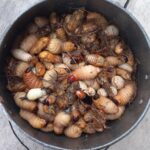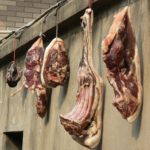
In October 2023, I spent two weeks living with rice farmers in northern Vietnam. It was in this area that Ho Chi Minh used as his initial base of operations against the regime after his return from China. The farmers there still live an elementary and traditional life. The only modern achievement in the area is a Ho Chi Minh memorial, accompanied by a large, paved area in front of it. This area is beneficial for the farmers, as they can dry their freshly harvested rice there. Besides agriculture, there are no industrial operations in the area, and few local tourists visit Ho Chi Minh’s former hut.
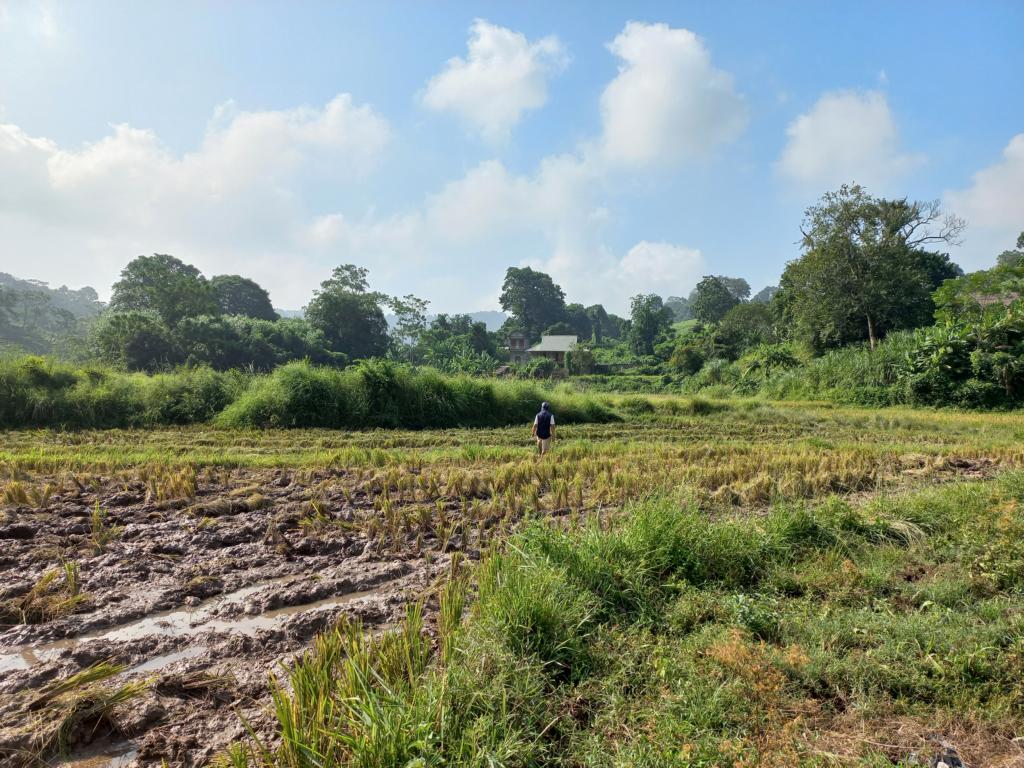
Rice is grown exclusively for subsistence, and chickens are kept. All other food is gathered, fished, or hunted in the fields, streams, and rainforest. I was fortunate enough to participate in and document many of these activities. It was fascinating to see how my host was able to provide his family with enough rice to eat (and drink) and the variety of supplementary foods he procured from nature. Below, I would like to describe one of these protein-gathering activities, specifically the gathering of grasshoppers.
Collecting methods of grasshoppers
The ‘Chinese Rice Grasshopper’ (Oxya chinensis) is found in large numbers in the rice fields and is considered an agricultural pest. During the rice-growing season, the fields are walked very carefully along individual furrows. Collecting the grasshoppers is only possible to a limited extent during this time. After the rice is harvested, however, the grasshoppers wander around the fields in search of new host plants and are caught in large numbers.
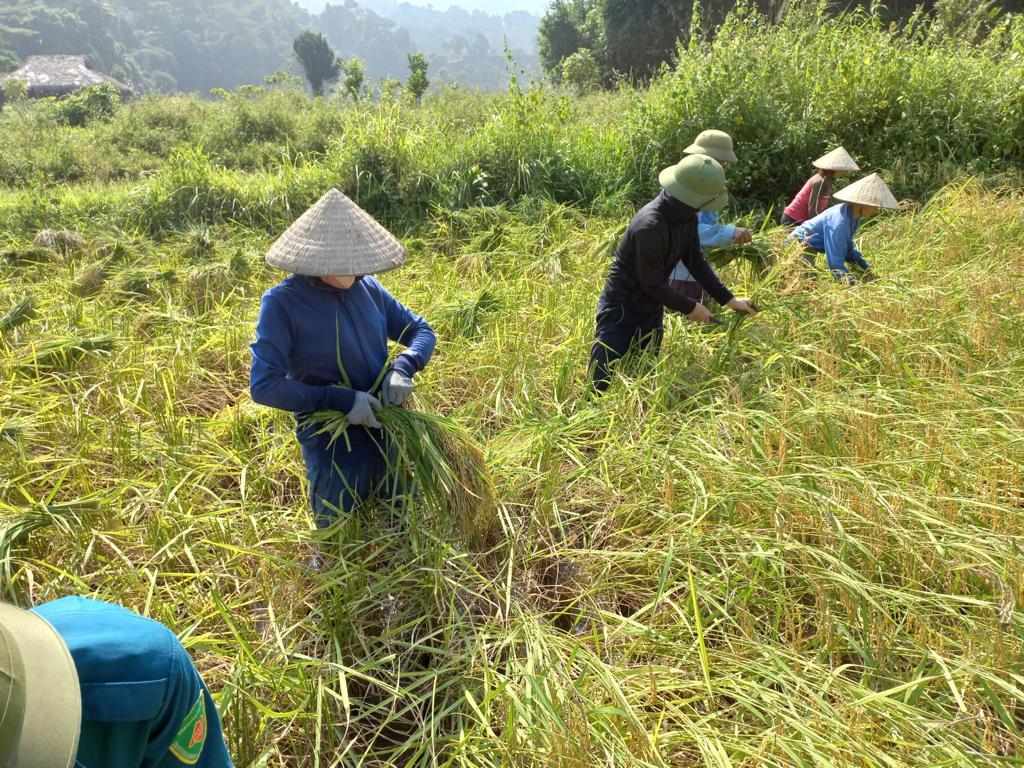
When rice is harvested by hand, the grasshoppers move sideways and forward of the harvesters, and are mainly collected in front of and beside the human harvesting line. After the field is harvested, large numbers of grasshoppers can still be found there for days.
If the harvest is carried out with a diesel-powered mechanical behemoth, the ‘Iron Buffalo,’ many grasshoppers are sucked into the collection container along with the rice grains and can then be picked up alive at the rice drying site. We employed all three collection methods: at the side of the hand-harvested rice field, behind the harvested field, and at the drying site of the mechanically harvested rice.
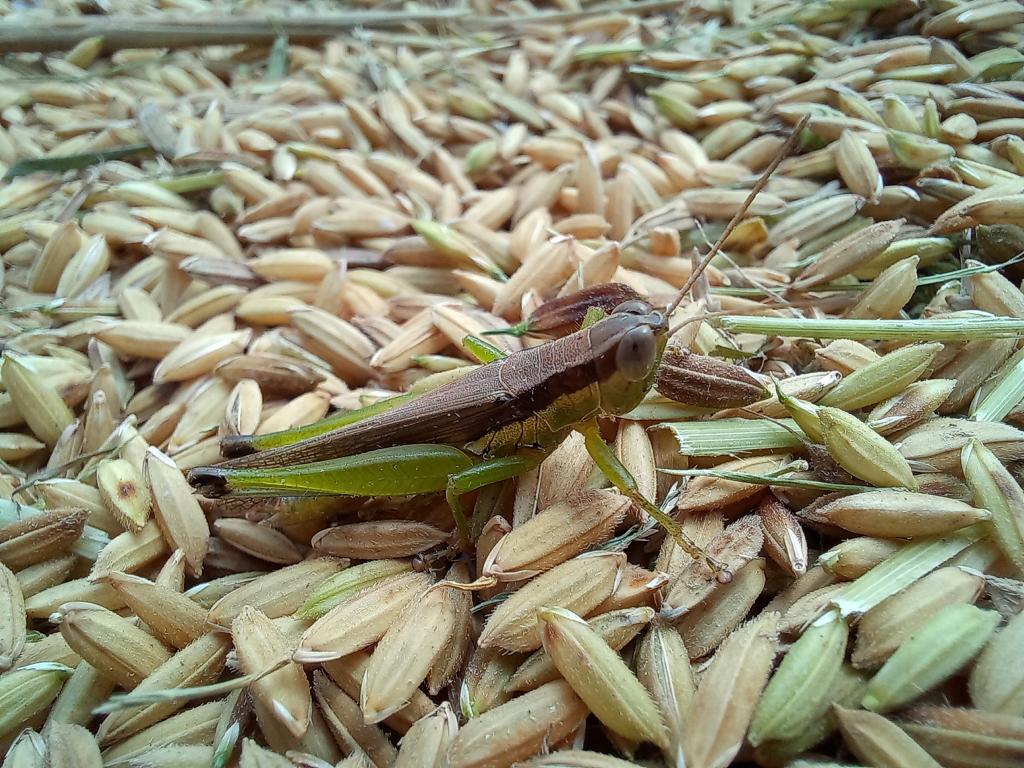
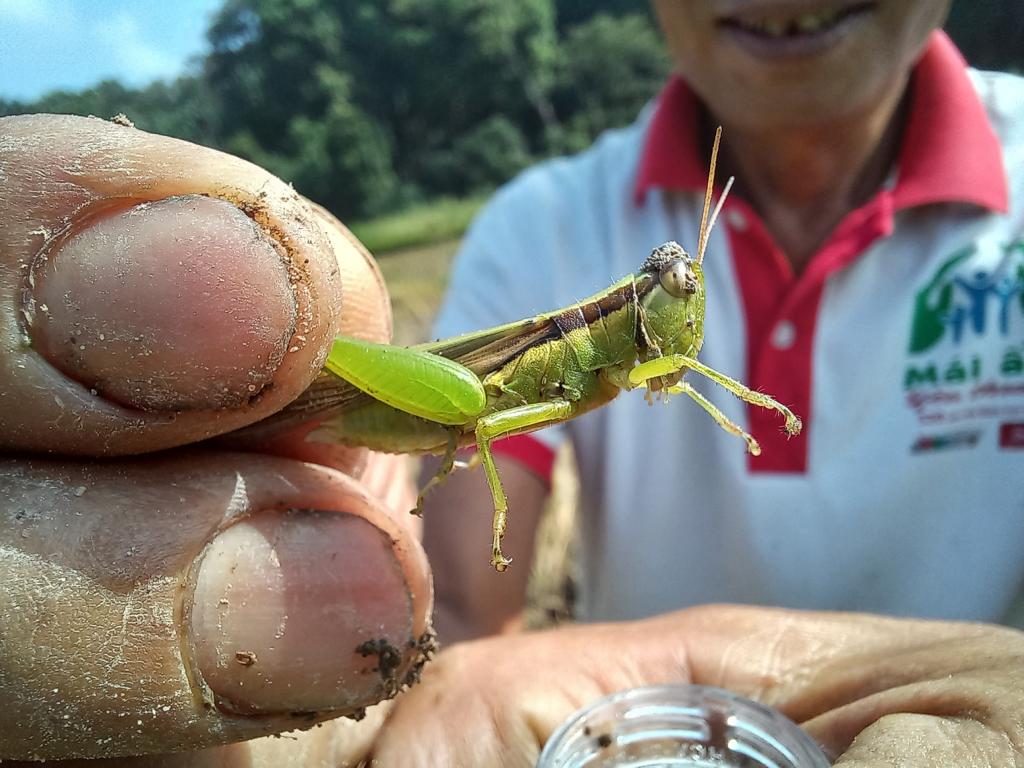
The wings of the ‘Chinese Rice Grasshopper’ extend to the end of its abdomen, and the insect has two stripes along its body, with the upper stripe being dark brown and a yellow stripe below. There are also a variety of grasshopper species, but these only appear sporadically and are not collected and eaten by the local population.
How to catch grasshoppers by hand?
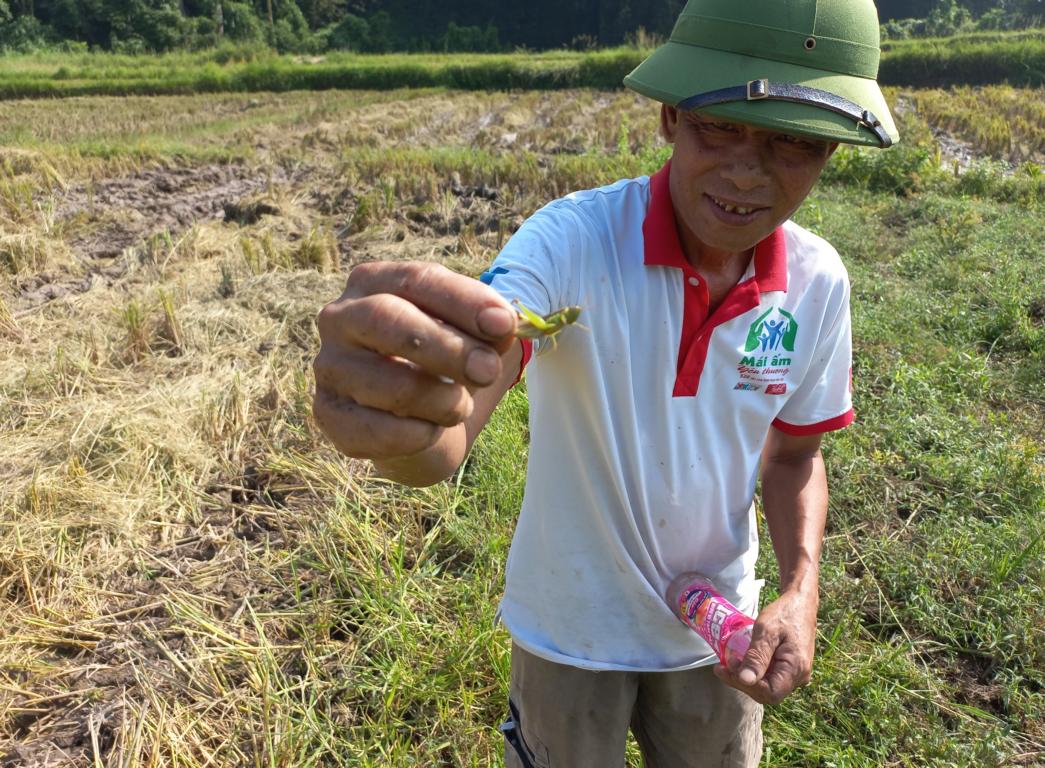
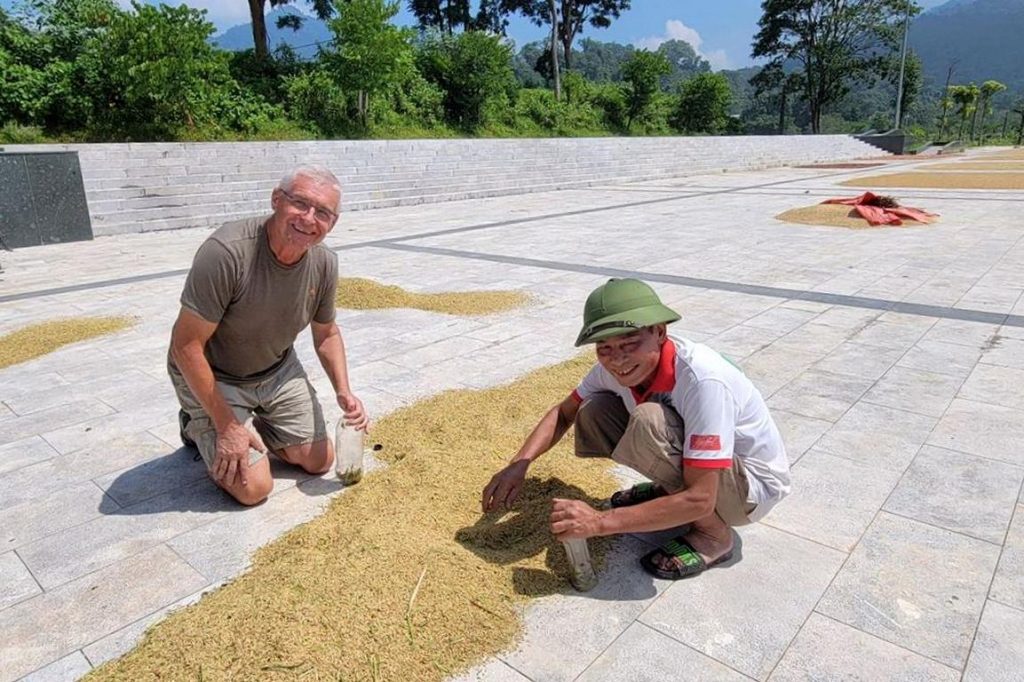
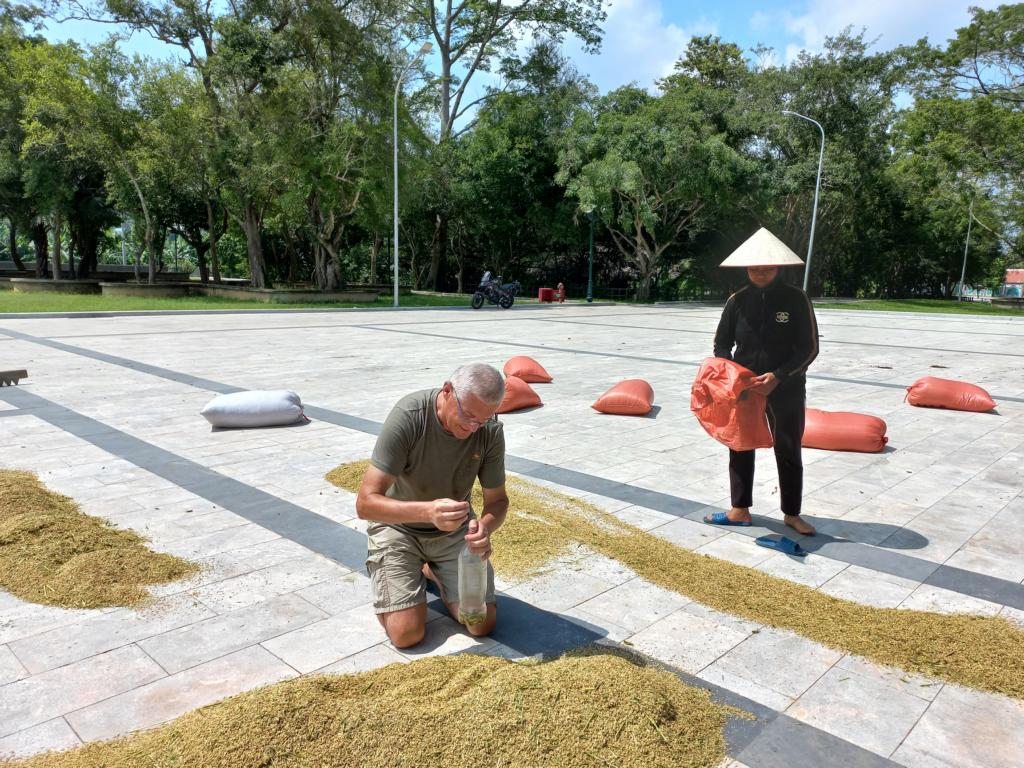
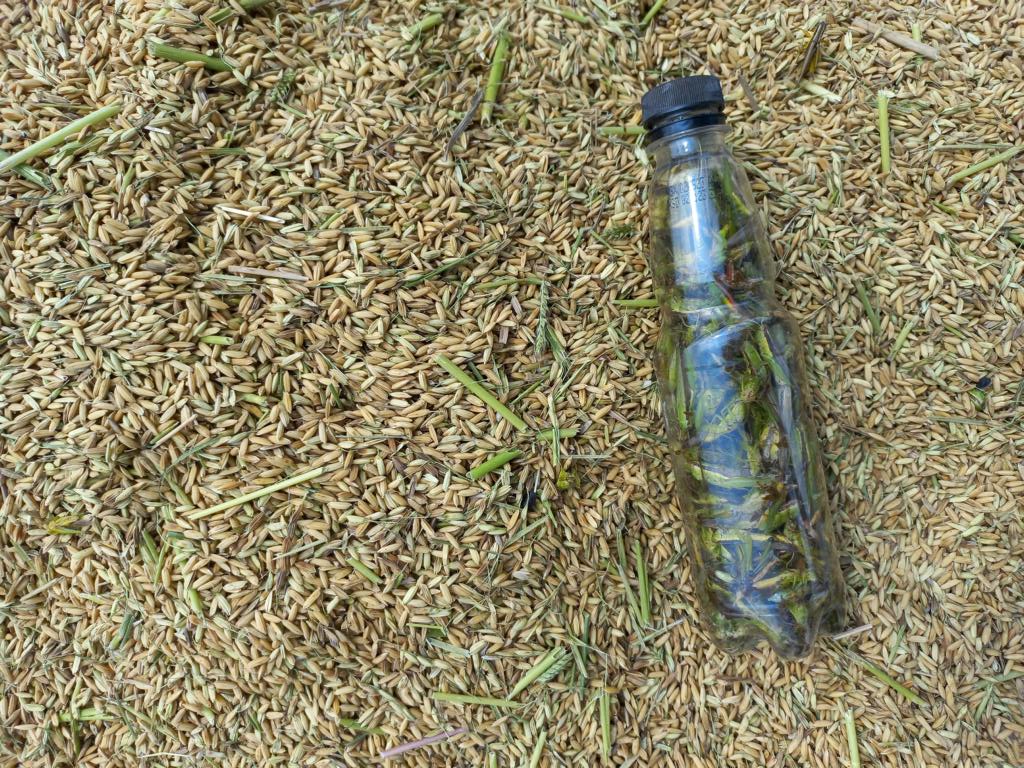
Grasshoppers are usually caught with one hand. To do this, you approach the insect from behind and quickly lower your forearm and hand onto the grasshopper. The two jumping legs behind the green leg are then immediately broken off. The grasshopper remains alive but can no longer jump or crawl away. The insect is then collected in a transparent PET bottle. The 1-liter bottle shown in the picture was filled by one person in about two hours.
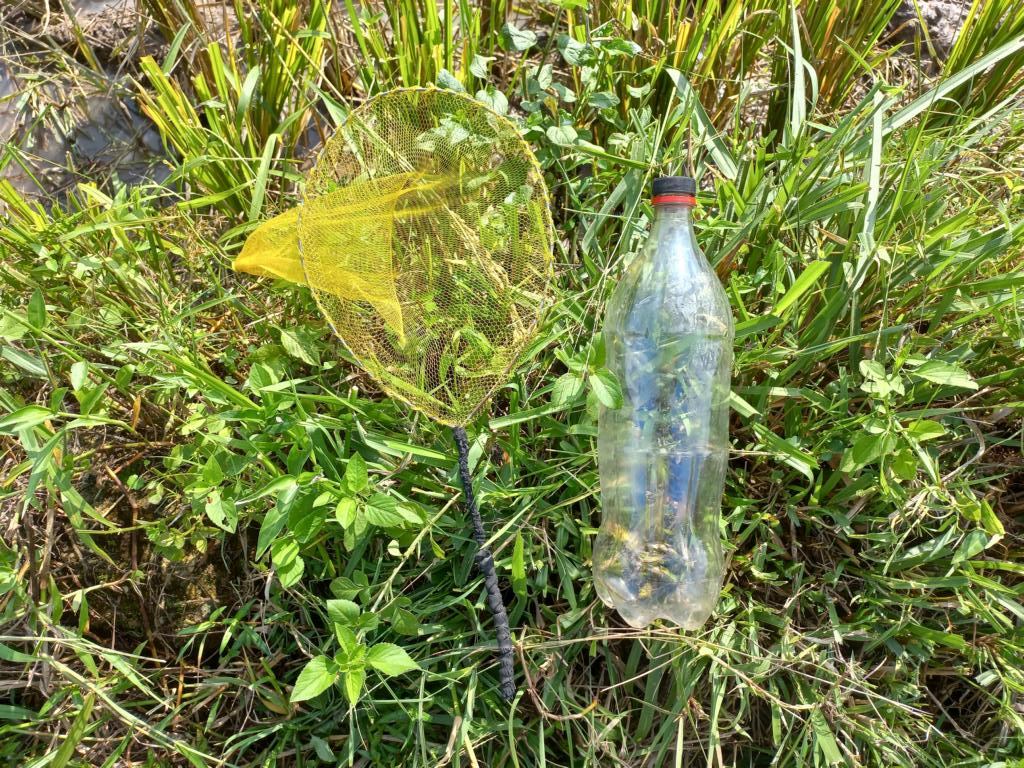
At first, I was given a small net to catch grasshoppers because they didn’t trust me to be as fast at catching by hand as the locals. After a bit of practice, however, the net became more of a hindrance, as the grasshoppers hide in the rice stubble and are challenging to collect there. My recommendation is quite clear: catch the grasshopper with a quick, direct hand movement from behind and above.
Grasshopper gathering from mechanically harvested rice
The mechanical harvester sucks up all the rice grains and grasshoppers, storing them in its collection container. At the paved Ho Chi Minh square, this container was emptied, and the rice was poured onto the sun-heated stone slabs to dry. There, we collected the grasshoppers as described earlier, catching them, removing their jumping legs, and filling the bottle.
Preparation of grasshoppers for food
After catching, the grasshoppers are emptied from the bottle onto a sieve and rinsed with water.
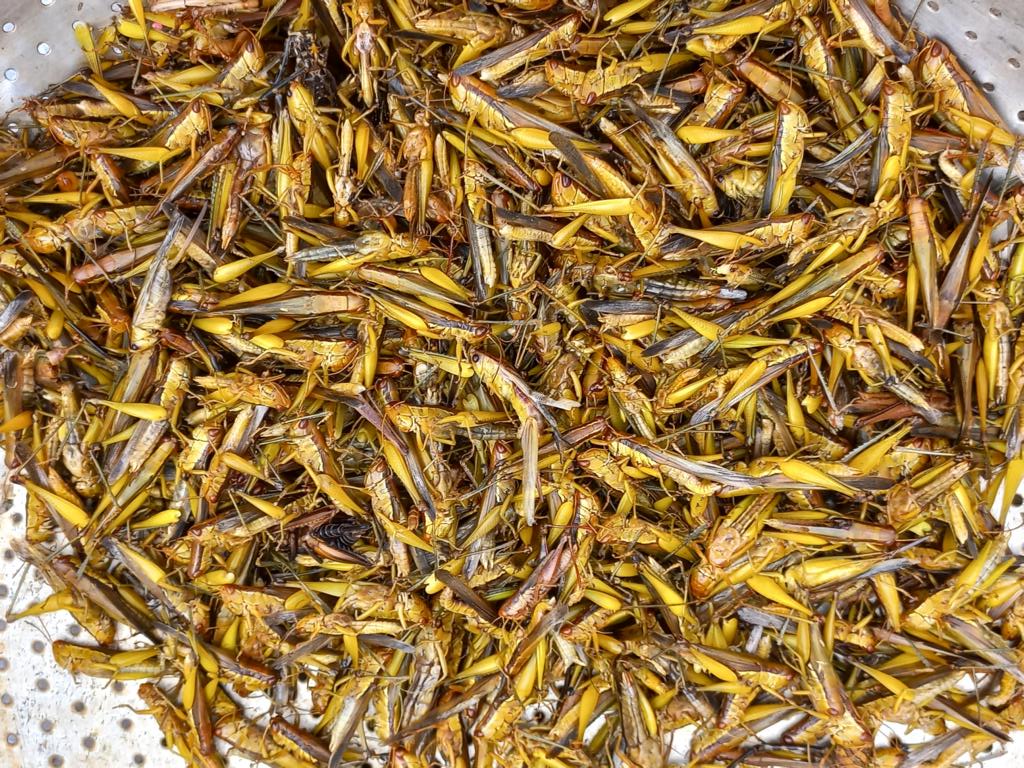
Shortly before dinnertime, the gas flame in the outdoor kitchen is turned up to high and a batch of grasshoppers is stir-fried in a wok.
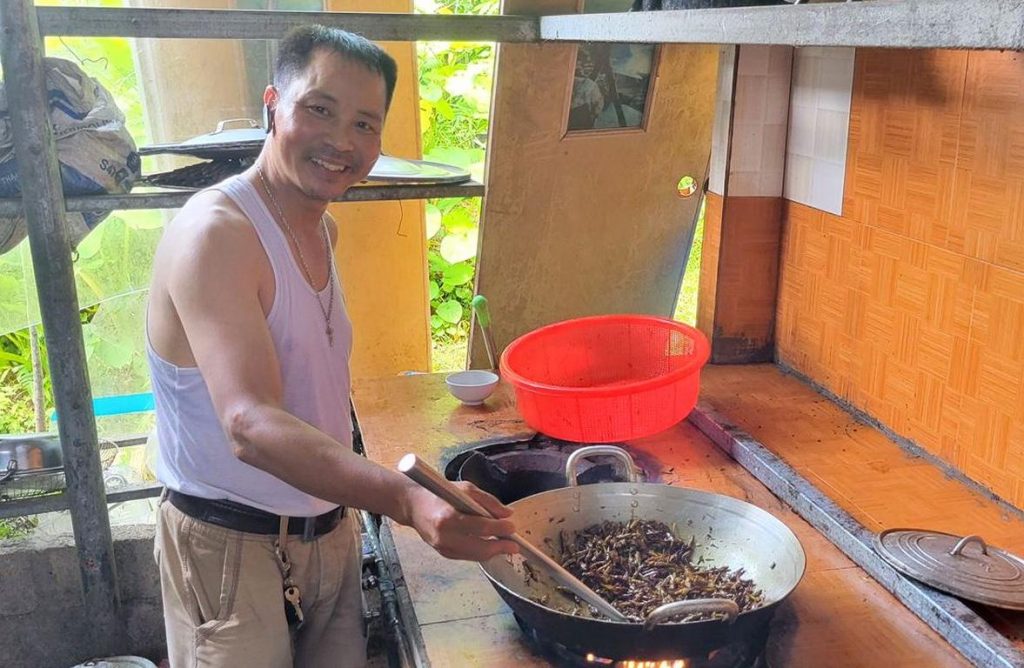
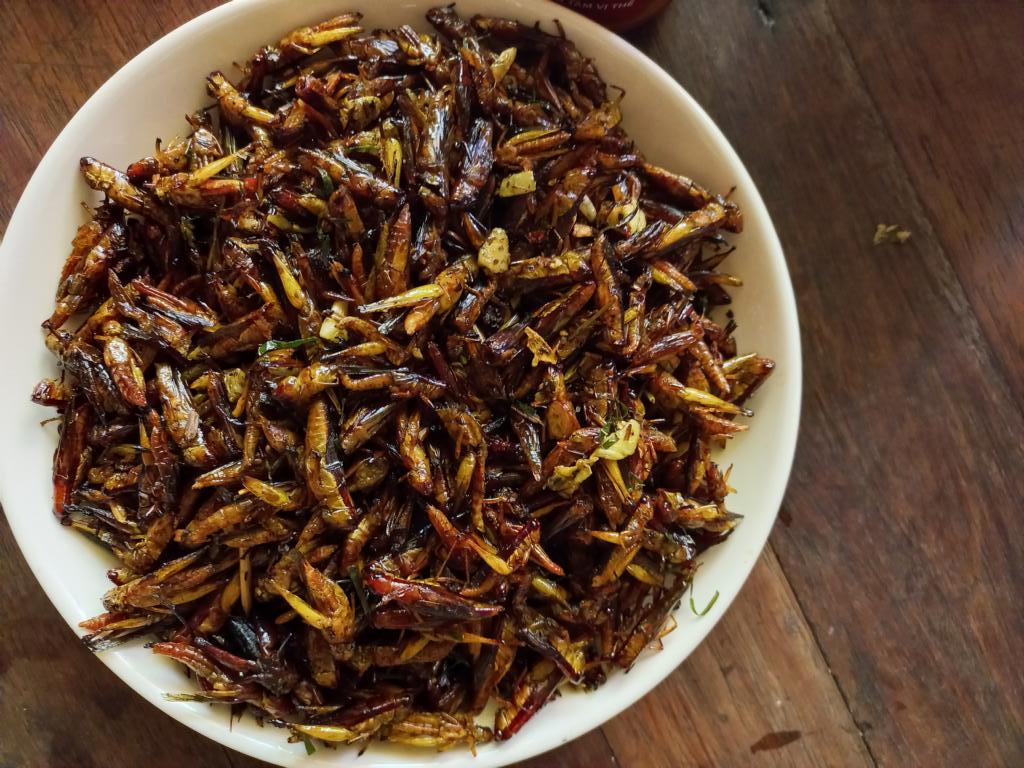
A standard recipe cannot be given, as the cooking methods vary. Depending on the person cooking, either oil or soy sauce was used or not. However, the grasshoppers were always fried crispy and tasted almost like peanuts.
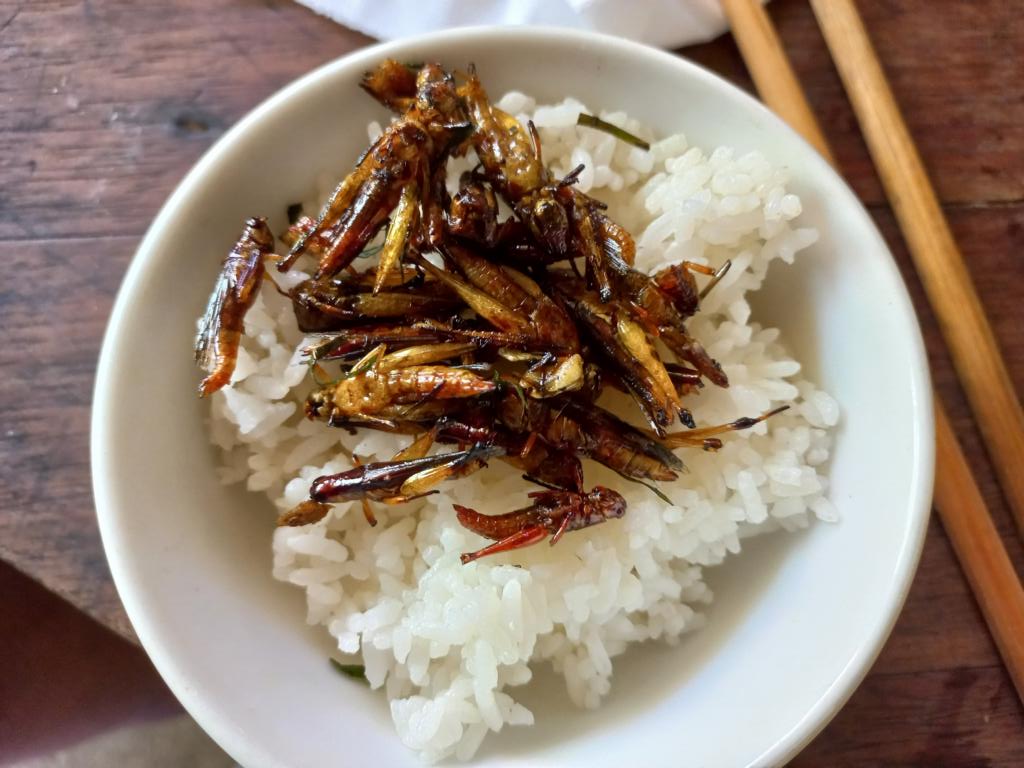
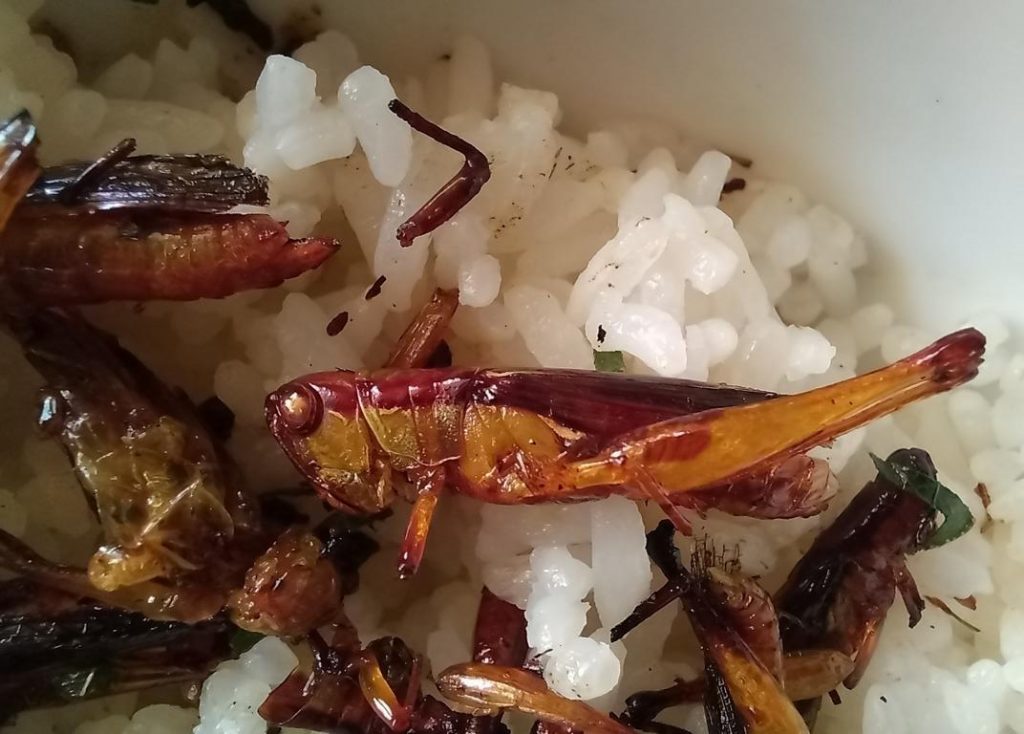
Typical dinner of rice farmers in North Vietnam
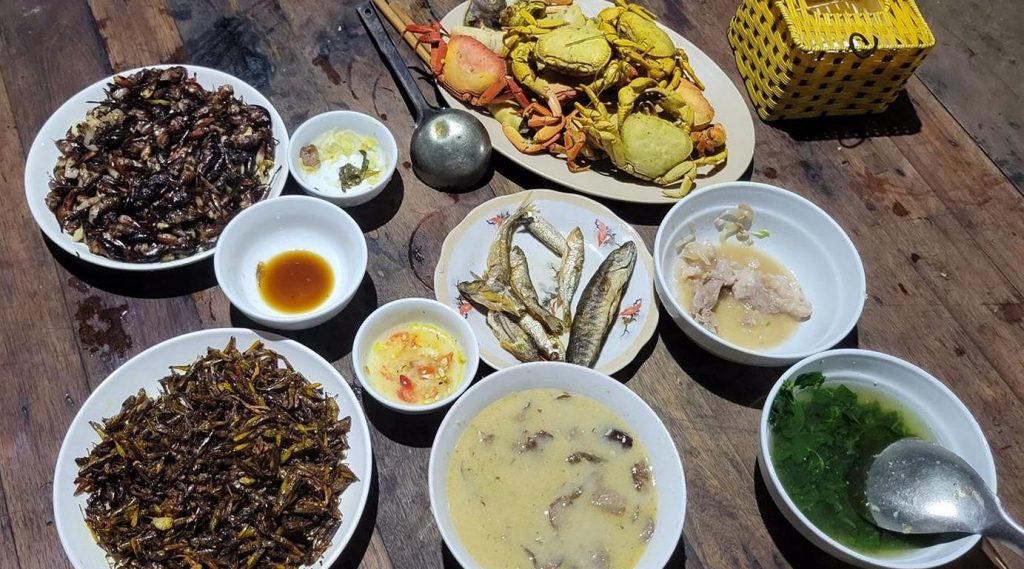
In contrast to breakfast and lunch, dinner among the rice farmers was a lavish affair. Breakfast was limited to tea. Lunch was typically cold rice and small fish with lime and chili sauce. In the evening, however, there was always a small feast. Everything caught or gathered that day was served with diluted rice liquor. Grasshoppers, crickets, mountain crabs, boiled frog, fish, green soup, and mushroom soup, as in the attached photo. But also lizards, snakes, snails, banana blossom salad, banana stems, sago worms, wasp larvae, watercress, and much more. White rice was served in almost unlimited quantities. Nature provides these people with a very varied and inexpensive diet.
Typical snack in the rainforest
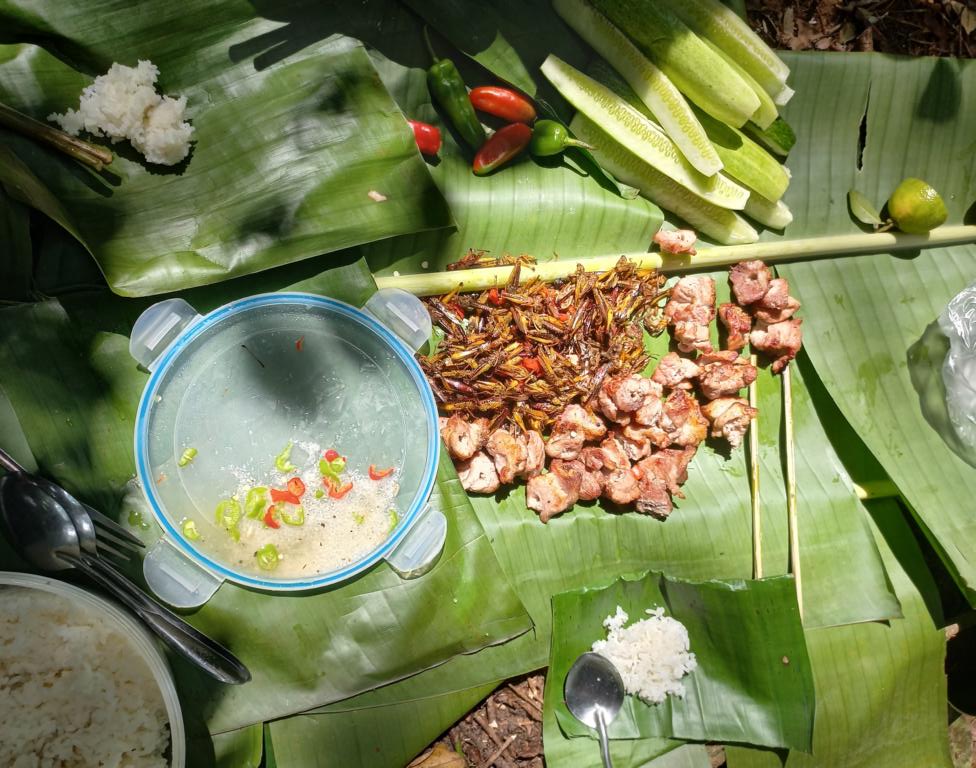
When we were out in the forest, we brought food from home. In the attached photo, you can see rice, chicken, and grasshoppers. Along with limes, cucumbers, and chili. Fried grasshoppers were always a very popular snack. It’s almost like popcorn or chips in the Western world.
Nutritional value of grasshoppers
The nutritional value of these rice grasshoppers depends heavily on whether they are fresh or dried. In our case, fresh grasshoppers are dried during frying, thus representing transitional products; therefore, only average values can be given based on known scientific studies.
The following values can be assumed per 100 g of fried grasshoppers (without oil):
- Energy: 410 – 460 kcal
- Protein: 45 – 70 g
- Fat: 10 – 25 g
- Carbohydrates: 5 – 20 g
- As well as fiber and ash (minerals).
It should be noted that these grasshoppers contain all essential amino acids, i.e., high-quality protein, and they serve as a good source of iron and zinc.
Beware of poisonous grasshopper species!
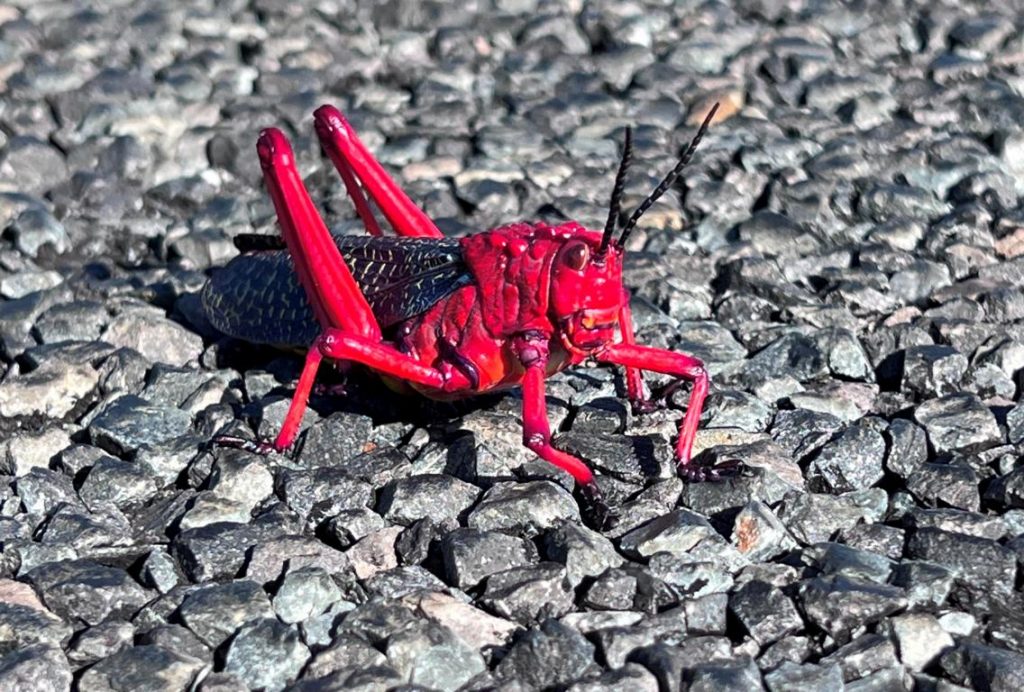
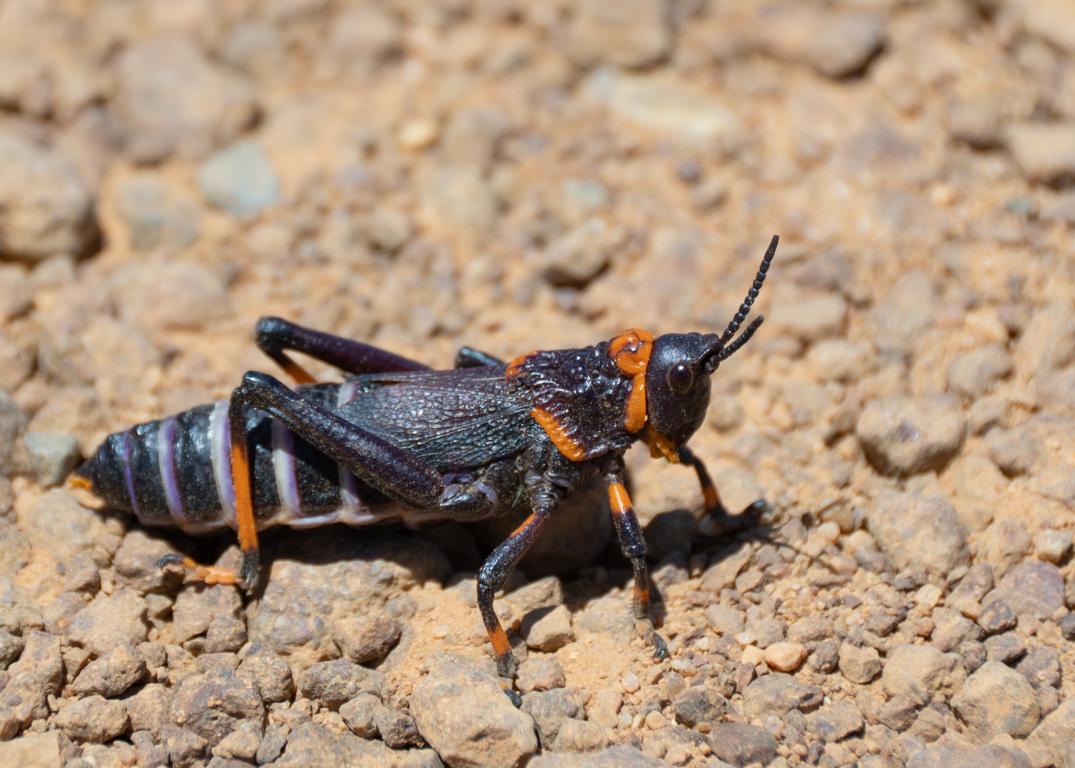
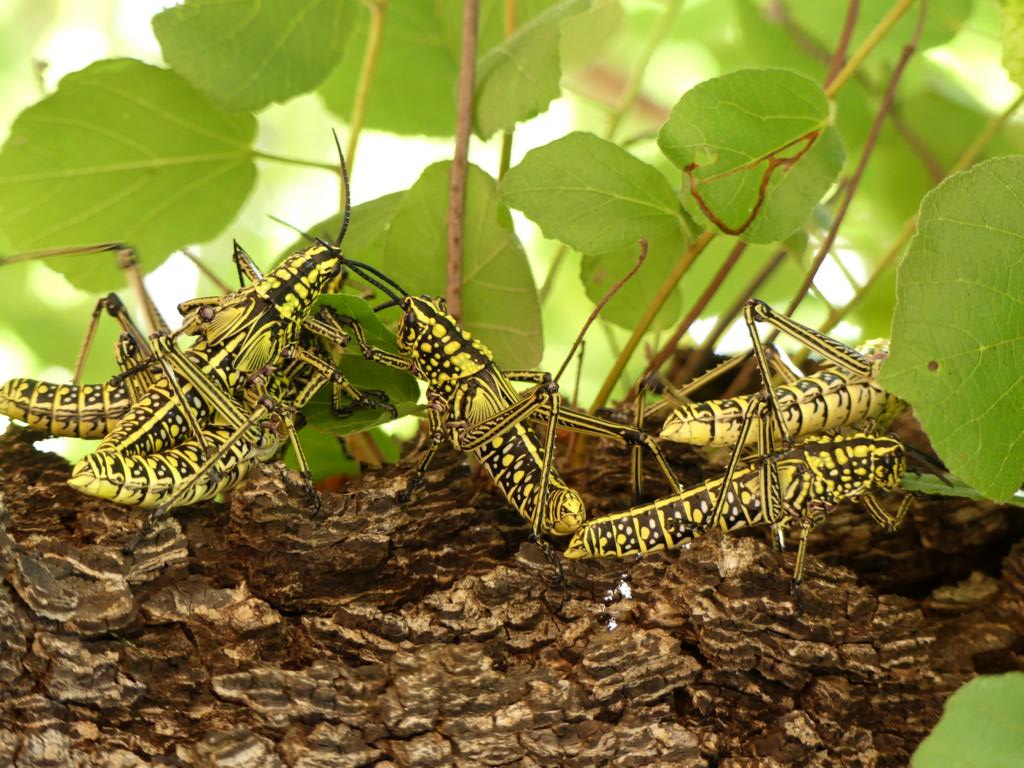
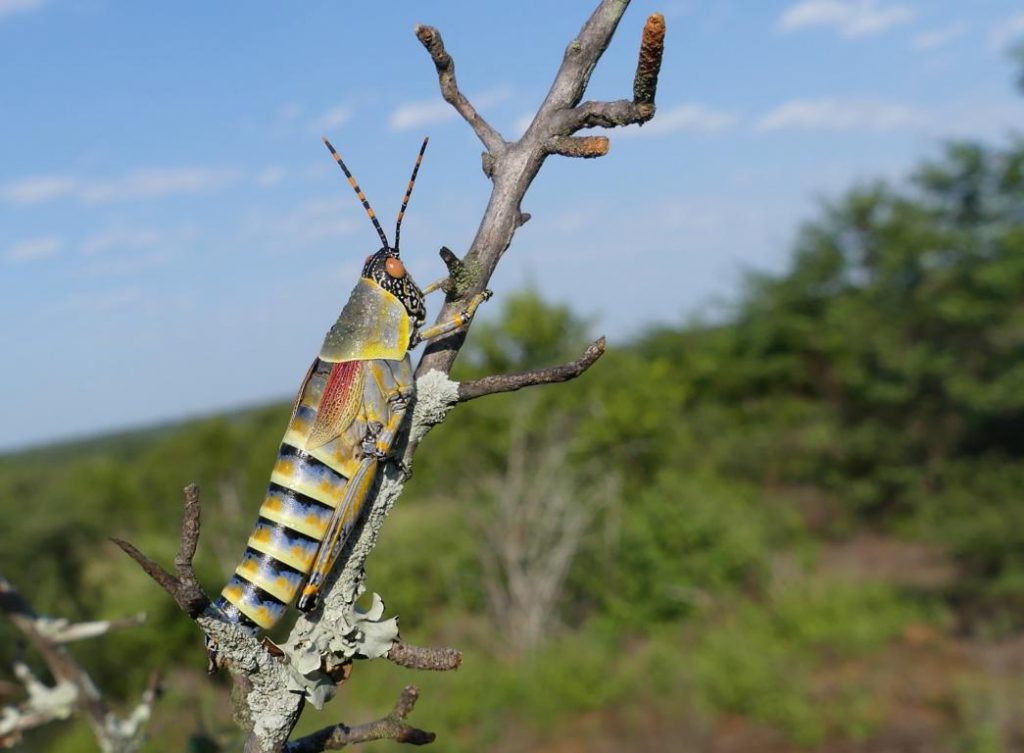
At the end of these remarks, it should be noted that all greenish-brown colored grasshopper species can be eaten. However, grasshopper species with warning colors, which usually cannot flee or often even cannot fly, contain toxins and should not be eaten under any circumstances.
Lessons learned about grasshoppers for food in Vietnam:
- The Chinese rice grasshopper is an agricultural pest on Vietnam’s rice fields.
- After harvesting the rice, grasshoppers are gathered and eaten in large numbers.
- The best method to catch them is by a fast hand movement.
- Grasshoppers are high in energy, protein, and fat.
- All grasshopper species with warning colors have to be avoided to catch and eat.
.