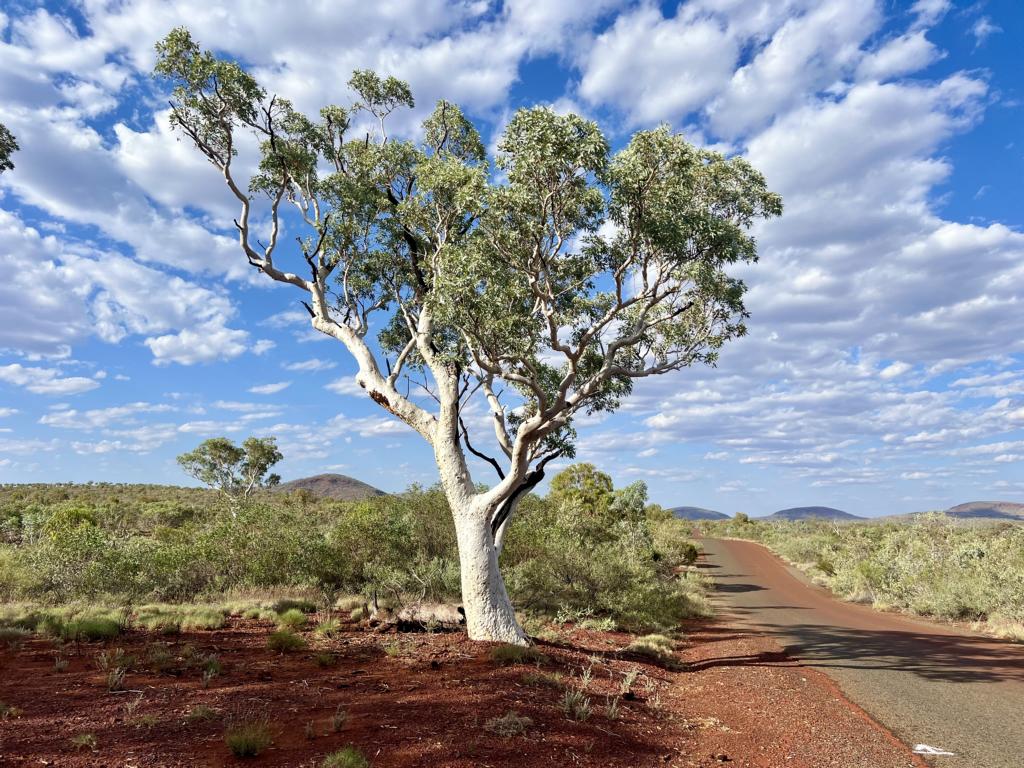
Ghost gum trees are one of the most striking and iconic elements of the Australian outback. Their white bark, combined with black core wood and silvery-green leaves, stands in stark contrast to the surrounding rocks or soil, which are often reddish-brown. At the Karijini National Park, in the Pilbara region of Western Australia, two white-barked eucalyptus species occur. These are the White-bark Snappy Gum (Eucalyptus leucophloia) and the Little Ghost Gum (Eucalyptus victrix), also called Western Coolibah. The main differences between these two species are habitat, bud position, and leaf shape.
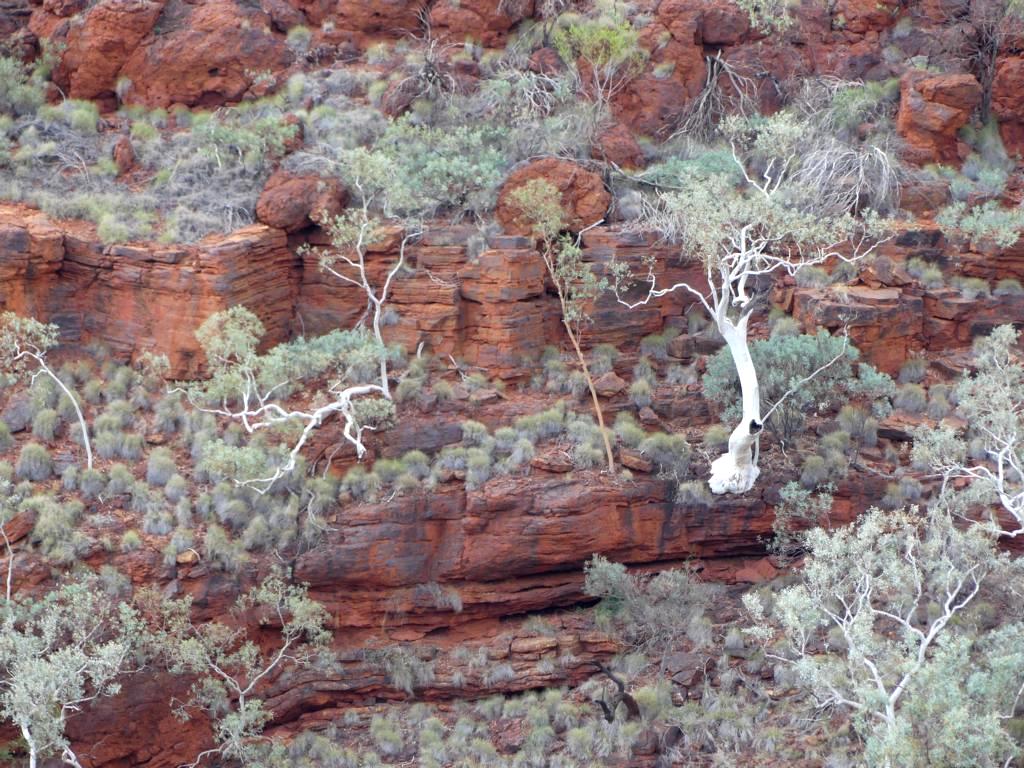
Description of the White-bark Snappy Gum (Eucalyptus leucophloia)
A full description of this species is available on the Atlas of Living Australia. But the most important characteristics are as follows:
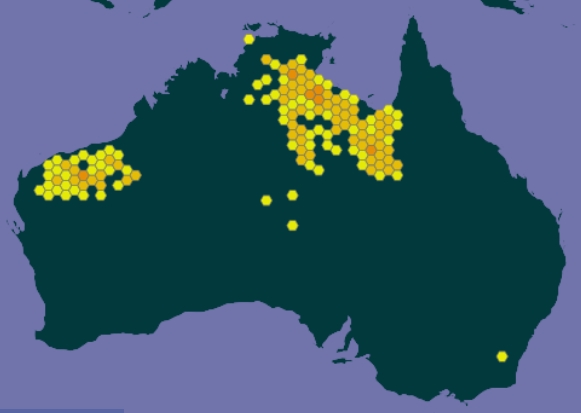
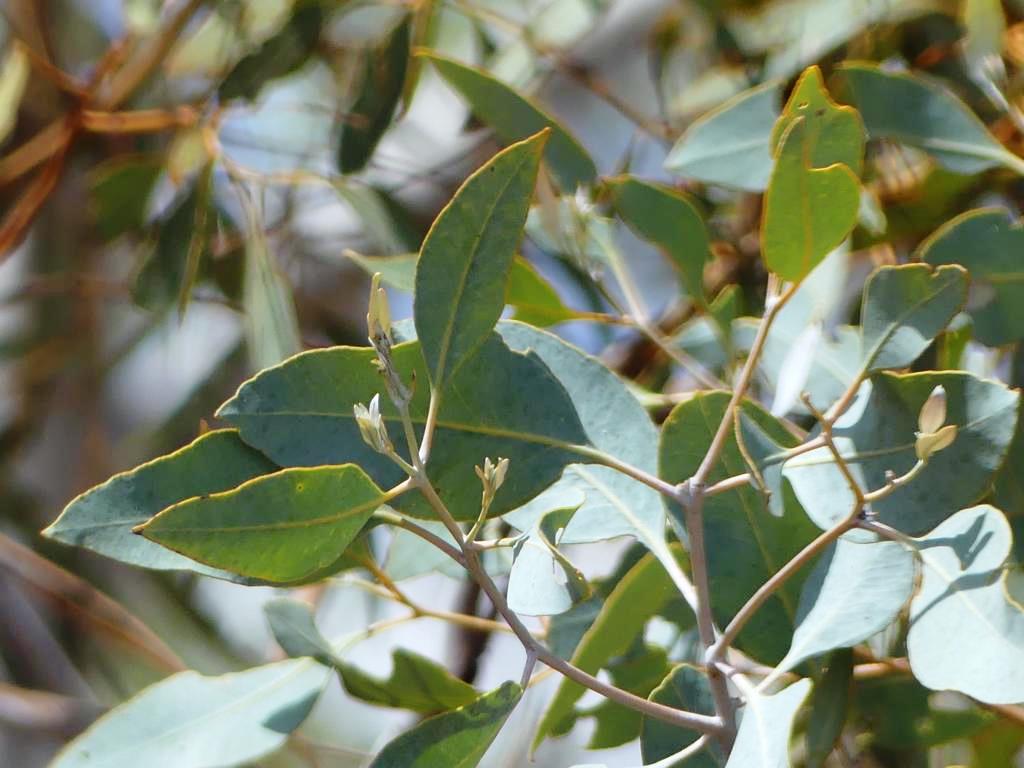
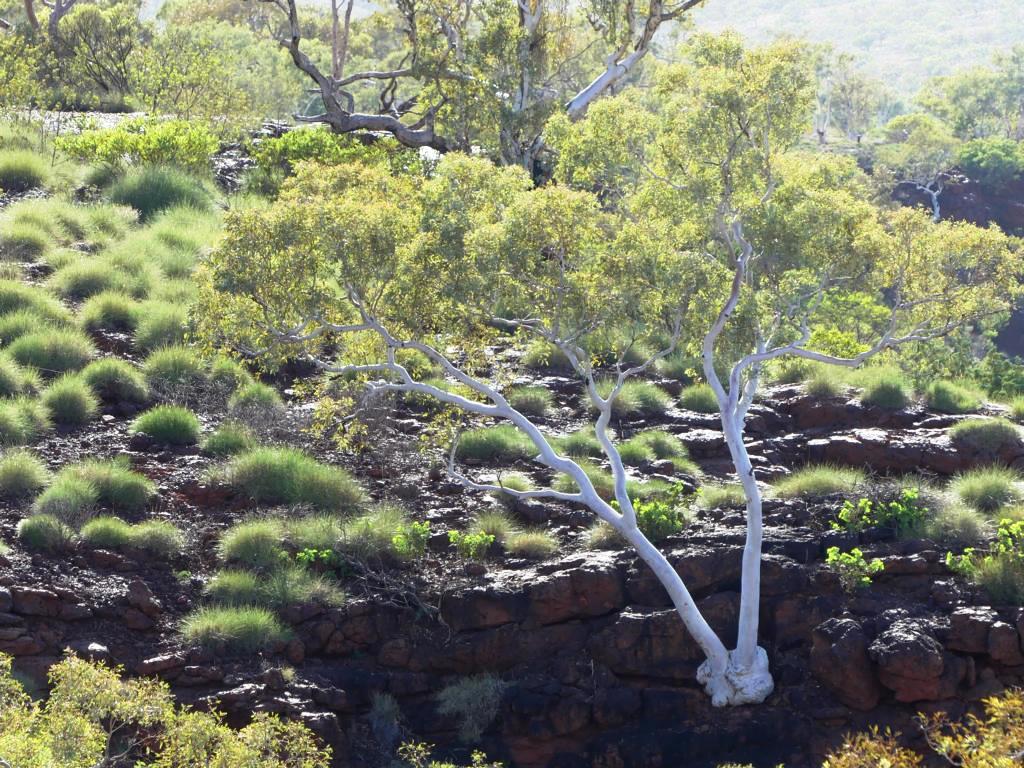
White-bark Snappy gums occur on rocks, low stony hills, gravelly sandplains, and often on skeletal soils over sandstone in the Pilbara area, NT and QLD. Their inflorescences are always in the leaf axils. The leaves are typically dull (not glossy), lance- to egg-shaped, and often broadly lanceolate. They generally are shorter than 10cm / 4inches.
The bark appears smooth and silky, with a powdery white color. New bark has a pink-to-orange hue that ages to pure white, with patches of darker pink or grey.
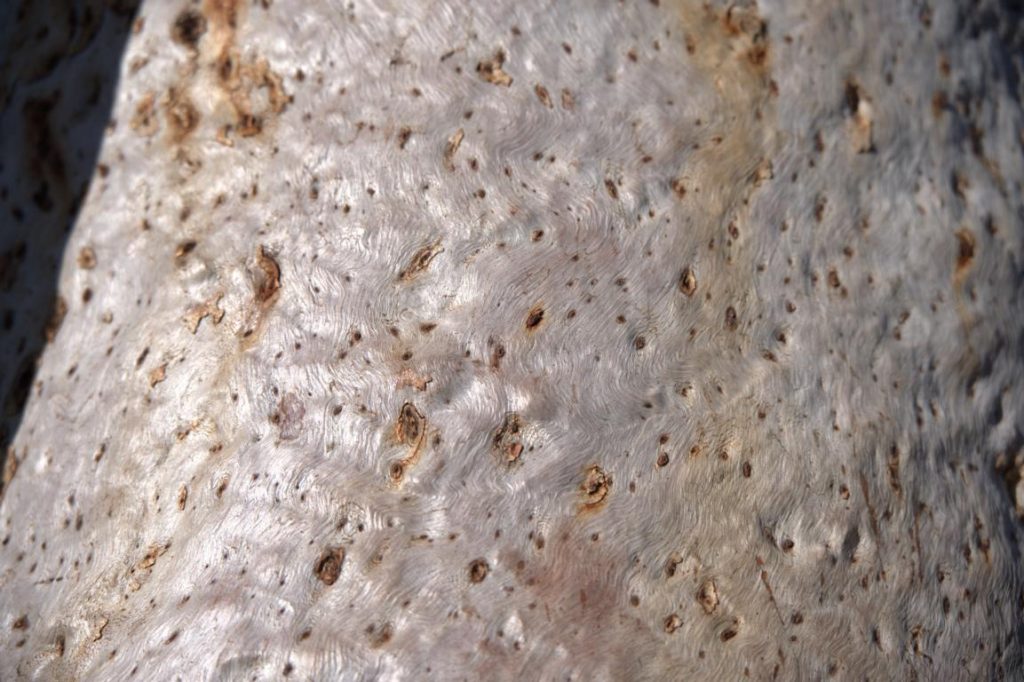
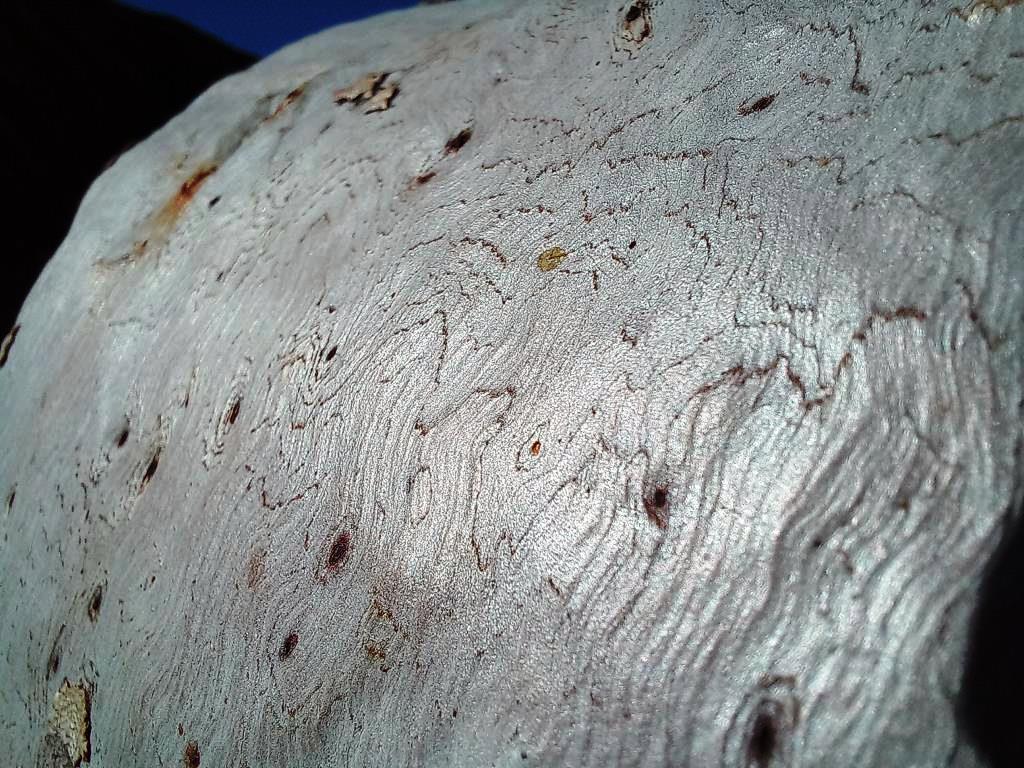
A special attraction of these trees is the visual effect, when the silky white bark overgrows the dead, black wood below or around it. This appears like icing on a chocolate cake.
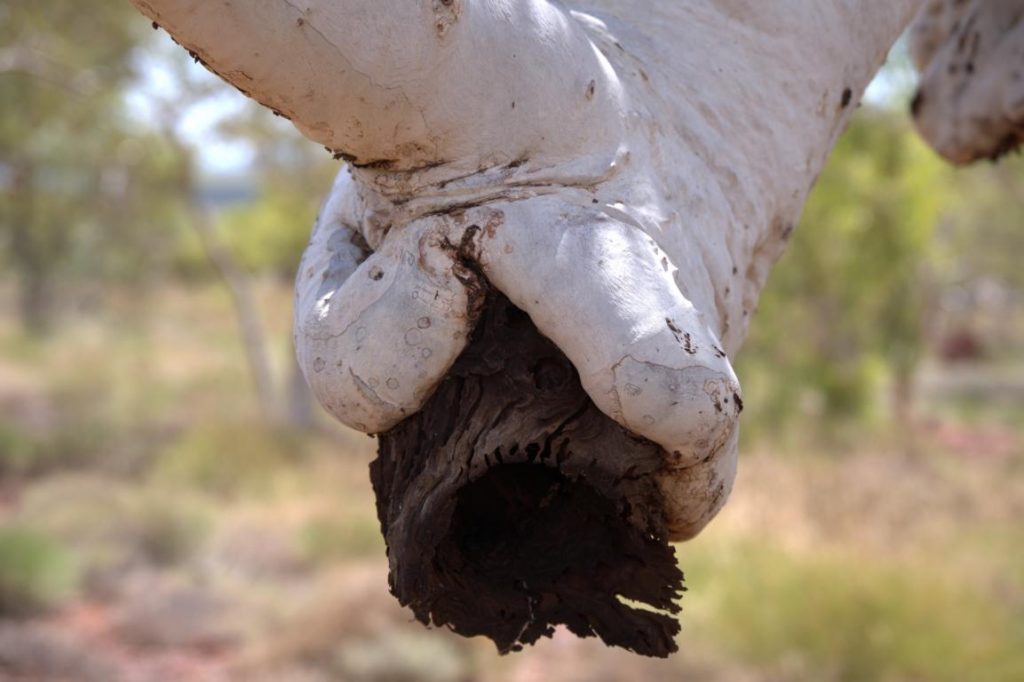
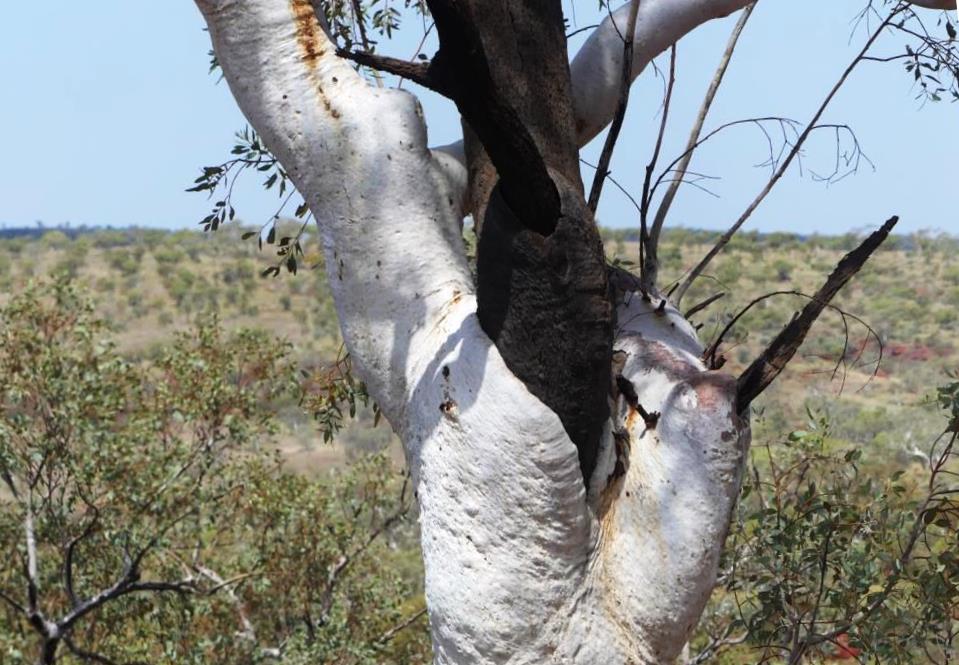
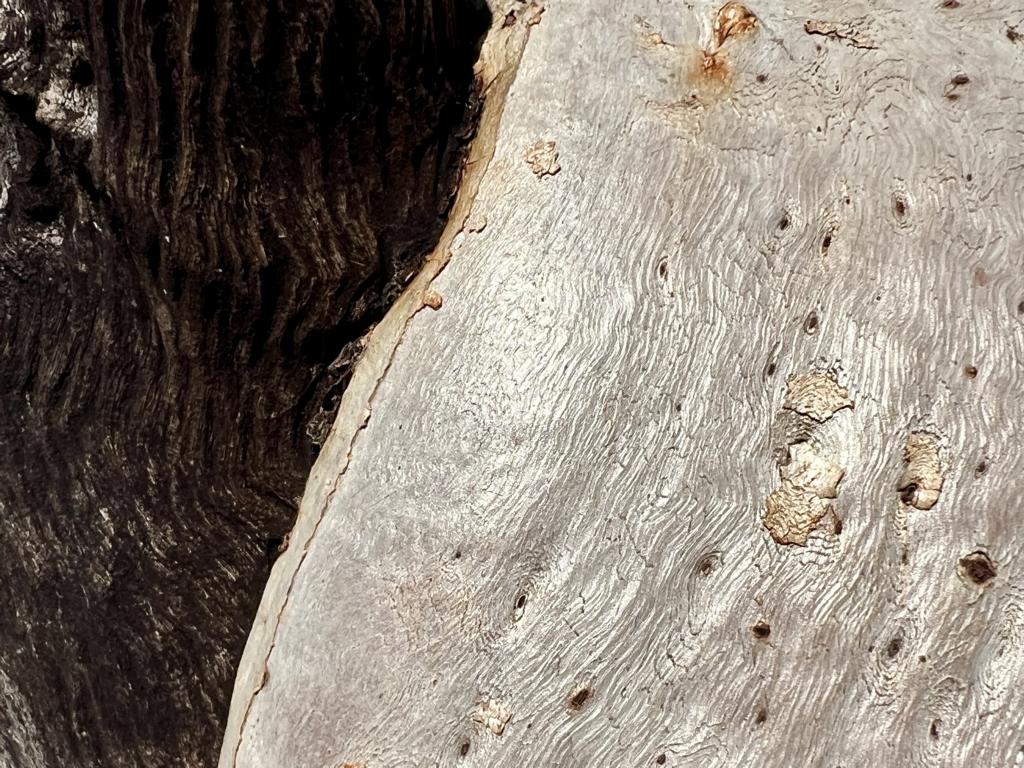
They often grow alone or in small groups, clinging to rocky hillsides or dry creek beds, which gives them this solitary, almost sentinel-like presence.
Description of the Little Ghost Gum (Eucalyptus victrix)
Again, a full description of this species can be found on another page of the Atlas of Living Australia.
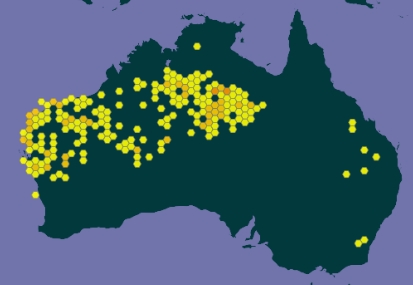
Little Ghost Gums prefer to grow in floodplains and low-lying areas, which are subject to irregular flooding. Also, arid zones with clay or clay loam soils are well-suited. This is a marked difference to White-bark Snappy Gums, which like rocks and gravel. The inflorescences are always at the end of the branchlets, and not in the leaf axils. And their leaves are lance-shaped to curved, grey-green to bluish-green. They are considerably slimmer than the leaves of Snappy Gums.
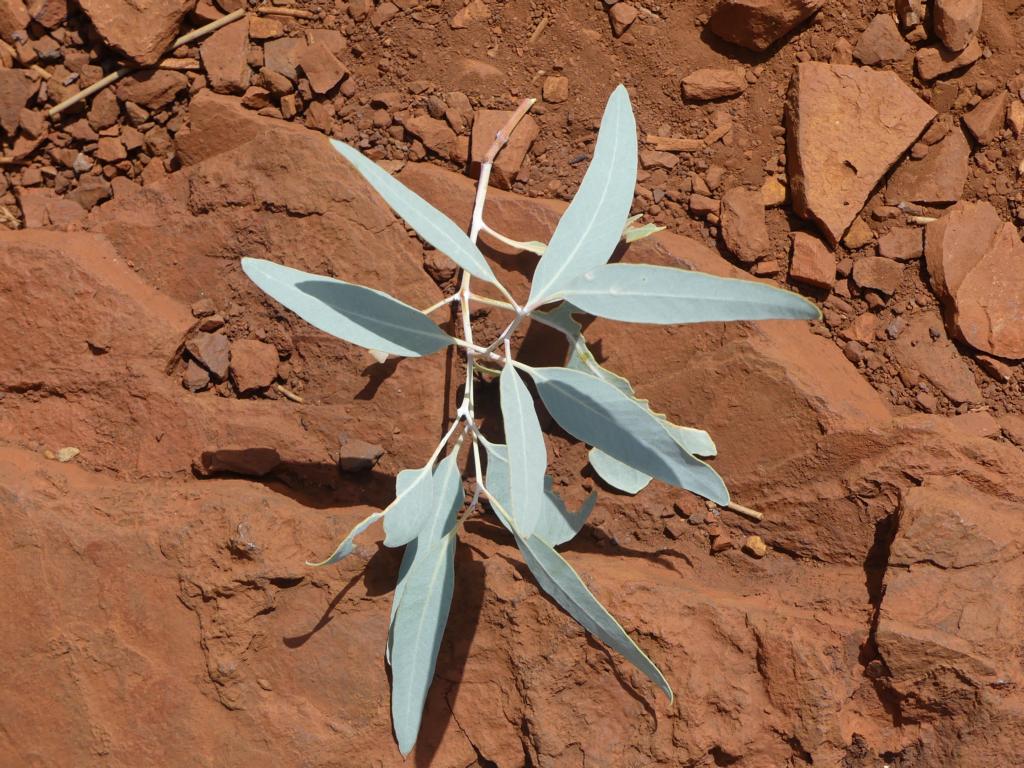
The bark of Little Ghost Gum trees is also smooth and powdery white throughout, not much different from that of Snappy Gums, but, again, Little Ghost Gums are associated with floodplains, whereas White-bark Snappy Gums prefer hills and plains.
In my opinion, both are absolutely beautiful and perfectly capture the stark, luminous resilience of a harsh landscape.
Other white-barked gum tree species in Western Australia
Besides the mentioned two species in the Pilbara region, the following gum tree species with white bark also occur in Western Australia, although some of them only in a very confined distribution:
The original ‘Ghost Gum’ tree, from which the name is derived, is Corymbia aparrerinja, a species that primarily occurs in Central Australia.
- Eucalyptus alba White Gum
- Eucalyptus apodophylla Whitebark Gum
- Eucalyptus houseana Kimberley White Gum
- Eucalyptus lane-poolei Salmon White Gum
- Eucalyptus mooreana Mountain White Gum
- Eucalyptus wanderoo Wanderoo
Some general thoughts about white-barked gum trees
As at night, under moonlight, that white bark is more visible compared to other vegetation around, Aboriginal people associated them with spirits – ghosts – and this name felt ‘spot-on’, when other Australians saw them. That’s the reason why they’ve called them “ghost” gums.
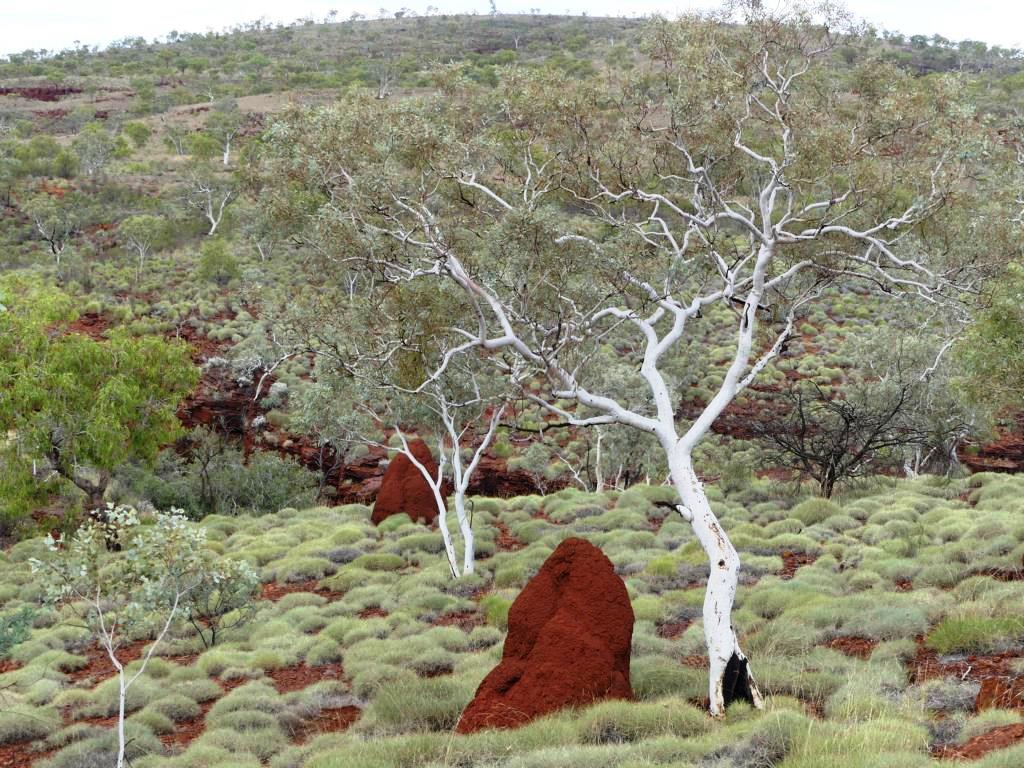
These gum trees and their general appearance received national and international attention through Albert Namatjira’s mid-20th-century watercolor paintings. His works often featured those classic ghost gums set against rugged ranges, helping turn them into a symbol of the outback’s beauty and spirit. Additionally, Indigenous knowledge values them, as parts were used medicinally to treat colds, and some Dreamtime stories link them to ancestral beings.
Overall, they’re one of my favourite Australian trees — understated yet memorable, and a perfect emblem of the continent’s wild and rugged interior.
Lessons learned about the Ghost Gum trees in Karijini NP and Western Australia:
- At hilly and rocky places, the White-bark Snappy Gum trees thrive.
- Little Ghost Gums prefer floodplains to grow.
- Original Ghost Gum trees are Corymbia aparrerinja, which only thrive in Central Australia.
- White barked gum trees of various species are a symbol of the continent’s wild and rugged interior.