
Shelter
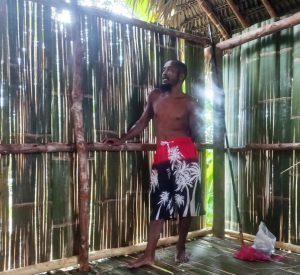
Jahai Huts: How the Bamboo Sidewalls are Built
Jahai huts, characteristic of the Semang Orang Asli people, exemplify the widespread use of bamboo as a material for floors and sidewalls. The Jahai people settle in and near the area of the Royal Belum State Park in Perak, Malaysia, and they showed the author in this area how they built their huts. In this article, we will not focus on thatching the roof, but rather examine how they create the sidewalls. The Jahai people live in small clusters of homes in remote areas near the lake. Typically, each cluster (also referred to as a village) comprises between 6 and…

Orang Rimba shelters in the forests of Sumatra
Orang Rimba (locally called Kubu) shelters and dwellings in the forests are designed in different styles rooted in their semi-nomadic lifestyle. These structures can be divided into two main groups: semi-permanent structures and shelters when they are on the move. The author visited a band of Orang Rimba people in Jambi province / Sumatra in December 2023. Semi-permanent structures Orang Rimba people living in the forest need a home base when returning from hunting, foraging, and collecting trips for Jernang fruits (Daemonorops draco (Willd.) Blume). At these structures, they have more cooking utensils and are securely protected against the weather.…

Mentawai Forest Huts: Resting Place and Storage in the Jungle
The Mentawai people at Siberut Island use forest huts (called Sapou by them) for various reasons and purposes. One is a permanent dwelling for single, old men who do not live with their family in the Uma (family home in the forest), as was the case with this forest hut described here. Other purposes for such a hut would be as a resting place when tendering taro gardens or as a hunting base in faraway locations. The particular purpose of forest huts For couples, it is strictly taboo to exchange any sexually inspired feelings within the Uma. Couples have to…

Roof Thatching Panels: How the Mentawai Build Waterproof Roofs
Roof thatching is vital for shelter waterproofing in the Mentawai tribe, which has around 6,000 members, on Siberut Island, Indonesia. Siberut lies about 100 miles (160 km) west of Padang in West Sumatra. Of the 6,000 Mentawai people, roughly 1,000, mainly elders, live traditionally in the Evergreen tropical forests. The younger generation attends schools and must adopt recognized Indonesian religions, leading to a loss of cultural ties. Consequently, they may settle in villages outside the forest. As a result, most traditional family houses might deteriorate, and vibrant shamanism could give way to tourist-oriented hip-hop dances in the future. Our group…
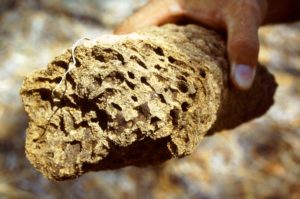
Ant beds for building materials in Australia
Although they are commonly referred to as “Ant beds,” particularly in Australia, the structures are actually “Termite mound.” Despite their physical similarities to ants, termites are related to cockroaches rather than ants. However, like ants, they are small and numerous. One significant difference between the two is that termites are white. This makes them highly susceptible to damage from sunlight. To protect their food sources, such as wood, from the sun’s rays, termites construct a coating of clay and saliva, known as “sheeting,” over them. Termites also use the same material as they use for sheeting to construct their mounds.…