
Dangers & Protection

Hidden blades at the Kimberley coast: Low-tide razor clams
When we headed to the Kimberley coast of Western Australia, we worried about the obvious threats: saltwater crocodiles, box jellyfish, and the massive 10- to 12-meter tides. While walking with Terry Hunter on an exposed reef, we became aware, however, that a grave hazard lay stationary in the shallow waters. Terry is a highly experienced Bardi Aboriginal who, together with his father, has already taught Malcolm Douglas indigenous survival techniques. Razor clam species around the Kimberleys When the tide drops across the Cygnet Bay at Cape Leveque on the Peninsula north of Broome in Western Australia, it reveals vast reef…

Dangers in the Khao Sok NP in Thailand
About the Khao Sok National Park The Khao Sok National Park is located in the Surat Thani province of Thailand, and about 150 km north of Phuket in a straight line. Cheow Lan Lake on the northern park border serves as the main water reservoir for Phuket and its surroundings. The highlights of Khao San NP are its biologically diverse evergreen tropical forests and geological karst topography. In Thailand, however, the attractiveness of ational Parks is seen in the number and size of caves and waterfalls. I prefer gibbon calls over waterfalls. The park entrance and the park headquarters are…

Snakes on Siberut Island
Bites from venomous snake species appear to be the highest concern when walking in the Siberut forests. There are anecdotal reports that middle-aged Mentawai men were bitten by pit vipers three or four times in their lives. Non-Venomous Snakes (Harmless to humans) On Siberut Island, 40 species of snakes have been documented. Out of this total, 23 species are non-venomous and harmless to humans. These species are: Slightly Venomous Snakes (Mildly venomous to humans) From a total of 40 species, eight species are rear-fanged and only slightly venomous to humans. These snake species are: Some Rhabdophis species can be dangerously…

Danger of Asian elephants – whether they are in musth or not
Asian elephants (Elaphas maximus) are smaller than their African cousins but not less dangerous when in musth. That danger was already described for African elephants in this article on this website. In the following, we briefly compare the differences between both genera. African elephants vs. Asian elephants Musth in Asian elephants Wild and tame male elephants experience a periodical manic disturbance called musth. During this period, the animal may have a bad temper and start fighting with other elephants. They will even try to attack any human they can reach, even their own Mahout or Caretaker. Before it starts to…

Stinging Nettle Slug Caterpillar in Vietnam
When hiking in Pu Luong Nature Reserve in northern Vietnam, we found a species of Stinging Nettle Slug Caterpillar on a Banana leaf. My local friends got highly nervous when they saw it, and I was intensely warned against touching it. Description of specimen Stinging nettle slug caterpillars are larvae instars of a small-sized, hairy moth that belongs to the taxonomic family of Limacodidae. Wikipedia – see here – describes them as: ‘… The larvae are often liberally covered in protective stinging hairs and are mostly tropical, but occur worldwide, with about 1800 described species and probably many more as…

Small catfish got dangerous spines in Thailand
There is a variety of small catfish species with dangerous spines living in Thai waters. One, a very abundant one, is locally called Pla Kod (Hemibagrus wyckioides); English common name: Asian Redtail Catfish; Thai name: ปลากด. The typical length for catching in smaller water bodies is about 20 cm (abt. 8 inches). Adult Pla Kod, which live in large rivers, can be up to 50 inches (abt. 1,27 m) long. The appearance resembles a bullhead catfish, but Pla Kod is silvery colored and slightly slimmer built. When getting stressed, the first dorsal fin will attain a red shimmer, as there…
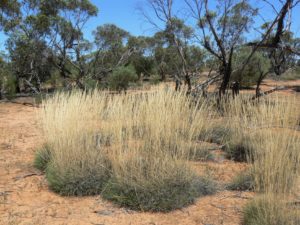
Spinifex grass – friend and foe
The common name ‘Spinifex grass’ is not entirely correct as a botanical term for discussed grasses, as commonly named ‘Spinifex’ grasses belong to the genus ‘Triodia’, whereas the genus ‘Spinifex’ itself contains mainly coastal grasses. Whatever it is, the common name ‘Spinifex’ comprises two kinds of inland grasses: a harder and pricklier version in arid environments of Australia and a northern Australian version, which is doing better in more humid tropical environments. Why Spinifex is not liked Every bush traveler will know and be aware of spinifex, as it is nearly impossible to walk through it due to the spiky…